
Introduction
The proposed merger between Capital One and Discover Financial Services is one of the biggest consolidation events in the U.S. credit card industry. In February 2024, Capital One announced its plan to buy Discover in a $35.3 billion all-stock deal.
After more than a year of regulatory review, the Capital One Completes Acquisition of Discover was finalized in May 2025, creating the nation’s largest credit card issuer and the sixth-largest bank by deposits.
The deal faced intense antitrust scrutiny from regulators and lawmakers worried about less competition and harm to lower-income consumers. Still, it received approval from the Federal Reserve and the Office of the Comptroller of the Currency.
For our readers — founders, venture capital professionals, and investors — understanding the strategy behind this merger is critical.

It reshapes consumer lending, payments, and fintech competition. Capital One gains Discover’s payment network, reducing reliance on Visa and Mastercard. This could affect everything from credit card rewards to small business products like spark business capital one. For capital world investors and big think capital players, the merger creates both opportunities and risks in the evolving financial landscape.
If you want to stay ahead of how big financial moves affect startup fundraising and tech investing, subscribe to The AI Newsletter Worth Reading. It delivers clear daily updates on AI and technology trends that shape the markets.
We also dive deeper into how large financial firms influence startups. Read more about corporate venture capital as the new power broker in startup funding to understand the bigger picture.
The Capital One-Discover Merger: A Landmark Deal
When Capital One announced its plan to buy Discover in February 2024, many observers called it the biggest banking deal in years. The numbers back that up. The transaction was valued at about $35.3 billion in an all-stock deal, giving Discover shareholders a 26.6% premium over the stock price before the announcement. This was no small bet. It was a strategic move to combine two of the largest credit card issuers in the U.S. and, more importantly, to give Capital One its own payment network.
Here is what actually happened. The merger officially closed on May 18, 2025, after more than a year of regulatory reviews. The combined company now holds over $660 billion in total assets, making it the sixth-largest bank by deposits and the country’s largest credit card issuer. For comparison, that is roughly the same asset size as the entire GDP of some mid-sized countries. You can see the detailed timeline in the UPDATE: $35B Capital One-Discover merger closes by Virginia Business.
Why did Capital One push so hard for this deal? The main reason was vertical integration.
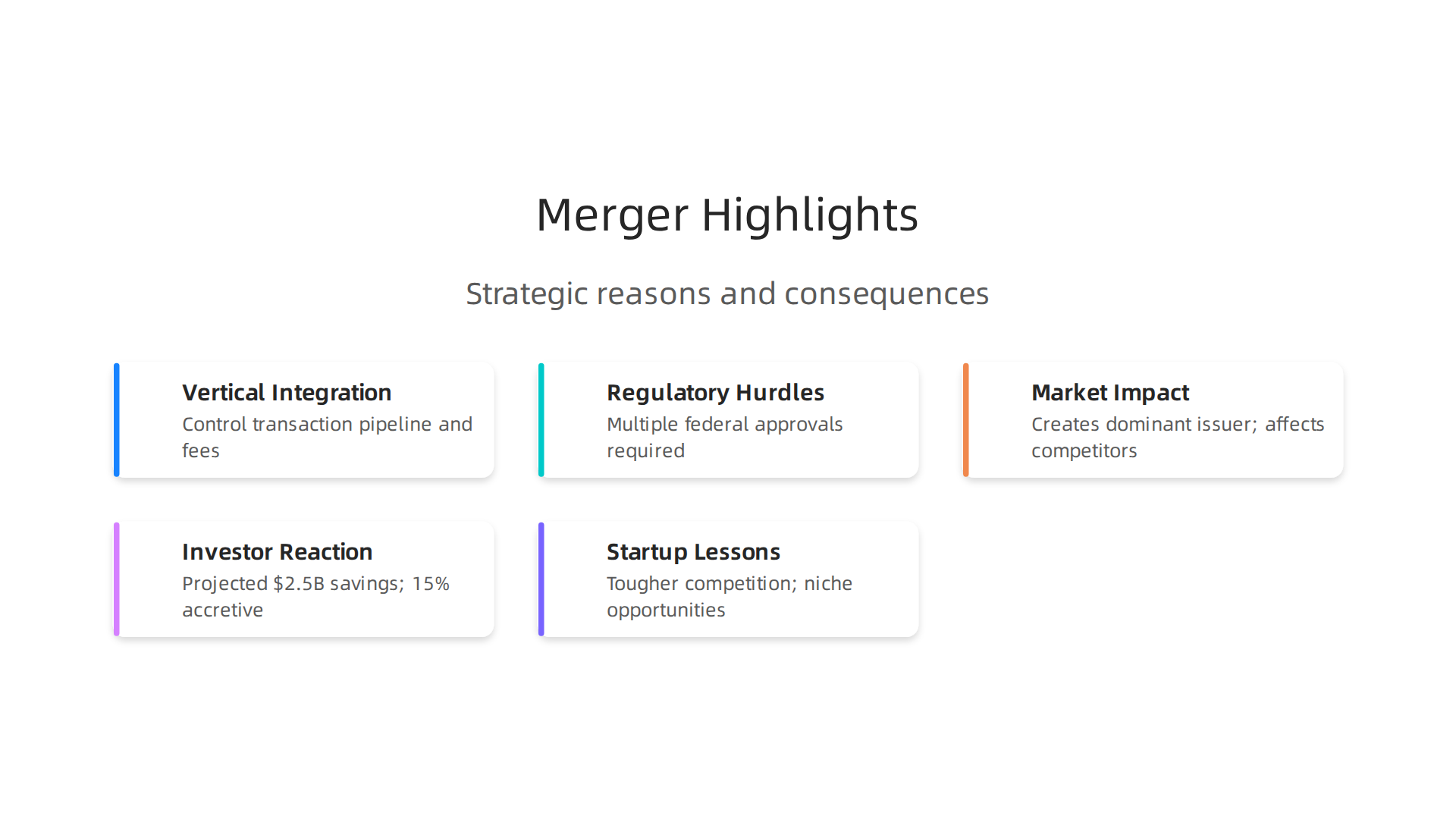
Before the merger, Capital One relied on Visa and Mastercard to process its credit card transactions. That meant paying network fees and having limited control over the payment experience. Discover, however, owns its own payment network, including Pulse and Diners Club. By buying Discover, Capital One now controls the entire transaction pipeline. It becomes a card issuer and a network owner at the same time, similar to how American Express operates.
This is a huge shift for capital management services across the industry. Instead of sharing revenue with outside networks, Capital One can keep more of the transaction fees. The company expects this move to generate significant savings. According to the official Form 425 filing from Capital One, the deal is expected to produce $1.3 billion in operating expense synergies and $1.2 billion in network synergies by 2027. That is a combined $2.5 billion in annual savings. The company also expects the merger to be more than 15% accretive to adjusted earnings per share in 2027.
For investors and founders who track big think capital movements, this deal signals something important. Large financial institutions are betting on owning the full stack. If you are building a fintech company or a startup that relies on payment processing, you need to pay attention. A combined Capital One Discover could change how rewards programs, interchange fees, and even small business lending products like spark business capital one work in the coming years.
If you want to understand how massive corporate moves like this reshape the startup funding landscape, take a look at what the Capital Group American Funds can teach founders about institutional investing. The dynamics at play here are directly relevant to your fundraising strategy.
Regulatory Hurdles and Antitrust Scrutiny
Getting a merger this big across the finish line was never going to be easy.

The capital one discover merger needed approval from multiple federal watchdogs, and each one had its own checklist.
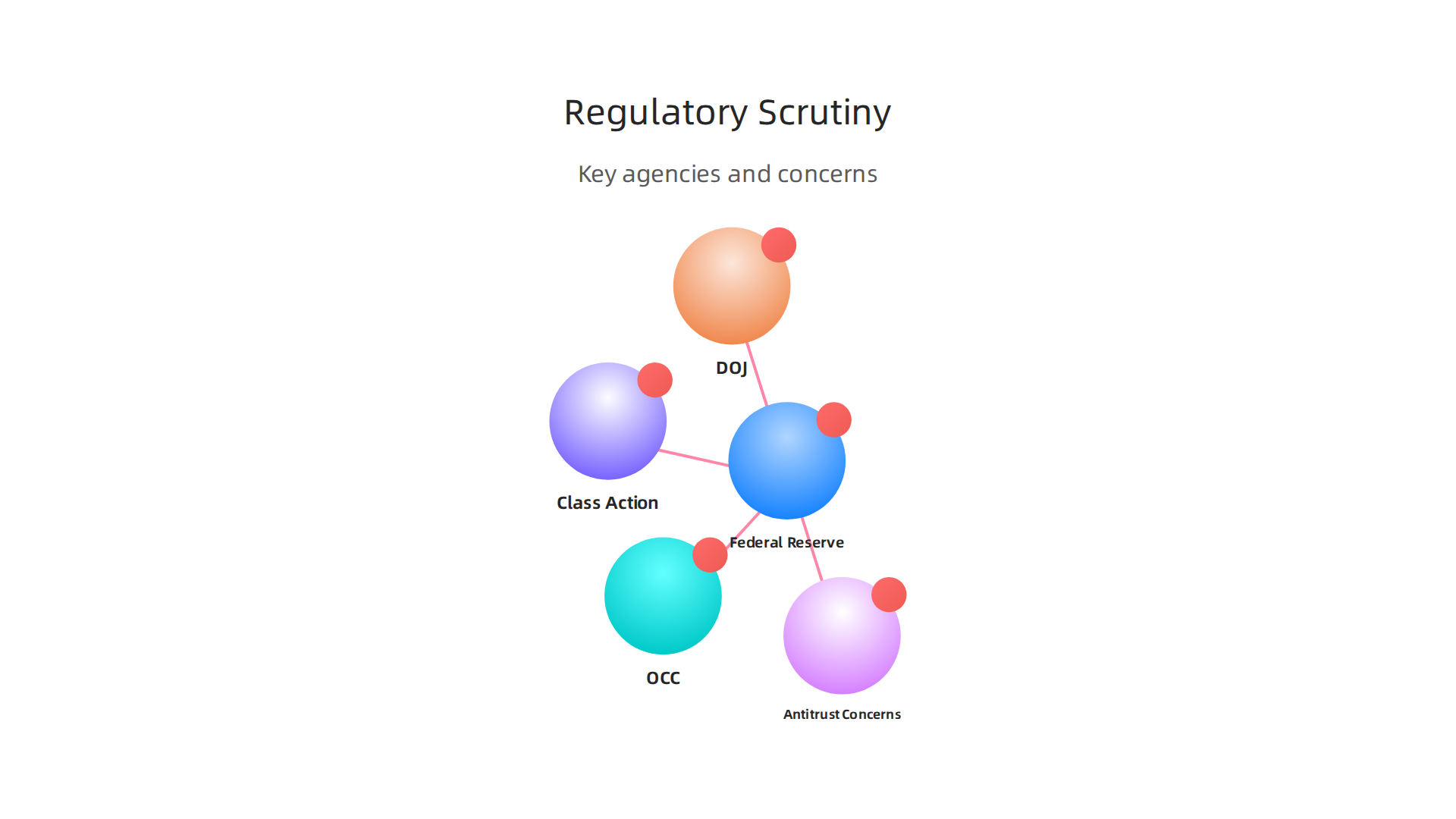
The main players were the Federal Reserve, the Office of the Comptroller of the Currency (OCC), and the Department of Justice.
The Federal Reserve and OCC both signed off on the deal in April 2025, just weeks before the merger closed on May 18. But approval did not come without conditions. The OCC specifically required Capital One to submit a detailed plan within 120 days after closing to fix any outstanding enforcement issues at Discover Bank. You can read the full story behind the final regulatory approvals from the Federal Reserve and OCC in this Banking Dive report.
On top of that, the Federal Reserve hit Discover with a $100 million penalty for overcharging interchange fees from 2007 to 2023. Capital One agreed to follow all the Fed’s orders for remediation as part of the approval. So even after years of preparation, the deal came with strings attached.
Antitrust concerns were another major hurdle. Critics argued that combining two of the largest credit card issuers in the U.S. would hurt competition. U.S. Senator Elizabeth Warren publicly asked the Department of Justice to block the deal. A group of Capital One cardholders even filed a class action lawsuit in July 2024, claiming the merger would violate antitrust law. That case was paused later that year.
The DOJ’s new antitrust chief, Gail Slater, took a close look at the evidence. In the end, she decided there was not enough proof to challenge the merger in court. That decision cleared the last major legal roadblock.
For startup founders, this merger is a real world lesson in how big think capital movements get past regulators. If you are building a company in fintech or payments, you need to understand that the rules are changing. The DOJ’s new merger guidelines from 2023 are stricter than before, but they still leave room for deals that show clear benefits. Capital One argued that owning a payment network would lead to lower costs and better products, and regulators agreed.
To stay ahead of these shifts and understand how corporate venture capital is reshaping startup funding, read our full breakdown of how corporate venture capital is reshaping startup funding.
Regulatory battles like this one also tie directly into broader technology trends. Artificial intelligence, for example, is changing how banks assess risk and manage operations. If you want clear, daily updates on AI and how it affects finance and startups, subscribe to The AI Newsletter Worth Reading. It helps founders like you see what is coming next.
Market Dynamics: How the Merger Reshapes the Credit Card Landscape
So who really wins and loses in this merger? Let’s look at the numbers.
The combined company now holds roughly $257 billion in outstanding credit card balances. That makes it the largest credit card issuer in the United States, pushing past JPMorgan Chase, Citibank, and American Express.
A detailed analysis of the deal on LinkedIn explains how the new giant is over twice the size of Amex in terms of loan volume.
That kind of market power changes the game for everyone else.
What this means for smaller competitors
Credit unions, community banks, and smaller fintech lenders that rely on card partnerships are feeling the pressure. They used to compete with two separate companies. Now they face one mega competitor that controls both the lending side and the payment network. If you are a startup founder building a fintech product around credit cards or payments, you need to rethink your strategy. The new landscape favors scale, and small players will have to get creative to survive.
One way to stay competitive is to sharpen your fundraising approach. Knowing how to structure a pitch and find the right investors matters more than ever. That is why it helps to study successful capital movements and learn from them. You can start by reading about seed enterprise investment strategies that help early stage companies attract funding even in a crowded market.
Interchange fees, rewards, and your wallet
Interchange fees are the small percentage merchants pay every time you swipe a card. With fewer big competitors in the room, some experts worry those fees could climb. Capital One has argued that owning the Discover network will lower costs and let them pass savings to customers. But the opposite could also happen if they decide to flex their market muscle.
Rewards programs are another wild card. Discover is known for its rotating cash back categories and simple rewards. Capital One has a more complex system with travel miles and transfer partners. No one knows yet how these will blend together. Early signs suggest Capital One may keep some of its premium cards on the Visa network for now, especially for international travelers. That means not every card will change overnight.
For consumers, the short term looks stable. Account numbers, logins, and card designs are staying the same. But over time, you might see new debit card rewards, more branch access, or shifts in interest rates. The smartest move is to watch how the merger plays out and adjust your spending habits accordingly.
The bottom line
This merger reshapes the credit card landscape in ways we are just beginning to understand. Big players get bigger. Small players scramble. And consumers hold on for the ride. If you are a founder or investor, now is the time to pay close attention to how these market dynamics affect your next move.
Investor Sentiment and Stock Market Reaction
So how did the stock market react when the capital one discover merger finally closed? The short answer is: it sent mixed signals.
On the day the deal was completed, Capital One shares opened at about $195 and edged up slightly to $198. That small gain shows investors were cautiously optimistic. Meanwhile, Discover shares had been trading at a premium ever since the deal was announced. Remember, Discover shareholders got 1.0192 Capital One shares for each Discover share. That exchange ratio meant Discover stock was effectively valued higher than its standalone price, reflecting the deal’s expected benefits.
But not everyone was cheering. Some analysts warned that the capital one discover merger still faces big regulatory risks and integration headaches. The combined company has to merge two very different technology systems, blend two corporate cultures, and handle a $425 million settlement related to savings account interest rates. That kind of complexity makes some investors nervous.
Other analysts loved the strategic fit. They pointed to expected operating expense synergies of $1.3 billion and network synergies of $1.2 billion by 2027.

They also noted the deal should be more than 15% accretive to adjusted earnings per share by 2027. For long term investors, those numbers look attractive.
The payments sector as a whole felt the shockwaves too. Fintech stocks and payments indices moved as investors priced in a future where one giant player controls both a major card network and a huge lending portfolio. If you are tracking these trends for your own fundraising or investment decisions, staying informed on tech and AI shifts becomes even more important. One practical way to stay ahead is to subscribe to a daily newsletter that cuts through the noise. That is why we recommend The AI Newsletter Worth Reading for clear daily AI updates that help you understand where the market is heading.
For startup founders watching this space, the market reaction tells you something valuable: big mergers create both winners and losers. The smartest investors are already studying how consolidation like this changes competitive dynamics. Learning how to read these signals can help you position your own company better when you go out to raise capital. A great resource for that is a guide on corporate venture capital as the new power broker in startup funding, which explains how large corporate investors are reshaping deal flow.
The bottom line on investor sentiment is this: the market is still figuring out what this mega merger really means. Short term caution. Long term opportunity. And a lot of data to watch in between.
Lessons for Startup Founders: Fundraising in a Consolidating Market
So what does the capital one discover merger actually mean for startup founders like you? If you run a fintech company focused on lending, payments, or banking infrastructure, this deal changes your playing field in real ways.
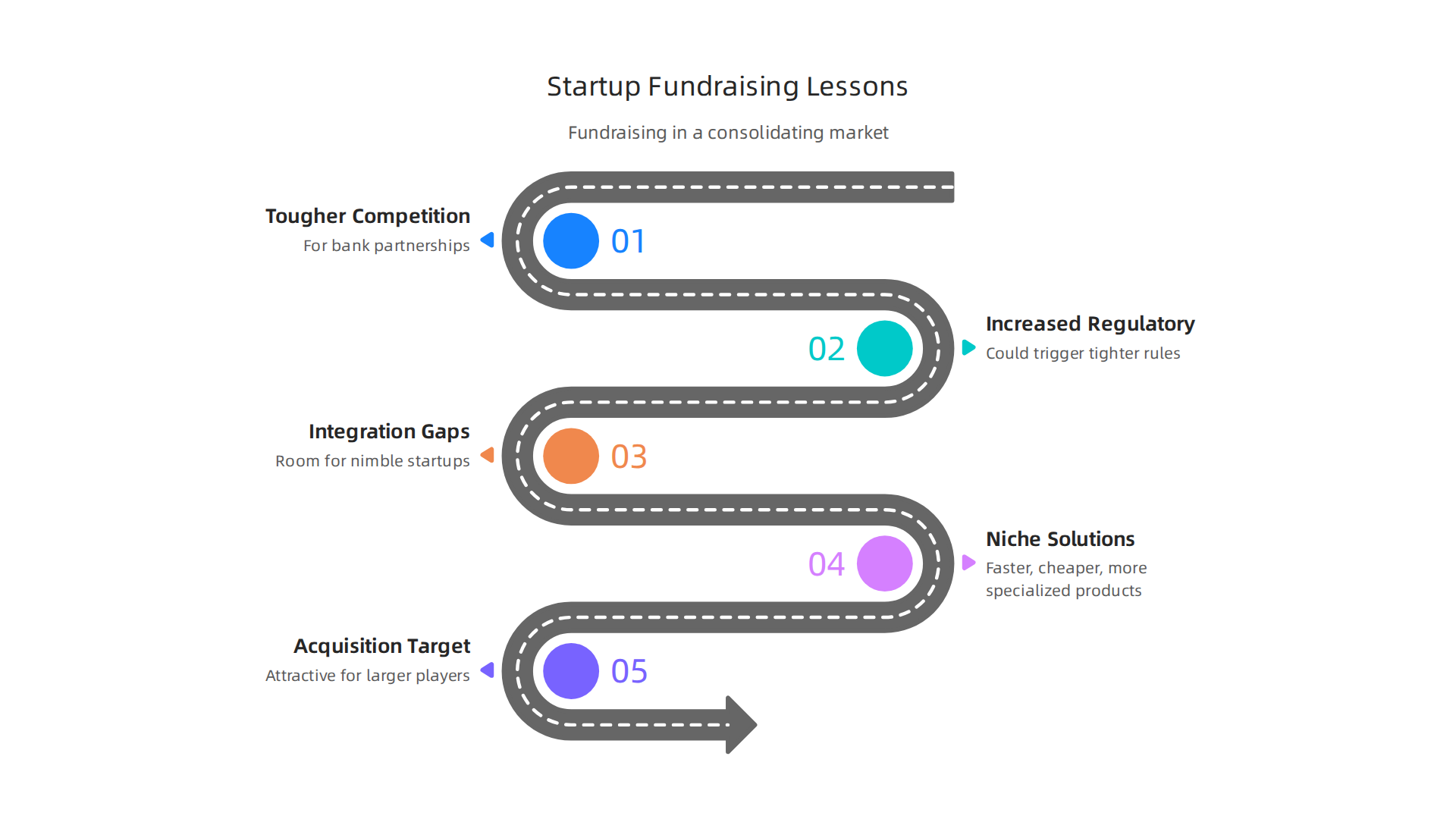
Let’s start with the risks. You may face tougher competition for bank partnerships. Big banks already have limited appetite to work with small fintechs. Now the new combined giant controls both a major card network and a huge lending book. That gives them more leverage to keep partnerships in house. According to this analysis of the Capital One and Discover merger on LinkedIn, the deal creates further concentration in an already top heavy industry. That means fewer doors may be open for you at traditional banks.
Increased regulatory attention is another concern. Regulators have been watching the fintech bank model closely for years. A merger this large could trigger tighter rules on how startups partner with banks or handle consumer data. If you rely on bank partnerships for your product, stay ready for new compliance requirements.
But here is the other side. Big mergers also create gaps and opportunities. The combined company will spend years integrating technology systems and cultures. That leaves room for nimble startups to step in with faster, cheaper, or more specialized solutions. For example, if you build a lending platform for a specific niche, a larger player like Capital One may want to buy you instead of building from scratch. That makes you an attractive acquisition target.
Smart founders already study M&A trends to position themselves as strategic partners or potential buys. Understanding how consolidation reshapes competition helps you make better fundraising decisions.

For a deeper look at how private equity consolidation works in the financial world, check out how KKR private equity became one of the most powerful names in finance. Those same dynamics are now playing out in banking and payments.
Your takeaway is simple. The capital one discover merger is a signal that consolidation is accelerating. Position your startup to be either a disruptive partner or a desirable target. Either way, staying informed on M&A trends will give you an edge when you sit down with investors.
Future Outlook: Capital Market Trends Post-Merger
The capital one discover merger changes more than just two companies. It reshapes the entire banking and payments landscape for years to come. Here is what we can expect next.
More M&A Is Coming for Mid-Sized Banks
Regional banks and credit card issuers now face a clear choice. They can grow bigger through their own deals or risk getting squeezed. The combined company controls roughly $660 billion in assets and a major payment network. That puts pressure on competitors to find their own path to scale.
The good news for those considering deals? The process is getting faster. According to the U.S. Bank M&A Outlook for 2026 and Beyond, regulatory approval timelines have dropped sharply. Deals that once took over six months now clear in under 150 days. That speed makes strategic acquisitions more realistic for mid-sized players.
Regulatory Outcomes Set the Precedent
This deal also creates a blueprint for future consolidation involving payment networks. Regulators approved the transaction even with antitrust concerns on the table. That signals they are open to carefully structured mergers that create clear efficiencies.
But the approval did not come without strings attached. As part of the deal, Capital One agreed to a $425 million settlement related to savings account practices. Future transactions will likely face similar requirements around consumer protection and fair lending. The official announcement of the Capital One Completes Acquisition of Discover lays out the full terms and timeline.
Digital Banking Shifts the Competitive Picture
Here is an interesting twist. Open banking and mobile-first banking are actually helping reduce antitrust worries. When consumers can open a new account or switch banks from their phone in minutes, the market stays competitive even after a big merger. Digital challengers like Chime, SoFi, and others keep pressure on traditional players.
This trend matters for founders because it changes how investors think about market power. A combined Capital One Discover still faces real competition from nimble fintechs. That dynamic could encourage regulators to approve more bank mergers in the future.
What This Means for Your Fundraising Strategy
The wave of consolidation creates both risks and openings for startups. If you build in lending, payments, or banking infrastructure, you need to track how bigger players are repositioning. Some founders will find acquisition opportunities. Others will face tougher competition for partnerships.
Staying informed on these shifts is key. Understanding how large institutions like capital management services operate helps you spot emerging trends early. For daily intelligence across AI, tech, and financial services, The Deep View Newsletter delivers clear updates that can give you an edge when you walk into investor meetings.
The capital one discover merger is not the end of a story. It is the beginning of a new chapter. The founders who pay attention to these market trends will be the ones who raise their next round with confidence.
Expert Perspectives on the Merger’s Impact on Venture Capital
Venture capitalists are paying close attention too. The capital one discover merger does not just reshape banking. It also changes how VCs think about fintech investments. Here is what top experts say about the impact on startup funding and dealmaking.
VCs Are Reassessing Fintech Investment Theses
Investors who focused on payments and consumer lending are now rethinking their approach. The combined company becomes the largest credit card lender in the US. That scale makes it harder for small fintech startups to compete in those same areas. According to the 2026 fintech and venture capital predictions from QED Investors, exit markets are heating up but the nature of exits is shifting. More fintechs are acquiring other fintechs to consolidate market share. That means VCs need to back startups that can either become acquirers themselves or offer something truly unique that large players cannot easily copy.
Firms like Big Think Capital and Capital World Investors are watching how the new entity behaves. If the combined company uses its data advantage to lock in customers, early-stage lending apps will struggle to gain traction. The smart money is moving toward niches where size does not give an automatic edge.
Fewer Exit Opportunities for Fintech Startups
Here is the tough news for founders. The capital one discover merger reduces the pool of potential acquirers. When two of the biggest independent players combine, there is one less buyer at the table. That is a real problem for startups that hoped to sell to a large financial institution. Many VCs now expect that consolidation will continue across the sector. More regional banks will pursue deals, and that could shrink the exit landscape further.
But not all hope is lost. The need for modern technology inside banks is growing fast. Startups that build B2B tools for compliance, fraud detection, and data analytics will find strong demand. The combined company itself will need vendors to help integrate its systems. That creates partnership opportunities that do not require an acquisition.
The Bright Spot: B2B Fintech Demand
On the positive side, the merger increases the need for digital transformation services. Banks are racing to upgrade their tech stacks, and they want outside help. Startups that sell software for regulatory reporting, AI-driven risk management, or customer onboarding are in a sweet spot. VCs are actively funding these areas because the buyers are big and the contracts are sticky.
If you are a founder building a B2B fintech solution, the timing is good. Focus on solving real pain points that large institutions face after mergers. For example, helping them merge customer data or streamline compliance across different systems. That kind of value gets noticed by both VCs and potential corporate partners.
To navigate this shifting landscape, you need clear data on where investor dollars are flowing. Check out our guide on data-driven fundraising strategies for 2026 to align your pitch with what VCs are actually looking for right now. The founders who adapt to this new reality will still find ways to raise capital and grow.
Summary
This article explains Capital One’s $35.3 billion acquisition of Discover, why it matters, and how it reshapes the U.S. credit card and banking landscape. It walks through the deal’s timeline, the strategic motive—gaining Discover’s payment network to capture fees and control the transaction stack—and the regulatory review, including Fed and OCC approvals plus enforcement conditions. The piece examines market effects on interchange fees, rewards programs, and how smaller banks, credit unions, and fintechs will face new pressure. It also covers investor reaction, expected cost synergies, and integration risks, then translates those developments into practical lessons for startup founders and VCs about fundraising, M&A positioning, and B2B opportunity areas. Readers will come away knowing how consolidation changes partnership windows, where to look for acquisition or vendor opportunities, and what steps founders should take to adapt their strategy.