

Introduction
You have a great idea. You have a solid team. And you have the drive to build something real. But in 2026, that alone won’t get you funded.
Here’s the truth. Seed stage fundraising is tougher right now than it has been in years. The number of seed deals dropped by 56% between early 2022 and late 2023, even though people kept starting companies at a steady pace, according to J.P. Morgan. And the trend has not fully reversed. By early 2026, pre-seed and seed rounds made up only about 27% to 28% of all venture deals, one of the lowest shares in recent memory.
That means more founders are chasing fewer checks. Meanwhile, investor caution is still high. Macroeconomic shifts, market uncertainty, and a stronger focus on proven traction have changed the game. If you are trying to find angel investors or navigate the stages of startup fundraising, you need more than just a good pitch deck. You need a strategy that matches what 2026 actually demands.

So what does seed enterprise investment look like today? It means knowing where valuations sit. It means understanding what makes an angel investor say yes right now. And it means positioning your startup as a lower risk bet in a high caution market. For example, AI startups are seeing seed valuations about 42% higher than non AI peers, per data from Qubit Capital. That kind of premium shows how much sector focus matters.
This article is built to help you cut through the noise. We will walk through data driven strategies and expert backed insights that can help you build a compelling fundraising story. No fluff. Just what works in 2026.
If you want to stay ahead of shifting investor trends, subscribe to The Deep View for daily AI and tech market intelligence that helps you make smarter fundraising moves.
Understanding the Seed Enterprise Investment Landscape in 2026
Here is some good news. After a rough patch in 2023 and 2024, global seed funding started bouncing back in early 2026. Investors are putting money back to work, especially in areas like AI, climate tech, and health. But the recovery is not even across the board.
You still need to know the rules of the game in 2026. Let’s look at the data.
The macro picture: a cautious rebound
The number of seed deals dropped sharply a couple years ago. Between early 2022 and late 2023, seed deals fell by 56%, even though people kept starting companies at a steady pace, according to J.P. Morgan. By early 2026, pre-seed and seed rounds made up only about 27% to 28% of all venture deals, according to the CDP Center. That is one of the lowest shares in recent years.
But here is the shift. In Q1 2026, total capital deployed is up, but the number of deals is still shrinking. Reach Capital reports that Q1 2026 saw under 4,000 deals, down from over 5,000 in previous periods. This means the money is concentrating into fewer, stronger startups.
Valuations vary by region and sector
Where you are based matters a lot for your seed valuation.
- United States: Valuations remain the highest on average. US enterprise software VC is heavily tilted toward AI. Silicon Valley Bank notes that 65% of US enterprise software venture capital went to AI startups in 2025. That trend continues into 2026.
- Europe: Valuations are lower but stabilizing. Investors here tend to be more conservative and want to see more traction before writing a check.
- Asia: Later seed rounds are growing fast, especially in markets like Singapore and India where investor activity is rising.
For a deeper look at how the US startup market breaks down, check out this guide to find a trusted list of startups in the USA for smarter fundraising decisions. Knowing the landscape can help you target the right investors.
Sector premiums are real
If you are building an AI startup, you are in luck. Seed stage AI startups typically get valuations about 42% higher than non AI peers, according to Qubit Capital. This premium is driven by strong demand and early market excitement.
But that does not mean other sectors are dead. Climate tech and health are also drawing serious investor attention. The key is showing how your startup fits into a high growth trend.
What investors want now
Investor sentiment in 2026 is cautiously optimistic. But here is the catch. Diligence cycles are longer. Investors are taking more time to check your numbers, your team, and your market. They want to see real traction, not just a pitch deck.
You need to show:
- Clear revenue or user growth
- A strong understanding of your unit economics
- Proof that your product solves a real problem
- A defensible position in your market
If you are early and still figuring out product market fit, you might need to look into headstart funding options like grants or angel rounds before going for a full seed round.
Regional differences in deal terms
The table below shows how valuations and deal terms differ across major regions in 2026:
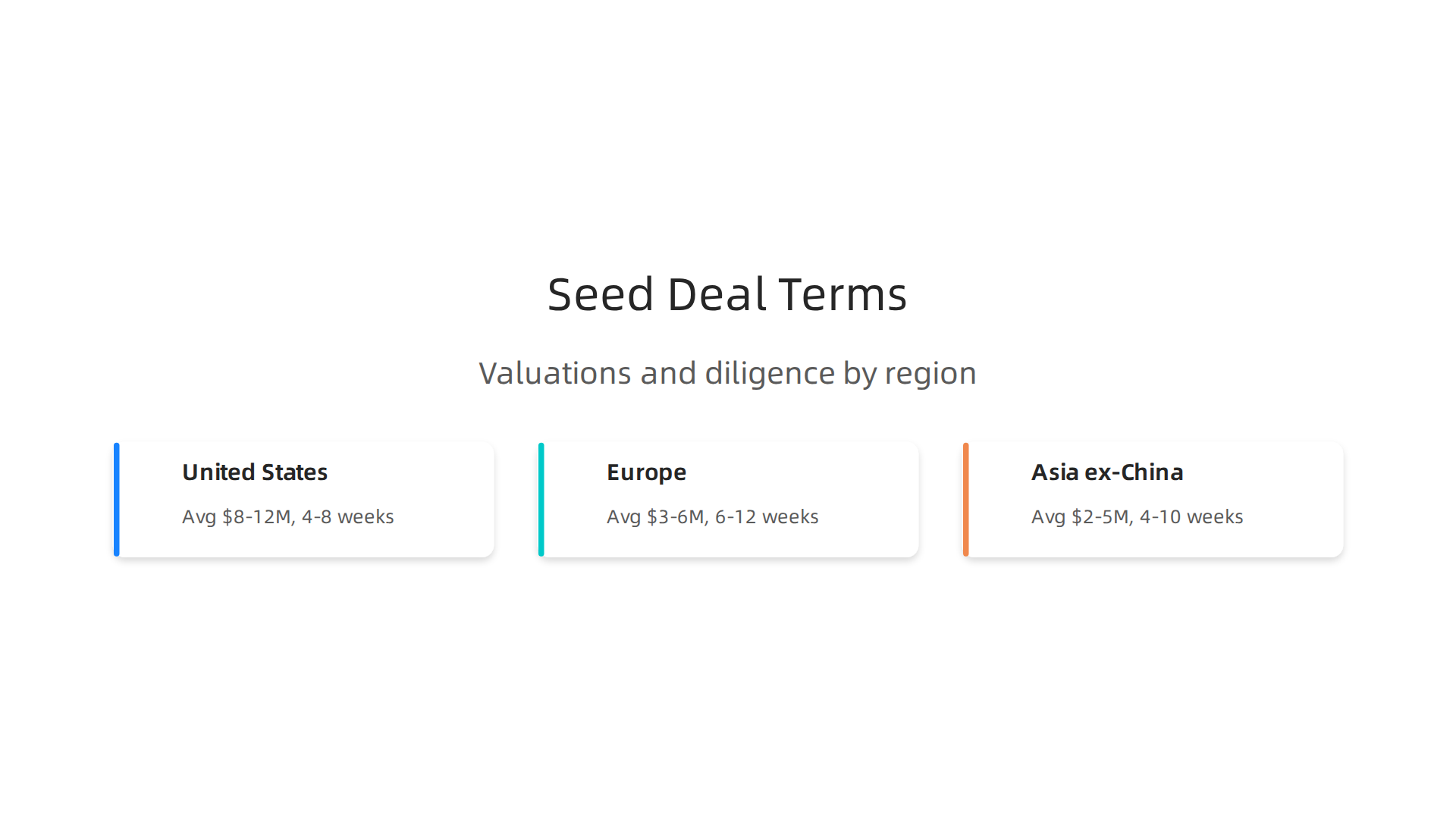
| Region | Average Seed Valuation | Investor Diligence Time | Popular Sectors |
|---|---|---|---|
| United States | $8M – $12M | 4-8 weeks | AI, enterprise software, health |
| Europe | $3M – $6M | 6-12 weeks | Climate tech, fintech, SaaS |
| Asia (ex-China) | $2M – $5M | 4-10 weeks | E-commerce, AI, mobile |
These numbers are rough averages. Your actual valuation will depend on traction, team, and timing.
The bottom line for founders
Seed enterprise investment in 2026 is not about blasting your deck to 500 investors. It is about being strategic. You need to pick the right region, the right sector, and the right timing. And you need to be ready for a longer, more detailed conversation.
Stay up to date on where the smart money is flowing. That kind of intelligence can make or break your fundraising timeline. Subscribe to The Deep View for daily AI and tech market updates that help you move faster and smarter.
Key Criteria Investors Use for Seed and Early-Stage Deals
Now that you understand the seed enterprise investment landscape, let’s talk about what actually makes investors say yes.

The days of raising money on a slick pitch deck and a big vision are mostly gone. In 2026, investors want proof. And they are looking at three things more than anything else.
Founder-Market Fit Comes First
Here is the truth. Investors bet on people first. They want to know that you are the right founder for this specific problem. That is what founder-market fit means.
According to CRV’s guide on what seed investors look for in 2026, the team quality and your personal connection to the problem you are solving matter more than almost anything else. Investors ask questions like: Why you? Why now? What do you know about this space that nobody else does?
Strong founder-market fit shows up in a few ways:
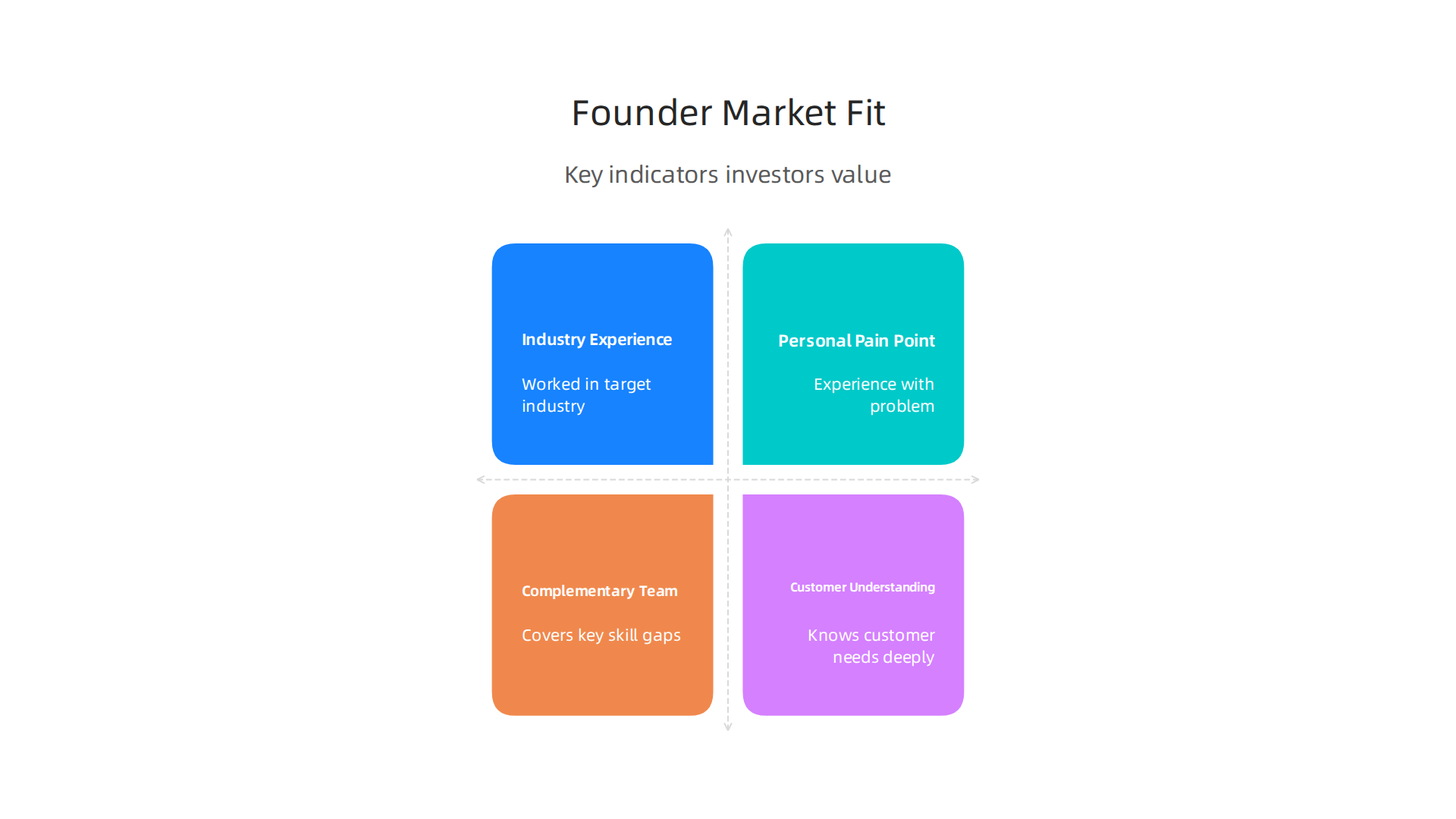
- You have worked in the industry you are targeting
- You have personal experience with the pain point
- You have built a team that covers the key skill gaps
- You can talk about customer needs without reading notes
If you can show deep insider knowledge, you build trust fast. And trust is what gets a check written.
Traction Beats Ideas Every Time
Here is the cold truth for 2026. Pure idea pitches are losing ground. Investors want to see traction, even at the seed stage.
Traction can mean a few things. You might have early revenue. You might have a growing user base. You might have strategic partnerships or letters of intent from future customers. The key is showing that someone besides you wants what you are building.
The TalkingSeed guide on what investors want in 2026 notes that stronger seed rounds typically show between $500K and $1.5M in annual recurring revenue (ARR). For SaaS startups, monthly churn needs to stay under 8% to 10%. These are the numbers that make investors pay attention.
Think of it this way. Traction de-risks the deal. It shows that your idea works in the real world, not just on a slide.
Valuation Benchmarks Depend on Where You Are
Setting the right valuation for your seed round is tricky. You do not want to ask for too much and scare investors off. You do not want to ask for too little and give away your company.
The Pitchwise guide to startup funding rounds in 2026 breaks down current benchmarks. Seed round medians are around $3M at valuations between $5M and $15M, depending on your sector and traction. But these numbers shift a lot based on region and industry.
The best way to set your valuation is to look at comparable companies. Find startups in your space, in your region, at a similar stage. See what they raised and at what valuation. That comparable analysis gives you a realistic target.
If you want to understand more about the different types of capital available during the early stages of startup fundraising, check out this guide on capital group American funds and what startup founders need to know. It helps you see the full picture of who might write your first check.
The Red Flags That Kill Deals
Investors also look for reasons to say no. And in 2026, they are watching for specific red flags.
The Fundable Startup guide for 2026 highlights that investors now demand capital efficiency, profitability, and validated unit economics. If you cannot show that your numbers work, they walk away.
Common red flags include:
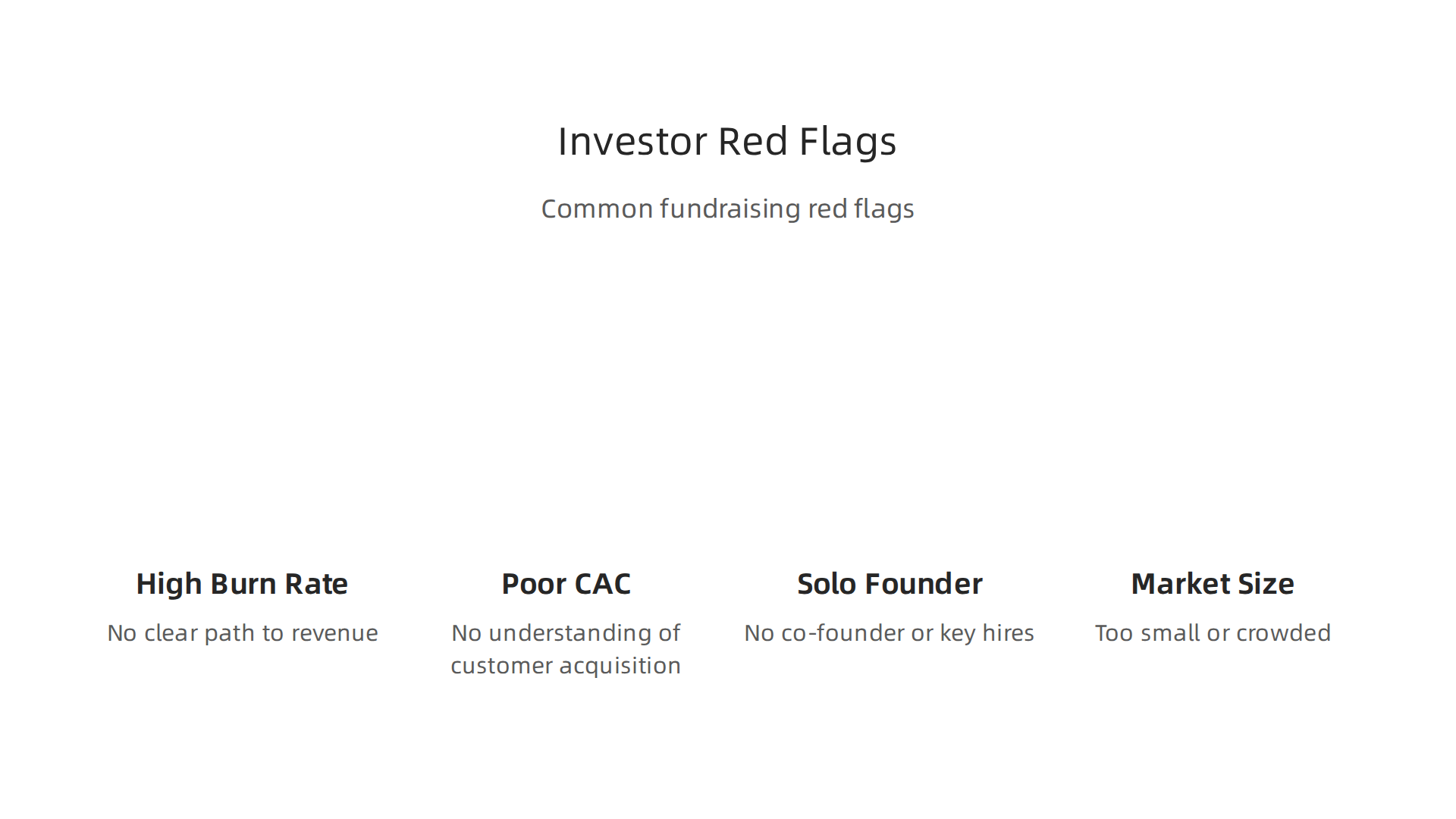
- High burn rate with no clear path to revenue
- Poor understanding of customer acquisition cost
- A solo founder with no co-founder or key hires
- A market that is too small or too crowded
Avoid these by getting your financial model right early. Know your unit economics inside and out.
Putting It All Together
Investors in 2026 are looking for three things: a founder who fits the market, real traction that proves the idea works, and a valuation that makes sense for your region and sector. Nail all three, and you have a strong chance of closing your seed round.
Want to stay ahead of what investors are thinking? Subscribe Free to The Deep View for daily AI and tech market updates that help you spot trends before your competitors do.
Navigating the Fundraising Process: From Pitch to Term Sheet
So you know what investors look for. Now comes the hard part. You have to go from preparing to actually raising money. The fundraising process can feel overwhelming, but if you break it down, it is a lot simpler than it seems. Let’s walk through it step by step.
Your Pitch Deck Tells a Story, Not Just a Product Demo
Here is the biggest mistake I see founders make. They treat their pitch deck like a product manual. They list features, show screenshots, and talk about how great the technology is. Investors do not care about that yet.
Your pitch deck needs to tell a structured narrative backed by data. According to Y Combinator’s guide on building seed round pitch decks, the best decks follow a clear story: problem, solution, market, traction, team, and ask. That is the formula that works.
A strong seed round pitch deck communicates your startup’s vision, business plan, and critical metrics in a way that makes investors want to learn more. The key is to show that you understand the market deeply and that you have the numbers to back it up.
The slides that matter most? Traction, Team, and Market. If those three are weak, nothing else saves you.
Term Sheets Are Where Deals Live or Die
Once you get a verbal yes, the term sheet arrives. And this is where many founders make costly mistakes.
A term sheet is a non-binding document that outlines the key terms of the investment. You need to understand a few critical clauses before you sign anything.
Valuation is the big one. It determines how much of your company you give away. But do not get too attached to a specific number. Focus on the overall deal structure instead.
Liquidation preference tells you who gets paid first when the company sells. A 1x non-participating preference is standard and fair. Anything more aggressive can hurt you later.
Anti-dilution provisions protect investors if you raise money at a lower valuation in the future. Full ratchet anti-dilution is harsh. Weighted average is more standard.
If you are unsure about any clause, ask questions. And always get a lawyer who specializes in startup fundraising. It is worth the cost.
Common Pitfalls That Slow You Down
Even with a great pitch and a fair term sheet, you can trip up. The biggest pitfalls in 2026 include over-optimistic financial projections and poor due diligence preparation.
Investors will check your numbers. If your revenue projections show hockey-stick growth with no explanation, they will assume you are guessing. Be realistic. Show your assumptions.
Also, have your documents ready. Financial statements, cap table, customer contracts, and IP assignments should be organized before you start talking to investors. If you scramble when they ask for these, you look unprepared.
Understanding the stages of startup fundraising helps you know what to expect at each step. Seed rounds, Series A, and beyond all have different timelines and expectations.
Your Action Plan
Here is your simple checklist for navigating the process:
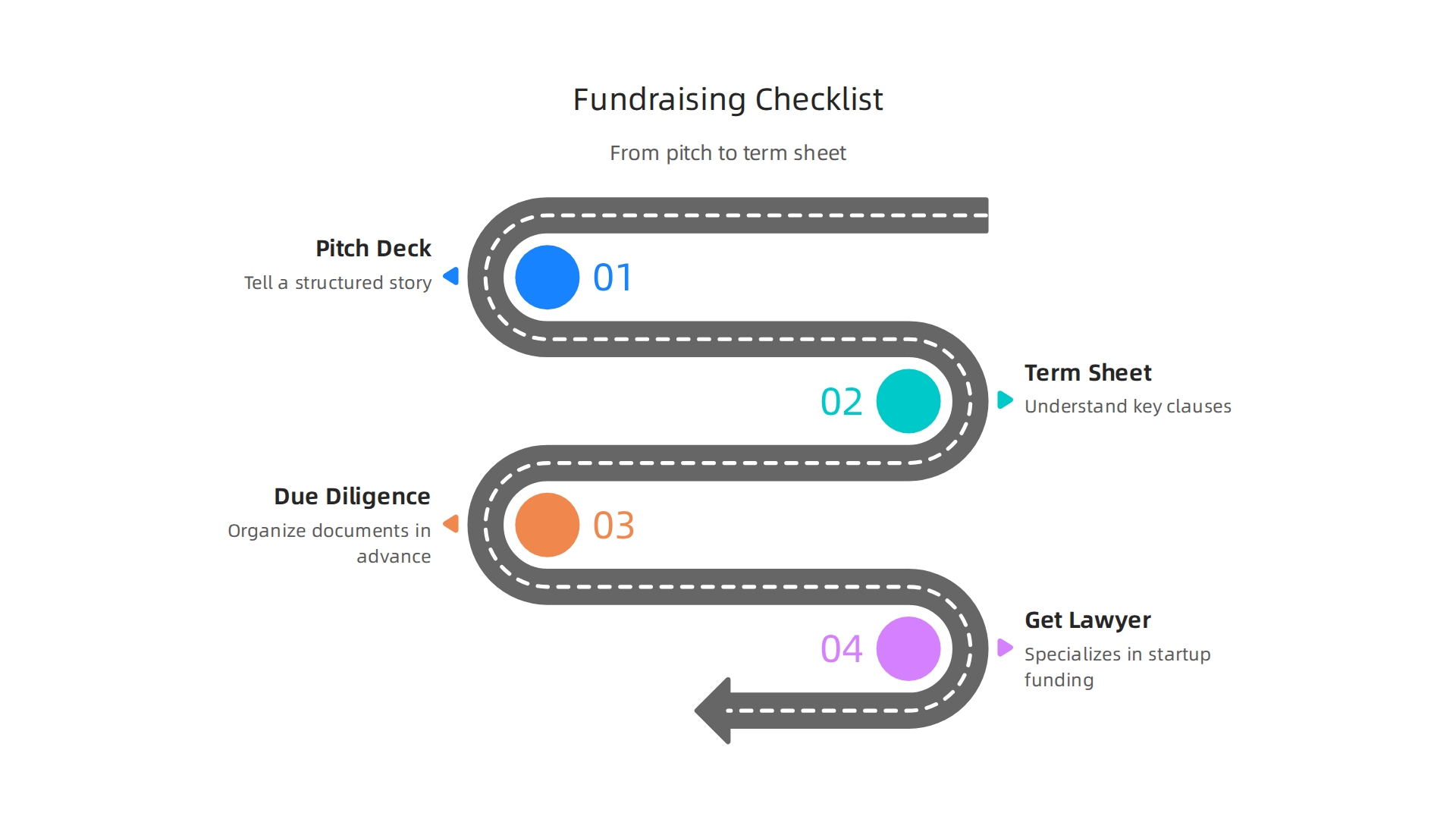
- Build a pitch deck that tells a story, not a product demo
- Learn the key term sheet clauses before you negotiate
- Prepare your due diligence documents in advance
- Get a lawyer who knows startup funding
Follow these steps and you will move from pitch to term sheet with confidence.
Want to stay up to date on the latest fundraising trends and investor behavior? Get Free Updates from The Deep View Newsletter for daily AI and tech market insights that help you raise smarter.
Overcoming Information Overload and Lack of Transparency
Here is something that surprises most founders. You spend weeks preparing your pitch deck, memorizing your numbers, and practicing your story. But when you actually start talking to investors, you realize you have no idea what they really want.
The problem is not your startup. The problem is information overload.
There are hundreds of newsletters, blogs, podcasts, and social media posts about fundraising. Everyone claims to have the secret formula. But most of it is noise. You waste hours reading content that does not apply to your stage, your industry, or your geography.
And the lack of transparency makes it worse. Investors rarely publish their exact criteria. So you guess. You send cold emails to the wrong people. You base your valuation on outdated numbers.
Use the Right Tools to Cut Through the Noise
In 2026, the smartest founders use data platforms and curated databases to find real answers. Instead of relying on random blog posts, they look at actual market benchmarks. For example, seed-stage investors in 2026 typically look for startups with $500K to $1.5M in annual recurring revenue (ARR) and monthly churn under 8 to 10 percent, according to TalkingSeed.
Knowing numbers like that helps you understand the seed enterprise investment landscape. It tells you if you are ready or if you need to build more traction first.
You can also use platforms that track investor preferences by stage and sector. Some tools even provide AI-driven valuations and targeted investor matching, like the approach SeedScope describes in its 2026 fundraising guide. These tools give you clarity that saves weeks of wasted effort.
Lean on Curated Reports and Founder Communities
Another powerful way to cut through the noise is to rely on trusted sources. Curated industry reports from groups like the Founder Institute or Silicon Valley Bank give you real data on deal sizes, valuation trends, and investor behavior. These are far more reliable than random social media advice.
You should also join active founder communities. Other entrepreneurs who have recently raised capital can tell you exactly what worked for them. They can help you understand the angel investor meaning in practical terms, not textbook definitions. They can share tips on how to find angel investors who actually write checks in your space.
If you are still early in your journey, look for programs that offer headstart funding or pre-seed grants. Some governments and accelerators provide non-dilutive capital to help you build an MVP before you talk to VCs. Understanding the stages of startup fundraising helps you know when to apply for each type of money.
Your Shortcut to Smarter Fundraising
The key is to stop guessing and start using reliable signals. Use data platforms, read curated reports from respected sources, and lean on founders who have done it before. You will move faster and make fewer mistakes.
For daily analysis that cuts through the noise and gives you real fundraising intelligence, Subscribe Free to The Deep View Newsletter. It covers the latest investor trends, deal data, and tech market insights in plain language.
Building Competitive Advantage and Standing Out
You now know where to find reliable data and how to cut through the noise. But knowing the numbers is only half the battle. The real question is: how do you make investors pay attention to you?
In 2026, the bar for seed enterprise investment is higher than ever. The number of seed deals has dropped significantly. According to J.P. Morgan, seed deals declined 56% between early 2022 and late 2023, even though company formations stayed stable. That means investors are more selective. You need a clear advantage to stand out.
Your Unique Value Proposition Is Non-Negotiable
Investors see hundreds of decks every month. Yours must immediately answer: What real, sizable problem do you solve that nobody else does?
A unique value proposition is not a tagline. It is a concrete difference. Maybe your AI model makes enterprise workflows 10x faster than existing tools. Maybe you have a proprietary dataset that competitors cannot access. Whatever it is, show it clearly.
According to Y Combinator’s seed deck template, the first slides should frame the problem and your solution with sharp focus. Investors want to see that you understand the market better than anyone else. Get specific about who you serve and how you are different.
Early Traction Speaks Louder Than Vision
Here is a hard truth that many founders ignore. Vision is cheap. Proof is rare.
Demonstrating early traction is the most powerful way to boost investor confidence. This does not mean you need millions in revenue. Even pilot customers, letters of intent, or a strong waitlist work. The key is to show that real people want what you are building.
The numbers back this up. A 2026 report from Qubit Capital shows that seed-stage AI startups get valuations about 42% higher than non-AI peers. Why? Because AI startups often have faster adoption curves and clearer early signals. Investors pay a premium for traction potential.
If you are still in the earliest stages, consider programs that offer headstart funding to build an MVP. Once you have a working product, even a few paying customers can transform your pitch from a story into a proven model.
Strategic Partnerships and Advisors Send Strong Signals
You do not have to go it alone. Strategic partnerships with established companies or credible advisors act as powerful validation. When a well-known industry expert agrees to advise your startup, it tells investors that someone with experience believes in you.
Same goes for partnerships. A pilot program with a Fortune 500 company, even a small one, shows that your solution has real enterprise potential. According to a 2025 analysis of pitch decks from Powderkeg, investors consistently rank the Traction, Team, and Market slides as the most important. Your team slide becomes much stronger when you include advisors with relevant domain expertise.
If you want to learn more about building credibility through smart partnerships, check out our guide on how to find a trusted list of startups in the USA for smarter networking.
Your Next Step
You have the data. You know how to find the right signals. Now it is time to build a pitch that makes investors stop scrolling and start asking questions. Focus on your unique value, show that traction with real proof, and surround yourself with credible partners and advisors.
Stay ahead of the latest investor trends and deal data by subscribing to The Deep View. It delivers clear daily insights to help you raise smarter in 2026.
Leveraging Networks and Advisory Relationships
You have sharpened your unique value proposition. You have early traction signals. But now comes the hard part: getting in the door. A brilliant pitch deck means nothing if the right investors never see it.
Here is the reality in 2026. Warm introductions are the strongest channel for securing investor meetings.

Cold outreach works sometimes, but the odds are brutally low. According to one analysis by Evalyze, a warm intro makes you 13 times more likely to close a round than cold emailing. Another study from Flowlie puts the success rate of warm intros near 50 percent. The gap between those numbers and the near-zero reply rate of cold outreach is where most fundraising dreams stall.
So how do you build the network that produces those warm intros?
Start with angel investors and industry mentors. Understanding the angel investor meaning is key. Angels are high-net-worth individuals who invest their own money at the earliest stages. They often provide more than capital. They bring connections, credibility, and strategic advice. To find angel investors, look at your own alumni network, local startup meetups, and platforms like LinkedIn. The warmest intros come from people you already know or can reach through a mutual contact.
Accelerators are another powerful gateway. Programs like Fast Forward, VentureWell, and The Vetted Accelerator offer structured mentorship, cohort networking, and sometimes headstart funding. But not all accelerators deliver equal results. Research from Wharton shows that founder pre-entry knowledge and program design are key drivers of growth. Choose accelerators that fill your specific gaps and match your stage. Many also host demo days where you pitch a room full of qualified investors.
Manage your network proactively. Don’t wait until you need money to start building relationships. Attend industry events. Participate in demo days. Use LinkedIn strategically to share insights and engage with investors’ content. The goal is to be on their radar long before you ask for a meeting. When you do need a warm intro, you can map your existing connections. A practical approach is outlined in M Accelerator’s five-step guide: map your network, choose the right investors, craft your pitch, get the intro, and follow up.
Advisory relationships also send strong signals. When a respected industry figure advises your startup, it tells investors that someone with domain expertise believes in you. That kind of social proof is gold during a seed enterprise investment round. It helps de-risk your team and validates your market approach.
The bottom line: seed enterprise investment flows through trusted connections. Start building those bridges today. If you want to stay ahead of the latest investor trends and see who is actively writing checks, subscribe free to The Deep View for daily AI and tech insights that help you raise smarter.
Summary
This article explains how seed enterprise fundraising changed in 2026 and what founders must do differently to raise money. It reviews the macro trends—fewer seed deals, concentrated capital, and sector premiums (notably AI)—and shows how regional differences affect valuations and diligence timelines. The piece walks through the three investor priorities today: founder-market fit, demonstrable traction, and realistic valuation, and it outlines practical metrics (ARR ranges, churn targets) that get attention. You’ll also get a clear walkthrough of the process from pitch deck to term sheet, common pitfalls to avoid, and how to use tools, curated reports, accelerators, and warm intros to improve your odds. Read this to understand what investors are really checking in 2026 and to leave with a concise action plan for preparing documents, negotiating terms, and targeting the right investors.