

Starting a new business, or a startup, is exciting! But for these new companies to grow big and make a real difference, they need help. They need money and smart advice, which comes from people or groups called investors. Investors, in turn, look for promising startups where their money can grow. This dance between investors and startups is key to making new ideas come to life and creating jobs.
The Problem: Not Always on the Same Page
Even though investors and startups need each other, they often face challenges in connecting well. Think of it like this: A startup founder is super excited about their new idea and can see all the amazing things it can do. An investor, however, might be looking at different things, like how much money the startup will make, or how quickly it can grow. This can lead to "misaligned expectations" where both sides want different things or expect different outcomes.
Also, there can be "information gaps." Startups might not know how to best talk about their plans in a way investors understand. And investors might not always find the right startups because many deals come from referrals, not just cold calls, meaning connections matter a lot to even get noticed in 2026, according to research from POLITECNICO DI TORINO. When these expectations don’t match or information isn’t clear, it’s harder for money to flow to the right places, and for good ideas to get the funding they need to thrive. For example, investors have very specific things they look for, which are known as private equity investment criteria.
Unlocking Better Growth Together
The good news is that these problems can be fixed. When investors and startups learn to understand each other better and share information openly, amazing things can happen. Stronger connections mean more smart money goes to the right startups, helping them grow faster and stronger. It means founders can offer fair startup equity in exchange for the capital and guidance they need.
This guide will give you a clear roadmap. We’ll show founders how to strategically connect with investors. We’ll also help investors understand how to find and work with the best new companies. We’ll talk about how different kinds of investors, like those using angel investing platforms, think and what they look for. Our goal is to make these important relationships smoother and more successful for everyone.
To stay sharp on market shifts and emerging trends that impact both investors and startups, get cutting-edge insights delivered daily.
The AI Newsletter Worth Reading
Aligning Incentives: Why Investor–Founder Fit Matters
When investors and startups come together, it’s a bit like two different kinds of drivers planning a long trip. Both want to reach the same city, but one might want to get there super fast, while the other wants to enjoy the scenery and take their time. Their goals, or "incentives," are a bit different. This is very true for founders and investors too.
What Drives Investors and Founders?
Investors usually put their money into a startup hoping to get more money back. This is called a financial return. Some investors, like those in a big private equity fund, might want a quick return on their money, meaning they hope the company grows fast and sells for a lot in a few years (an "exit"). They might push for quick decisions and fast growth. Other investors, such as those from certain venture capital firms, might be okay with a longer wait, looking for slow and steady growth that builds something really big over many years. They might also look for "strategic partnerships" that help their other companies. For example, some large investment groups might want a startup to help with their own larger business goals.
Founders, on the other hand, often start a business because they have a big idea or a special vision they want to bring to life. They pour their heart and soul into their company. While they want to make money, they might also care deeply about the product, the company culture, or making a lasting impact. They might be focused on long-term growth and building something that lasts, not just selling it off quickly. Protecting their share of the company, known as startup equity, is also usually very important to them.
When Goals Don’t Match Up
Here’s where things can get tricky. If an investor wants a quick "exit" in three years, but the founder dreams of building a company that will last for decades, their goals don’t line up. This difference in what they want can lead to big problems.
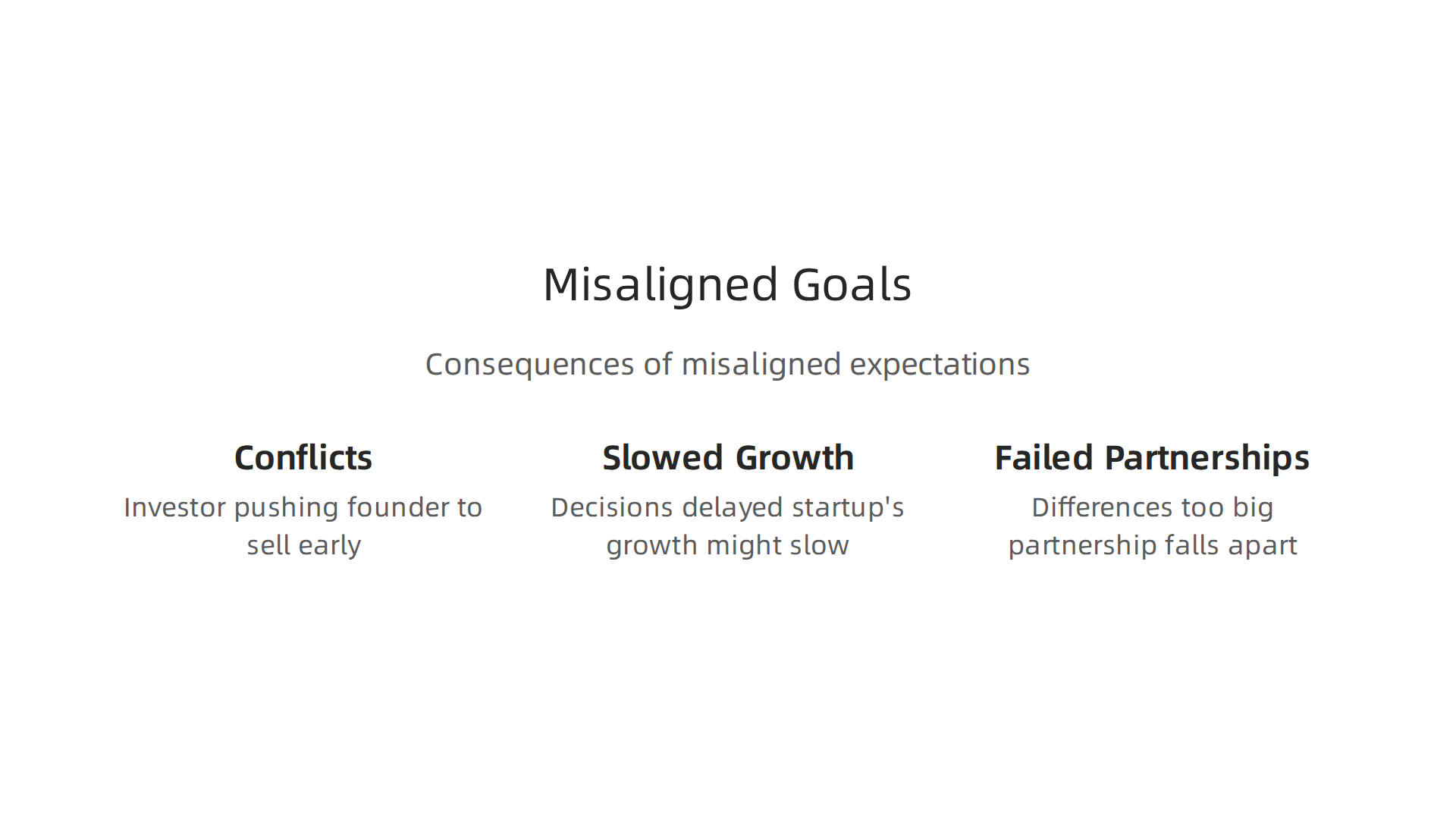
- Conflicts: Imagine the investor pushing the founder to sell the company early, even if the founder thinks it’s not the right time or price. This can cause arguments and bad feelings.
- Slowed Growth: If they can’t agree on the best path forward, decisions can get delayed, and the startup’s growth might slow down. It’s like having two people steering a boat in different directions. This poor alignment can have a real cost, slowing down progress and causing issues according to Forbes in 2026 The Real Cost Of Poor Alignment Between Investors And Founders.
- Failed Partnerships: Sometimes, the differences are too big, and the partnership just falls apart. This is a tough outcome for everyone involved. Experts say it’s key to discuss these tough questions early to avoid major mistakes in founder-investor alignment Founder-Investor Alignment: 5 Critical Mistakes to Avoid.
To make sure things work well, founders and investors need to find a good "fit." This means understanding each other’s goals, how they like to work, and what they expect for the future. It’s about finding a partner who shares your vision, not just your money. Some suggest creating a "working agreement" that outlines how everyone will work together, not just a legal document, to help keep things smooth Navigating The Founder-Investor Dynamic: A Practical Playbook.
How investors evaluate startups: criteria, signals, and red flags
We just talked about how important it is for founders and investors to have goals that match. But how do investors actually figure out if a startup is a good match in the first place? It’s like they have a special checklist they go through to decide where to put their money.

In 2026, finding the right investors and startups to connect is all about looking at specific things.
What Investors Look For: Key Checklist Items
When investors think about putting their money into a company, they usually focus on a few main areas. These are like the big pillars that hold up a strong startup idea. According to a 2026 investor framework, venture capitalists often look at four main things when assessing a startup: the team, product-market fit, total addressable market, and traction metrics What Do VCs Look For? The 4 Pillars Investor Framework.
Here’s a simpler way to think about it:
- The Team: Who are the people running the show?
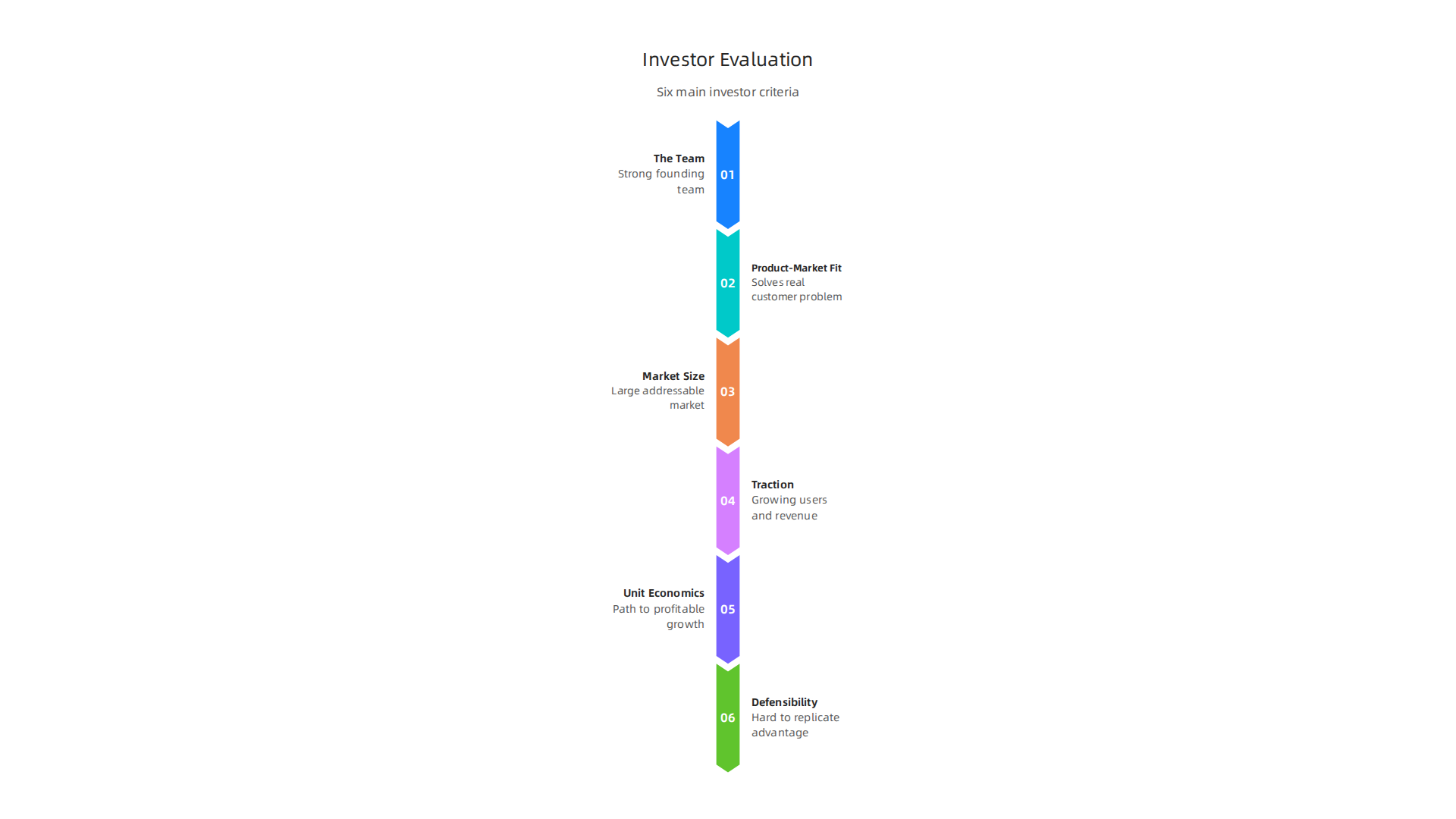
Investors want to see smart, driven founders who know their stuff. They look for experience, passion, and how well the team works together. A strong team can make even a good idea great.
- The Problem and Solution (Product-Market Fit): Does the startup truly solve a real problem for many people? Is there a big group of customers who really need or want this product? This is called "product-market fit." Investors want to know that the product fits well with what the market needs.
- The Big Picture (Market Size): How many people could actually use this product or service? Is it a small group, or is it a huge market that could grow even bigger? Investors like ideas that can reach lots of customers and make a lot of money.
- Proof It’s Working (Traction): This means showing that people are actually using your product and that the business is growing. It could be a lot of users, steady income, or signs that customers love what you offer. This "traction" proves your idea isn’t just a dream, it’s actually happening.
- How the Money Works (Unit Economics): Investors want to understand how much money the startup makes from each customer and how much it costs to get a new customer. Good "unit economics" means the business can make a profit as it grows.
- Hard to Copy (Defensibility): What makes your startup special and hard for others to copy? Is it a unique technology, a strong brand, or a special way of doing things that gives you an edge? This is important for long-term success.
Signals and Red Flags
Besides these main points, investors also look for signals that tell them if a startup is doing well, or if there are problems.
Good Signals:
- Clear Goals: The founders know exactly what they want to achieve and how to get there.
- Strong Growth: Numbers show that the business is expanding fast, whether in users or money coming in.
- Happy Customers: People are not just using the product, but they love it and tell others about it.
- Smart Spending: The startup manages its money well and doesn’t waste funds. Investors want to see that founders are watching key metrics like burn rate and runway in 2026 What investors expect from founders in 2026? – Part IV.
Red Flags (Warning Signs):
- Team Issues: If the founders don’t get along, or important team members leave often, that’s a big warning.
- No Clear Plan: If the startup doesn’t have a solid idea of how to make money or how to grow, investors will be worried.
- Ignoring Feedback: Founders who don’t listen to advice or feedback from others might struggle.
- Unrealistic Expectations: If founders expect too much money for their company too early, or promise growth that isn’t possible, it can scare investors away.
- Too Much "Startup Equity" for Early Investors: Sometimes, founders give away too much of their company early on, which can be a red flag for future investors. This is something that can cause issues for both sides.
Understanding these points helps founders know what to focus on when they are looking for money. For those looking to understand more about finding different kinds of support, learning about specific networks can be very helpful. Discover how to effectively navigate various funding avenues by exploring topics such as mastering the angel investment network to secure seed funding for your startup. Knowing what investors value most helps founders build a stronger company that is more attractive to financial partners like those in venture capital firms or even smaller angel investing platforms.
Want to stay on top of the latest technology shifts that affect startups and investors? Get daily updates that cut through the noise.
The AI Newsletter Worth Reading
The last section helped us see what investors look for. Now, let’s talk about how to find those special investors for your startup. Think of it like a treasure hunt. You need to know where to look and how to ask for help. In 2026, many ways exist for investors and startups to connect, and knowing the best path makes a big difference.
Finding the Right Investor: Channels, Tactics, and Outreach Strategies
Finding the right investor means knowing which "doors" to knock on. Different types of investors hang out in different places.
Where to Find Investors
Here are the main places you can look:
- Accelerators and Incubators: These are programs that help young startups grow fast.

They often provide some initial funding, office space, and lots of advice. Many also have connections to a network of investors. If you’re just starting, joining an accelerator can be a great way to get noticed.
- Angel Networks and Platforms: Angel investors are wealthy individuals who invest their own money in early-stage companies. Angel networks group these investors together, making it easier for founders to find them. Online platforms also connect founders with angel investors. Research shows that angel investors can be found through online platforms, local networks, accelerators, and alumni groups Where to Find Angel Investors: Founders’ Guide 2026.
- Venture Capital (VC) Firms: Venture capital firms manage money from larger investors and put it into promising startups. They usually invest bigger amounts than angel investors. If your startup is growing quickly and has big goals, a VC firm might be a good fit. Some firms, like those focused on mac venture capital, might specialize in certain tech areas.
- Warm Introductions: This is often the best way to meet investors. A "warm introduction" means someone who knows both you and the investor introduces you. It’s like getting a personal recommendation. This often works much better than just sending a cold email.
- Corporate Venture Capital (CVC): Some big companies have their own investment arms that put money into startups. They often invest in companies that align with their business goals. This can be great because you get money and a strategic partner. Learn more about how corporate venture capital is the new power broker in startup funding.
Practical Steps for Reaching Out
Once you know where to look, you need a plan for how to reach out.
- Do Your Homework: Before you contact any investor, learn about them. What kinds of companies do they usually invest in? What stage of startup do they prefer? What are their interests? This helps you know if they’re a good fit and lets you personalize your message.
- Prioritize Warm Introductions: Studies show that warm introductions convert much better than cold outreach. One report from 2026 found that warm intros convert at 30% to 50% to a first meeting, while cold outreach is only 2% to 8% The Startup Fundraising Playbook: From Pre-Seed to Series B. So, try to get introduced by someone they trust. This could be another founder they’ve invested in, an advisor, or a shared contact.
- Craft a Clear Pitch: Your message should be short, clear, and exciting. Tell them what problem you solve, how your product fixes it, and why your team is the right one to do it. Have your key numbers ready too.
- Be Patient and Persistent: Finding the right investors takes time. You might get many "no" answers before you get a "yes." Keep trying, keep learning from feedback, and keep improving your pitch.
- Know Your Value (Startup Equity): When you raise money, investors get a part of your company, called
startup equity. Understand how much of your company you are willing to give up and what a fair deal looks like. This helps you negotiate better. - Use the Right Tools: In 2026, there are many tools that help founders find investors and manage their outreach. Some platforms focus on helping you find warm introductions by mapping your network.
By using these channels and tactics, you can greatly improve your chances of connecting with the right investors and startups that are a good fit for your company’s journey.
After finding potential investors and making connections, the next important step is to understand how those connections turn into real help for your startup. This means looking at the deal terms and thinking about how investors can help you grow in ways that aren’t just about money. For many investors and startups, a good partnership goes beyond just the cash.
Structuring Strategic Partnerships and Deal Terms Beyond Capital
When an investor decides to put money into your company, they will offer you a "term sheet." Think of a term sheet as a basic plan or outline for the investment deal. It’s usually not a final, legally binding contract, but it sets the main rules for how the investment will work. It covers things like how much money is being invested, what percentage of your company the investor gets, and how decisions will be made. Experts say that while a term sheet outlines basic terms, it is a key document for defining the financial and governance rules of an investment round in a startup 2026 An LLM-Powered Agent for Filling Venture Term Sheets from ….
Understanding Key Term-Sheet Clauses
The term sheet includes several important clauses. These parts decide not just how much money you get, but also how much control you keep and what kind of support you receive.
- Control Terms: Investors often want a say in how your company is run, especially as they put in more money. This might mean they get a seat on your board of directors, which is the group that makes big decisions for the company. They might also get special voting rights on certain issues. Even if founders keep most of the voting power at first, control terms can give investors more say over important decisions NEGOTIATING. For example, a venture firm might require approval for big operational decisions, like setting the yearly budget or hiring top leaders YC Series A Term Sheet Template | Y Combinator.
- Economic Terms: These clauses deal with the money side of the deal. They include things like your company’s valuation (how much it’s worth), the price per share, and how much startup equity the investors will get. It also covers how much money founders will get if the company is sold later on, and what happens if there are future rounds of funding that might make your shares worth less.
Strategic Value Beyond Money
Investors don’t just bring cash. The best investors offer "strategic value." This means they help your startup in other important ways, like:
- Advisory and Mentorship: Many investors have a lot of experience building companies. They can give valuable advice, help you solve problems, and guide you through tough decisions.
- Customer Introductions: Investors often have wide networks. They can connect you with potential customers or partners, which can really help your business grow.
- Co-Development and Partnerships: Sometimes, an investor’s main company might want to work with your startup. This could lead to shared projects or even using your product within their own business, giving you a strong partner.
- Hiring Help: Investors can also introduce you to talented people who might join your team.
The Trade-Offs: Control, Dilution, and Support
As a founder, you face a big balancing act.
- Control: Giving up some control is often necessary to get investment. The more money an investor puts in, the more say they might want. You need to decide how much control you are comfortable giving away to get the funding and support you need.
- Dilution: Every time you raise money by selling more shares, your own percentage of ownership (your startup equity) becomes smaller. This is called dilution. It’s a normal part of growing a startup, but you need to understand how it affects you.
- Strategic Support: You should weigh the strategic help an investor can offer against the control you might lose and the dilution you’ll experience. Sometimes, giving up a little more equity or control for an investor who brings amazing connections and advice can be much more valuable than just getting the money from someone who offers less support.
The goal is to find investors who are not just giving you money, but also becoming true partners who can help your company succeed. Thinking about these factors helps you form Strategic Capital Partnerships Unlock Value Beyond Funding. Understanding these deals and the full value investors bring is key for investors and startups to succeed together.
To stay on top of the broader tech world and make even smarter strategic decisions, consider getting regular updates.
Get clear daily AI updates from The AI Newsletter Worth Reading.
To make sure your startup is ready to attract the right investors, you need to prepare well. This means having all your important company information in order and knowing how to tell your story in a way that truly grabs attention. Investors, whether they are focused on mac venture capital or other kinds of funding, want to see a clear path to success and a solid foundation.
How Startups Should Prepare: Metrics, Documents, and Storytelling That Attract Investors
Getting ready for investors is like preparing for a big test. You need to gather all the facts, organize them clearly, and be ready to explain why your startup is the best choice.

This involves showing them key numbers, important papers, and a strong story about your company’s future.
Essential Investor-Ready Materials
When you talk to potential investors and startups, they will expect to see a few key things. These items show them what your company is all about and how well it’s doing.
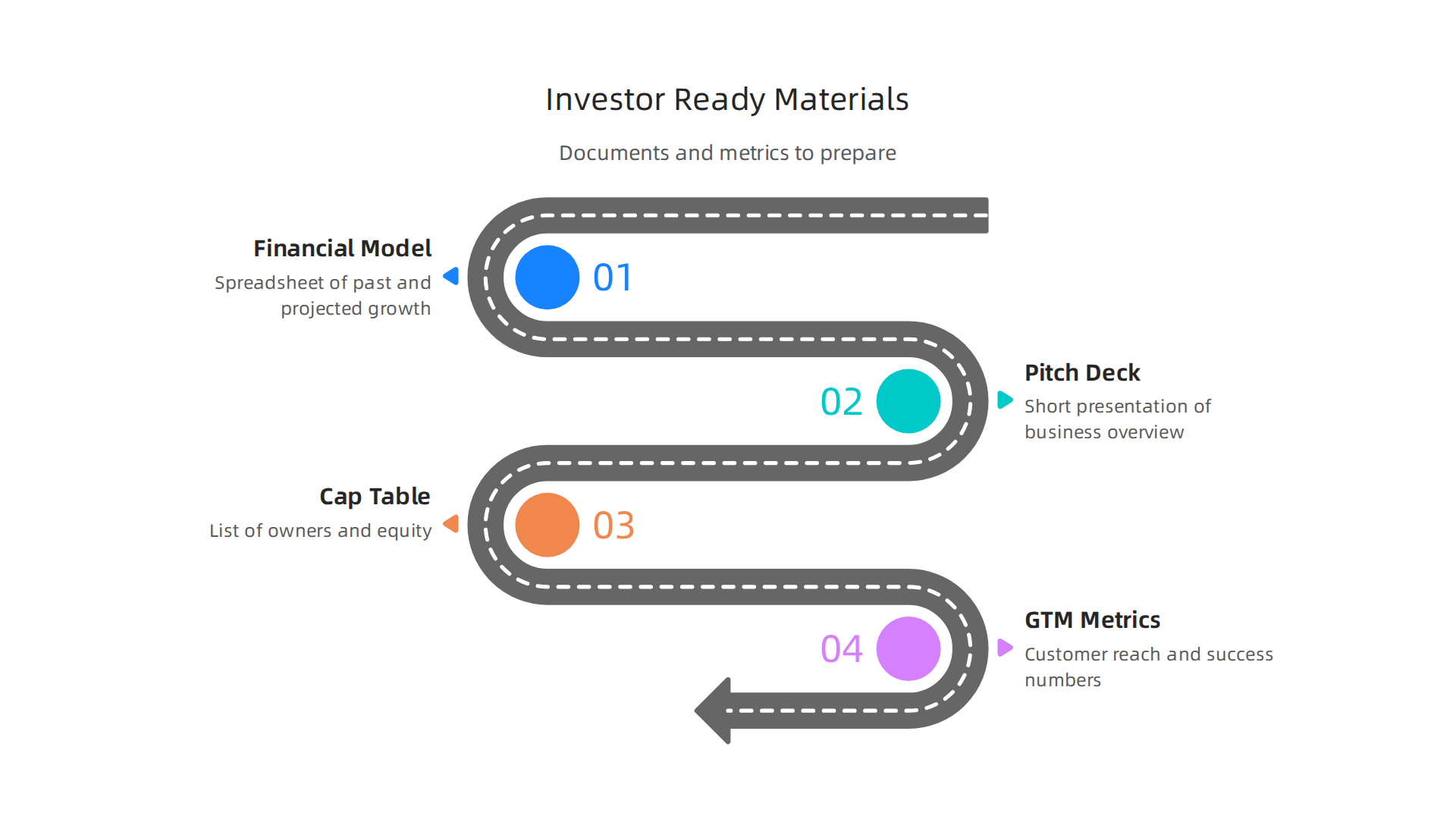
- Financial Model: This is a detailed spreadsheet that shows how your company makes and spends money. It includes your past performance and how you expect to grow in the future. It covers things like sales, costs, and profits. A good financial model helps investors see if your business idea can truly make money and grow over time.
- Pitch Deck: Think of this as your company’s story told through slides. It’s a short presentation that covers the main points of your business. It should explain the problem you solve, your unique solution, who your customers are, how big your market is, your team, and what you’ve achieved so far. It also clearly states how much money you’re looking for and what you’ll use it for.
- Cap Table (Capitalization Table): This document lists all the owners of your company and how much startup equity each person owns. This includes founders, early employees, and any previous investors. It helps new investors understand the ownership structure of your business. Clear equity structures are important for commitment across all involved parties in early-stage tech ventures in 2026 Designing equity and incentive models for early-stage tech ….
- Go-to-Market (GTM) Metrics: These are the numbers that show how you plan to reach your customers and how successful you’ve been so far. This can include how many customers you have, how much it costs to get a new customer, and how much money each customer brings in. Investors look at these to understand your growth strategy and how well it’s working.
Weaving Your Story with Numbers
Having all these documents is a great start, but you also need to tell a compelling story. This is how you connect your numbers to your big vision.
- Connect Past to Future: Show investors how your current achievements (your metrics) prove that your future plans are possible. If you’ve grown your customer base by 10% each month, explain how you will keep that growth going and make it even bigger. Investors look for clear, consistent communication from founders about traction metrics and a realistic path to business success in 2026 What investors expect from founders in 2026? – Part IV.
- Show Your Uniqueness: Explain what makes your startup special and hard to copy. This is called "defensibility." It could be your unique technology, a strong brand, special partnerships, or a loyal customer base.
- Highlight Your Team: Investors often bet on the team as much as the idea. Share your team’s experience, skills, and passion. Show why your team is the right group to make this vision a reality.
- Be Prepared to Explain Everything: Investors will ask many questions. Be ready to talk about your numbers, your strategies, and your challenges. Show that you understand every part of your business deeply. This readiness is crucial whether you are approaching large venture funds or smaller angel investing platforms.
By organizing your materials and practicing your story, you’ll be much more confident and attractive to potential investors and startups looking for exciting new opportunities.
Once you have successfully attracted investors and secured funding, the journey doesn’t end there. Actually, it’s just the start of building strong, lasting relationships that can help your startup grow even more. Investors and startups work best together when there is clear communication and mutual support.
Post-investment: how to build and sustain strategic investor relationships
Getting money from investors is a big step, but keeping them happy and involved afterward is just as important. These relationships can bring much more than just funds. They can offer guidance, open doors, and even help with future funding rounds.

Keep Investors Informed and Engaged
To build good relationships, you need to keep your investors in the loop. This means sharing what’s happening with your company regularly.
- Set up Regular Reporting: Decide how often you will share updates. For early-stage companies, sending updates every month is a good idea. As your company grows, you might switch to quarterly updates. These reports should include how your company is doing with money, important goals you’ve reached, and any big challenges you’re facing. What is called "investor reporting" is the practice of regularly updating your investors on your startup’s health and growth What Is Investor Reporting? A Startup’s Guide (2026). Board reports for companies backed by venture capital often include a short monthly update and a more detailed quarterly presentation What Belongs in the Monthly Investor Update?.
- Be Clear and Honest: Share both your successes and your struggles. Investors appreciate honesty. If you’re having problems, explain what they are and how you plan to fix them. This builds trust.
- Ask for Help: Don’t be afraid to ask your investors for advice or help. They likely have a lot of experience and a wide network of contacts. This shows them you value their knowledge and keeps them actively involved.
Turn Investors into Active Supporters
Your investors are more than just people who gave you money. They can become powerful allies for your business. Think of them as part of your team, ready to help you win.
- Leverage Their Networks for Hiring: Investors often know many talented people. If you’re looking to hire for important roles, ask them if they know anyone suitable. Their recommendations can help you find great team members.
- Find New Partnerships: Your investors might have connections to other companies that could become your partners or even big customers. These strategic capital partnerships can lead to new opportunities and faster growth for your startup.
- Prepare for Future Funding Rounds: When you need to raise more money, your current investors can be a huge help. They can introduce you to new investors. These "warm introductions" are much more effective than trying to reach out to strangers. In fact, warm introductions lead to a first meeting 30 to 50 percent of the time, while cold outreach only works 2 to 8 percent of the time The Startup Fundraising Playbook: From Pre-Seed to Series B. Keeping good relationships now can make future fundraising much easier.
By actively communicating, being transparent, and leaning on your investors’ experience and networks, you can strengthen your position and better attract and partner with investors in businesses for long-term success.
Want to stay on top of the latest technology and market trends that impact investors and startups? Get clear daily AI updates from The AI Newsletter Worth Reading.
Summary
This article explains how startups and investors can close gaps in expectations and information to form stronger, more productive partnerships. It covers why alignment between founders’ long-term vision and investors’ incentives matters, what investors evaluate (team, product-market fit, market size, traction, unit economics and defensibility), and the signals or red flags that shape investment decisions. You’ll learn practical ways to find the right investors—accelerators, VCs, angel networks, CVCs and warm introductions—and step-by-step outreach tactics that convert. The guide also walks through term-sheet basics, the trade-offs between control and dilution, and how to assess strategic value beyond cash. Finally, it shows what investor-ready materials to prepare (financial model, pitch deck, cap table, GTM metrics) and how to keep investors engaged after funding to unlock ongoing support and future rounds.