

Introduction: Cutting Through the Noise – Why Reliable Startup Lists Matter
You’re hunting for a list of startups in US markets. Maybe you want to study competitors.

Maybe you’re searching for your next investment. Or maybe you’re a founder trying to see where your company fits.
Here’s the problem. The internet is stuffed with startup directories, random social media posts, and half-written blog roundups. Sorting through all that takes hours. Actually, it takes days. And most of what you find is either outdated or flat-out wrong.
That’s where curated startup lists come in. A solid list of startup in USA markets cuts your research time dramatically. It helps you spot real trends in innovation. It gives you honest valuation benchmarks. And it points you toward the right investors and partners faster.
The fundraising landscape in 2026 makes this even more urgent. Old approaches aren’t working like they used to. Recent data shows that SaaS fundraising timelines are shifting, and founders need sharper signals to know where to focus. Meanwhile, startup ecosystems across the country worry about federal funding cuts while juggling rising costs and AI disruption. But founders stay resilient. A 2026 survey found that 80% would try again after a failure. That same determination applies to finding the right opportunities.
This guide pulls together the most trusted sources for a list of startups in the US and beyond. But we won’t just drop names. You’ll learn how to use these lists for fundraising, smarter deal sourcing, and better investment decisions. You’ll also get practical strategies to turn a simple directory into real connections.
From understanding how different capital sources work to finding the right institutional partners, having reliable data is your first step. Learning how major players like Capital Group American Funds operate can give you a clearer picture of where smart money flows.
Want to stay ahead of market shifts without the noise? Subscribe to The Deep View for daily AI and tech insights that help you move faster.
Let’s dive in.
Why Curated Startup Lists Are Essential for Fundraising Success
Let’s be real for a second. You have a great startup. You have a solid pitch deck. But you’re spending hours scrolling through random blog posts, old spreadsheets, and social media threads trying to find investors who actually make sense for your stage and sector. It’s exhausting. And worse, it’s eating time you could spend building your product or talking to warm leads.
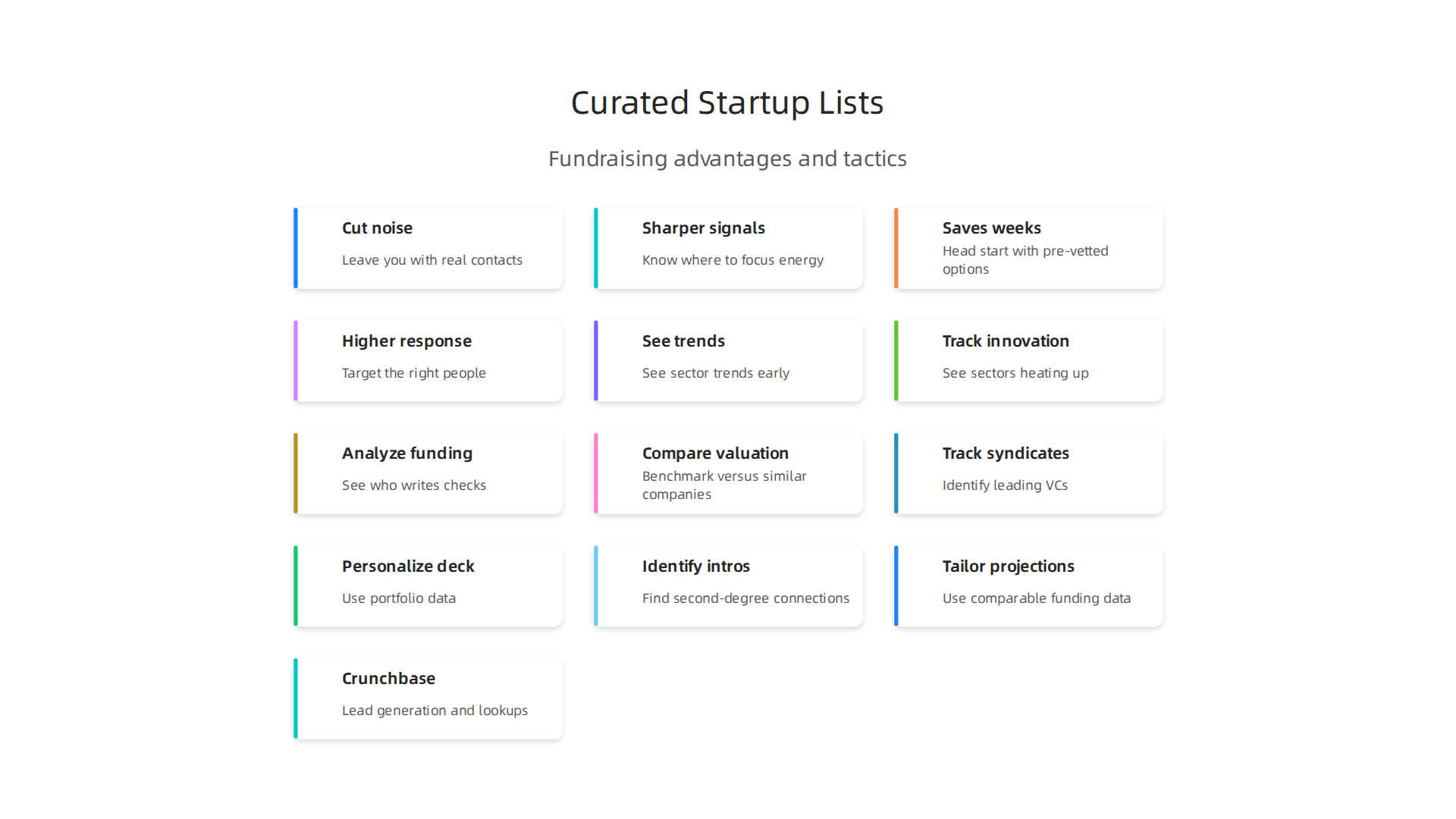
That’s exactly where a curated list of startups in us markets changes the game. These aren’t just random directories. They are filtered, verified, and updated sets of companies and investors. They pull out the noise and leave you with real contacts and recent funding data. No more wondering if that investor still writes checks or if that company even exists anymore.
Here’s the thing about fundraising in 2026. It’s getting harder to stand out. Data shows that SaaS fundraising timelines are stretching, and founders need sharper signals to know where to focus their energy. A curated list of startup in usa ecosystems helps you cut straight to the investors whose portfolio matches your sector and stage.
When you stop guessing and start targeting, your response rates go up. Plain and simple.
Using a quality list saves you weeks of research. Instead of building a target list from scratch, you get a head start with pre-vetted options. And that leads to higher response rates from investors. Why? Because you’re not blasting your deck to everyone. You’re sending it to the right people who actually look at businesses like yours.
Plus, curated lists often include signals like recent funding rounds and areas of innovation. You can spot trends in tech events, track where innovation is happening, and see which sectors are heating up. That kind of intelligence is gold when you’re raising capital.
Want to see how major players think about investment strategy? Learning how Capital Group American Funds operate can give you a clearer picture of where smart money flows.
The bottom line? Stop wasting time on noise. Use curated lists to find the right investors faster and get more meetings. For daily AI and tech insights that help you move faster, Subscribe to The Deep View.
Top Sources for a Comprehensive List of Startups in the US
Now that you know why a curated list of startups in us can save you weeks of work, let’s talk about where to actually find one. Not all databases are created equal. Some are built for sales teams. Others are made for investors. And a few are completely free.
Your goal is to pick the right source for your stage, budget, and type of research. Here are the top options in 2026.
Crunchbase vs PitchBook: The Two Giants
If you search for a list of startup in usa ecosystems, you will run into Crunchbase and PitchBook fast. These are the most widely used platforms, but they serve different needs.
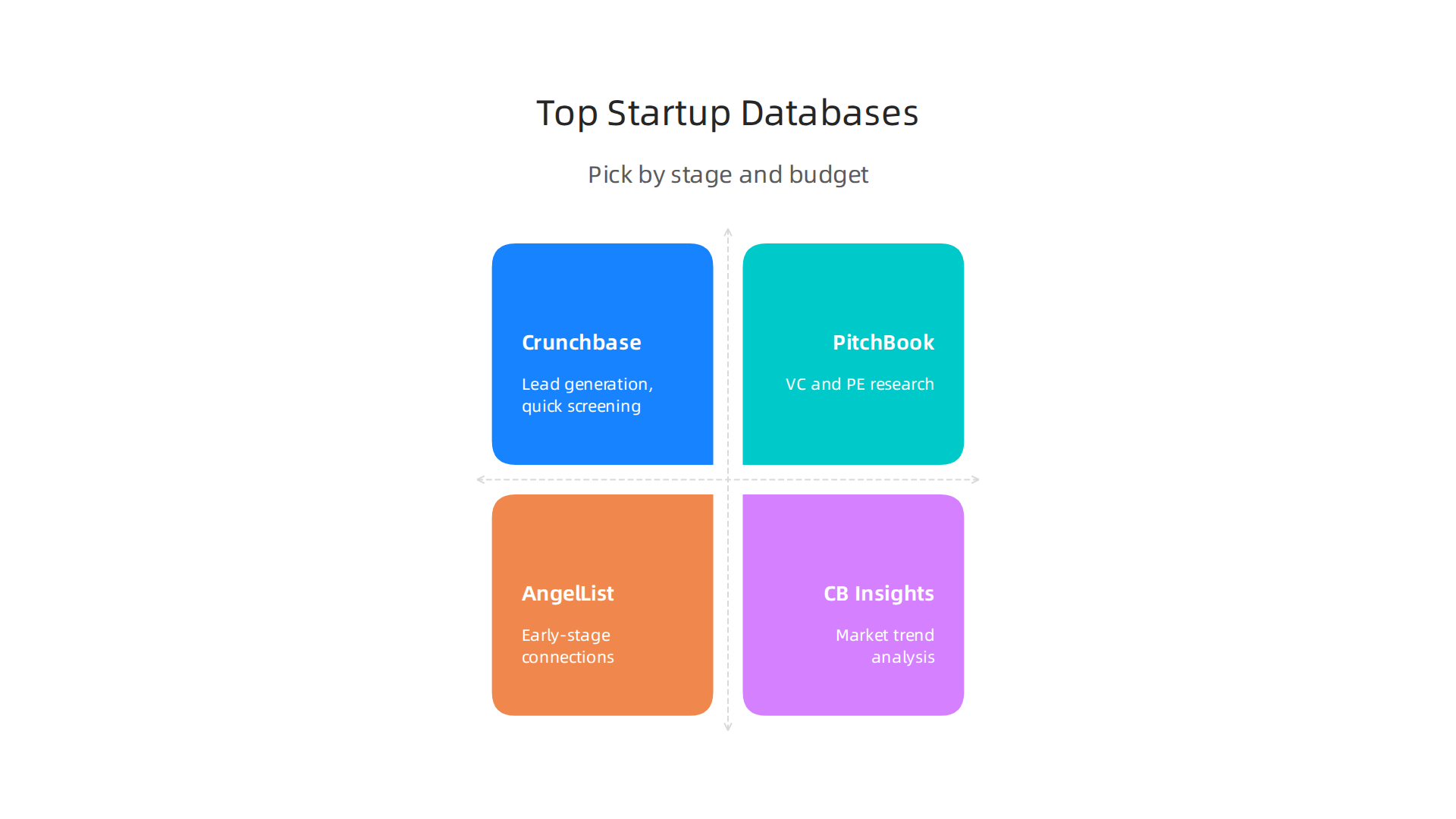
Crunchbase is great for lead generation and quick company lookups. It covers millions of startups, has a clean interface, and offers a free tier that still gives you basic funding data.
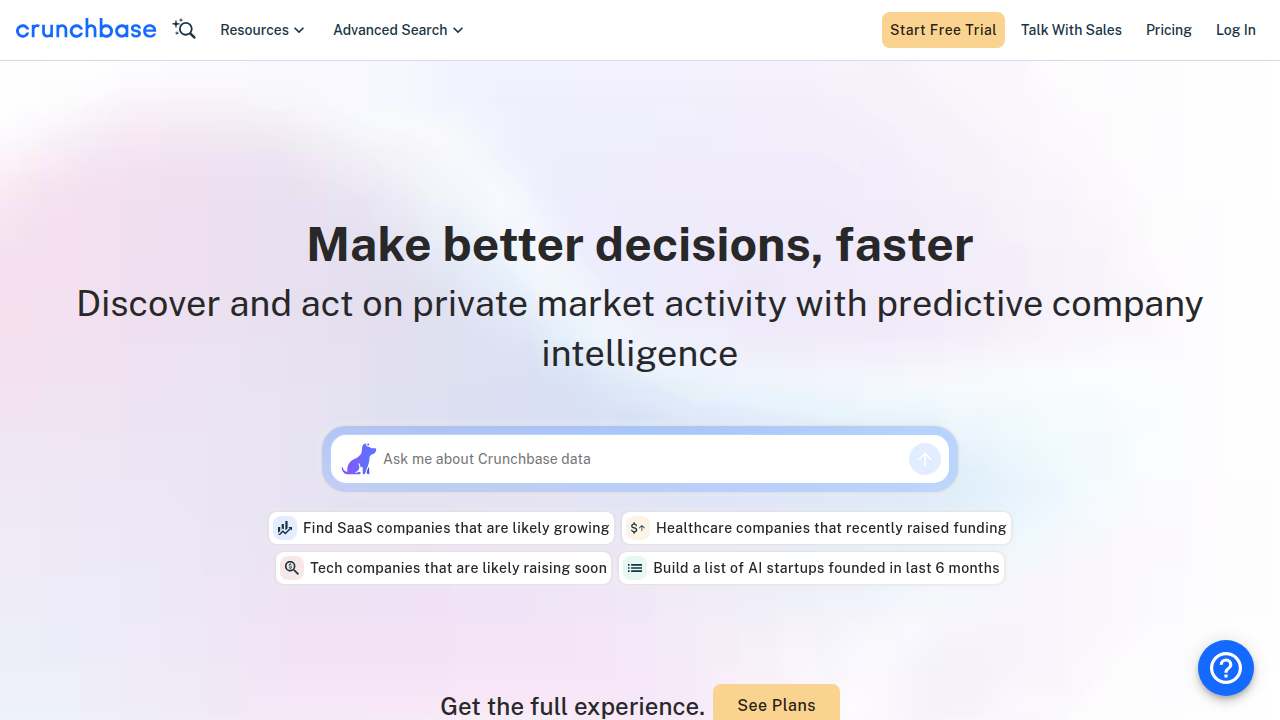
In 2026, Crunchbase’s paid plans start at $49/month for Basic and around $99/month for Pro, with full API access requiring Pro. Crunchbase is better suited for sales teams and lead generation, while PitchBook goes deeper.
PitchBook is the heavyweight for venture capital and private equity professionals. It gives you detailed valuation metrics, fund performance data, and deal history. But it comes at a price. Annual contracts for PitchBook start around $12,000. That makes it tough for bootstrapped founders. PitchBook is the stronger choice if you need deep financial data on companies and investors.
For a full breakdown of platforms including Tracxn and Dealroom, check out this comparison of startup databases for investors.
Free and Low Cost Alternatives
If your budget is tight, do not worry. AngelList is free to use and packed with early stage startup data.
You can search by sector, location, and funding stage. It also connects you directly to investors through its syndicate feature.
Another free option is government datasets. The USPTO gives you patent filings, which can reveal which startups are innovating in your space. The SEC’s EDGAR database holds Regulation D filings from companies that have raised money. Yes, it takes more effort to mine, but the data is verified and free. The Credit People suggests starting with Crunchbase, AngelList, Dealroom, and Owler if you want lower cost options.
Industry Specific Aggregators
For niche coverage, turn to platforms like CB Insights and S&P Capital IQ. CB Insights is known for predictive market intelligence. It tracks over 2.5 million startups and provides AI powered trend signals. This is gold if you want to spot which innovation areas are heating up before everyone else.
S&P Capital IQ focuses on financial data and is used more by institutional investors. If you need revenue estimates, debt structures, or detailed competitive landscapes, this is the tool.
The 7 Best Startup Databases for Investors in 2026 list from Crustdata also highlights Harmonic for pre-seed and stealth discovery, which is useful if you want to find startups before they hit the mainstream.
Matching Your Source to Your Goal
| Source | Best For | Cost |
|---|---|---|
| Crunchbase | Lead generation, quick screening | $49/month+ |
| PitchBook | VC/PE deep research | ~$12,000/year |
| AngelList | Early stage connections | Free |
| CB Insights | Market trend analysis | Paid, varies |
| Government datasets | Verified, no cost data | Free |
Want to understand how top firms use these databases? Learning how Capital Group American Funds evaluate startups can show you what signals matter most to large investors.
No matter which source you choose, the key is to combine them. Use a broad platform like Crunchbase to build your initial list of startups in us. Then verify and deepen your research with a niche tool or a free dataset. That mix gives you both speed and accuracy.
If you want daily updates on fundraising trends, investor moves, and tech events that matter, Subscribe Free to The Deep View. It delivers clear insights straight to your inbox.
Global Expansion: Key Startup Lists from Europe, Asia, and the Middle East
Your list of startups in us is just the beginning. If you want to find the next billion-dollar company, you have to look beyond borders. Innovation happens everywhere in 2026. Here is where to find reliable startup lists in three major regions.
Europe: Dealroom and National Databases
Europe has a strong startup scene with excellent data sources. Dealroom is the go-to platform for European company data.
It even powers the Startup Europe list, an initiative by the European Commission to track growth across the continent. You can filter by country, sector, and funding stage.
For broader discovery, the EU-Startups database lists promising companies from Germany, UK, France, and beyond. And if you want to see which startups are hiring, Wellfound (formerly AngelList Talent) has a dedicated Europe section filled with top tech startups in 2026.
Some standout European startups making waves this year include Wayve in London, which raised $1.5 billion for autonomous driving tech. The Top Startups in Europe guide also highlights companies like Octopus Energy and Typeform.
Asia: Official Government Portals
Asia requires a different approach. The best data often comes from government-backed organizations.
For Japan, the Japan External Trade Organization (JETRO) maintains a searchable database of innovative startups. You can filter by technology type, funding history, and international expansion readiness. This is gold if you want to find partners or acquisition targets in Japan.
For South Korea, the Korea Institute of Startup and Entrepreneurship Development (KISED) runs a national startup portal. It lists companies that have received government support or accelerator backing. The data includes funding amounts and technology domains.
For Singapore, SGInnovate is the official agency driving deep tech startup development. Their portfolio includes companies working on AI, biotech, and clean energy.
Middle East: Hubs in UAE and Israel
The Middle East is rapidly becoming a startup powerhouse. Two countries lead the way.
In the UAE, the Dubai Startup Hub lists hundreds of registered startups across fintech, logistics, and proptech. You can filter by stage, sector, and investment history. Another platform, Magnitt, tracks the entire MENA region with detailed funding data and company profiles.
In Israel, Start-Up Nation Central is the definitive resource. Their database covers over 7,000 active startups. It includes everything from cybersecurity to agritech. If you are researching Israeli innovation, this is where you start.
No matter where you look, building a quality list of startups in us or abroad takes the right sources. The key is combining global databases with local government portals. That mix gives you verified data and fresh leads.
If you want to stay ahead of global fundraising trends and investor moves, Get Free Updates by subscribing to The Deep View. It delivers clear daily insights on where capital is flowing around the world.
Navigating European Startup Lists
If you are building a list of startups in us, European resources can give you a fresh perspective. The good news is Europe has some of the best curated startup databases in the world. You just need to know where to look.
Dealroom.co is the leading platform for European startup data. It covers over 100,000 companies and is used by the European Commission for its official Startup Europe list. You can filter by country, sector, funding stage, and growth rate. It is a goldmine if you want to find high-growth companies in places like London, Berlin, or Stockholm.
For a broader view, the EU Startup Monitor provides annual surveys and aggregate data from more than 20 countries. It helps you spot trends across the continent, not just in one city. You can also check the EU-Startups database for handpicked companies in Germany, France, the UK, and beyond. Another option is Wellfound (formerly AngelList Talent), which has a dedicated Europe section filled with top tech startups in 2026.
Local accelerator programs also maintain their own curated lists. Startupbootcamp and Seedcamp publish cohorts of startups they have invested in. These lists include early-stage companies that are often not yet on larger databases. Reviewing accelerator portfolios is a smart way to find hidden gems.
If you prefer rankings, StartupBlink ranks the top startups in Western Europe each year. Companies like Octopus Energy and Typeform regularly appear at the top. You can also browse the Leapfunder startup directory for exposure to active angel investors.
Finally, attending top European startup events in 2026 like MWC Barcelona, Techarena, and START Summit can give you direct access to founders and investors. Many events publish attendee lists or startup showcases that you can use as leads.
Whichever resource you choose, the goal is to build a reliable list of startup in usa or Europe that you can act on. To stay ahead of global investor trends and funding news, Subscribe Free to The Deep View. It delivers daily insights on where capital is flowing, including European startup activity.
And if you want to understand how American funds like Capital Group approach investing, check out our guide on capital group american funds what startup founders need to know.
Spotlight on Asia: Japan, Korea, Singapore
Building a list of startups in us often means looking west. But some of the fastest growing innovation hubs are actually in Asia. If you want a global edge, you should check out official startup directories in Japan, Korea, and Singapore. These governments backed platforms are full of high quality, vetted companies.
Japan runs a national program called J-Startup. It selects promising young companies with global potential. You can find the full list on the METI startup portal (Japan’s Ministry of Economy, Trade and Industry). Japanese VC databases also list hundreds of funded startups in Tokyo and Osaka.
South Korea has one of the most connected startup ecosystems in the world. The Korea Startup Ecosystem Index (KISE) tracks over 20,000 companies. The KDB (Korea Development Bank) maintains a detailed directory of funded startups. You can also browse D.Camp, a nonprofit that supports Korean founders and publishes cohorts of new companies.
Singapore is a gateway to Southeast Asia. SGInnovate runs a public directory of deep tech startups. Enterprise Singapore also lists thousands of high growth companies across biotech, fintech, and AI.
After you build your list of startup in usa or Asia, you need to know where money is flowing. To get daily updates on global investor trends and funding news, Subscribe Free to The Deep View. And if you want to understand how top American funds like Capital Group evaluate startups, check out our guide on capital group american funds what startup founders need to know.
How to Use Startup Lists to Identify Investor Preferences and Valuation Benchmarks
You built your list of startups in us and explored hubs like Japan, Korea, and Singapore. That is a solid first step. But a list is just a pile of names until you turn it into intelligence. The real value comes when you use that list to spot investor patterns and benchmark your own startup against the market.
In 2026, fundraising is tougher. Founders need data, not guesses, to understand what investors want. Here is how you make your startup directory work for you.
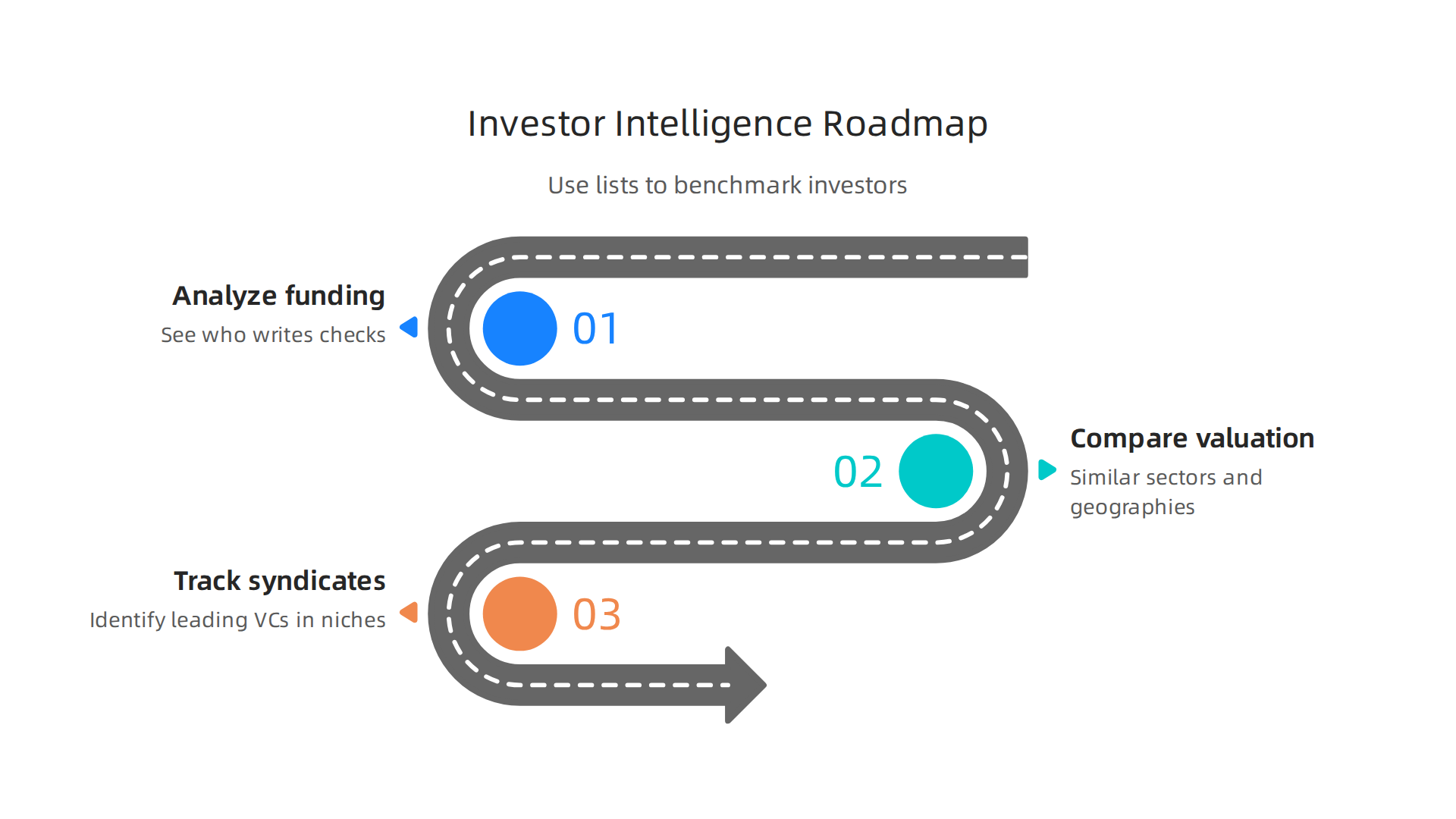
Analyze recent funding rounds to see who writes checks at each stage.
Look at the companies on your list and note which investors led their Seed, Series A, and Series B rounds.

You will quickly see that certain VCs specialize in early-stage bets while others only join later rounds. For example, SaaS benchmarks from 2026 show that pre-seed rounds are getting smaller, but the number of investors per round has increased. So if you are raising a Seed round, you want to target VCs that actively lead small rounds with multiple co-investors.
Compare valuation data across similar sectors and geographies.
Your list of startup in usa should include valuation figures if available. Use those numbers to see what a similar company in your space raised. For instance, median pre-money Series A valuations in Q3 2025 were about $49.3 million for primary rounds, according to Zeni AI. But biotech companies often see different numbers. Series A biotech valuations can swing wildly depending on the therapeutic area and clinical stage. By comparing a handful of companies in your exact niche, you get a range that helps you set realistic expectations when you negotiate with investors.
Use list filters to track investor syndicates and identify leading VCs in a niche.
Many startup directories let you filter by investor name or sector. Use this to spot syndicates. If you see the same three VCs co-investing in five different fintech startups, those VCs are the power players in fintech right now. Go to tech events where those VCs speak or present. Knowing their preferences and recent deal history makes your outreach smarter. In 2026, investors want capital efficiency and validated unit economics. When you understand which VCs prioritize that, you can tailor your pitch accordingly.
Putting all this together gives you a clear roadmap. You know who writes the checks, what valuations are realistic, and which investors lead the pack. That is the kind of insight that turns a simple list into a fundraising advantage.
Want to keep learning how top VCs think? Check out our guide on capital group american funds what startup founders need to know for a deeper look at one of the most influential investors in the US.
To stay ahead of the latest funding trends and investor moves, Get Free Updates from The Deep View. Daily AI and tech insights delivered straight to your inbox.
Overcoming Fundraising Complexity with Data-Driven Pitch Strategies
You have built your list of startups in us. You know who is writing checks and what valuations look like. Now comes the hard part. You need to turn all that data into a pitch that actually lands.
Here is the truth. In 2026, investors see hundreds of decks a month. They can spot a generic pitch from a mile away. The founders who win are the ones who use data to personalize every part of their approach. Your startup directory is the key to doing that.
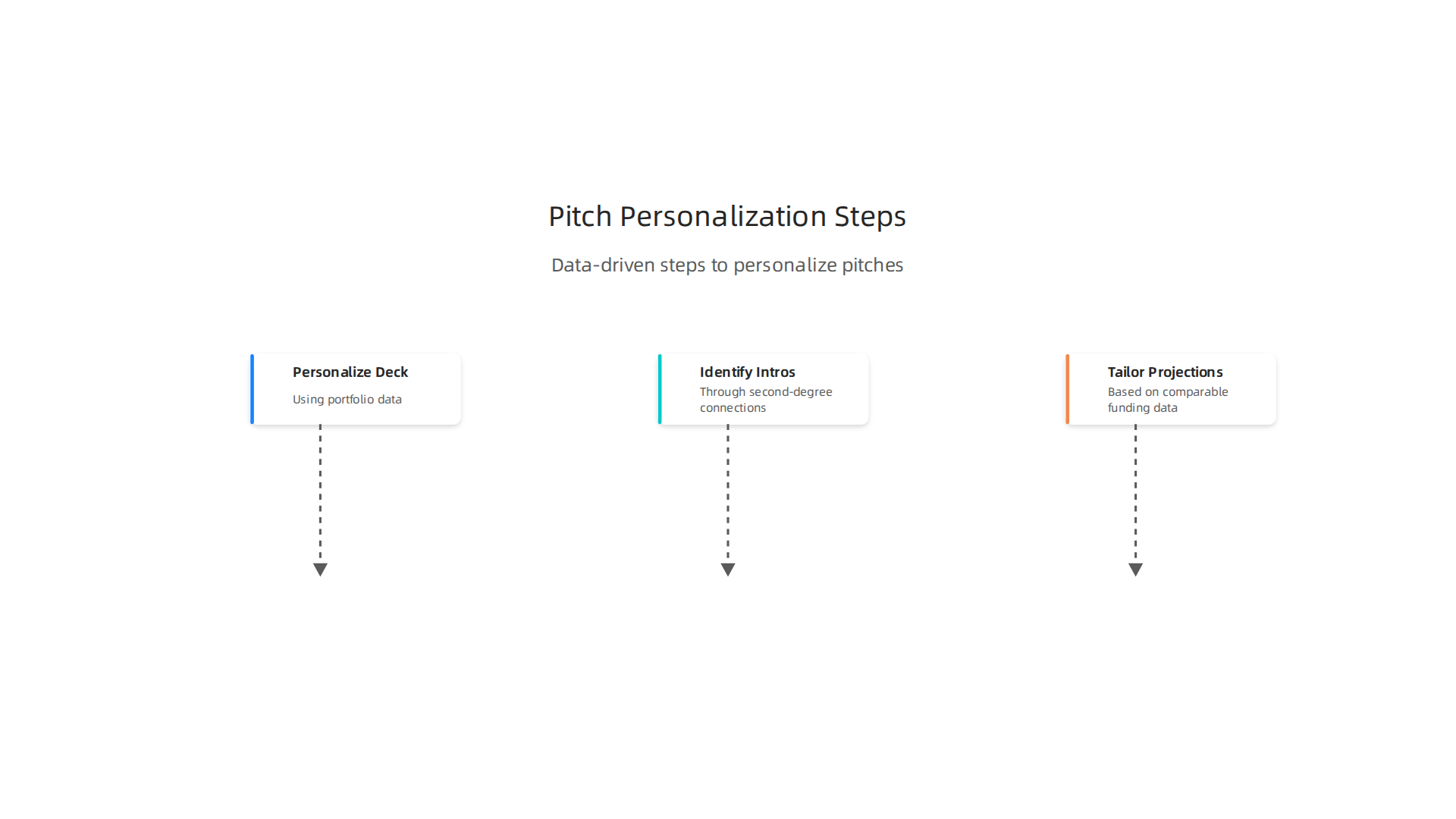
Personalize your pitch deck using portfolio data from target investors.
This is where most founders get it wrong. They send the same deck to every investor on their list. But the data you gathered on your list of startup in usa lets you do something smarter. Look at the portfolio companies of each VC you target. What stage do they typically invest in? What sectors do they love? What metrics do they highlight in their case studies?
Once you know this, you can reshape your deck to speak directly to that investor. If a VC specializes in capital-efficient SaaS companies, lead with your unit economics and low burn rate. If they invest heavily in AI, highlight your proprietary data moat. In 2026, investors want to see capital efficiency and validated unit economics. Your deck should prove you deliver both.
A data-driven pitch deck is not just about content. It is also about visual storytelling. Effective pitches now combine personalization with strong data-backed ROI narratives. Use graphs from your own financials that mirror the format investors are used to seeing from their portfolio companies.
Identify warm introductions through second-degree connections.
Cold emails mostly get ignored. But your startup directory can help you skip the cold outreach entirely. Many directories show you who invested in which companies. That gives you a map of second-degree connections.
Look at the companies on your list that are similar to yours. Check their current investors. Then look at your own network. Do you know anyone who works at or with those investors? A warm introduction from a founder they already backed changes everything.
If you find a VC who invested in a similar startup to yours, reach out to that founder first. Ask for advice, not a favor. Build a real relationship. When the timing is right, ask for an introduction. Warm intros are one of the most proven fundraising tactics that actually work in 2026.
Tailor financial projections based on comparable funding data.
You already gathered valuation data from your startup list. Now use it to shape your financial projections. If most companies in your sector raised a Seed round at a $8 million to $12 million pre-money valuation, your projections should show a realistic path to that range.
Your five-year forecast is a story, not a fantasy. Use comparable data to make that story believable. Show investors that you understand what similar companies achieved at the same stage. And be honest about the risks. Valuation is a negotiation, not a formula. But having real data on your side gives you a huge advantage at the table.
The combination of a personalized deck, a warm introduction, and realistic financials built from actual market data is incredibly powerful. It shows investors that you are not guessing. You are prepared.
Want to learn more about how top institutional investors evaluate startups? Check out our guide on capital group american funds what startup founders need to know for deeper insight into one of the most influential investors in the US market.
Ready to stay ahead of every major fundraising trend and investor move? Subscribe Free to The Deep View for daily AI and tech insights delivered straight to your inbox.
Building a Custom Startup List for Competitive Analysis and Deal Flow
You already know that data makes your pitch stronger. But where does that data come from? It starts with a smart, custom-built list of startups in us. This list is your secret weapon. It shows you who your real competitors are, what investors are backing them, and where the market is heading.

The old way was simple. Grab a few names from Google and call it a day. That does not work in 2026. You need a targeted set of companies that match your exact criteria. The best way to do that is to use advanced filters inside a good startup database.
Use Advanced Filters to Narrow Your Focus
Most databases let you filter by funding range, employee count, and technology keywords. Say you are a B2B SaaS startup looking at Series A competitors. You can set a filter for companies that raised between $5 million and $15 million, have 20 to 100 employees, and use keyword tags like "artificial intelligence" or "cloud software." Instantly, you have a focused pool to study.
The most popular tools for this are Crunchbase and PitchBook. Crunchbase is great for sales and lead generation, while PitchBook is better for deep valuation data. If you are a founder, starting with Crunchbase Pro can save you time. If you are an investor tracking deal flow, PitchBook may be worth the higher cost.
Automate Your List Building with APIs
Manually exporting lists gets old fast. In 2026, smart founders use APIs to pull data automatically. Crunchbase has an API that lets you build custom queries. The Basic plan starts at $49 per month, while the full-featured version requires the Pro plan at $99 per month. That is a small price to have fresh data flowing into your spreadsheet every week.
Other platforms like AngelList offer free access to core investor data. Combine that with paid tools and you get a much richer picture.
Validate Your Data with Multiple Sources
No single database is perfect. Crunchbase may miss smaller rounds. PitchBook might skip pre-seed startups. The smart move is to cross-reference. Use Crunchbase and AngelList for broad coverage, then validate funding details with PitchBook or Dealroom. This fills gaps and keeps your list accurate.
When you have a clean, verified list of startup in usa, you can spot trends others miss. For example, you might notice that institutional investors like Capital Group American Funds are increasing their bets on a specific sector. That insight changes your targeting. To dig deeper into how top funds operate, check out our guide on capital group american funds what startup founders need to know.
Building this list is the first step. Once you have it, you can personalize your pitch, find warm intros, and set realistic valuations. It all starts with the right data.
Want to build your list faster and never miss a key trend? Get clear daily updates on the startups and investors that matter. Subscribe Free to The Deep View for AI and tech insights straight to your inbox.
Summary
This article explains why high-quality, curated lists of startups matter for fundraising, competitive research, and deal sourcing in 2026. It compares leading platforms (Crunchbase, PitchBook, CB Insights, AngelList) and outlines free government and regional databases you can use to build a reliable list. You’ll learn how to match the right source to your goal, automate list building with APIs, and combine multiple datasets to validate funding and valuation signals. The guide also covers global sources for Europe, Asia, and the Middle East, and shows how to turn raw lists into investor-targeting strategies, warm introductions, and realistic financial projections. Practical steps include using advanced filters, tracking syndicates, and tailoring pitch decks to investor preferences. By following the methods here, founders and investors can reduce research time, improve outreach success, and make smarter fundraising decisions.