
The Tech Behind the Pitch: Why Founders Need to Understand Computer Systems
Picture this: You walk into a pitch meeting with a room full of investors. Your product is solid. Your traction is real. Your financial projections look clean. Then someone asks, "How do you handle data scaling at high concurrency, and what is your cloud cost burn rate per active user?"
Your mind goes blank.
You stumble through an answer, and the energy in the room shifts. The conversation never quite recovers.
Here is the hard truth that many founders learn the painful way: what is computer systems technology is not just a question for engineers anymore. In 2026, investors expect founders to have real answers about the technical infrastructure behind their products.
Why does this matter so much? Because the technology meaning in a startup context has grown far beyond just "the software we built." Investors now evaluate technical fluency just as closely as they evaluate market fit. According to a 2026 guide on tech talent due diligence, assessing a startup’s technical infrastructure and team capability is now a core part of the investment process.
The numbers back this up. More startup investors than ever are using structured due diligence frameworks that dig deep into technical architecture. These frameworks include questions about cloud costs, data management, scalability, and cybersecurity readiness.
Many founders still treat technical knowledge as optional. They lean on their CTO to handle "the tech stuff." But here is the thing: when you cannot speak fluently about the core synonyms for tech like infrastructure, systems architecture, and platform scalability, you miss funding opportunities. More importantly, you lose control of key decisions that define your company’s future.
Understanding computer systems directly impacts how you manage cloud costs, protect customer data, and plan for growth. These are not engineering problems. They are founder problems.
Think about the technology acceptance model for a moment. This theory explains how users adopt new technology based on how useful and easy it seems. But here is the twist: investors have their own acceptance model, and technical fluency is a big part of it. If an investor cannot trust that you understand your own tech stack, they will not trust your ability to scale.
The good news? You do not need to become a software engineer. You just need enough technical know-how to communicate clearly, make smart decisions, and earn investor confidence.

Want to stay sharp on the latest tech and AI trends that shape investor expectations? Subscribe to The Deep View Newsletter for clear daily updates that help you speak the language investors understand.
Next, let us explore what computer systems technology actually means for founders who are ready to raise capital in 2026.
What Is Computer Systems Technology? A Foundational Overview
So, what exactly does what is computer systems technology mean in a practical sense? Here is the simplest way to think about it. It is the combination of hardware, software, networking, and data management working together as a single system.
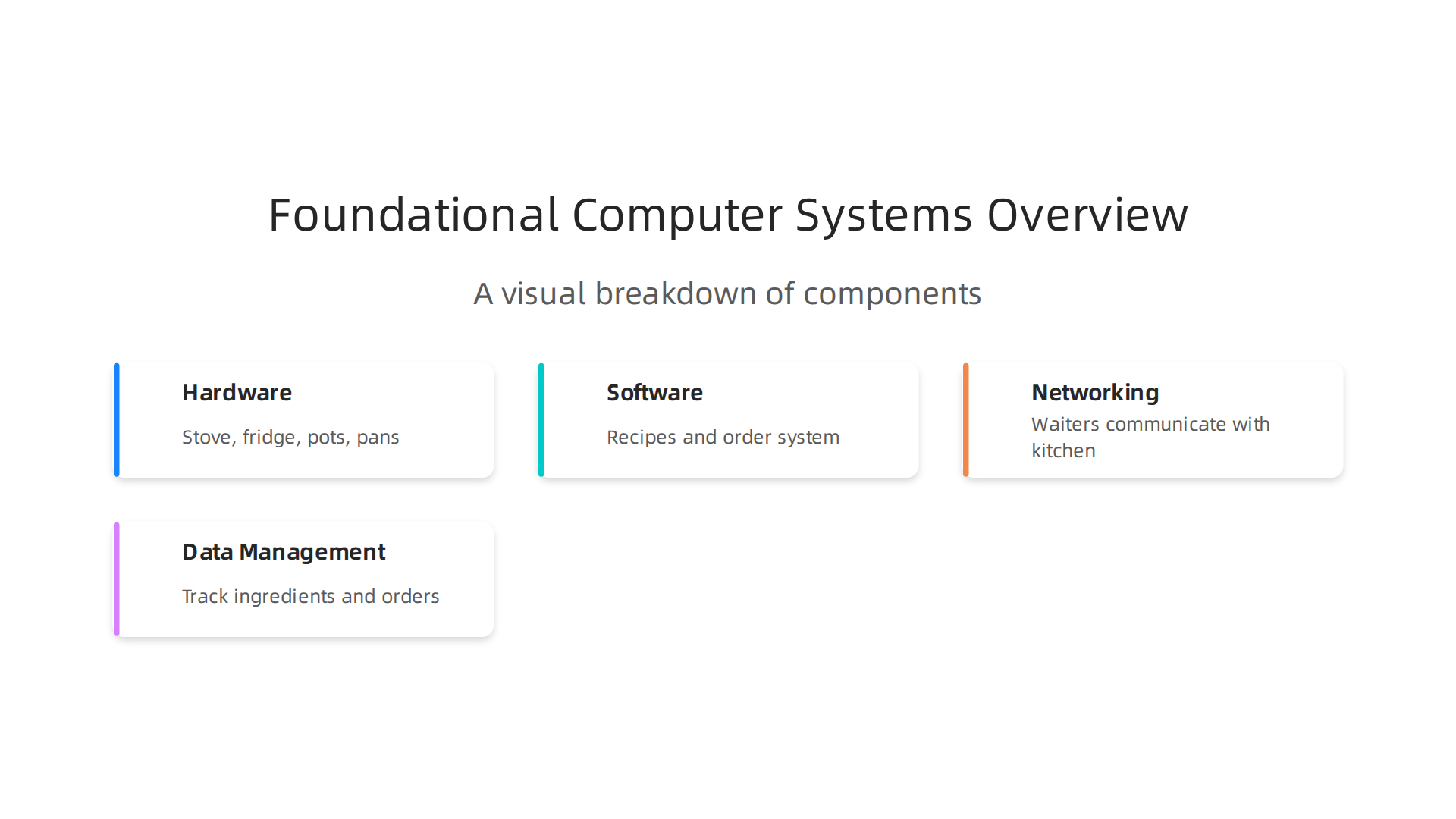
Think of it like a restaurant kitchen. The hardware is the stove, the fridge, and the pots and pans. The software is the recipes and the order system the cooks follow. The networking is the way the waiters communicate with the kitchen. And data management is how you track your ingredients and orders so nothing spoils or runs out. The kitchen only works well when all these parts connect.
This is not just a random way to organize things. It is based on real standards. The ACM and IEEE-CS curriculum guidelines have long defined these core areas as the foundation of computing education. These pillars include programming, networking, databases, and web systems.
Now, here is where the technology meaning of computer systems has changed completely in 2026. Twenty years ago, most companies owned their own physical servers in a room. That was a mainframe era. You could point to a box and say, "That is our computer system."
Today, your startup likely runs on distributed cloud architectures. Your application lives on servers owned by providers like AWS, Google Cloud, or Microsoft Azure. Your data flows across their networks. Your security depends on their configurations.
This shift matters because it directly affects your startup’s scalability. If your app suddenly goes viral, can your system handle 10,000 new users in one hour? What about 100,000? In the old mainframe days, you would have to buy and install new hardware. In today’s cloud world, you can scale with a config change. But only if you understand the basic layers of how your system works.
Founders who grasp these layers can do things that directly impact fundraising success.

You can evaluate vendor solutions without getting fooled by marketing hype. You can communicate with your engineering team clearly during tough technical debates. And you can ask smart questions about cloud costs, latency, and data security.
Want to go deeper on how to explain your stack? Read our guide on the technology definition for 2026 to frame your technical decisions for investors.
The best founders in 2026 are not the ones who write the most code. They are the ones who understand enough about their system to make smart bets on architecture, hiring, and infrastructure. That understanding directly builds investor confidence.
Keeping up with how these technologies evolve is tough. The landscape changes fast. Subscribe to The Deep View Newsletter for short daily updates that keep you informed about the tech trends shaping startup fundraising right now.
Hardware Components Explained: Processors, Memory, and Storage
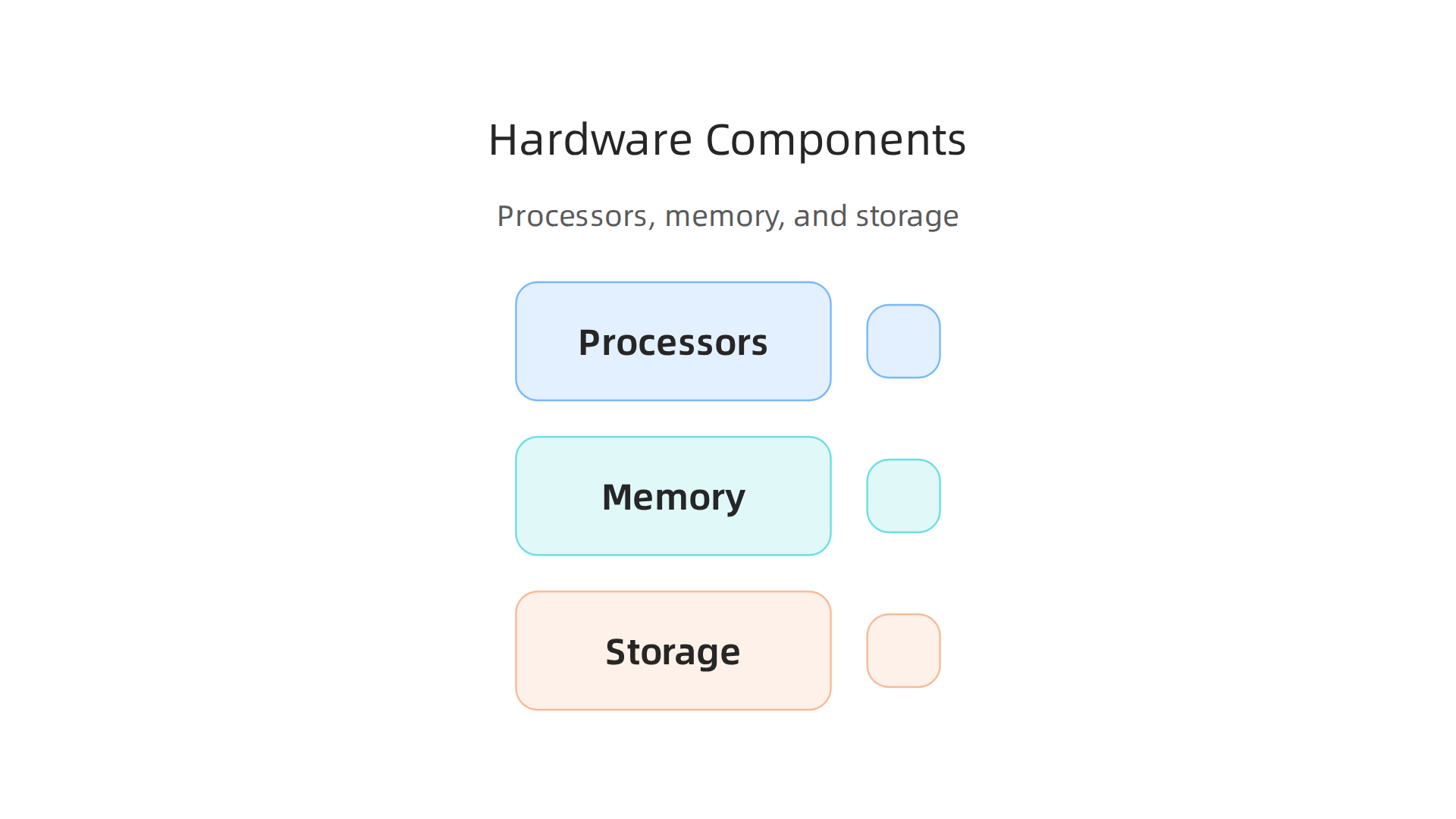
If you are building an AI startup in 2026, you don’t need to design a microchip. But you do need to understand the three main hardware pieces that make your system work.
Otherwise, you can’t make smart decisions about cloud costs, architecture, or vendor pitches. This is a core part of what is computer systems technology in the real world.
The ACM curriculum guidelines have long recognized hardware as a foundational pillar of computing education. Here is what each component does in simple terms.
Processors: The decision makers. CPUs handle general tasks like running your operating system. GPUs are built for heavy parallel work like training AI models. Custom TPUs (Google’s Tensor Processing Units) are even more specialized for machine learning. For an AI startup, GPUs are often your most critical hardware investment.
Memory and storage: The speed ladder. Your system has a hierarchy. Cache is super fast but tiny. RAM is fast and holds active data. SSDs store everything long term but are slower. The trick is balancing cost and performance. More RAM means fewer slow disk reads. Faster SSDs reduce load times. This directly affects your monthly cloud bill and your app’s responsiveness.
Understanding these trade-offs helps you choose between on-premise and cloud solutions. Cloud lets you rent GPUs by the hour, which is great for early stage startups. But once you scale, the costs can catch up quickly. You need to know when buying your own hardware might make sense.
Want to dive deeper into the technical skills that impress investors? Read our guide on why founders need a strong technology background for startup fundraising in 2026.
The technology meaning in 2026 is all about how you combine these pieces to solve real problems. Hardware choices define your system’s limits. Smart founders learn enough to ask the right questions about processors, memory, and storage before signing any cloud contract.
Keeping up with how these components evolve is tough, especially with AI hardware changing fast. Subscribe to The Deep View Newsletter for short daily updates on the tech trends that matter for your startup’s future.
Software Layers and Operating Systems: From Kernel to Container
Hardware is useless without software to control it. Understanding this relationship is central to what is computer systems technology in practice.
The operating system (OS) is the foundation. It manages your hardware, runs your programs, and provides basic services like file management and security. Linux dominates cloud environments because it is open source, secure, and battle tested. Windows and macOS serve different niches. For most AI startups in 2026, Linux is the default choice. The CS2023 curriculum guide from IEEE CS and partners confirms that operating systems remain a core skill for modern computing careers.
But the software stack does not stop at the OS. Containers changed the game. Docker lets you package an application with all its dependencies into a lightweight unit that runs anywhere. Kubernetes automates deployment, scaling, and management of those containers across many servers. In 2026, this combo is the standard for scalable startups.
Here is the catch. Containers give you speed and portability. You can move workloads between cloud providers easily. But the learning curve is steep. Choosing the wrong container strategy early on can create a complex maintenance problem later.
The technology meaning for founders is about picking a software stack that balances speed today with flexibility tomorrow. Your OS and container choices define how fast your team can iterate and how much technical debt you carry forward.
Explore more software tools that attract investor attention in our guide on tech tools for startups in 2026.
Software infrastructure changes fast. Subscribe to The Deep View Newsletter for daily AI and tech updates that help you make smarter infrastructure decisions.
Networking and Data Management: How Systems Connect and Communicate
Your containers and operating systems are powerful, but they cannot do much alone. They need to talk to each other and handle data. That is where networking and data management come in. This part of what is computer systems technology often makes or breaks a startup.
Networking is how systems communicate. The basics like TCP/IP and HTTP/2 make distributed operations possible. In 2026, most cloud native applications rely on these protocols to move data between services quickly and reliably. But modern networking goes further. Tools like software-defined networking (SDN) and network functions virtualization (NFV) make networks programmable and automated, according to next-gen network solutions from Fantastic IT. This means your team can adjust network rules without touching hardware.
Edge computing and 5G are also changing the game. They push processing closer to users, cutting latency for real time applications like video streaming or IoT devices. The cloud native trends for 2025 from Sidero Labs highlight edge computing as a key area for cost savings and performance. For a startup building a responsive product, this can be the difference between a happy user and a lost customer.
Now for the data side. Once your systems talk, they need to store and retrieve data. The classic choice is SQL versus NoSQL. SQL databases (like PostgreSQL) are great for structured data with strict rules. NoSQL databases (like MongoDB) offer flexibility for unstructured or rapidly changing data. Picking the wrong one early can slow down your product development speed. You might spend months rewriting queries that should have been simple. Understanding this technology meaning helps you avoid that trap.
Cloud computing gives you on demand access to networking, storage, and compute resources as IBM explains. This makes experimenting with different data management choices easier.
For a deeper look at how core system concepts shape your startup, read our guide on technology definition 2026.
The way you connect systems and manage data affects your speed and scalability. Stay informed on the technologies driving these changes. Subscribe to The Deep View Newsletter for daily AI and tech updates that help you make smarter infrastructure decisions.
How Networks Connect Systems: Protocols and Topologies
Think about the last time your product felt slow. A page took too long to load. An API call timed out. Your first instinct might be to blame your code. But often the real issue lives in your network.
Understanding the basics of network protocols and topologies is part of mastering what is computer systems technology. Two protocols matter most for founders: TCP/IP and HTTP. TCP/IP handles how data packets travel between devices. HTTP controls how web browsers and servers talk. When you know these basics, you can diagnose a slow product much faster. You can spot whether the problem is a dropped packet or a bad API call.
Modern networking tools make this even easier. Software-defined networking (SDN) and network functions virtualization (NFV) let you manage your network through software instead of manual hardware changes. According to next-gen network solutions from Fantastic IT, these tools make networks programmable and automated. For a startup, that means you can scale your network rules as you grow, without buying new routers.
But here is a trap many founders miss. If you run a multi-cloud architecture using AWS, Google Cloud, and Azure together, network latency and data transfer costs can eat your runway. The hottest networking startups of 2025 according to CRN are building solutions specifically for this multi-cloud challenge. They focus on connectivity and cost control across different providers.
Getting this part of your technology meaning right matters. The way your systems connect affects your user experience and your burn rate.
For deeper insight on how core system concepts shape your fundraising story, check out our guide on technology synonyms to attract the right investors.
Database Technologies for Startups: Relational, NoSQL, and NewSQL
Here is a common mistake first-time founders make. They pick a database because it is popular or because they used it before. Then six months later, their data model breaks and they waste weeks migrating.
The truth is, your database choice is a strategic bet. It affects how fast you can build, how much your infrastructure costs, and whether your investors trust your technology meaning behind the scenes.
Let us break down the three main options you have in 2026.
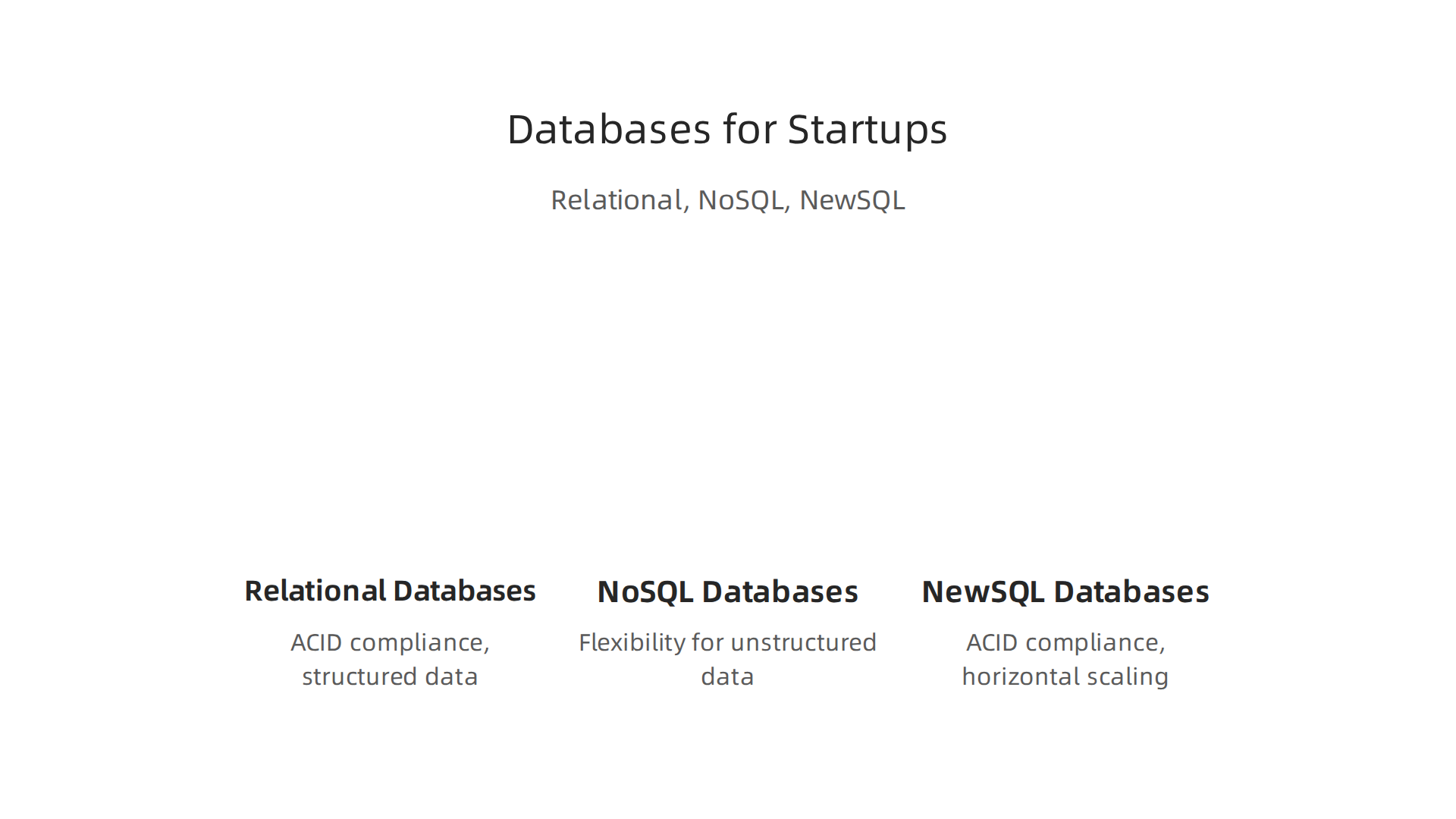
Relational databases like PostgreSQL and MySQL are the old guard for a good reason. They give you ACID compliance. That means every transaction is atomic, consistent, isolated, and durable. If you handle payments, subscriptions, or any financial data, this is non negotiable. Banks and fintech startups rely on relational databases because one bad transaction can ruin trust.
NoSQL databases like MongoDB and Cassandra flip the script. They are built for flexibility. You do not need to define your schema upfront. You can store JSON documents, key value pairs, or wide columns. This makes them perfect for rapid iteration when you are still figuring out your product. If your data looks different every week, NoSQL saves you from painful migrations.
But here is where things get interesting. A new category called NewSQL is emerging. Databases like CockroachDB and Yugabyte try to give you the best of both worlds. You get ACID compliance like a relational database, plus horizontal scaling like a NoSQL database. This matters a lot for startups that plan to go global from day one. You can run a single logical database across multiple cloud regions without losing consistency.
As you think about what is computer systems technology for your stack, remember that your database is the foundation of your data layer. Cloud native trends are pushing databases toward automation and simpler operations. According to the Cloud Native Computing Foundation, projects like Kubernetes help you run these databases more reliably across different environments.
So which one should you pick? Start with a relational database for anything involving money. Use NoSQL when you are experimenting rapidly. Keep NewSQL on your radar for when you need global scale without the headache of sharding.
Understanding these tradeoffs is part of being a credible founder. Investors want to see that you have thought deeply about your architecture. If you want to dive deeper into how your technical decisions affect your fundraising story, read our guide on why founders need a strong technology background for startup fundraising in 2026.
Technology moves fast. The database that works for you today might not work tomorrow. Keep learning, keep testing, and never assume your first choice is your final choice.
Stay sharp out there. For daily insights on how AI and new technologies are reshaping the startup landscape, check out The AI Newsletter Worth Reading.
Security and Compliance: Protecting Systems and Data
Now that you have chosen your database and started building your product, there is another question you cannot ignore. How do you keep your systems safe?
Here is a number that should wake you up. According to the Must-Know Small Business Cybersecurity Statistics for 2026, 43% of all cyberattacks in 2025 targeted small businesses. And the Identity Theft Resource Center found that 81% of small businesses suffered a security or data breach within the last year.
Think about what that means for your startup. One breach can destroy months of fundraising progress. Investors will ask hard questions about your security posture. If you cannot answer them, your deal falls apart.
You need to understand the basic threats first.
Phishing attacks try to trick your team into giving away passwords or sensitive data. Ransomware locks up your systems and demands payment. Both are common and both can take down a startup fast. The GOV.UK cyber security breaches survey 2025/2026 shows that just over four in ten businesses reported experiencing a breach or attack in the last year.
The good news is that simple defenses work.
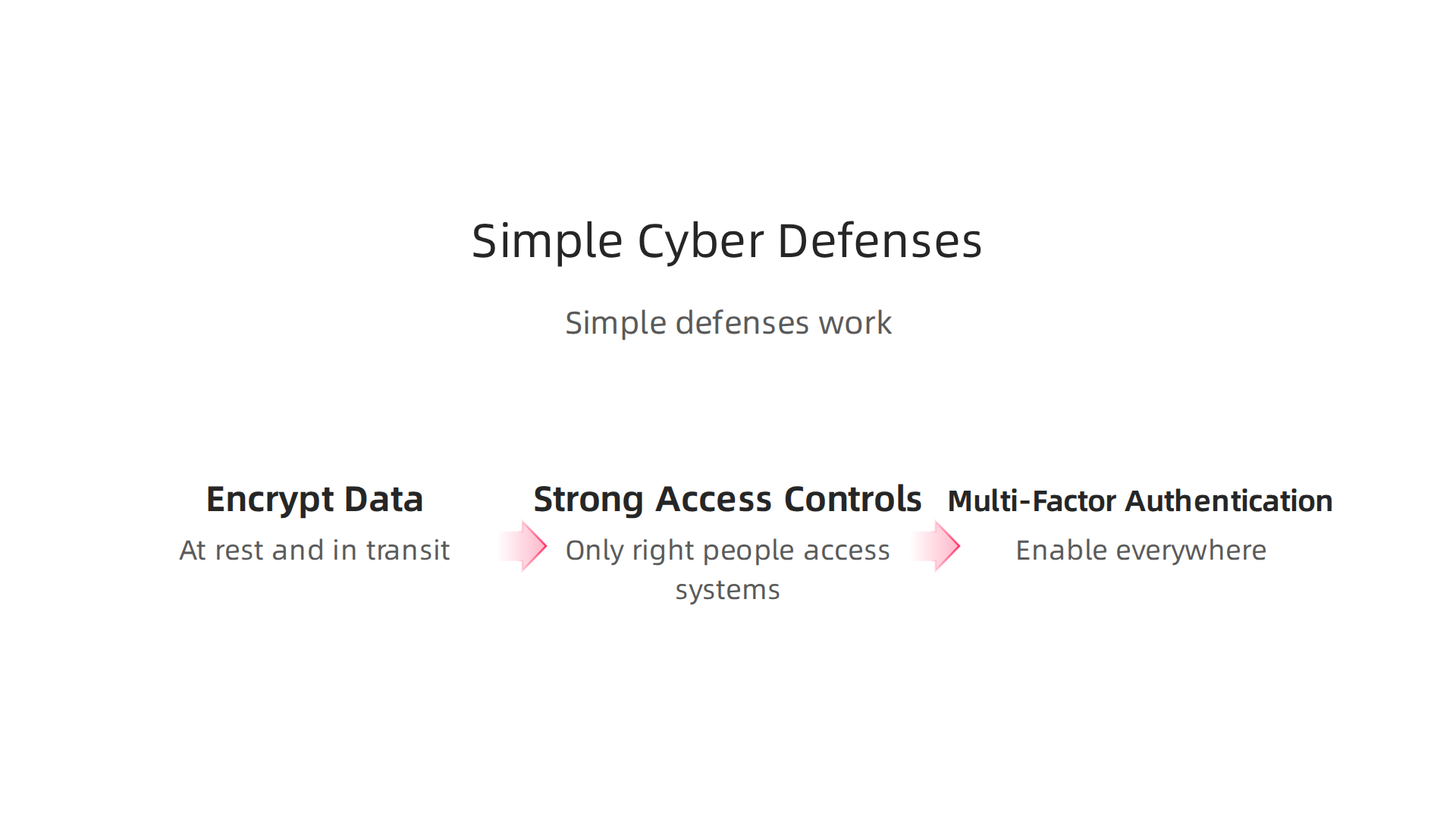
Encrypt your data at rest and in transit. Use strong access controls so only the right people can reach sensitive systems. Enable multi-factor authentication everywhere. These steps alone block most basic attacks.
Compliance is not optional either.
If you want to sell to customers in Europe, you need to follow GDPR rules. If you target California, CCPA applies. These regulations dictate how you collect, store, and delete personal data. Getting this wrong can lead to massive fines and lost customer trust.
The IBM Cost of a Data Breach Report 2025 shows that the financial impact of a data breach keeps climbing. For a startup without deep pockets, even a small breach can be fatal.
This is part of what we mean when we ask what is computer systems technology in practice. It is not just about picking the right database or the latest framework. It is about building systems that protect your customers and your business.

If you want to see how the smartest founders are using the latest tech tools to build secure, investor-ready startups, check out our guide on tech tools for startups 2026 that attract investors and accelerate fundraising.
Technology is moving fast. The threats are real. But with the right approach, you can build a startup that is both innovative and secure. If you want to stay ahead of the latest tech trends and understand how they affect your fundraising journey, get daily AI and technology updates from The AI Newsletter Worth Reading.
Cybersecurity Fundamentals: Threats Every Founder Should Know
You already know about phishing and ransomware. But here is what makes what is computer systems technology a tricky question for founders. Most data leaks come from two places you might not expect: your own team members and your cloud settings.
Insider threats are real. A tired employee clicks a bad link or shares a password without thinking. According to reports from 2026, small businesses face four times more confirmed breaches than larger companies. And misconfigured cloud storage makes it even worse. One wrong setting in your AWS or Google Cloud dashboard can expose customer data to the whole internet.
The fix that investors now look for is called zero-trust architecture. Instead of trusting anyone inside your network, you verify every request. No one gets free access, even if they are already logged in. This approach shrinks your attack surface and tells investors you take security seriously.
The good news is simple actions stop most attacks. Multi-factor authentication blocks 99% of automated cyberattacks. Regular patching closes known holes. If you want a deeper look at how top founders are building secure systems, check out our guide on tech tools for startups 2026 that attract investors and accelerate fundraising.
You do not need a giant security team. You need smart basics and a mindset that treats threats as real. If you want daily updates on AI and tech trends that affect your startup, get The AI Newsletter Worth Reading.
Data Privacy Regulations: GDPR, CCPA, and Beyond
Now that you have locked down your cybersecurity basics, there is another layer you cannot skip. Data privacy laws like the GDPR in Europe and the CCPA in California apply to any startup that handles data from those regions. If you store, process, or sell information about EU or California residents, these rules cover you. This is a big part of understanding what is computer systems technology for your business. The technology meaning here is about how you collect, protect, and delete personal data inside your systems.
The fines for getting this wrong are huge. GDPR violations can cost you up to 4% of your global annual revenue. That is enough to kill a startup. And it gets worse. Investors now look at your compliance posture before they write a check. A single breach or fine on your record will scare them away. According to IBM’s Cost of a Data Breach Report, the average cost of a breach for small businesses is climbing every year. Non-compliance does not just hurt your wallet. It destroys trust with users and investors.
The smart move is to build privacy by design. That means thinking about data protection from day one, not as an afterthought. When you design your product, decide what data you really need, how long you keep it, and how you will delete it. This saves you painful and expensive rewrites later. It also shows investors you are serious about risk management. For a deeper look at how strong technology foundations help you raise capital, read our guide on technology definition 2026.
Privacy regulations are only getting tougher. New laws keep popping up in states like Colorado and Virginia. Staying on top of these changes is key. For daily updates on AI and tech trends that affect your startup, subscribe to The AI Newsletter Worth Reading.
Cloud Computing and Virtualization: The Backbone of Modern Startups
If you are wondering what is computer systems technology in the real world, look no further than how startups run today. They don’t buy servers anymore. They rent computing power from the cloud. Three major names dominate this space: Amazon Web Services (AWS), Microsoft Azure, and Google Cloud Platform (GCP). These platforms give any small team the same infrastructure that a huge company had ten years ago.
But here is the thing. More startups are now using multi-cloud strategies. They spread their work across two or three providers instead of relying on just one. This approach helps you avoid getting trapped in a single system. As the trends show, hybrid and multi-cloud deployment is becoming the new normal in 2026.
Serverless computing is another big shift. With services like AWS Lambda, you write code and never think about the hardware running it. This lowers your workload a lot. But it comes with a risk. Serverless architectures can lock you into one provider. If you build everything on one cloud, moving later gets hard and expensive. Serverless adoption is growing fast, but it introduces vendor lock-in risks that founders need to plan for.
So how do you pick the right setup? You have three main service models: Infrastructure as a Service (IaaS), Platform as a Service (PaaS), and Software as a Service (SaaS). IaaS gives you raw servers and storage. PaaS gives you a platform to build on. SaaS gives you a ready-to-use app. Each one has a different cost. You must calculate the total cost of ownership before choosing. A cheap monthly fee today might lead to higher costs later as you grow.
Understanding the technology meaning behind these models helps you make smarter decisions. If you want to dig deeper into how tech choices affect your ability to raise money, read our guide on why founders need a strong technology background for startup fundraising in 2026. Cloud computing is not just a tech trend. It is the backbone that lets you scale fast and compete with bigger players.
Staying on top of fast-moving tech like cloud systems can feel like a full-time job. That is why many founders rely on The Deep View Newsletter for clear, daily AI and tech updates. It helps you stay informed without the noise, so you can focus on building your startup.
AI and Machine Learning Integration: From Hype to Production
Cloud computing does more than just host your app. It gives you the power to add AI and machine learning to your product. Think of it this way: every AI model needs three things. First, a data pipeline to feed it information. Second, training infrastructure to teach the model. Third, model serving to make predictions for your users. All three live in the cloud today.
AI and machine learning are now a core part of cloud innovation. You do not need to build everything from scratch. Pre-trained models from companies like OpenAI and Hugging Face let you add smart features fast. You can use their APIs to add chatbots, image recognition, or recommendation engines without hiring a team of data scientists. That is a huge win for startups with limited resources.
But here is the catch. Running AI workloads eats up compute power. Your cloud bill can spike fast. As AI integration in cloud services grows, startups must plan for these costs. The technology acceptance model matters here. If your team resists new tools because they seem complex, the best infrastructure will fail. You need to choose systems that your engineers can actually use.
Understanding the real technology meaning behind AI infrastructure helps you make better decisions. When you know what a GPU cluster is and how much it costs, you can budget correctly. The top cloud trends of 2026 all point to AI as the main driver of infrastructure decisions. For synonyms for tech like "machine learning ops" or "ML pipelines", these are just fancy terms for making AI work reliably in production.
So what does this mean for you? Start simple. Use a pre-trained API first. Test your idea without heavy investment. As you scale, move to custom models on your own cloud setup. And always keep an eye on compute costs. If you want to learn more about how technology choices affect your fundraising pitch, check out our guide on the technology definition 2026 framework every founder needs for investor clarity. That clarity will help you explain what is computer systems technology in your own startup story.
Why Startup Founders Must Understand Computer Systems Technology
Picture this: You are in a pitch meeting with a top VC firm. The partner leans forward and asks, "Walk me through your tech stack. How does your database handle 10x traffic? And what is your disaster recovery plan?" If you freeze up, that deal could slip away.
This scenario happens more than you think. Investors do not just care about your revenue. They care deeply about your infrastructure. Tech talent due diligence is now a critical part of every funding round. VCs want to know if your engineering team can scale. They ask about cloud costs, security gaps, and how you chose your framework. If you cannot explain what is computer systems technology in plain terms, you look like a risky bet.
Understanding the real technology meaning behind your architecture gives you a massive advantage. You do not need to be a code wizard. But you do need enough knowledge to manage your CTO and engineering leads. When you grasp the basics of databases, load balancers, and API design, you can ask better questions. You can spot when your team is over-provisioning servers or ignoring security updates.
Here is the thing. The technology acceptance model applies to your own company. If you resist learning about your own stack, you will struggle to evaluate new tools. You will approve expensive cloud services without understanding the value. That is a fast track to burning investor cash.
Investors are using advanced due diligence checklists in 2026 that probe every layer of your technology. They ask about your data pipeline. They want to know your synonyms for tech like "serverless" and "containerization" and whether your team actually uses those tools correctly. Founders who can speak this language earn trust faster.
So how do you build this understanding? Start with the fundamentals. Learn the difference between vertical and horizontal scaling. Understand the tradeoffs between SQL and NoSQL. Study cloud security basics. Then practice explaining these concepts like you are teaching a beginner. That clarity will impress investors.
If you want to dive deeper into how technical knowledge directly impacts fundraising, read our guide on why founders need a strong technology background for startup fundraising in 2026.
And here is a pro tip: Stay current on AI and cloud trends because investors obsess over them. The Deep View newsletter gives you daily, clear updates on AI that will help you sound sharp in any pitch meeting. Subscribe for free and never get caught off guard by a tech question again.
Investor Expectations and Tech Savvy
Here is where things get real. In 2026, investor due diligence goes way beyond your financial projections. VCs now look at your entire technology foundation. They want to see your architecture, your security setup, and how you handle data.
Tech talent due diligence is now standard practice for every serious funding round. Investors will ask about your database choices, your cloud costs, and your backup plans. They want to know if your team can handle a surge in users without crashing the whole system.
So what does this mean for you? You need to understand the real technology meaning behind your stack. You do not need to code it yourself. But you need to explain it in business terms.
Founders who can do this build trust fast. When you say "Our architecture scales horizontally so we can double users without downtime," that sounds credible. When you mumble about servers, investors get nervous.
Understanding what is computer systems technology helps you frame realistic growth projections. If you know your scalability bottlenecks, you can tell investors exactly when you will need to upgrade. You can predict costs accurately. You can show them your growth plan is grounded in reality, not just hope.
The technology acceptance model applies here too. Investors want to know you have the right synonyms for tech in your vocabulary. Terms like "microservices," "API-first design," and "zero-trust security" matter because they show you know the landscape.
Start building this knowledge now. It will make your pitch stronger and your company more investable. For more on this topic, check out our guide on technology synonyms to attract the right investors.
And stay current on AI trends because they come up in every investor conversation. The Deep View newsletter gives you clear daily updates so you never get caught off guard. Subscribe for free and sound sharp in every pitch.
Building a Scalable Tech Stack from Day One
You have your idea and your pitch ready. Now it is time to build the actual product. And the choices you make today will affect your company for years.
Here is the thing: investors in 2026 want to see a scalable tech stack. They will dig into your architecture during due diligence. A checklist from Neotas shows that tech scrutiny is now standard practice. So you need to get this right from the start.
Choose your programming language and framework wisely. Some languages are easier to hire for. Others are faster to build with. Think about your long-term hiring needs. If you pick a rare language, you might struggle to find developers later. Stick with popular, well-supported options.
Decide between microservices and a monolithic architecture. A monolithic app is simpler at the beginning. It is faster to build and easier to debug. But as you grow, it can become a bottleneck. Microservices let you scale parts of your system independently. The tradeoff is more complexity upfront. Go monolithic first, then split into microservices when you see clear need.
Invest in monitoring and logging early. This is one of those boring things that saves you weeks of debugging later. Set up tools that track errors, performance, and user behavior from day one. Catching a bug early is way cheaper than fixing it in production.
Your technology meaning matters here too. When you understand what is computer systems technology, you can explain your stack to investors without getting lost in technical details. That builds credibility fast.
Looking for more on this topic? Check out our guide on tech tools for startups in 2026 to find the right platforms for your stack.
And stay sharp on AI trends because they come up in every investor meeting. The Deep View newsletter gives you clear, daily updates so you never get caught off guard. Subscribe for free and sound confident in every conversation.
Summary
This article explains why every founder raising capital in 2026 needs a practical grasp of computer systems technology rather than leaving it entirely to engineers. It defines the core layers—hardware, operating systems, containers, networking, databases, security and cloud services—and shows how each choice affects scalability, costs, and investor confidence. The piece highlights common tradeoffs like GPU costs for AI, SQL versus NoSQL versus NewSQL, and the vendor lock‑in risks of serverless or multi‑cloud approaches. It also covers essential security and compliance steps founders must take to avoid breaches and regulatory fines. The goal is not to make founders into engineers, but to give them enough fluency to ask the right questions, make better architecture and hiring decisions, and defend those choices in diligence. By reading this, founders will be able to explain their stack clearly, estimate cost and scaling needs, and present a credible technical story to investors.