

Why strategic capital partnerships matter for founders and investors
Getting money to start or grow a business is super important for founders. But not all money is the same. When we talk about "strategic capital," we mean more than just cash.

It’s about getting money that comes with smart help, useful connections, and a clear plan to make your company much stronger. This is different from traditional venture funding, where investors mostly just give you money and expect you to grow fast.
Strategic capital means investors become true partners. They don’t just help your company drive capital for operations, but they also bring special skills and tools. For example, they might help you reach more customers, make your product better, or even open doors to new markets. Founders use a process called strategic investor mapping to find partners who truly fit their goals, not just their bank account needs How Do Founders Use Strategic Investor Mapping in 2026?. This kind of partnership helps a company grow not just quickly, but in a way that builds lasting value.
For investors, being "strategic" also brings big benefits. It means they’re not just hoping for a good return on their money. They’re actively helping the company succeed, which often leads to an even bigger payoff in the long run. They get to be a part of building something truly great, sharing their wisdom, and watching their investment grow beyond simple financial returns. These partnerships create a win-win situation, helping companies thrive and ensuring investors see strong, steady growth.
Want to stay informed about the latest trends in technology and how they affect the investment world?
The AI Newsletter Worth Reading
Overview: Types of strategic capital firms and what they offer
When a company looks to drive capital for growth, it’s helpful to know the different kinds of strategic partners out there. Not every investor is the same, and different firms offer different kinds of support along with their money. Knowing these types can help founders find the best fit for their needs in 2026.
Here are the main types of firms that offer strategic capital:
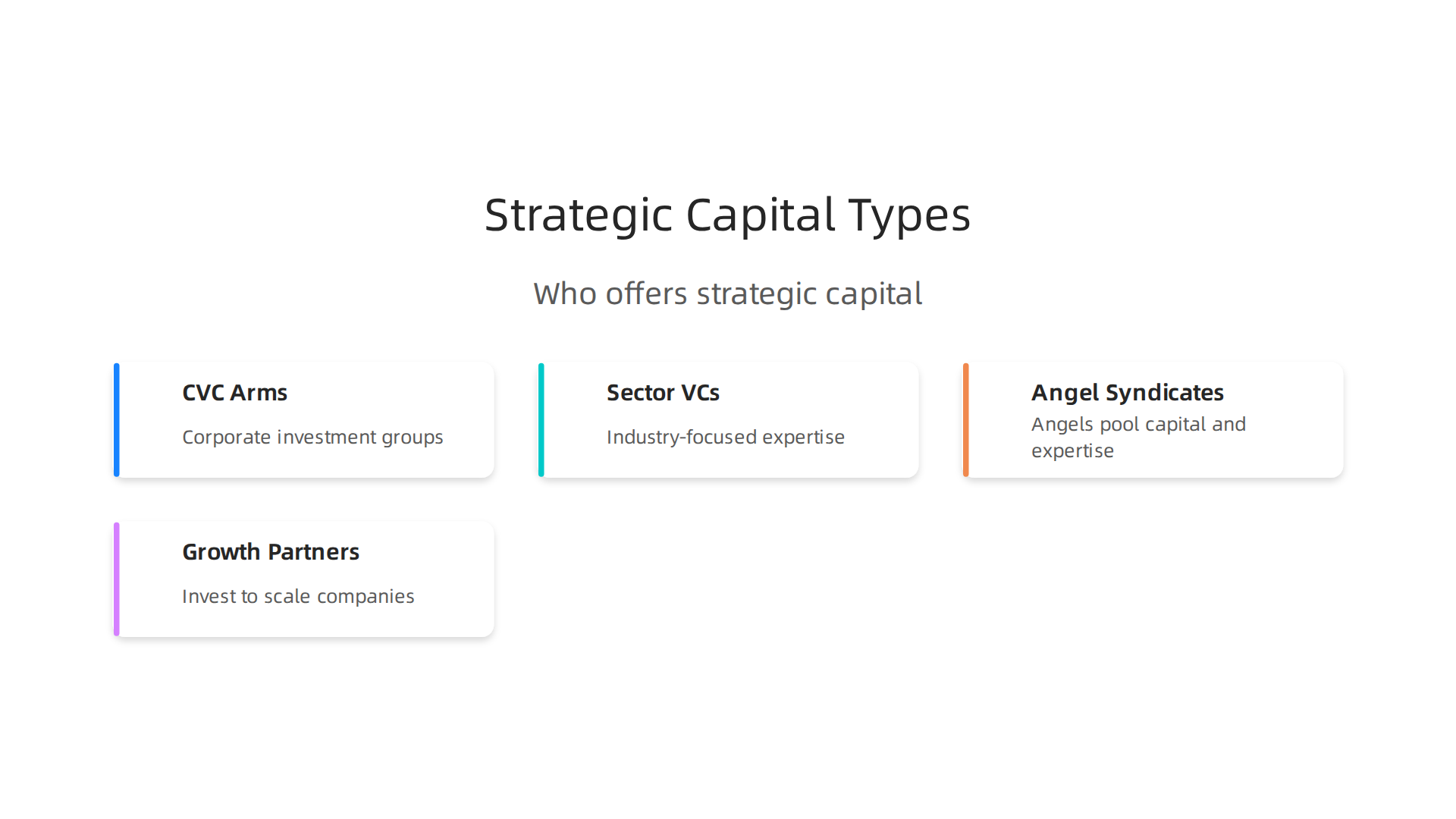
- Corporate Venture Arms: These are investment groups inside larger companies. They invest in startups that can help their main business grow or find new ideas. For example, a big tech company might invest in a smaller startup whose technology fits well with what they do. This can lead to important partnerships where the startup gets a big customer or a way to sell their product to many more people. You can learn more about how these types of investors operate by reading about how corporate venture capital is the new power broker in startup funding.
- Sector-Focused Venture Capital (VC) Firms: These VCs focus on specific industries, like healthcare, clean energy, or software. Firms such as Wing Venture Capital or Aspect Investors become experts in their chosen fields. They not only provide money but also deep knowledge of that market, connecting startups with key players and helping them understand industry trends. This helps startups grow smartly within their special area.
- Strategic Angel Syndicates: Angel investors are wealthy individuals who invest their own money, often in very early-stage companies. When they form a syndicate, it means a group of angels pools their money and knowledge. These groups can be very strategic, offering not just cash but also important connections, mentorship, and specific business advice based on their own experiences.
- Growth Partners: These firms usually invest in companies that are already a bit bigger and looking to scale up quickly. They help companies expand their reach, improve operations, and get ready for even bigger steps, like going public or being acquired. Firms like Sands Capital or Think Equity LLC often play this role, providing funds and expertise to help a company jump to the next level of growth.
These strategic investors do more than just provide money. They offer what’s called "value-add." This extra help can look like a few things:
- Distribution: They might help a startup sell its products or services to a wider audience, using their own sales teams or customer networks.
- Product Integrations: They can help combine the startup’s product with their own offerings, making both stronger and more appealing to customers.
- Co-selling: This means the investor and the startup work together to sell products, sharing customers and sales efforts.
- M&A Pathways: For some startups, the goal is to be bought by a larger company. Strategic investors can help guide this process or even be the buyer themselves. This path can be an important part of a company’s journey, as detailed in many reports on venture capital globally in 2026, including the Global Private Equity and Venture Capital Overview and Outlook 2026.
How to identify strategic partners that align with your business model
After learning about the different kinds of firms that offer strategic capital, the next big step for founders is finding the right partner. It’s not just about getting money; it’s about finding someone who truly understands your business and can help you grow. Choosing wisely can help your company drive capital and achieve its goals. In 2026, many founders look for partners that offer more than just cash.
Here’s how to figure out if a strategic partner is a good fit for your company:

The Alignment Checklist: What to Look For
Think of this as a checklist to see if a potential investor’s goals match yours.
- Go-to-Market Overlap: Does the investor have a sales team or customer base that you can use? For example, if you sell software to small businesses, and a potential investor already sells other tools to small businesses, they could help you reach many more customers. This shared path to market can make a big difference in how quickly you grow.
- Customer Base Fit: Do the investor’s current customers look like your ideal customers? If an investor’s portfolio companies (the other companies they’ve invested in) serve the same kinds of people you want to reach, it means they know that market well. This can open doors to new sales and strong customer relationships.
- Product Roadmap Synergies: Does what your company plans to build in the future fit well with what the investor or their other companies are doing? Sometimes, an investor might have a product that could work even better if combined with yours. Or they might understand the next big trends in your field, helping you plan your future products smarter. Finding these connections means both sides can benefit more.
Researching Potential Investors
To find these aligning signals, you need to do some homework.
- Study Their Portfolio: Look at all the companies an investor has put money into. What industries are they in? How big are they? This helps you see if they have experience in your area and if your company would be a good addition to their family of businesses. Be aware that sometimes VCs invest in competing companies, which might show up in their portfolio overlap, a behavior some VCs reveal through observable signals like portfolio company overlap within the same category, as detailed in reports like Signs a VC Invests Competitively Simultaneously.
- Understand Their Behavior: Pay attention to how they talk about their past investments. Do they highlight helping companies with sales, product development, or getting acquired? This shows you their usual way of working with startups. You can often learn a lot by checking out their social media, news articles, or even asking other founders they’ve invested in. For a deeper dive into how venture capitalists strategize, consider reading about venture fund strategy how VCs pick power startup winners.
- Review Typical Partnership Terms: While the exact terms of an investment deal will be unique, you can research the general kinds of deals an investor usually makes. Do they prefer to invest early or later? Do they take a big stake in companies, or a smaller one? This helps you know what to expect.
By carefully checking these points, you can find a strategic partner who truly adds value beyond just money, helping you effectively drive capital and grow your business.
Want to stay informed about the broader tech market, including the latest in AI and its impact on startups? Get clear daily AI updates from The AI Newsletter Worth Reading.
Getting to the point of discussing deal terms means you’re close to a big step. This is where you really need to look at the paperwork closely. A "term sheet" is a document that lays out the main ideas of an investment deal before everything is set in stone. Think of it as a plan or a blueprint for how the investment will work. While most of it is a plan and not fully binding, some parts like keeping things secret or agreeing not to talk to other investors are binding right away, as highlighted in "Term Sheet Review: The Complete Guide for Deal Teams" and "From Investment Term Sheet to Long-Form Documents".
Understanding these terms is key to making sure the deal helps you drive capital effectively, without giving up too much control of your company. Many investors, like those at Sands Capital or Wing Venture Capital, will have their own standard term sheets, but you can always discuss the details.
What to Watch For in the Deal
When you look at a term sheet, you’ll see several important parts.
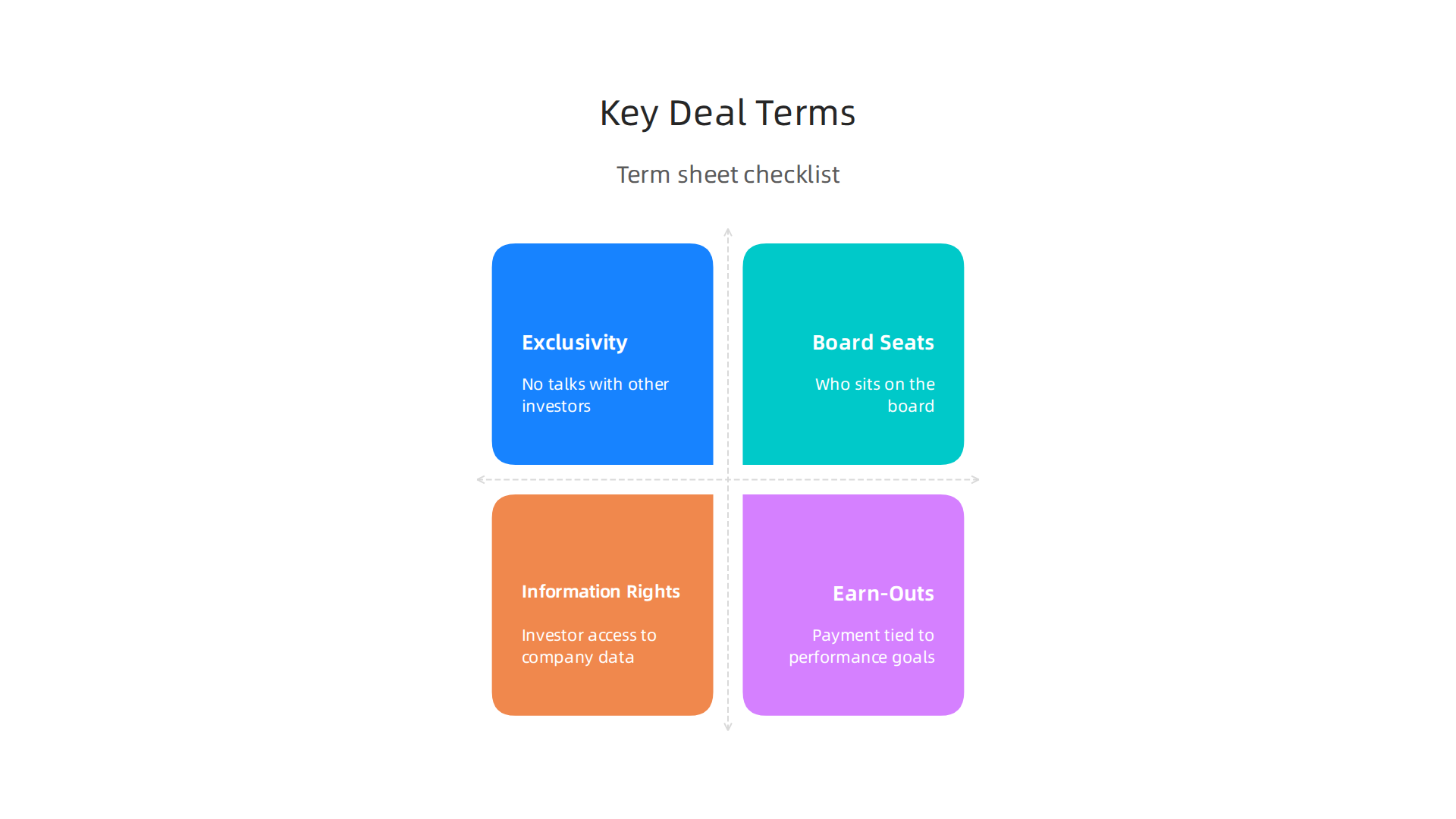
These parts can really change how much power you keep as a founder and how your company might sell later on.
- Exclusivity: This means you promise not to talk to other investors for a certain time. It gives your potential partner time to finish looking into your company. While this is often a binding part of the term sheet, it’s important to understand how long it lasts and what it truly covers.
- Board Seats: This is about who gets to sit on your company’s board of directors and help make big decisions. An investor might ask for one or more seats. While having experienced people on your board can be good, giving up too many seats can mean losing control of your company’s direction. For example, firms like Aspect Investors might bring valuable expertise, but their board representation terms are crucial.
- Information Rights: This clause gives the investor the right to see certain company information, like your financial reports or business plans. This is normal, but you should know what kind of information they can ask for and how often.
- Earn-Outs: Sometimes, a deal includes an "earn-out." This means that part of the money you get depends on your company reaching certain goals after the investment. It can be a way to make sure everyone is working towards the same success.
Different Ways to Structure a Partnership
The way an investment is set up also changes how much control you have and your options for the future.
- Equity with Strategic Commitments: This is when an investor buys a piece of your company (equity) and also promises to help you in specific ways, like with sales or product development. This can be great if you find a partner who truly aligns with your business goals, helping you grow faster. This method lets you drive capital while gaining active support.
- Revenue Share: Instead of giving up a part of your company, you agree to give the investor a percentage of your future sales for a set time or until they get a certain amount of money back. This can be good if you want to keep more ownership but still need cash.
- Convertible Instruments (like Convertible Notes or SAFEs): These are like loans that turn into equity later, often during your next fundraising round. They can be simpler and faster to set up early on, but the terms for conversion need to be carefully understood. For founders working with firms like Think Equity LLC, understanding how these convertibles impact future valuations is key.
Each of these structures has its own pros and cons, especially when it comes to keeping control of your company and what happens when you eventually sell it. Getting good advice on these legal documents, often called "key clauses in term sheets," is very important for founders aiming to succeed in 2026. You can learn more about key term sheet clauses to consider when negotiating with investors to fully grasp their impact on your company’s future.
Getting to the point of discussing deal terms means you are close to a big step. This is where you really need to look at the paperwork closely. A "term sheet" is a document that lays out the main ideas of an investment deal before everything is set in stone. Think of it as a plan or a blueprint for how the investment will work. While most of it is a plan and not fully binding, some parts like keeping things secret or agreeing not to talk to other investors are binding right away, as highlighted in Term Sheet Review: The Complete Guide for Deal Teams and From Investment Term Sheet to Long-Form Documents.
Understanding these terms is key to making sure the deal helps you drive capital effectively, without giving up too much control of your company. Many investors, like those at Sands Capital or Wing Venture Capital, will have their own standard term sheets, but you can always discuss the details.
What to Watch For in the Deal
When you look at a term sheet, you’ll see several important parts. These parts can really change how much power you keep as a founder and how your company might sell later on.
- Exclusivity: This means you promise not to talk to other investors for a certain time. It gives your potential partner time to finish looking into your company. While this is often a binding part of the term sheet, it’s important to understand how long it lasts and what it truly covers.
- Board Seats: This is about who gets to sit on your company’s board of directors and help make big decisions. An investor might ask for one or more seats. While having experienced people on your board can be good, giving up too many seats can mean losing control of your company’s direction. For example, firms like Aspect Investors might bring valuable expertise, but their board representation terms are crucial.
- Information Rights: This clause gives the investor the right to see certain company information, like your financial reports or business plans. This is normal, but you should know what kind of information they can ask for and how often.
- Earn-Outs: Sometimes, a deal includes an "earn-out." This means that part of the money you get depends on your company reaching certain goals after the investment. It can be a way to make sure everyone is working towards the same success.
Different Ways to Structure a Partnership
The way an investment is set up also changes how much control you have and your options for the future.
- Equity with Strategic Commitments: This is when an investor buys a piece of your company (equity) and also promises to help you in specific ways, like with sales or product development. This can be great if you find a partner who truly aligns with your business goals, helping you grow faster. This method lets you drive capital while gaining active support.
- Revenue Share: Instead of giving up a part of your company, you agree to give the investor a percentage of your future sales for a set time or until they get a certain amount of money back. This can be good if you want to keep more ownership but still need cash.
- Convertible Instruments (like Convertible Notes or SAFEs): These are like loans that turn into equity later, often during your next fundraising round. They can be simpler and faster to set up early on, but the terms for conversion need to be carefully understood. For founders working with firms like Think Equity LLC, understanding how these convertibles impact future valuations is key.
Each of these structures has its own pros and cons, especially when it comes to keeping control of your company and what happens when you eventually sell it. Getting good advice on these legal documents, often called "key clauses in term sheets," is very important for founders aiming to succeed in 2026. You can learn more about Key Clauses in Term Sheets to fully grasp their impact on your company’s future.
Designing a partnering strategy that attracts strategic capital
After understanding the different ways an investment can be structured, the next step is to create a plan that truly attracts the right strategic partners. This means not just looking for money, but for partners who can help your company grow in specific ways.
First, you need to clearly tell your company’s story in a way that matters to these strategic partners.

Think about what they care about most. This includes showing:
- How your company fits with theirs: Can your product or service easily work with what they already do? This is called "integration proofs."
- How you can help them sell more: Do you have good sales numbers or a way to reach customers they want? These are "channel metrics."
- Plans to work together: How will you combine your efforts to reach shared goals? This could be a "joint go-to-market plan."
A strong narrative like this makes it clear how your company can add value beyond just profits. You want partners who see your business as a key part of their own future success. This helps you drive capital that comes with valuable support and connections, not just cash. Many investors look for specific milestones that show a company is ready for a strategic alliance, as described in guides for Strategic Investment Clause Samples.
Second, you should make it easy for partners to start working with you. This involves putting together simple agreements at the beginning.
- Pilot agreements: These are small, trial projects that let both sides test how well they work together without a big commitment. It’s a low-risk way to show your value.
- NDAs (Non-Disclosure Agreements): These legal papers keep your secrets safe while you share important information with potential partners.
- Phased engagement: Instead of jumping into a full partnership, you can start with smaller steps. This builds trust over time and speeds up the process of making a bigger commitment.
By having these things ready, you reduce worries and make it faster for a partner to say "yes." This thoughtful approach helps you secure investment and grow your business with the right allies. Want to know more about how different groups manage their money and partnerships? You can explore what is a capital investment group how to partner for growth 2026.
Beyond fundraising, keeping up with broader tech trends is crucial.
Get clear daily AI updates from The AI Newsletter Worth Reading.
After getting your company story ready and making it simple for partners to work with you, the next big step is the actual talks. This part is called negotiation and due diligence. It’s about making sure you get a good deal that helps your company grow while still letting you keep control and flexibility. You want to drive capital that comes with the right support, not just money.
Smart Ways to Negotiate Your Deal
When you sit down to talk about the deal, it’s like putting together a puzzle. You need to fit your needs with the investor’s needs. Here are some smart ways to protect your company’s future:
- Keep Your Options Open: Try to avoid agreements that limit what you can do later. This means not signing away your rights to raise more money from other investors or to sell your company easily in the future. Founders should work to keep their company’s future flexible, including options for raising more money, making new partnerships, and even selling the company, as discussed in Corporate Venture Capital Deal Terms: What Founders Should Negotiate.
- Watch Out for Strict Rules: Some deals might have "restrictive covenants." These are rules that can tie your hands, like making it hard to hire certain people or enter new markets. Your goal is to keep these rules to a minimum so you can keep running your business how you think is best. It is key for founders to understand how to negotiate with investors to keep control of their company. You can learn more about How To Negotiate With Investors.
- Know Your Worth: Before you even start talking, have a clear idea of what your company is worth. This helps you get a fair price for your company shares and protects how much of your company you own. Learning how to negotiate valuation is a core skill. Using clear numbers and explaining how you got them helps you set a strong starting point for talks. This can involve making sure the cost of employee stock options is handled smartly so it doesn’t unfairly reduce your share later. Founders should aim to protect their ownership, often by knowing about important negotiation points when discussing money with investors, as explained in 9 Proven Venture Capital Negotiation Techniques.
- Get Legal Help: Always have a good lawyer look over any paperwork. They can spot hidden problems and help you understand the tricky parts of a deal. They can also help you clearly say what parts of the deal you are not willing to change.
What Investors Look For (Due Diligence)
"Due diligence" is when investors really dig into your company to make sure everything you’ve told them is true and that there are no big surprises. This is a very important part of closing a deal, and being ready for it can speed things up. Many investors want to finalize this step before getting too deep into discussions, as mentioned in Negotiating & Closing Startup Investment Deals.
Here’s what strategic investors typically check:
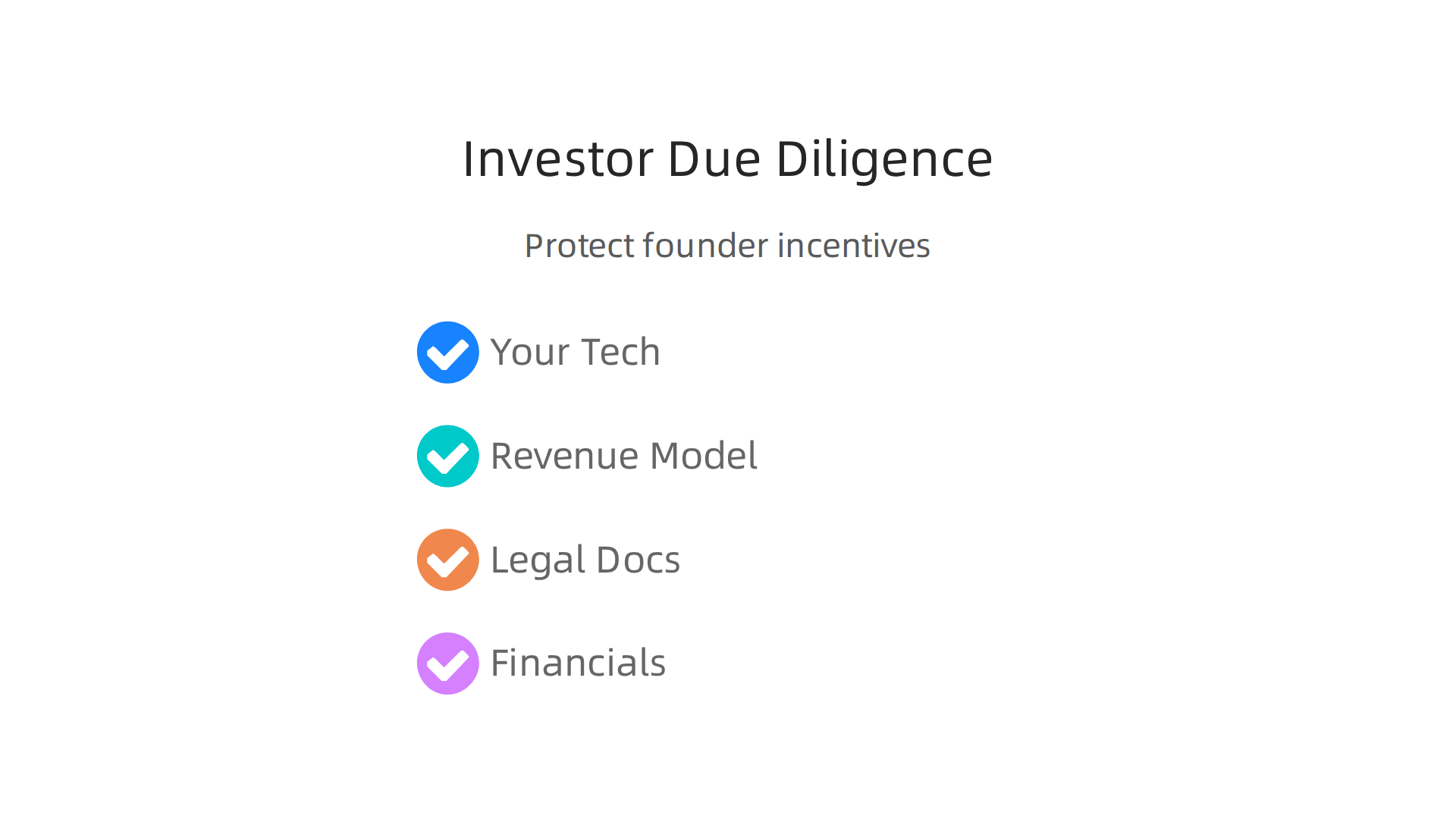
- How Your Tech Works: They will look closely at your product or service to see if it actually does what you say it does. They also check how well it can connect with their own systems if you plan to work together.
- How You Make Money: Investors will review your sales numbers, customer agreements, and how you plan to get more customers. They want to see that your business can grow and make money consistently.
- Your Papers and Rules: They’ll check all your legal documents, like business licenses, contracts with customers and employees, and important details about your inventions (intellectual property or IP). This makes sure everything is in order and you don’t have legal problems coming.
- Your Financial Health: They want to see your money records, how much you spend, and how much you earn. This helps them understand if your company is stable and can use their investment wisely.
Being prepared with clear, organized information for all these checks makes you look professional and builds trust. It shows investors you know what you are doing and are ready to really drive capital to grow your business. If you are looking to understand more about different types of investors, you might find it useful to explore private equity funds a startup founders guide.
After understanding what investors look for during due diligence, it’s time to think about the different kinds of deals you can make. It’s not just about getting money; sometimes, it’s about getting the right kind of help. This is where strategic capital partnerships come in. They are special deals where an investor gives you money but also offers big help like business connections, market access, or shared technology.

This kind of partnership can really help your company drive capital in smart ways, going beyond just cash.
Illustrative Models and Case Examples of Strategic Capital Partnerships
When a bigger company or a special type of venture capital firm invests in your startup, it often comes with a plan for how you’ll work together. These plans, or "playbooks," are like roadmaps for how the partnership will help you grow.
Here are some common types of strategic partnerships:
- Distribution-First Partnerships: Imagine your small company makes a great new app, but you don’t have many ways to get it to lots of people. A strategic investor, perhaps a large tech company, might invest in you and then help you sell your app to their huge customer base. They have the "distribution" network ready. Startups that make products for many users, like consumer apps or business software that needs to reach many offices, often fit well with this model. This helps them quickly drive capital through wider reach.
- Product-Embedded Partnerships: Sometimes, your technology can be a missing piece for a bigger company’s product. In this type of partnership, the investor helps your tech become a part of what they already offer. For example, if you have a new way to clean water, a big water utility company might invest in you and then use your technology inside their systems. This works well for business-to-business (B2B) tech startups or those with very specific, deep technology.
- Co-Development Partnerships: This is when your company and the strategic investor work together to build something completely new. You both put in ideas, money, and effort to create a new product or service. This is common for research-heavy startups or those working on cutting-edge tech that needs more development before it’s ready for the market. An investor like Wing Venture Capital or Aspect Investors might bring not just money, but also their deep industry knowledge to co-develop the next big thing.
When to Pick a Strategic Investor
Choosing a strategic investor over just a financial backer is a big decision. You might want a strategic partner when:
- You need more than money: If your company needs help reaching new customers, finding new talent, or getting expert advice in a specific area, a strategic partner can offer that. This is more than just getting cash; it’s about getting smart capital.
- You want to grow faster: A big partner can open doors to markets and resources that would take you years to build on your own. They can help you scale up much more quickly.
- You want to make your product better: With co-development, you get to tap into a partner’s resources and knowledge to improve your offerings or build new ones.
- You’re looking for market validation: Having a known company like Sands Capital or Think Equity LLC invest in you can also show others that your startup is worth watching. This can attract more customers and future investors.
The goal is to drive capital that does more than just fill your bank account. It should also help you reach your business goals faster and more smartly. For founders seeking to navigate these complex decisions, staying informed about market trends and investor motivations is essential.
For daily insights into AI and technology, which can help you understand the landscape of potential strategic investors and how to drive capital effectively, make sure to read The Deep View Newsletter.
Model A: public VC / growth investor-led strategic programs
We just learned about different types of strategic partners. Now, let’s talk about another special kind: public venture capital (VC) firms and growth investors. These are big investment groups like Sands Capital, Wing Venture Capital, Aspect Investors, or Think Equity LLC. They do more than just give money; they offer special programs to help startups grow.
These programs often include:
- Follow-on support: This means they keep helping you even after they invest. They might help you hire the right people, plan your business steps, or fix problems.
- Introductions to LPs/customers: They can introduce your startup to their own investors, called Limited Partners (LPs). These LPs might become your first big customers or even invest more money in you later. They also connect you to other important customers. This kind of help can really drive capital and new business to your company.
When is this model a good fit? This type of partnership is often best when you need broad help with your business. It’s great if you want to grow fast and need expert advice on many different parts of your company. It is different from working with a big company that wants your tech for its own product, which we talked about before. Public VCs and growth investors focus on helping you get bigger overall. Understanding how these groups work can help you find the right path to drive growth through new ventures. For more details on how these funds choose who to invest in, check out information on venture fund strategy.
Model B: corporate venture and strategic integration partnerships
After looking at how public VCs help grow businesses, let’s explore a different kind of partner: corporate venture capital (CVC) firms. These are special investment arms of big companies, not standalone investment groups like Sands Capital or Wing Venture Capital. Companies set up CVCs for many reasons. They mainly want to gain access to new ideas and fresh technology that startups are building. This helps them stay current and competitive in their own industry.
Another big reason is to expand their reach, like finding new ways to sell their products or connect with more customers. For example, ICL Group launched its CVC arm to drive new ideas and growth in agricultural solutions, as seen in their CVC success story with Lavie Bio. Sometimes, a big company might invest in a startup with the idea that they might buy the startup completely later on. This is called M&A optionality. These investments can truly drive capital and customers for startups.
The way these partnerships are set up can vary. Often, it involves the corporate venture arm taking a small ownership stake (minority equity) in the startup. But it’s not just about the money. These deals usually come with commercial agreements, like plans for how the startup’s product will work with the larger company’s business.
Common ways they work together include:
- Joint pilots: This is when the startup and the big company test out new ideas or technologies together on a small scale. This helps both sides see if the solution truly works before a bigger commitment. You can see examples of such pilot projects in corporate venturing reports from institutions like Wharton’s Mack Institute.
- Distribution agreements: The larger company might agree to help the startup sell its products or services through its own sales channels. This can give a startup a huge boost.
In essence, corporate venture capital is becoming a very important way for startups to get funding and grow. These partnerships are often about more than just money; they offer strategic help and market access that can be invaluable. It’s truly changing how startups secure funding, making corporate venture capital the new power broker. For instance, a look at the Capital One Ventures profile shows how large corporations are actively engaging in this space.
Scaling the relationship: governance, KPIs, and exit planning with strategic partners
After getting funds and support from corporate venture capital (CVC) partners, the real work begins: managing that relationship so it stays strong and helps the startup grow. It’s not enough to just get the money; you need a clear plan for working together. This means setting up good rules for how things are run (governance), knowing how to measure success (KPIs), and having a roadmap for the future (exit planning).
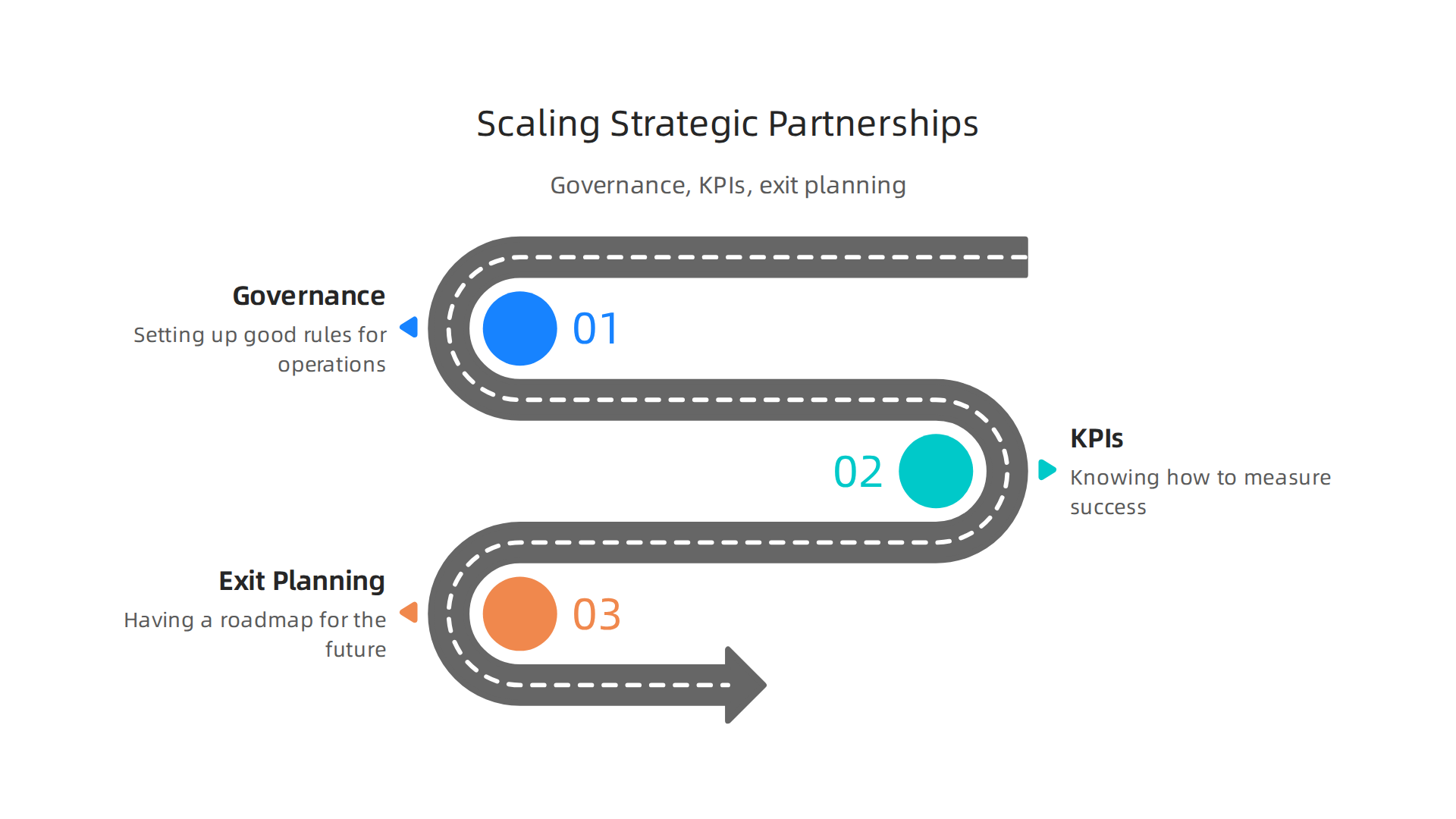
To keep these strategic partnerships productive, both sides need to agree on how decisions will be made and how often they’ll check in. This can involve regular meetings between the startup’s leaders and the corporate partner’s team. Clear communication helps ensure everyone is working towards the same goals and helps the startup continue to drive capital and innovation. Putting these structures in place is key to driving growth through new ventures, as noted in reports on corporate venture capital strategies by firms like KPMG.
It’s also important to decide on Key Performance Indicators (KPIs). These are like scorecards that show how well the partnership is doing. For example, if the partnership is about developing a new product, KPIs might track how quickly prototypes are made or how many customers try the new solution. Regular reports help both the startup and the corporate partner see progress and address any issues early. This way, the partnership can adapt and truly help the startup thrive.
Finally, founders must think about what happens when the partnership ends or when the startup wants to move to its next big step, like being bought by another company or going public. This is called exit planning. It’s crucial to make sure the agreements with a corporate partner don’t limit the startup’s options for the future. For example, a partnership should be set up in a way that doesn’t make it harder for other investors, like those at Sands Capital or Wing Venture Capital, to show interest later on. Thinking about this from the start ensures the partnership helps, rather than hinders, long-term success. Experts often explain the frameworks for managing corporate finance, including exit planning, to ensure smooth transitions and future opportunities.
Staying informed about market shifts and new technologies, such as AI, is also vital for both founders and investors in navigating these complex relationships.
Get clear daily AI updates from The AI Newsletter Worth Reading.
Summary
This article explains why strategic capital—funding paired with active support, distribution, or product integration—can be more valuable than pure financial investment for many startups. It walks founders through the main types of strategic investors (corporate venture arms, sector-focused VCs, angel syndicates, growth partners), and how each can add distribution, co-selling, or M&A pathways. You’ll get a practical alignment checklist to research investor portfolios, go-to-market overlap, and product synergies, plus guidance on term-sheet risks like exclusivity, board seats, information rights, and earn-outs. The piece covers alternative deal structures (equity with commitments, revenue share, convertibles), negotiation tactics to retain flexibility, and how to prepare for investor due diligence. It also describes common partnership models—public VC programs and corporate venture integrations—and shows how to set governance, KPIs, and exit plans so partnerships scale without blocking future options. After reading, founders will know how to target, evaluate, structure, and manage strategic capital deals that drive growth beyond cash.