

Why understanding investment group profiles and capital strategies matters for founders and investors
Starting or growing a company needs money, or capital. But getting the right kind of money from the right people can be tricky. For both founders looking for money and investors looking for good places to put their money, it is really important to know who you are dealing with.

Not all investment groups are the same, and they do not all think about "partners capital" in the same way.
Imagine you are a founder with a great idea. You might talk to many different groups, like Charlesbank Capital Partners or Harren Equity Partners. Each of these groups has its own way of investing. Some get their money from many different people and big organizations, which are called LP-backed funds. Others might be family offices, which manage money for a single very rich family, or even big companies with their own special investment arms. Each of these types has different rules and reasons for investing. For example, family offices are often faster at making decisions than bigger funds. In 2026, many family offices are moving their money into new kinds of investments like private equity, with some putting over 20% of their money there Family Office Alternative Investment Allocation 2026.
Understanding these differences is key. If you are a founder, knowing how groups like Penumbra Investment Group or Capital World Investors make decisions helps you find a better match for your company. If you are an investor, knowing the different ways capital is structured helps you choose the best paths for your own money.
This guide is here to help clear things up. We will look at the common types of investors you might meet, how their money pools are set up, and what things make them decide to invest. We will also give you clear steps you can take to figure out which investor is a good fit for your company and how to talk to them. This way, you can build strong partnerships that help everyone succeed. To learn more about selecting the right partners, check out our guide on how to choose private equity investment companies for your startup.
Staying informed about new technologies like AI is also very important for both founders and investors. Knowing the latest trends can give you a big advantage.
Get clear daily AI updates from The AI Newsletter Worth Reading.
Investor archetypes: How ‘partners capital’ compares to family offices, VC funds, and corporate investors
We have seen that different investment groups have their own ways of working. Now, let us look closer at the main kinds of investors you might meet. Knowing who they are and how their money works is like having a map.

It helps founders know who to talk to and what to say. It also helps investors understand the different places they can put their money, like with Charlesbank Capital Partners or Harren Equity Partners.
Let us break down these investor types:
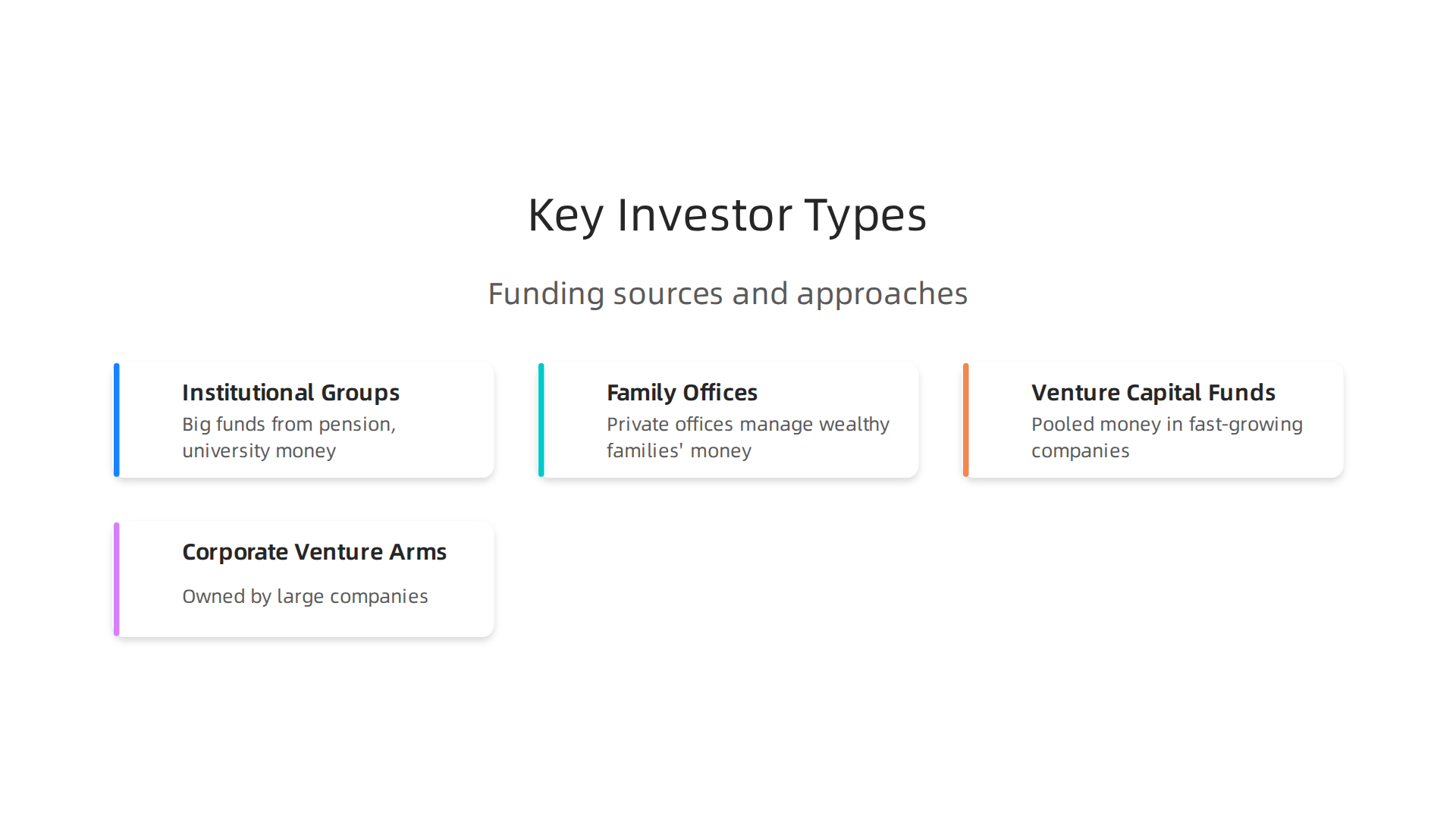
Institutional Investment Groups
These are big funds that get their money from many different places. Think of big pension funds, university money, or large organizations. When we talk about "partners capital" in these groups, it often means the money that the actual partners of the investment firm put in themselves. This money is often mixed with the money from outside investors (called Limited Partners or LPs). Groups like Penumbra Investment Group and Capital World Investors might fall into this category. They often have strict rules and a long process for making investment decisions. They look for specific financial goals and often want to see a clear plan for how their money will grow over many years.
Family Offices
These are private offices that manage money for very wealthy families. They are different because the money comes from one family, or sometimes a few families. In 2026, many family offices are looking to invest in new ways, like putting money directly into companies. Family offices can move very fast when they decide to invest. Some can make a decision in a few weeks if they really like a company, much faster than bigger funds which can take many months to commit capital The 50 Largest Family Offices in the World (2026).
This speed is because they have fewer steps to go through. There are different types of family offices too, like single-family offices for one family or multi-family offices for several families Family Office Structure: SFO vs MFO vs VFO vs EFO (2026). They often look for good long-term ideas and can be very patient with their money, sometimes even leading early-stage funding rounds for startups.
Venture Capital (VC) Funds
VC funds collect money from many investors, just like institutional groups. This pooled money is then invested in new, fast-growing companies, usually startups. The partners who run the VC fund also put in their own "partners capital." A key thing about VC funds is that they usually have a set time frame, often about ten years, to grow the companies they invest in and then return money to their investors. This means they are often looking for companies that can grow very quickly and become very valuable in a shorter amount of time. They have specific ways they judge companies, like looking at how fast a company is growing its money (Annual Recurring Revenue or ARR) and how well it keeps customers Startup Metrics Guide: What Investors Actually Care About. This can be very different from how a family office might think about an investment. You can learn more about these differences in our guide on Venture Capital and Private Equity: The Critical Difference for Startup Fundraising.
Corporate Venture Arms
These are investment groups owned by large companies. Their main goal is not just to make money, but also to help the bigger company. For example, a tech giant might invest in a small startup that makes new software. The startup gets money, and the big company might get early access to new technology or ideas that help its own business. They often bring more than just money to the table, like business connections or help with product development.
Understanding these different groups helps you know what each investor is looking for. It helps founders make a better plan for finding money, and it helps investors pick the right paths for their own capital.
Understanding who investors are is just the start. Now, let us look at how they set up their money to invest. This is called their "capital structure" or "partnership model." It tells us how they put money into companies, what rules they follow, and how they expect to get their money back.
Capital structures and partnership models: funds, direct investing, co-invest, and secondary plays
Different investors use different paths to put their money to work.
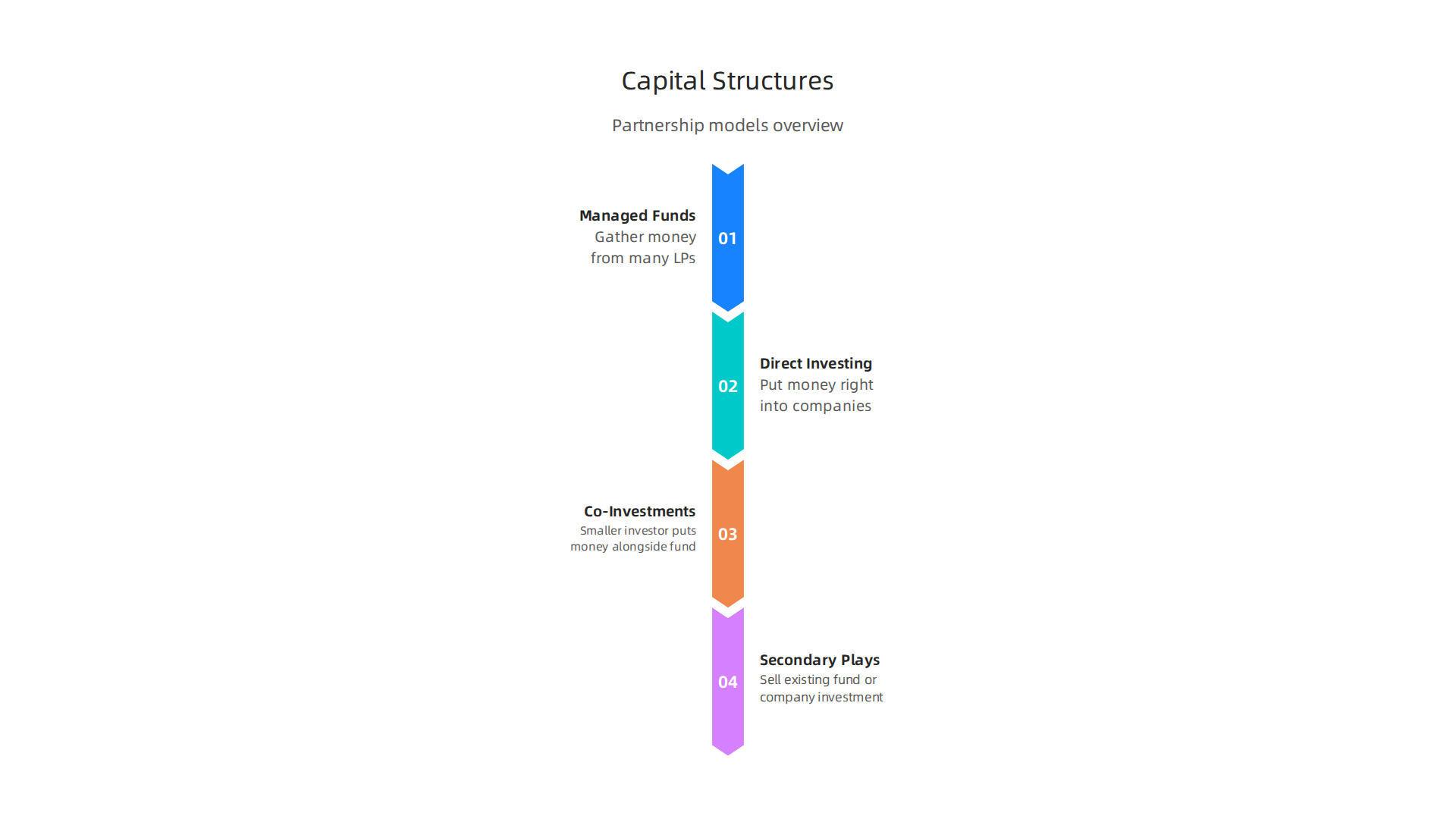
Some collect money from many people into a big fund. Others invest their own money directly. Knowing these structures helps both founders looking for money and investors making choices.
Managed Funds
Many big investors, like those from institutional groups, use managed funds. They gather money from many smaller investors, known as Limited Partners or LPs. The people who run the fund, the General Partners (GPs), also put in their own money. This is a form of partners capital that shows they believe in their own choices.
Firms like Charlesbank Capital Partners or Harren Equity Partners often manage large funds. These funds typically have strict rules and a set time, often around ten years, to invest and then return money to their LPs. This means they look for companies that can grow in specific ways to meet these timelines. Legal forms for these funds often include limited partnerships, as seen in places like Germany in 2026 Investment Funds 2026 – Global Practice Guides – Chambers.
Direct Investing
Instead of pooling money into a fund, some investors choose to put their money right into companies. Family offices are great examples of this. They use the family’s money to invest directly. This often makes them very quick to decide, much faster than larger funds. In 2026, many family offices are putting money directly into private companies. This can be faster because fewer steps are needed to make a choice Family Office LP Trends in Alternatives 2026.
They might use different legal setups for these direct investments. This way of investing gives them more control and they can be more patient, looking for long-term growth instead of quick returns. For more details on how family offices differ from venture capital funds, you can read about Family office investments: What’s different about venture capital funds?.
Co-Investments
Co-investing is when a smaller investor, often an LP of a larger fund, puts money into a company alongside that main fund. Think of it as a shared investment. This lets the smaller investor get more involved in a deal. They often get better terms, like lower fees, and can have a closer look at how the company is doing. Co-investments can be set up in many ways, sometimes through a special company just for that one deal, or as part of a "sidecar fund" that invests in many deals with the main fund Co-Investment, Sidecar Funds, and Fee Breaks. It’s a way to share the risk and the rewards Co‑Investing 101: Shared Risk, Shared Reward Explained.
Secondary Plays
Sometimes, an investor wants to sell their part of a fund or a company investment before the fund officially ends or the company sells. This is where "secondaries" come in. It means someone else buys that existing investment. This offers a way for early investors to get their money back sooner. These deals can be between LPs, or a fund manager might even set up a new fund to buy out older investments, letting some LPs cash out while others roll their money into the new fund The growing opportunity in private equity secondaries and …. This adds another layer of ways money moves in the investment world.
How These Structures Affect Decisions
Each of these ways of investing has a big impact on:
- Governance: Who makes the rules and how decisions are made. Managed funds have many rules, while direct investors can be more flexible.
- LP Expectations: What the investors expect to get back and when. Fund LPs have certain return targets and timelines.
- Return Targets: How much money they hope to make. This often decides what kind of investment tools they use, like simple equity, SAFE notes, convertible notes, or preferred stock rounds. For instance, high-growth startups often get funds through convertible notes or SAFE notes in their early stages.
Understanding these different structures is key for founders to pick the right investors and for investors to choose the best way to put their capital to work.
If you’re a founder or an investor looking to stay sharp on the latest in technology and how it impacts markets, consider keeping up with new insights.
Get clear daily AI updates from The AI Newsletter Worth Reading.
Understanding how investors structure their money is important. But just as vital is knowing where that money comes from in the first place.

This money often comes from different types of "limited partners" or LPs. These LPs provide the capital to investment funds, and their own needs and rules greatly shape how those funds invest.
Where capital comes from: LPs, endowments, sovereign wealth, and high‑net‑worth partners
The main source of money for many investment funds comes from a diverse group of LPs. These are the people or organizations that put money into a fund, expecting a return. They don’t manage the day-to-day investments, but their unique needs and rules, called "mandates," guide the fund’s choices. In 2026, many different types of LPs are looking to invest, each with their own goals.
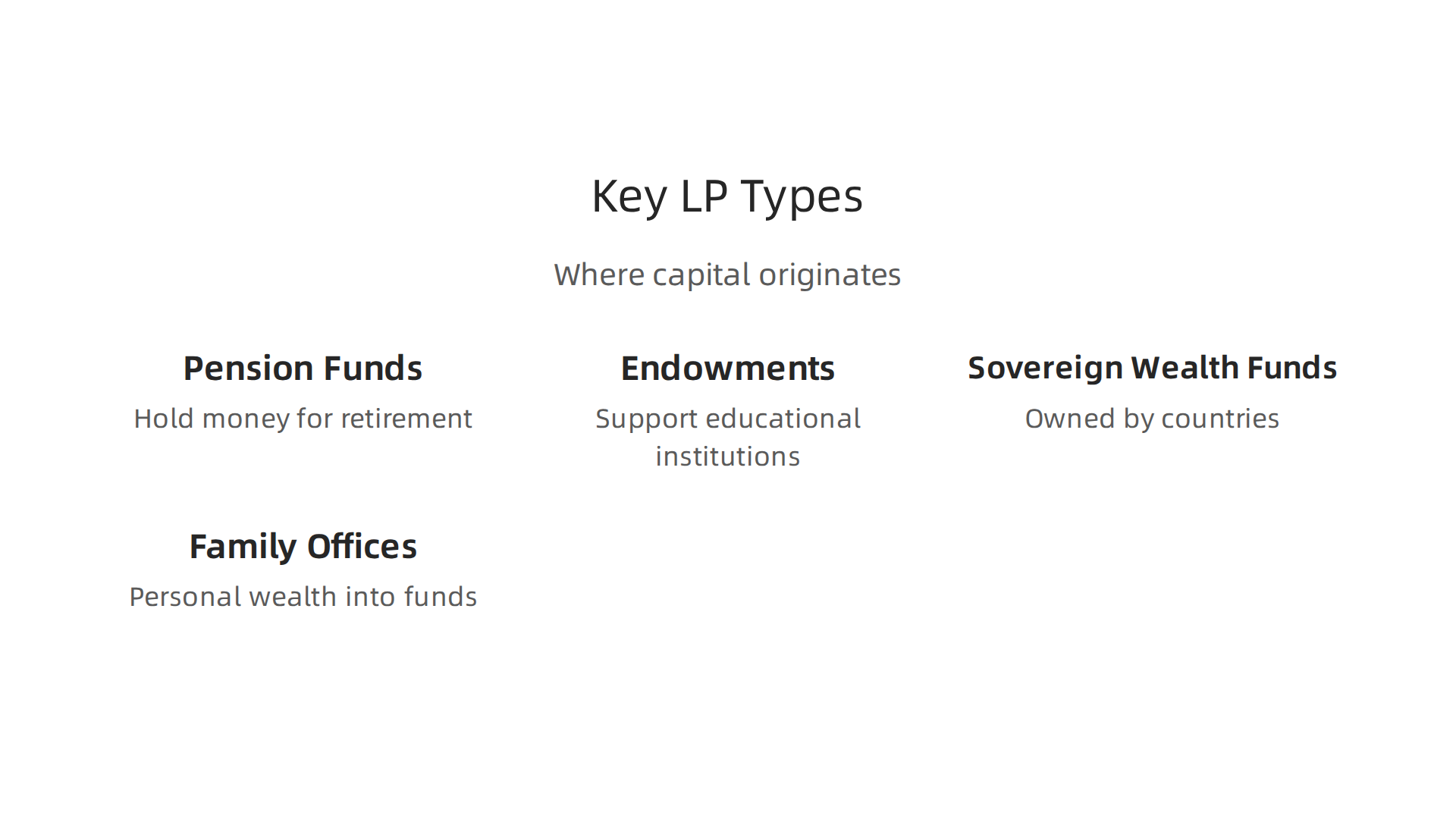
Let’s look at the key types of LPs:
Pension Funds
These funds hold money for people’s retirement. They are often very large and look for steady, long-term growth. Pension funds make significant commitments to venture capital and private equity, often seeking ways to ensure future payouts for retirees. Institutional LPs like pension funds are very active in the investment world, with some committing as much as $25 million per investment in 2026, according to one ranking of allocators 2026 LP Selection Committee — 61 Institutional VC Allocators Ranked.
Endowments
University endowments are funds that support educational institutions. They are also long-term investors, but sometimes they can take on a bit more risk than pension funds to achieve higher returns. Endowments often allocate a good portion of their money to private markets, averaging between 15% to 20% in 2026 for larger endowments. Smaller endowments may allocate less due to their size Institutional LP Allocation Trends in 2026. They look for strong financial growth to fund their universities for years to come.
Sovereign Wealth Funds
These are special funds owned by countries. They invest government money to benefit their citizens, often over many decades. Sovereign wealth funds are very big and have long-term goals, making them powerful players in the global investment scene. They can invest in a wide range of assets, from stocks and bonds to private companies.
Family Offices and High-Net-Worth Individuals
While some family offices invest directly, many also act as LPs in funds. High-net-worth individuals, who have a lot of personal wealth, also put their money into funds. Actually, family offices are currently the fastest-growing group of LPs investing in venture capital in 2026 LPs Allocating to Venture… | Live VC LP Database — Altss. This group of partners capital often has more flexibility than large institutions and can be quicker to make investment decisions.
How LP Mandates Affect Investment Decisions
The type of LPs a fund has plays a huge role in how that fund operates. Each LP group has its own "mandate," which sets out rules about:
- Risk Tolerance: How much risk the fund can take. Pension funds might prefer safer bets, while endowments or family offices might allow for more aggressive, high-growth investments.
- Investment Cadence: How quickly the fund needs to deploy its money. Some LPs might want the fund to invest rapidly, while others are fine with a slower pace.
- Expected Returns and Timelines: When LPs expect to see their money back and how much profit they hope to make. This directly influences a fund’s exit strategy and how long it can hold investments. For instance, the mix of LPs can affect things like a fund’s ability to recycle capital (reinvest early returns) or set aside money for future investments in existing portfolio companies, known as "follow-on reserves." The expectations for when companies should be sold or go public are also tied to LP needs.
For founders, knowing a fund’s LP base helps them understand the fund’s true colors. It reveals if a fund is looking for quick wins or is a patient partner for long-term growth. When choosing who to get money from, understanding these differences is key. This helps founders pick the right investment partners, like how one would choose private equity investment companies for a startup that fits their business needs. Firms like Charlesbank Capital Partners or Harren Equity Partners carefully manage their funds based on their LPs’ expectations. Even groups like Penumbra Investment Group or Capital World Investors tailor their strategies based on the source of their capital. In 2026, understanding these LP mandates is crucial for both sides of the fundraising coin.
After a fund gathers money from its partners, the next big step is figuring out where to put that partners capital to work. This means doing a lot of careful checking, called due diligence, to find the best startups. Funds want to make sure their investments will grow and provide good returns for their LPs. In 2026, funds like Charlesbank Capital Partners, Harren Equity Partners, Penumbra Investment Group, and Capital World Investors look at many things before making a decision.
Due diligence and decision drivers: metrics, team signals, and market validation that matter to partners
When a fund decides to invest, it doesn’t just hand over money. It goes through a deep dive into the startup.

This is called due diligence. The goal is to truly understand the business and its chances of success. What investors look for can change based on the type of fund, but some things are always important.
What Investors Look For: Key Numbers and Business Health
Investors pay close attention to the startup’s numbers, or "metrics." These tell them how well the business is actually doing.
- Unit Economics: This looks at how much money a company makes from each customer versus how much it costs to get that customer. Investors want to see that a company makes more money from a customer than it spends to get them. For example, institutional investors often want a company’s customer lifetime value to customer acquisition cost ratio (LTV:CAC) to be at least 3:1, meaning they earn three times what they spend to get a customer Unit Economics Institutional Investors Actually Require.
- Total Addressable Market (TAM): This means how big the market for the startup’s product or service could be. A bigger market means more room to grow.
- Annual Recurring Revenue (ARR) and Growth Rate: For companies that charge a regular fee, like software companies, ARR is key. Investors look at how fast this revenue is growing. For Series A investments, a high growth rate is very important, ideally 7-15% month-over-month Series A Traction Metrics: Benchmarks & Investor.
- Defensibility: This refers to how hard it would be for other companies to copy the startup’s idea or business model. Things like unique technology, strong brands, or a large customer base can make a company more defensible.
Beyond the Numbers: People and Market Signals
Investors also look at things that aren’t just numbers. These "non-financial signals" help them understand the real potential and risks.
- Founder Track Record and Team: Who is leading the company? Do they have experience? Is the team strong and capable? Investors want to know that the people running the show can actually make their plans happen. Having a strong technology background can help founders attract more investors.
- Coachability: Are the founders open to advice and willing to learn? Investors often want to work with people who can take feedback and adapt.
- Market Timing: Is it the right time for this product or service? Sometimes an idea is great, but the market isn’t ready for it yet.
- Go-to-Market (GTM) Traction: How is the startup getting its product to customers? Is its strategy working? This shows that the company can attract users or buyers.
- Regulatory Risk: Are there any government rules or changes that could harm the business? Investors want to know about potential problems ahead of time.
Getting Ready for Due Diligence
Founders should prepare for these deep dives by having all their information organized. This includes detailed financial reports, a clear plan for how they will grow, and a strong story about their team and what makes their idea special. Being honest and transparent during this process builds trust with potential investors.
Staying on top of market and tech trends is also a big part of preparing. Investors are always looking for what’s new and next.
Get clear daily AI updates from The AI Newsletter Worth Reading.
After a fund has looked closely at many startups, the next step is to build a smart plan for all the companies it decides to put its money into. This plan is called "portfolio construction." It’s about deciding how to use the partners capital to get the best results while also managing risks.
Building the Investment Mix: Concentrated or Spread Out?
When investment groups like Charlesbank Capital Partners, Harren Equity Partners, Penumbra Investment Group, and Capital World Investors create their portfolios, they often choose one of two main ways to invest their money:
- Concentrated Bets: Some funds pick just a few companies that they believe will be huge winners. They put a lot of money into each one. This way can lead to very big returns if they pick right, but it also means more risk if a few companies don’t do well.
- Diversified Portfolios: Other funds spread their partners capital across many more companies. They might invest smaller amounts in each. This helps lower risk because if one company doesn’t succeed, others might. There’s no one perfect number of companies to invest in; the goal is to spread out risk and meet specific goals for the fund, as experts explain in guidance on VC Fund Portfolio Construction Strategy.
The choice between these methods depends on the fund’s goals, how much risk its partners are willing to take, and what kind of companies it invests in.
Keeping Money Ready: Reserve Allocation and Follow-On
A big part of portfolio management is planning for the future. Funds don’t just invest once; they often need to put more money into their best-performing companies later on. This is where "reserve allocation" comes in. It’s the money a fund keeps aside specifically for these future investments.
Typically, investment funds set aside a good portion of their money for follow-on investments. For example, many venture capital funds reserve about 40-60% of their total capital for this purpose, with seed funds sometimes keeping 30-40% and later-stage funds reserving more, sometimes 50-70% What is Reserve Allocation? Definition for Founders (2026). This allows them to support successful companies through more funding rounds, helping them grow even bigger. This is called a "reserve strategy," and it’s key to how a fund manages its partners capital to get the most out of its investments. You can learn more about follow-on reserve strategy for VC fund managers to see how this works.
The way a fund manages its follow-on investments and how quickly it invests its money (called "pacing") can really affect its relationship with founders. Giving consistent support helps build trust and shows founders that the investment group is a true partner in their journey.
The Finish Line: Exit Strategies
Every investment group has a plan for how it will eventually sell its shares in a company to return money to its partners. These are called "exit strategies," and they greatly influence which companies a fund chooses to invest in and how it supports them.
Here are the main ways funds plan to exit:
- Mergers & Acquisitions (M&A): This means another, often larger, company buys the startup. Many startups are built with this kind of exit in mind.
- Initial Public Offering (IPO): This is when a company sells its shares to the public for the first time on a stock exchange. IPOs can lead to very high returns, but they are less common and usually only happen for very successful and large companies.
- Secondary Sales: Sometimes, early investors or employees want to sell their shares before a big M&A or IPO. They can sell these shares to other investors or funds in what’s known as a secondary market. This gives them a way to get some money back sooner. Another strategy is "co-investments," where partners invest directly in a company alongside the main fund. This has become a key trend in 2026, helping investors strengthen their ties with sponsors and gain more control over portfolio management, as highlighted in 2026 Perspectives in Private Equity: LP Co-Investment in 2026. To understand more about the bigger picture of investing, you might want to look into the venture capital private equity critical difference for startup fundraising.
These exit strategies guide funds in how they nurture their portfolio companies, aiming to help them grow into attractive targets for buyers or the public market.
Looking ahead to 2026, the world of investing is always changing, and new trends are making big waves in how investment groups manage their money and choose companies. These "macro trends" are very important for funds like Charlesbank Capital Partners, Harren Equity Partners, Penumbra Investment Group, and Capital World Investors, as they shape how they use their partners capital and what they look for in a startup.
Emerging trends and signals for 2026: ESG, AI allocation, secondaries, and cross-border plays
Here are some of the big trends influencing how investment funds think about portfolio construction and what it means for founders looking for money:
More Money for AI Companies
One of the biggest trends in 2026 is how much money is flowing into Artificial Intelligence (AI) companies. Investors are very excited about AI and how it can change many parts of our lives. Funds are setting aside more of their partners capital to invest in startups that use AI in smart and new ways. This means if your startup is in AI, you might find investors more eager to listen. They are looking for ways to grow their money by investing in new technologies. If you want to stay updated on the latest in AI, consider subscribing to The AI Newsletter Worth Reading.
Caring for the World: ESG Investing
ESG stands for Environmental, Social, and Governance. It means investors are not just looking at how much money a company makes, but also how it impacts the planet and people. In 2026, many funds are making sure their investments fit with ESG ideas. They want to put their partners capital into companies that are good for the environment, treat their workers well, and are run honestly. For founders, this means telling a story about how your company is not just profitable but also responsible. Funds are increasingly looking at this as part of their portfolio construction and volatility management in 2026.
The Rise of Secondary Market Deals
We talked about how "secondary sales" are when early investors sell their shares before a big exit. This market is growing a lot in 2026. More investors are buying shares from earlier investors or employees. This trend gives everyone more ways to get money back from their investments sooner. It also means there are more ways for funds to manage their portfolios and get returns for their partners. It reflects a shift in shifting paradigms for portfolio construction in 2026.
Investing Across Borders: Geographic Diversification
In 2026, funds are also looking beyond the usual tech hubs to find great startups. They are spreading their investments to different cities and even different countries. This is called geographic diversification. It helps funds find new ideas and lower risks by not putting all their eggs in one basket. For founders, this means opportunities can be found in more places than ever before. You might want to explore how to choose your regional tech hubs for optimal startup fundraising to find these new chances. Learning about world tech centers 2026 can also help you see where these opportunities might be.
For founders, understanding these trends is key. When you talk to investors, you need to show how your company fits into these big ideas. Whether it’s through smart AI use, a strong ESG plan, or being part of an exciting new region, aligning your story with these trends can help you attract the right partners and secure the partners capital you need.
Summary
This article explains how different investment groups structure and deploy