
Why startup capital strategy matters now
Starting a new business is exciting. You have a great idea and a plan to make it happen. But how do you get the money, also known as startup capital, to bring your big idea to life? This is where figuring out your startup capital strategy comes in. In 2026, finding the right money for your business is more important than ever. It’s not just about getting cash; it’s about getting the right cash at the right time.
Many founders face a tough choice. They need to find money sources that will keep their business running for a long time.

This is called maximizing your runway. They also need to be careful not to give away too much of their company too early. This is known as minimizing dilution, which means you keep more ownership of your hard work. In 2026, this balance is critical because the fundraising landscape is always shifting. For instance, in Q1 2026, the median amount of money raised in a seed funding round in the U.S. was $3 million Q1 2026 Startup Fundraising Benchmarks. This shows how much capital is often needed, and why strategic planning is critical from the very start.
But what if you want to create a business to start with no money? Or maybe you’re thinking about using crowdfunding for small business, like trying to start a gofundme for your project? These are real options, and this guide will help you understand them all. You’ll learn about practical financing options, from talking to traditional investors to finding more creative ways to get money. We’ll also cover basic negotiation skills, how to get your pitch ready, and common mistakes that founders often make when seeking startup capital. Our goal is to give you the tools to make smart choices for your company’s future, ensuring you build a strong foundation. Discover more Smart Capital Solutions for Every Startup Funding Stage that fit your business needs.
Understanding how to secure startup capital is vital for any new venture. But staying informed about the bigger picture in tech and business is also a huge advantage. Get clear daily AI updates from The AI Newsletter Worth Reading.
Understanding how to secure startup capital is vital for any new venture. But staying informed about the bigger picture in tech and business is also a huge advantage. Get clear daily AI updates from The AI Newsletter Worth Reading.
Understanding the fundraising landscape and valuation benchmarks
When you’re looking for startup capital, knowing what your company is worth is super important. This is called "valuation." It tells investors how much they might need to pay for a part of your business. In 2026, these numbers change a lot, depending on how new your business is and what kind of work you do.
Let’s look at what businesses are valued at for different stages of funding:
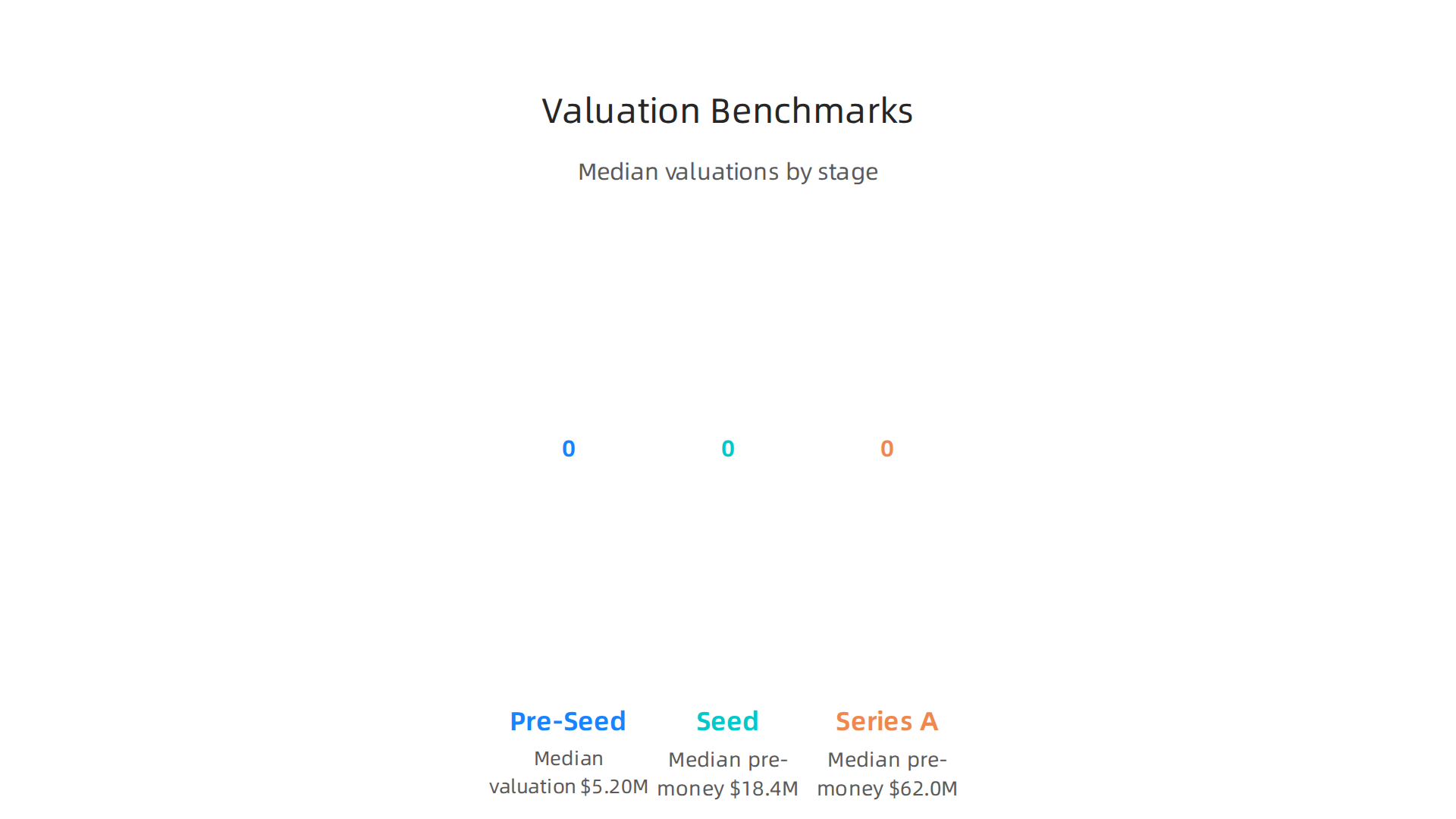
- Pre-Seed Stage: This is for very new businesses just starting out. In H1 2026, the median valuation before getting money (pre-money valuation) for a pre-seed company in the US was about $5.20 million, staying pretty steady from last year Pre-Seed H1 2026: Valuations Steady, Dilution Low. Some sources even show median pre-seed rounds aiming for a $8-$12 million post-money valuation, meaning after the investment 45 Startup Funding Statistics for 2026. It’s a tricky dance to show your potential here.
- Seed Stage: Once you have a basic product or idea that’s working, you look for seed funding. The median post-money valuation for seed rounds hit a new high of $24 million in Q4 2025 Startup Fundraising Stats 2026: VC Trends. By Q1 2026, the median pre-money valuation for US seed rounds was around $18.4 million Seed round valuation 2026: benchmarks, dilution, time. This shows a good jump in how much companies are worth as they grow past the very first stage.
- Series A Stage: This stage is for businesses that are really taking off and need more money to grow big. In Q1 2026, the median pre-money valuation for Series A reached about $62.0 million, with the typical amount of money raised being $19.6 million Seed-to-Series-A graduation rate benchmarks in 2026. This means companies at this stage are seen as much more valuable.
These numbers can change based on many things. For example, some sectors, like AI, might see different valuations than others. Overall, how the economy is doing (macro trends) and what’s popular in your specific industry can make investors more or less excited, which then changes how much they think your startup is worth. It’s important to understand these broader trends to better position your business for investors. Staying informed about these shifts can help you in your quest for startup capital.
To better understand how venture capitalists decide which startups to back, explore Venture Fund Strategy How VCs Pick Power Startup Winners.
Now that you know what your company might be worth, the next big step is to find the right kind of money to help it grow. This is where choosing the right sources of startup capital comes in. Not all money is the same. Different types of investors offer different things, and what’s best for a brand new idea might not be best for a business that’s already making sales.
Let’s look at the most common ways to get startup capital for your business.
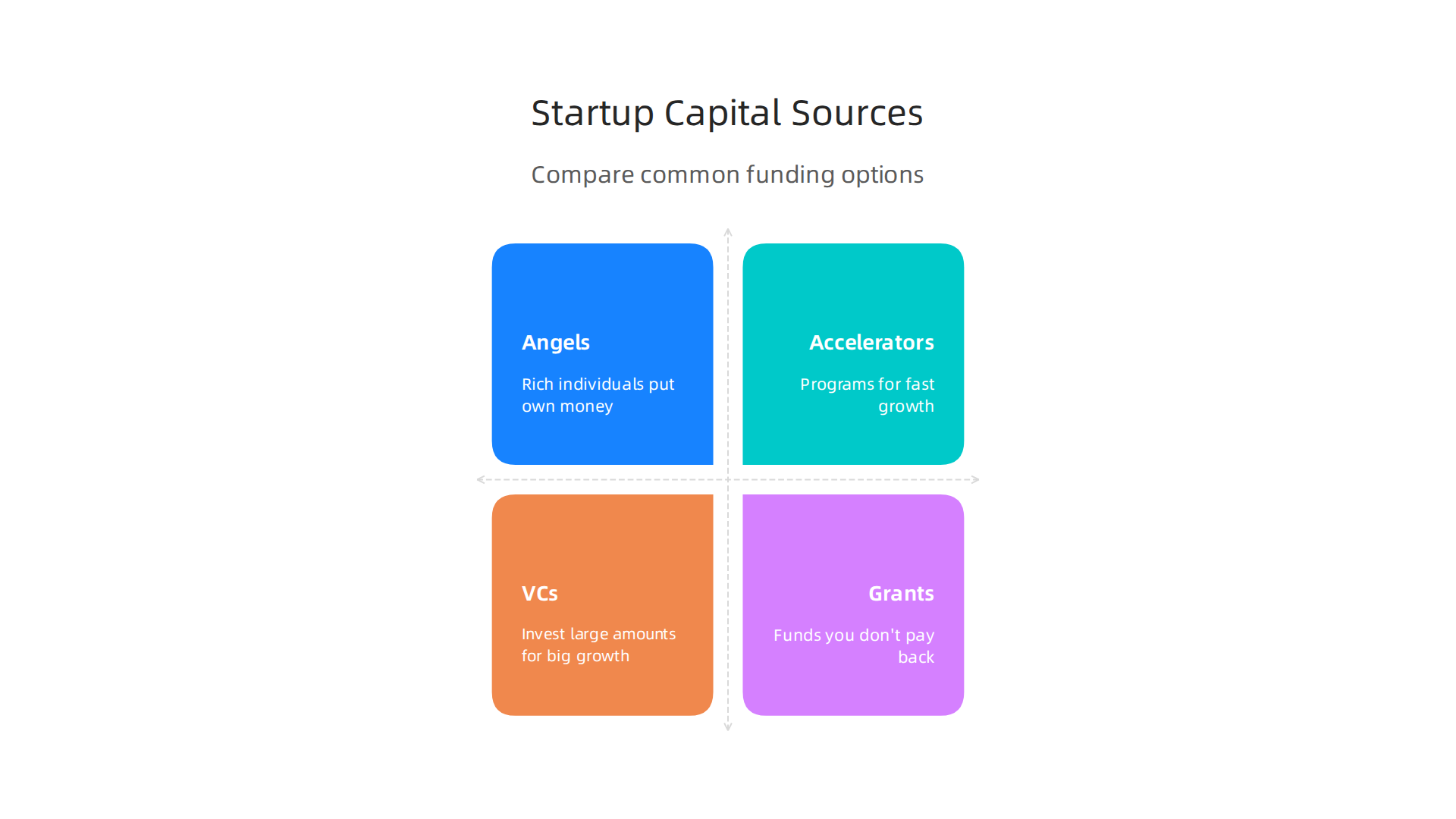
Angel Investors: The Early Believers
Angel investors are usually rich individuals who put their own money into very early-stage companies. They often invest smaller amounts than bigger firms, typically from $25,000 to $100,000, but sometimes more.
- Pros: They are often quick to decide and can bring valuable advice and connections from their own business experiences.

They might be the first to believe in your idea when no one else will. If you’re wondering about raising seed funding, learning about mastering the angel investment network to secure seed funding for your startup can be very helpful.
- Cons: They might want a bigger piece of your company for their money because the risk is higher. Sometimes, they might also want a say in how you run your business.
- Best for: Very new companies, even those still figuring out their full plan or a business to start with no money. You need a strong idea and a passionate team.
Accelerators: Programs for Fast Growth
Accelerators are special programs that help new businesses grow very fast over a few months. They offer a small amount of startup capital, mentorship, office space, and a network of useful people.
- Pros: You get a lot of help and learning in a short time. The connections you make can open many doors. They can be a great way to kickstart your business.
- Cons: These programs usually take a small part of your company (equity). They are also very demanding and intense, requiring a lot of hard work in a short period.
- Best for: Early-stage companies that have a working idea or product and are ready to push hard for quick growth. According to the Founder Institute, accelerator programs may offer a company valuation from $1 million to $7 million for a small equity stake Startup Funding Benchmarks & Requirements.
Venture Capital (VCs): For Big Dreams
Venture Capital (VC) firms manage money from other people and businesses. They invest large amounts, usually from $1 million to tens of millions, into companies they believe can grow very big and make them a lot of money.
- Pros: VCs can provide a huge amount of startup capital, helping you hire many people and grow very quickly. They often have deep connections in your industry and can offer strategic guidance. In Q1 2026, the median Series A deal size was $20 million Q1 2026 Startup Fundraising Benchmarks.
- Cons: VCs will take a bigger piece of your company, and they expect you to grow extremely fast. This means you might lose some control over your business decisions. They want to see strong results and will push you to get them. They usually only invest in businesses with proven sales or a large user base.
- Best for: Companies that have already shown good growth and have a clear plan to become a very large business.
Grants: Money You Don’t Pay Back
Grants are funds given to businesses, often by governments or foundations, that you don’t have to pay back. This kind of startup capital is usually for specific purposes, like research, innovation, or projects that help the community.
- Pros: It’s "free" money, meaning you don’t give up any part of your company. It can be great for projects that are hard to fund in other ways.
- Cons: Grants are very competitive and often come with strict rules about how you can use the money. The application process can be long and complicated. It’s usually not a way to get large amounts of general operating capital.
- Best for: Businesses working on new technologies, scientific research, or those with a clear social mission. Also, for some small businesses, things like crowdfunding for small business via platforms like a GoFundMe can be a similar idea for very specific projects or needs, although not a traditional grant.
Choosing the right source of startup capital depends on where your business is now and where you want it to go. Think about how much money you need, how much control you want to keep, and what kind of support would help you most.
After picking the right type of startup capital, the next big step is putting the deal down on paper. This means understanding how funding rounds are put together and, more importantly, reading and understanding a "term sheet." A term sheet is like a roadmap for your investment deal. It lays out the main rules and agreements between your company and the investors before the final legal documents are made. Think of it as a handshake deal, written down simply, that everyone agrees to before going into more complex legal talks. For founders, knowing how to read a startup term sheet is super important before you sign it How to Read a Startup Term Sheet Before You Sign It.
Key Clauses Founders Must Understand
A term sheet has many parts, but some are more important for you as a founder.
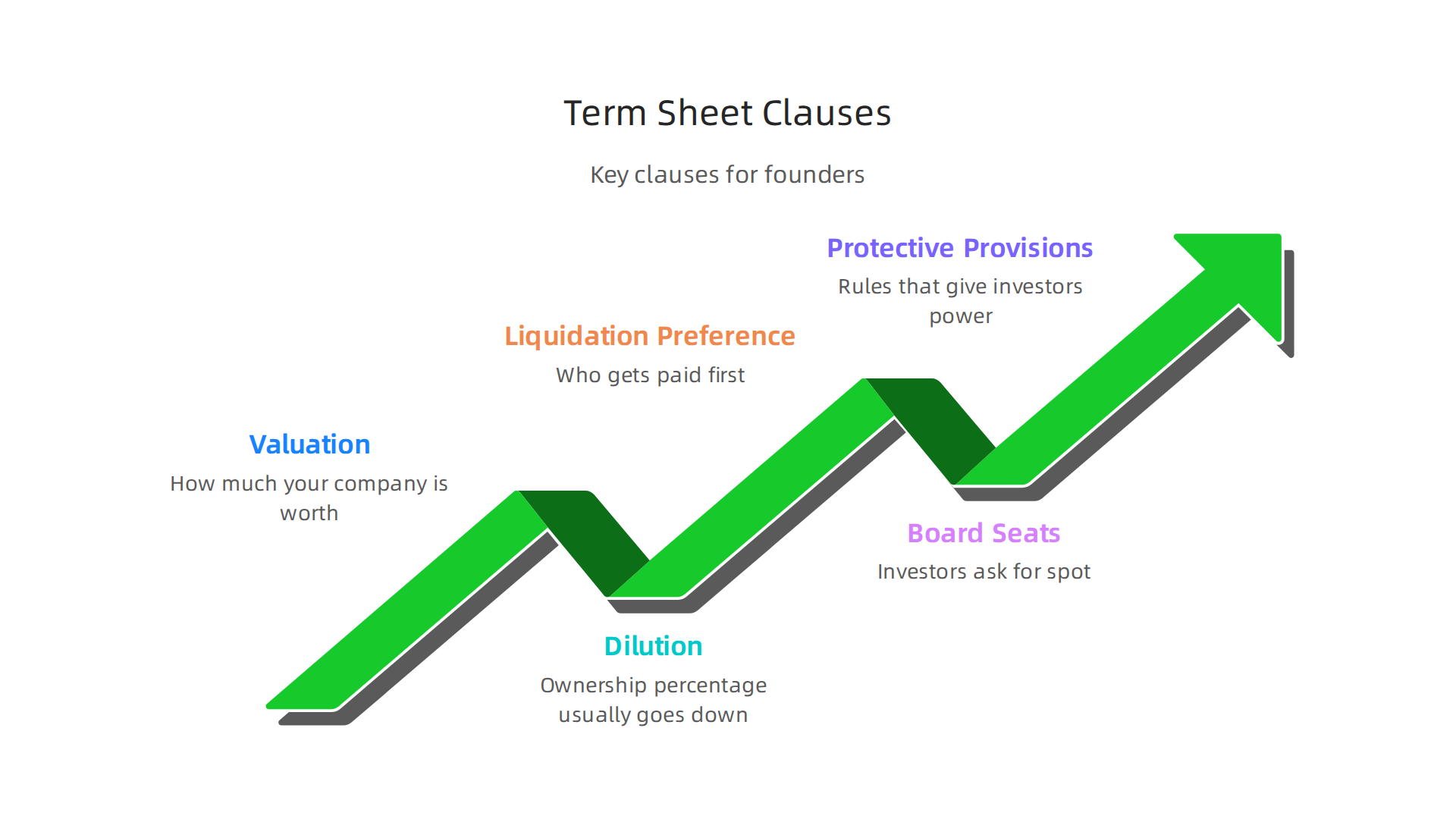
Understanding these can help you keep more of your company and steer its future.
- Valuation: This is about how much your company is worth. There are two types: "pre-money valuation" (what your company is worth before new money comes in) and "post-money valuation" (what it’s worth after the investment). The valuation directly affects how much of your company investors get for their money What is a Term Sheet? Common Terms & Examples for Startups.
- Dilution: When you take on new startup capital, new shares are created, and your ownership percentage of the company usually goes down. This is called dilution. It’s a normal part of getting investment, but you need to understand how much your share will shrink with each new round of funding. Learning about Typical Dilution Benchmarks can help you prepare.
- Liquidation Preference: This clause explains who gets paid first if your company sells or shuts down. Investors often want to get their money back, or even more, before you or other shareholders see any money. For example, a "1x liquidation preference" means investors get their original investment back before anyone else. This is a key part to look out for when negotiating term sheets Term Sheet Templates: Clauses to Look Out for During Negotiation.
- Board Seats: Investors, especially bigger ones, might ask for a spot on your company’s board of directors. This gives them a direct say in big company decisions. You need to think about how many people will be on the board and who they will be.
- Protective Provisions: These are special rules that give investors power to block certain big company actions, like selling the company, taking on more debt, or changing the business plan, even if you, as the founder, disagree. They are meant to protect the investor’s money.
It’s always a good idea to look at common term sheet examples to learn more about these clauses Term Sheet for Founders: Key Clauses & How to Negotiate.
Differences Between SAFEs, Convertible Notes, and Priced Equity Rounds
When you get startup capital, the way the money is given can be different. There are three main types of agreements for early-stage funding:
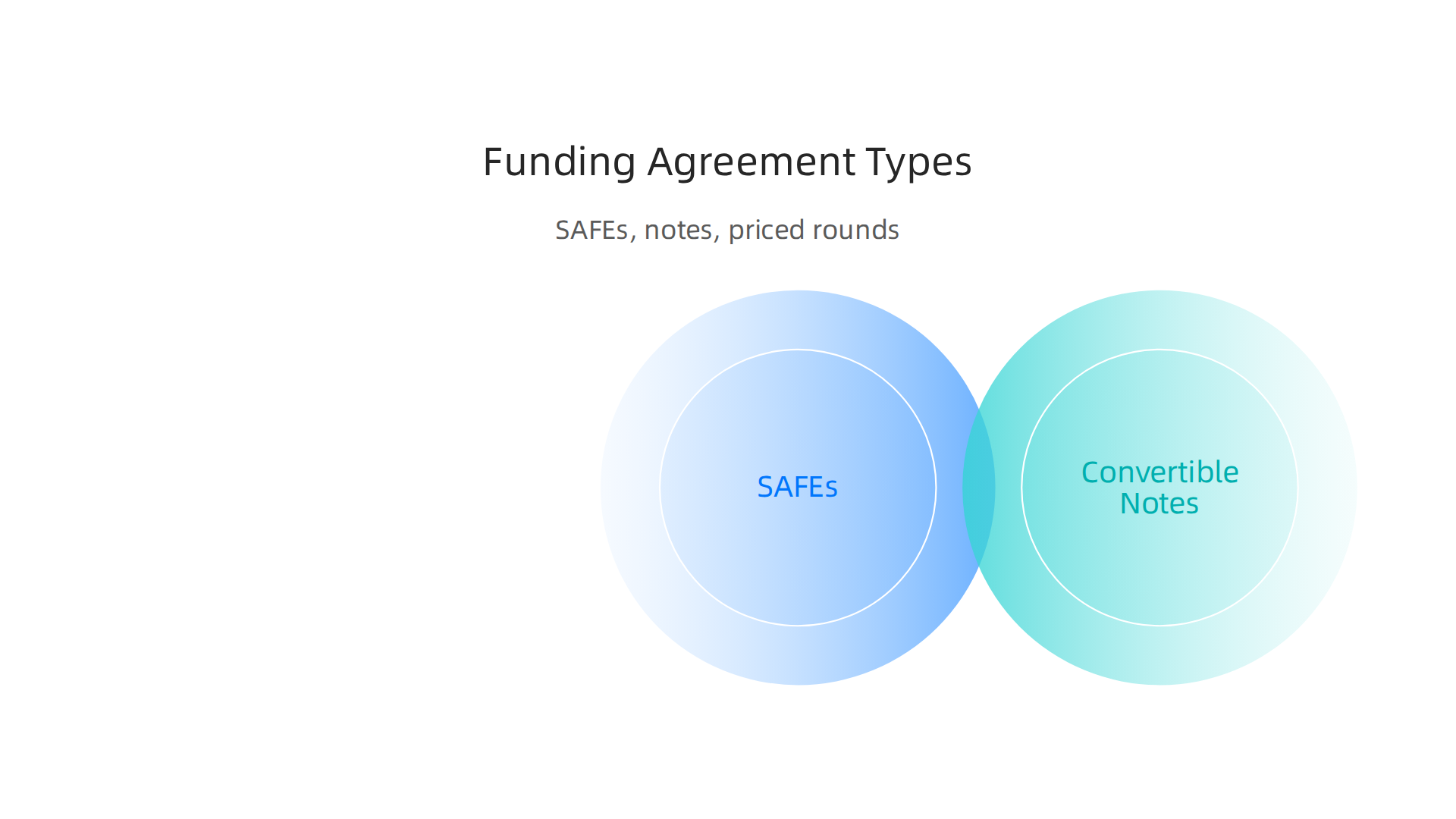
- SAFEs (Simple Agreement for Future Equity): SAFEs are popular for very early companies because they are simple. They are not a loan, and they don’t give investors ownership right away. Instead, they give investors the right to get company shares later, usually when the company raises a bigger, "priced" round of funding. SAFEs often come with a "valuation cap" or a "discount rate" that sets a maximum price for conversion or gives a cheaper price per share for early investors SAFE Notes, Convertible Notes & Term Sheets: A Founder’s Guide. In Q1 2025, SAFEs were used in 90% of all pre-seed funding rounds State of Pre-Seed: Q1 2025. Investors with SAFEs don’t have voting rights until their investment turns into shares 2026 WilmerHale Venture Capital Report.
- Convertible Notes: These are like a short-term loan that turns into equity (shares) later. They have an interest rate and a maturity date, just like a regular loan, but instead of being paid back in cash, they convert to shares at a later funding round. Like SAFEs, they often include a valuation cap or a discount rate. While SAFEs are more common now, convertible notes were very popular for seed-stage investment in the past. Most SAFEs are "post-money," meaning the investor gets a fixed ownership percentage, while convertible notes are more often "pre-money" State of pre-seed: Q2 2024.
- Priced Equity Rounds: This is a more traditional way of raising startup capital. In a priced round, your company’s value is set right away, and investors buy shares at that specific price. This happens more often in later funding rounds (like Series A and beyond) when a company has shown more growth and has a clearer idea of its worth. This is often the goal when using SAFEs or convertible notes.
Knowing the differences between these options helps you pick the right one for your company’s stage and goals. For founders looking to navigate investment choices, understanding your options for equity investment companies in 2026 is vital. Staying current with market trends, especially in the fast-changing world of technology and startups, gives you a big edge in negotiations.
Get clear daily AI updates from The AI Newsletter Worth Reading.
After understanding the different ways to get startup capital, like SAFEs or priced equity rounds, your next big job is to show investors why your company is worth their money. This means putting together a strong pitch. A good pitch tells a clear story and backs it up with solid numbers, also called "traction metrics" and financials.
What Investors Look for in Your Pitch
Investors, especially those looking at early-stage companies in 2026, want to see proof that your business is growing and that people like your product. They don’t just want ideas; they want to see progress.
1. Traction Metrics: Showing Your Progress
Traction metrics are numbers that show how well your business is doing.
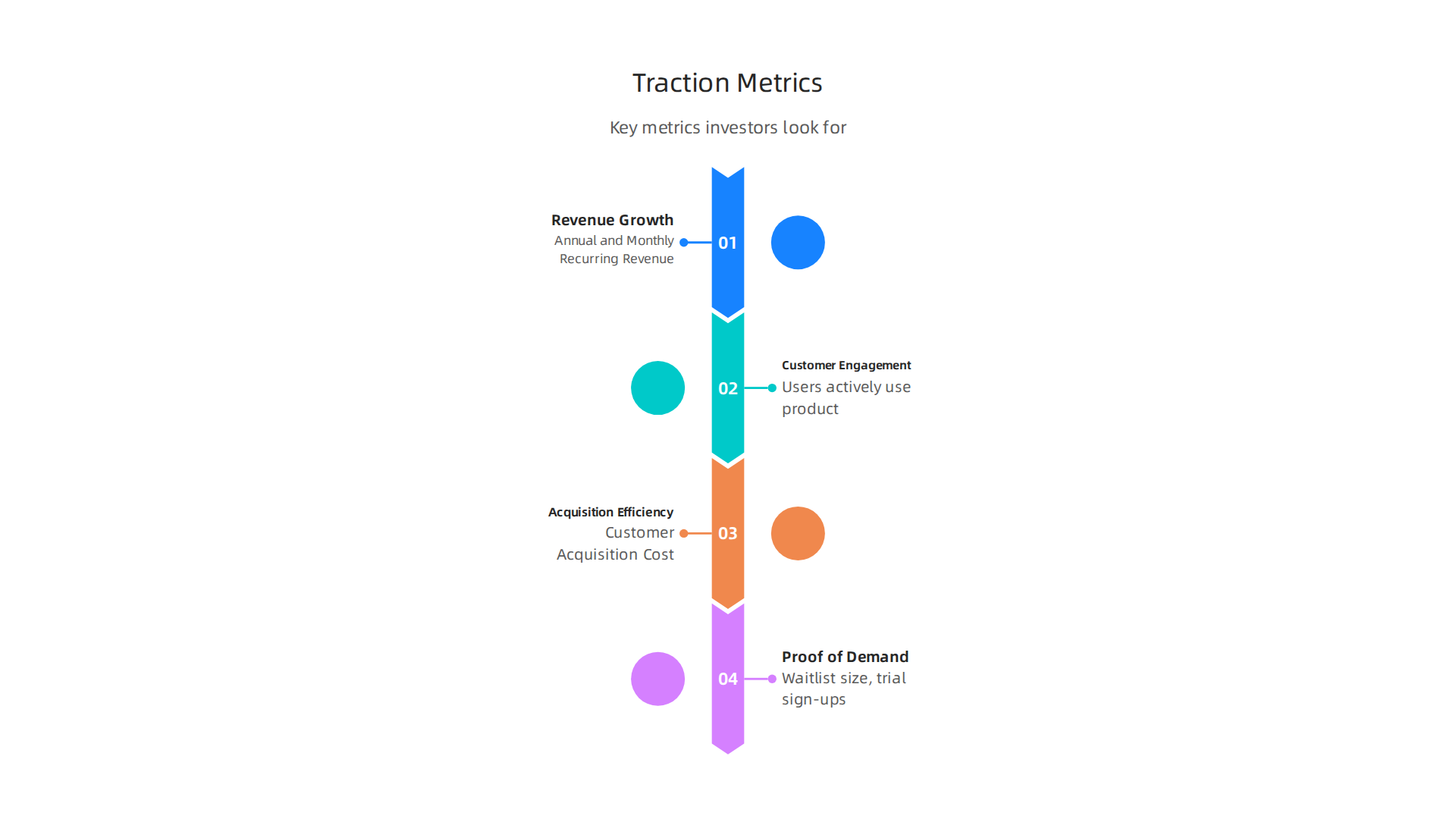
These are often about growth, how much money you make, and how happy your customers are.
- Revenue Growth: If your business makes money, investors will look at Annual Recurring Revenue (ARR) and Monthly Recurring Revenue (MRR). These numbers show how much predictable money you get from customers who pay regularly. A good sign for early companies, especially in the software world, is showing strong month-over-month growth, often 10-15% or even more for stronger candidates, with ARR targets from $100K to $700K for seed rounds in 2026, depending on the sector Startup Traction Matrix: Investor Benchmarks by Stage ….
- Customer Engagement and Retention: It’s not enough to get new customers; you need to keep them. Investors want to see how many users actively use your product and how long they stick around. For instance, Weekly Active Users (WAU) and Daily Active Users (DAU) are key for apps, showing if customers rely on your product Startup KPIs VCs Track at Seed & Series A in 2026. A low "churn" rate (people leaving your service) is very important, with under 8-10% monthly churn seen as good for software companies What Investors Want in 2026: From Seed to Series C.
- Efficiency in Getting Customers: How much does it cost you to get a new customer? This is called Customer Acquisition Cost (CAC). Investors want to see that you can get customers without spending too much money. They also look at how quickly you earn back that cost, known as CAC payback Startup Metrics That Matter to Seed Investors (2026).
- Other Proof of Demand: Even if you don’t have a lot of revenue yet, you can show strong demand. This includes things like the size of your waitlist or how many people are signing up for a trial. Any early signs of activation and how well people stay engaged from the start are important How to Show Traction for Pre-Seed Startup – Flowjam.
To truly impress, these metrics should prove not just growth, but also that your business model can be repeated and that customers find real value in what you offer Which metrics belong in a seed-stage pitch deck? | Prismdeck. You might want to explore articles like Seed Enterprise Investment in 2026 Data Driven Strategies to Raise Capital to dive deeper into these strategies.
2. Crafting a Story that Connects
Beyond the numbers, you need to tell a clear and exciting story about your startup.

This story should connect your product, the market you’re in, your team, and the traction you’ve achieved.
- Start with the Problem: What big problem are you solving for your customers?
- Introduce Your Solution: How does your product or service fix that problem? Make it easy to understand.
- Show Your Market: Who are your customers, and how big is the opportunity?
- Highlight Your Team: Why is your team the best group to make this happen? Talk about their skills and experience.
- Connect to Traction: Show how your metrics prove that your solution is working and that your team can deliver.
Your pitch should be clear, concise, and show passion. Investors want to see that you have a strong vision and the drive to make it real. A compelling story, backed by strong traction, gives investors confidence in your startup capital potential.
While showing strong traction is key for attracting investors who take a piece of your company, there are other smart ways to get startup capital that don’t involve giving up ownership. These are called non-dilutive or hybrid funding options, and they can be a great choice for many businesses, especially those looking for a way to get started with no money.
Alternative Early Funding Strategies (Revenue-Based, Grants, Corporate Partnerships)
Not all funding means selling shares of your company. Non-dilutive funding lets you keep all your equity. This can make your startup look more appealing to future investors, as they’ll see you’ve kept more ownership. It also gives you more control over your business. For 2026, there are many kinds of non-dilutive funding, including grants, revenue-based financing, and corporate partnerships, as highlighted in reports like the Non-Dilutive Funding 2026: Venture Debt, RBF, Grants Guide.
1. Grants: Free Money for Innovation
Grants are like gifts; you don’t have to pay them back. They often come from governments, foundations, or big companies. They usually support specific types of projects, like new technologies or ideas that help the community. For example, federal programs like SBIR and STTR are known for giving non-dilutive funds to small businesses working on research and development Startup Business Loans with No Revenue (2026 Guide).
To find grants, you need to do some searching. Websites like simpler.grants.gov list many government opportunities. Other sources also provide databases of 80+ Non-Dilutive Funding Sources for Startups (2026 Database). Many grants are given based on a detailed application that explains your project and how it meets the grant’s goals. While they can take time to get, grants are pure profit for your business and can really help your runway, which is how long your money lasts.
2. Revenue-Based Financing (RBF): Paying as You Grow
Revenue-based financing is when an investor gives you money, and you pay them back with a percentage of your future sales. It’s not a loan with fixed payments, and it’s not equity. Instead, the payments go up when your sales are good and go down when sales are slower. This kind of funding is usually for businesses that already make some money and can show steady growth. It’s a flexible way to get capital without giving up ownership. Many companies in 2026 offer RBF for growing businesses, with typical amounts from $100K to $10M for revenue-generating startups, as noted in a Startup Funding Database 2026.
3. Corporate Partnerships and Pilots: Strategic Alliances
Sometimes, big companies will partner with startups. They might give you money, resources, or even become your first big customer. This can take the form of a pilot program, where the bigger company pays you to test your product or service. This isn’t just about money; it also gives your startup valuable proof that your product works and is needed. Such partnerships can lead to significant non-dilutive funds, often in the form of cloud credits or direct investment, especially for early-stage companies in 2026 looking for Grants for Early-Stage Startups.
These alternative funding paths are excellent ways to get your startup capital without diluting your ownership. They show future investors that you can grow your business smartly and efficiently, which sends a strong signal about your company’s health and potential.
Want to stay on top of the latest tech trends that can impact your fundraising?
Get clear daily AI updates. Sign up for The AI Newsletter Worth Reading.
After exploring non-dilutive ways to get startup capital, you might wonder how to find the right investors if you decide to go that route. It’s not just about getting money; it’s about finding partners who believe in your vision and can help your business grow.
Sourcing Investors: Outreach, Network-Building, and Selecting Partners
Finding the right investors for your startup is like building a strong team. You need to be smart about who you reach out to and how you do it. In 2026, investors look for more than just a good idea; they want to see real progress and a solid plan.
Targeted Outreach and Warm Introductions
The best way to get an investor’s attention is through a "warm introduction." This means someone they already know and trust introduces you. It’s much better than a "cold email" because it builds trust from the start. To get warm introductions, you need to:
- Build your network: Go to industry events, online forums, and meetups. Connect with other founders, advisors, and people who work in venture capital. Even if you’re a business to start with no money in the very early stages, networking can open doors.
- Research investors: Don’t just reach out to everyone. Look for investors who have put money into companies like yours or in your industry. Learn about their past investments and what kinds of teams they support. This shows you’ve done your homework.
- Ask for introductions: When you meet someone who knows an investor, politely ask if they’d be willing to introduce you. Make it easy for them by giving them a short, clear message about your company they can forward.
While warm intros are best, sometimes you might send a cold email. If you do, make sure it’s short, clear, and highlights what makes your startup special. According to a 2026 report, the response rate for first meetings from cold outreach is typically between 20% to 40% 2026 Investor Outreach Benchmark Report.
What Investors Look for Beyond Capital
Investors aren’t just giving you startup capital; they’re investing in your potential. They want to see that your business has "traction," which means it’s already gaining momentum. This can be shown through:
- Growth: How fast your customer base or revenue is growing. Investors often check monthly recurring revenue (MRR) or annual recurring revenue (ARR) and how quickly these numbers are increasing What Seed Investors Look For in 2026 – CRV. For example, some seed investors look for enterprise SaaS companies with $100K–$300K ARR and 10–15% month-over-month growth Startup Traction Matrix: Investor Benchmarks by Stage.
- Customer engagement: Are people actually using your product or service? How often? Do they stick around? Metrics like active users and retention rates are very important, especially for early-stage companies Startup Metrics That Matter to Seed Investors (2026).
- Team: Investors bet on the people. Show them your team has the skills, passion, and experience to make your vision happen.
- Market opportunity: Is your idea solving a big problem for a large group of people?
When you present your startup, make sure to highlight these key areas. You’ll want to clearly explain your product, market, and team, often in a pitch deck.
Managing the Process and Vetting Partners
Once you start getting meetings, you’ll need to manage the fundraising process carefully. This includes:
- Timing: Fundraising can take a long time, so plan ahead. Keep track of who you’ve spoken to and when to follow up.
- Demo days: These events allow many startups to pitch to a room full of investors. They can be a great way to get noticed.
- Maintaining momentum: Keep showing progress in your business, even while you’re talking to investors. New sales or user growth can make a big difference.
- Evaluating investor fit: Not all money is good money. Think about what else an investor brings to the table, like their network, advice, or experience in your field. You’ll want to find a capital investment group that truly understands and supports your goals.
- Term sheets: If an investor wants to give you money, they’ll offer a "term sheet," which is a document outlining the conditions of their investment. It’s very important to understand every part of this document. It’s often smart to work with advisors who can help you understand the terms and negotiate for the best deal. Learning how to evaluate capital advisors for startup funding can be a crucial step.
Finding the right investors can be a long journey, but by being prepared and strategic, you can secure the necessary startup capital to turn your dreams into reality.
Finding startup capital is exciting, but it also comes with chances to make mistakes. Knowing what to watch out for and how to handle the next steps can save your business a lot of trouble. After getting a term sheet, you enter a new phase where careful choices are very important.
Common Mistakes Founders Make
Many founders, even smart ones, can make big mistakes during fundraising and when talking about deals. Here are some common ones to avoid:
- Asking for money too early: Some founders try to raise funds before their idea is really proven. Investors want to see some progress, even small wins, before they put in their money. One report in 2026 points out that raising before you validate your idea with real users or have basic financial plans can be a big mistake 10 Fundraising Mistakes Startups Should Avoid.
- Not having a clear story: Your pitch deck needs to be super clear. It should tell a simple, strong story about your company. If your story is hard to understand or has too much text, investors might lose interest quickly. Actually, a poorly made pitch deck can scare off many potential investors Startup Funding: Avoid 4 Costly Founder Mistakes in 2026.
- Talking to the wrong investors: Not all investors are a good fit for every business. Some invest in early-stage companies, while others prefer later-stage ones. Some focus on specific types of technology or industries. Sending your pitch to investors who don’t fit your needs wastes everyone’s time 12 Fundraising Mistakes That Kill Startups (And How to …).
- Overvaluing your company: Thinking your startup is worth too much too soon can make investors turn away. It’s better to have a realistic idea of your company’s value based on real numbers and progress, not just big dreams Avoid Startup Failure: Funding Errors to Fix by 2026.
- Not understanding the term sheet: The term sheet is a key document that lays out the rules of the investment. Founders sometimes don’t fully understand important parts like liquidation preference or anti-dilution clauses. These parts can really affect how much money you get later if your company sells or goes public. Always make sure to look closely at every clause with a legal advisor before signing Term Sheet Templates: Clauses to Look Out for During Negotiation. For more details, you can learn about key clauses for founders in a term sheet.
Negotiation Checklist for Founders
When you get a term sheet, it’s time to negotiate. This isn’t just about the money; it’s about making sure the deal works for you and your company in the long run.
Here’s a simple checklist:
- Understand Valuation: Know the "pre-money" (before investment) and "post-money" (after investment) valuation of your company. This affects how much of your company you give away.
- Check the Investment Type: Often, early funds come through SAFEs (Simple Agreement for Future Equity) or convertible notes. In 2025, SAFEs were used in 90% of pre-seed rounds on Carta, making them a very common choice State of Pre-Seed: Q1 2025. Understanding these different types is key, as SAFEs typically don’t give investors voting rights until they convert to shares 2026 WilmerHale Venture Capital Report.
- Focus on Valuation Cap and Discount Rate: These are often the most important terms to negotiate in SAFEs and convertible notes. They decide how much of your company early investors will own when their investment changes into shares SAFE Notes, Convertible Notes & Term Sheets: A Founder’s Guide.
- Consider Pro-Rata Rights: These give investors the option to invest more money in future funding rounds to keep their ownership percentage.
- Seek Legal Advice: Always have a lawyer who understands startup investments review the term sheet. They can help you understand what each clause means and negotiate for the best deal. Finding a good legal partner is a vital step in securing your startup capital.
Post-Fundraising Priorities
Once you’ve secured your startup capital, your work isn’t over. Actually, a new chapter begins. You need to focus on these things to keep your company healthy and your investors happy:
- Protect Your Runway: This means carefully managing the new funds to make sure your business has enough money to operate for a long time. Create a clear spending plan and stick to it.
- Execute Your Plan: Investors put money into your vision. Now it’s time to show them you can deliver. Focus on hitting the goals you shared in your pitch.
- Build Investor Relationships: Keep your investors updated on your progress, both good and bad. Open and honest communication builds trust and can lead to more support down the road.
- Focus on Growth: Continue to grow your customer base, improve your product, and expand your market. Showing constant progress is the best way to prove your company’s value.
- Stay Informed on Tech Trends: The tech world changes fast. Keep learning about new ideas and what’s happening in your industry. This broader knowledge can help you make smart choices for your business.
Staying updated with the latest in technology and AI is crucial for any founder.
For clear daily AI updates and broader tech market intelligence, we recommend checking out The AI Newsletter Worth Reading.
Summary
This article explains how to build a smart startup capital strategy in 2026, focusing on getting the right money at the right time while protecting ownership and runway. It walks through valuation benchmarks across pre‑seed, seed and Series A rounds and compares common funding sources—angels, accelerators, VCs, grants, revenue‑based financing and corporate partnerships—so founders can match capital types to business stage and goals. You’ll learn how term sheets work and which clauses (valuation, dilution, liquidation preference, board seats, protective provisions) matter most, plus the differences between SAFEs, convertible notes and priced rounds. The guide also shows what traction metrics investors expect, how to craft a compelling pitch, practical ways to find and vet investors, common fundraising mistakes to avoid, and a simple negotiation checklist to protect your company after you get an offer. By the end, readers will know how to choose funding paths that preserve control, extend runway, and position their startup for growth.