
Why understanding equity investment companies matters for every founder
Starting a new business is exciting. You have a great idea and a dream to make it big.

But soon, you’ll need money to grow. This is where things can get a little tricky for founders. There are so many choices for getting money, like asking friends and family, getting a bank loan, or finding special companies that invest in new businesses. It can feel like a maze, and you might wonder, "Which path is right for my company?"
Knowing your options is key. Many founders struggle with information overload when looking for gateway funding. You might hear terms like "angel investors companies," "private equity investing," or "venture capital," and it can all sound very complex. The truth is, choosing the right financial partner is one of the most important decisions you’ll make for your startup. It’s not just about the money they give you, but also about the help, advice, and connections they bring.
For example, an equity investment company is a special kind of business that puts money into other companies, often in exchange for a share of ownership. In 2026, the world of these investment companies is vast, with many different types and rules. For instance, the Investment Company Fact Book shows details about many funds globally each year, and the SEC also provides lots of data on these companies to keep things clear and fair 2026 Investment Company Fact Book. Understanding these firms is crucial because they offer a different kind of support compared to, say, a traditional bank loan.
This article is here to help you make sense of it all. We will give you a simple, practical way to understand equity investment companies and other ways to get money. You will learn what an equity investment company does, how it differs from other funding sources, and how to pick the best partner for your startup’s unique needs. We’ll cover topics like how to choose private equity investment companies for your startup and how to work with angel investors. By the end, you’ll feel much more confident in finding the right financial path for your business in 2026 and beyond.
Stay ahead with the latest in tech and fundraising. Get clear daily AI updates from The AI Newsletter Worth Reading.
What is an equity investment company? Definitions and roles
So, what exactly is an equity investment company? Simply put, it’s a special kind of business that puts its money into other companies, usually startups or growing businesses. In return for their cash, they get a share of ownership in your company. Think of it like this: they become a part-owner, hoping your business will do very well so their share becomes worth more money later on.
These companies are different from banks, which lend you money that you have to pay back with interest. An equity investment company shares the risk with you. If your company succeeds, they win too. If it doesn’t, they lose their investment. This makes them active partners, not just lenders. In fact, U.S. law defines an investment company as any business that is primarily involved in investing or holding itself out as doing so 15 USC 80a-3: Definition of investment company.
There are many kinds of equity investment companies. Some are known as angel investors companies, who often provide early-stage capital. Others focus on later-stage businesses and are known for private equity investing. Understanding these differences can really help you choose the right partner.
Key Roles of an Equity Investment Company
An equity investment company does more than just hand over money. They play several important roles that can help a startup grow:
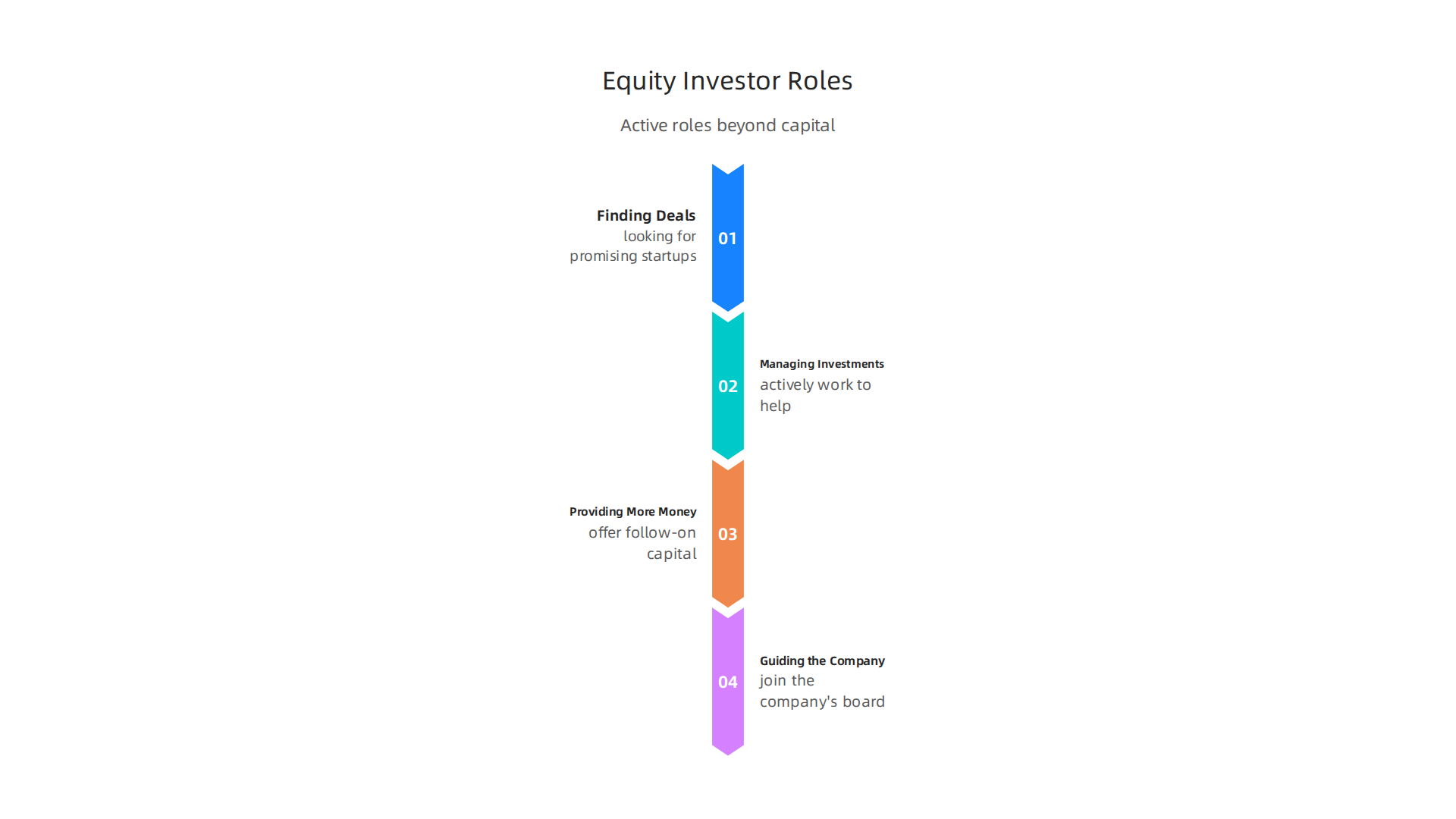
- Finding Deals: They spend a lot of time looking for promising startups to invest in. This is called "sourcing deals." They search for businesses with great ideas, strong teams, and big growth potential.
- Managing Investments: Once they invest, they don’t just sit back. They actively work to help their portfolio companies succeed. This might involve helping with business strategy, making new connections, or bringing in experienced advisors.
- Providing More Money: If a company they’ve invested in needs more money to keep growing, the equity investment company might offer "follow-on capital." This is like adding more fuel to the fire to help the company reach its next big goal.
- Guiding the Company: Because they own a part of your company, they often have a say in big decisions. This is called "governance influence." They usually join the company’s board of directors, offering guidance and oversight to make sure the business stays on track and grows wisely.
These roles show that an equity investment company is truly a partner in your startup’s journey. They are deeply invested in your success, both with their money and their expertise.
There are many different kinds of equity investment companies, and knowing the differences helps you find the right partner for your business. Each type has its own way of working, focusing on different stages of a company’s life and offering various levels of help.
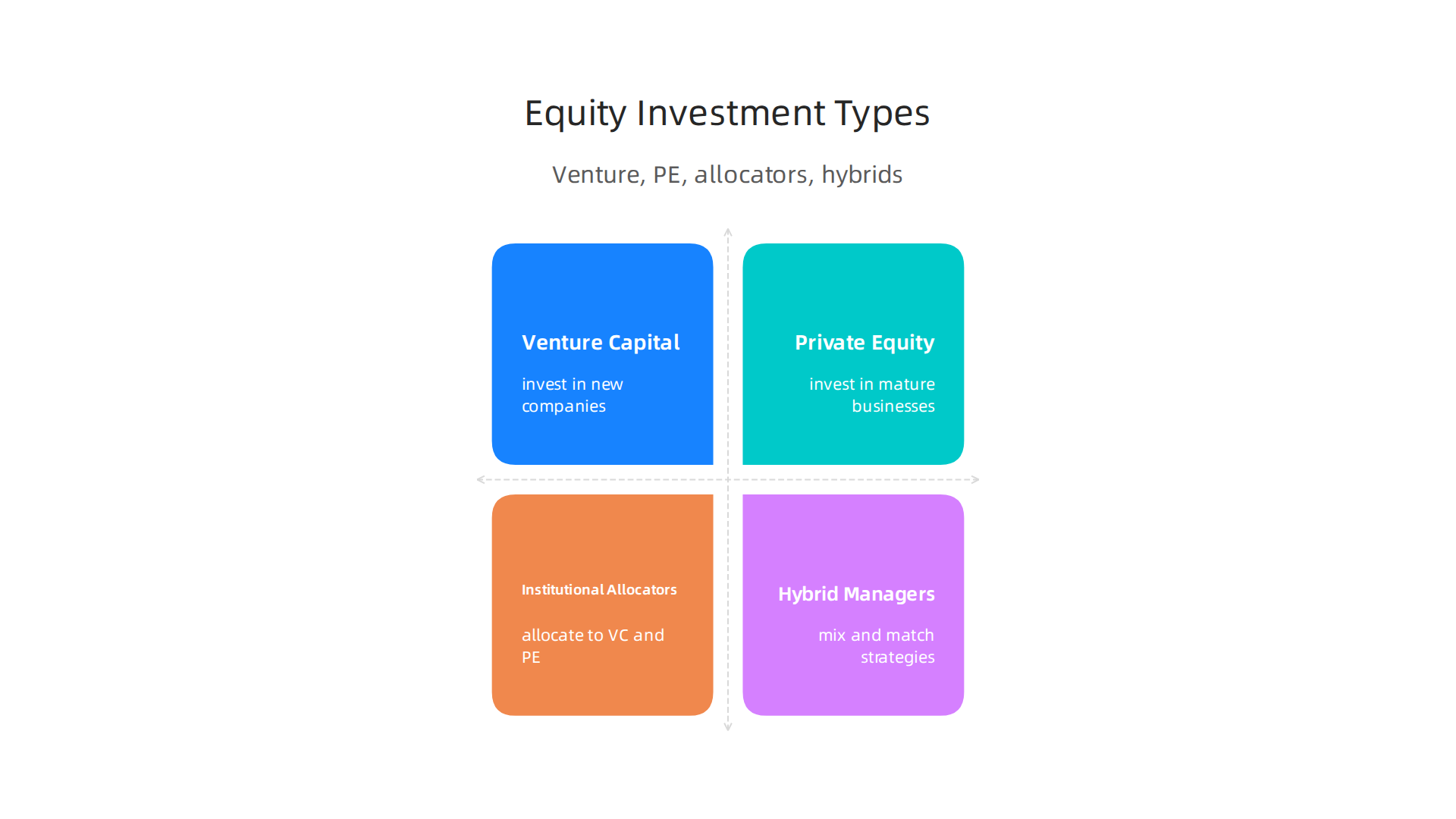
Here are the main types of equity investment companies:
Venture Capital (VC) Firms
Venture capital firms are usually the ones you hear about when talking about startups. They put money into new companies that have big ideas and the chance to grow very fast.
- Where they focus: VCs love early-stage companies, from the very beginning (seed stage) to when a company is growing quickly (Series A, B, and C rounds). They look for innovation and new tech. In fact, venture capital firms often evaluate startups based on their team, market, and product to decide if they’re a good fit Venture Capital Start-up Selection.
- How much money they give: They start with smaller amounts of money for early investments and can give more as the company grows.
- How long they hold: VCs often stay invested for many years, sometimes five to ten years or even longer, waiting for the startup to become very successful or go public.
- How much they get involved: These firms are very active. They often ask for a seat on your company’s board of directors and help a lot with business plans, hiring, and making important choices. They are truly partners in your journey.
Private Equity (PE) Firms
Private equity firms usually invest in companies that are more grown up and already making money. Sometimes they buy a large part of a company or even the whole thing.
- Where they focus: PE firms usually look for mature businesses that they can make even better and more profitable. They might buy a company, improve how it runs, and then sell it for more money later on. To learn more about the critical differences between these two, explore venture capital and private equity differences.
- How much money they give: They typically make very large investments.
- How long they hold: PE firms usually hold investments for about three to seven years. They aim to improve the company quickly and then exit.
- How much they get involved: Like VCs, they are very active. They take a lot of control and often bring in new management teams or make big changes to how the business operates to boost its value.
Institutional Allocators
These are not companies that invest directly in startups. Instead, they are big organizations like pension funds, university endowments, or large family offices. They are the ones who give money to venture capital firms and private equity firms to invest.
- Where they focus: They don’t invest in specific startups, but rather in the investment funds managed by VCs and PEs.
- How much money they give: They invest very large sums of money into these funds.
- How long they hold: They typically commit money to funds for long periods, often ten years or more, recognizing that it takes time for the underlying investments to grow.
- How much they get involved: They don’t have a direct say in individual startup decisions. Their main role is to pick the best VC and PE firms to manage their money.
Hybrid Equity Managers
Some equity investment companies mix and match strategies. They might do a bit of venture capital, a bit of private equity, and even invest in public company stocks.
- Where they focus: Their focus can be very broad, depending on market opportunities. They are flexible and can invest in different types of companies and stages.
- How much money they give: This can vary a lot, from smaller startup investments to larger stakes in mature companies.
- How long they hold: Their holding periods are also flexible, adapting to their investment goals for each company.
- How much they get involved: Their involvement might range from hands-on partnership to more passive investment, depending on the specific deal.
Understanding these types is like knowing the different tools in a toolbox. Each has its strengths and is best for certain situations. For founders, knowing which type of equity investment company fits your startup’s stage and needs can make a big difference in your fundraising journey.
For more strategic insights into how top tech news and analysis platforms impact fundraising, you might also like to explore the current trends in tech adoption.
Staying informed about technology is a must for both founders and investors.
Get clear daily AI updates from The AI Newsletter Worth Reading.
Understanding the different kinds of equity investment companies is just the first step. The next important part is knowing how these companies decide which startups to put their money into. They don’t just pick any idea; they have a careful way of looking at each business. This way of checking a company is called due diligence, and it helps them find the best opportunities.
Here’s how an equity investment company usually looks at a startup:
Initial Screen: The First Look
When a startup first reaches out, an equity investment company does a quick check. They look at your business plan, or "pitch deck," to see if your idea fits what they usually invest in. Think of it like a quick scan to make sure your company is in the right ballpark. In 2026, many firms even use smart computer programs, called AI tools, to help them sort through many pitch decks quickly and find the most promising ones How Artificial Intelligence Is Transforming Investment Decisions.
Deeper Due Diligence: Checking Everything Closely
If your startup passes the first screen, the equity investment company will start a much deeper look. This is where they really dig into all the details. They want to know everything about your business before they offer any gateway funding. This process helps them decide if you’re a good fit for their investment group and if your company can really grow big. For more on what these groups are, you can learn about what is a capital investment group how to partner for growth 2026.
Here are some key things they look at during this deeper check:
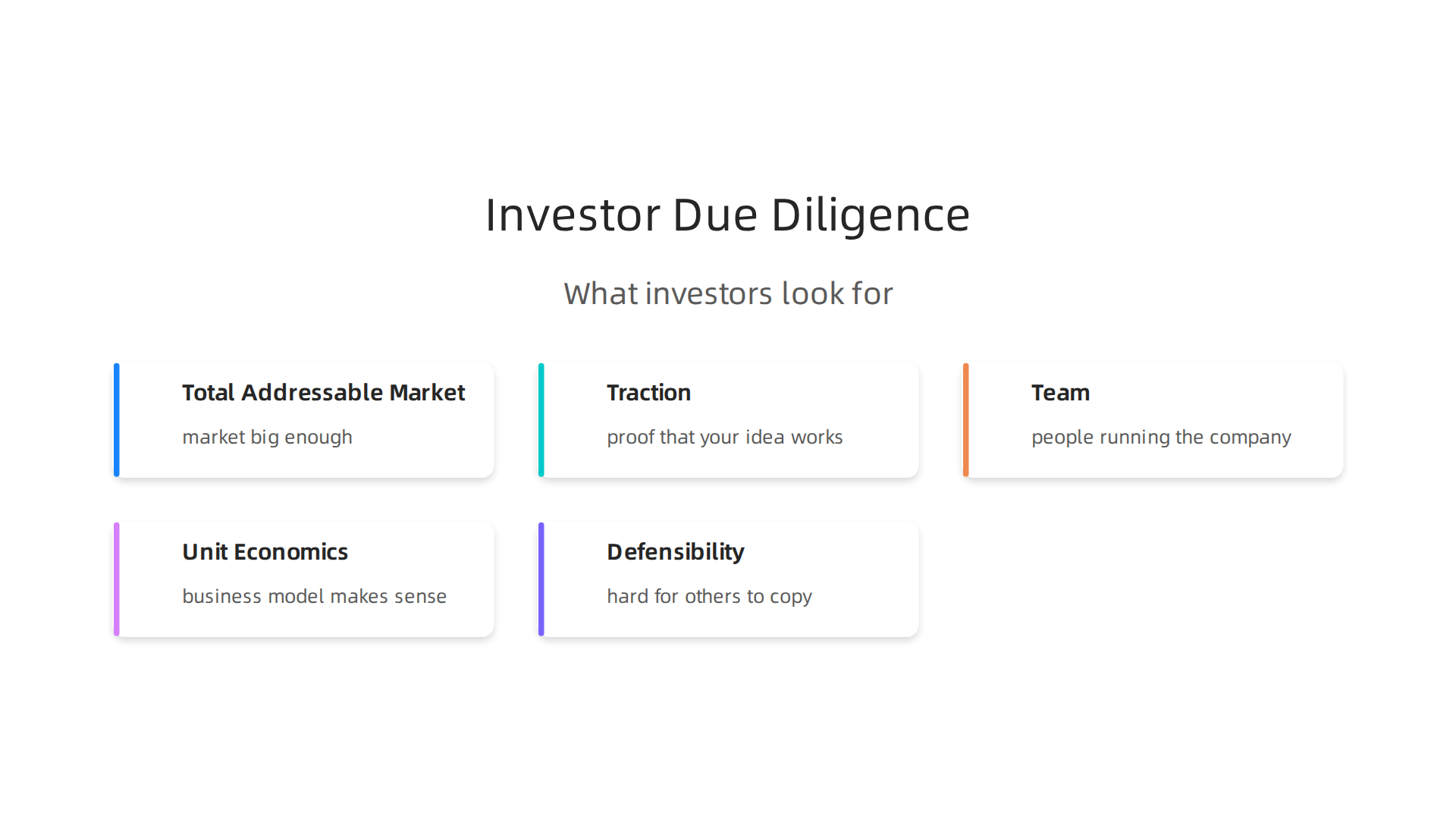
- Total Addressable Market (TAM): This means how many people or businesses could use your product or service. Is your market big enough for your company to become truly huge?
- Traction: This is proof that your idea actually works. Have you made sales? Do people like your product? Are you growing your users? Showing real progress is very important.
- Team: Who are the people running the company? Investors want to see a strong team that knows their stuff and can make the business succeed. They look at experience and passion. Actually, founders who really understand their computer systems technology tend to attract more investors, as it shows deep insight into their product founders who understand computer systems technology attract more investors.
- Unit Economics: This is about how much money you make from each product or service you sell, compared to how much it costs you. Investors want to see that your business model makes sense and can be profitable.
- Defensibility: What makes your company special and hard for others to copy? Is it a secret technology, a strong brand, or a special way of doing things? This protects your business from competitors.
These factors help venture capital firms and private equity firms decide if an investment is a smart move. Venture capital firms, for example, evaluate startups by looking at the team, market, and product to figure out the best fit How Venture Capital Firms Evaluate Startups. The way they do this "due diligence" is always getting better, especially with new tech tools in 2026 The Modern VC Due Diligence Playbook for AI-Era Funds.
Term Discussion and Investment Committee
If everything looks good, the investment company will talk about the terms of the deal. This is where they discuss how much money they’ll give, how much of your company they’ll own, and any special rules. Once everyone agrees on the terms, the deal goes to a special "investment committee." This is a group of senior people at the equity investment company who give the final approval. Their job is to make sure the investment fits their overall strategy and that it’s a good use of their funds.
Knowing this process helps founders prepare better. It shows what equity investment companies truly value when looking for the next big success. You can also explore specific strategies like venture fund strategy how vcs pick power startup winners.
While working with a big equity investment company can lead to a lot of money, it’s not the only way to get your startup off the ground. Actually, there are many other kinds of investors and funding sources that might be a better fit for your business, especially in the early stages. These alternatives can offer different types of gateway funding, support, and connections compared to traditional private equity investing firms.
Let’s look at some other popular options:
Angel Investors: Experienced Helpers
Angel investors are usually wealthy individuals who put their own money into new businesses. They often have experience running companies themselves, so they can offer advice and connections along with cash.

In 2026, many startups find angels through special networks. Angel investors typically invest smaller amounts than an equity investment company, often between $25,000 to $500,000, and usually take about 10-20% ownership in your company Startup Funding Options: 10 Sources Compared (2026). They are good for very early stage companies that need initial seed capital. Sometimes, startups that get money from angels have a better chance of getting more funding later from bigger investors compared to those using crowdfunding alone Crowdfunding Success Effects on Financing Outcomes for Startups: A Signaling Theory Perspective. You can learn more about finding these investors by reading about mastering the angel investment network to secure seed funding for your startup.
Accelerators: Programs for Growth
Startup accelerators are special programs that help new companies grow very quickly over a few months. They usually give you a small investment, like $100,000 to $150,000, for a small piece of your company (around 7-10%). But you get much more than just money. You get mentorship, training, office space, and access to a network of other founders and investors. This kind of hands-on help can be very valuable for learning how to run and scale your business. Accelerators are especially helpful for technical teams that might need more business knowledge On Resource Complementarity Among Startups, Accelerators, and Financial Investors.
Crowdfunding: The Power of Many
Crowdfunding lets many people invest small amounts of money in your company, often through online platforms. This is different from getting money from one large equity investment company. There are a few kinds:
- Equity Crowdfunding: People get a small share of your company for their money.
- Reward Crowdfunding: People pre-order your product or get a special perk for their support.
Crowdfunding can be a great way to raise money and get early customers at the same time. It also helps you prove that many people want your product. However, it might attract different types of follow-on investors compared to angel-funded companies Business angels and crowd sourced start-up funding.
Corporate Investors: Strategic Partners
Sometimes, a large company will invest in a startup that works in a similar area. These are called corporate venture capital investors. They might not just offer money; they often provide a strategic partnership. This could mean access to their customers, their technology, or their marketing power. For startups, this kind of investment can offer huge advantages beyond just cash, but it might also come with certain expectations about how you’ll work with the larger company. Entrepreneurial equity financing can involve these corporate venture capital groups, among others A Review and Road Map of Entrepreneurial Equity Financing Research.
Each of these options has its own pros and cons, from how fast you get money to the kind of help you receive. Choosing the right one depends on what your startup needs most and what kind of partner you’re looking for.
To stay updated on all these funding options and the broader tech market, consider signing up for
The AI Newsletter Worth Reading.
After learning about different funding options, from helpful angel investors companies to big corporate investors, the next step for founders is to pick the right one. It’s not just about how much money an investor offers. It’s also about finding a good fit, getting extra help, and making sure the deal works for everyone in the long run.
Choosing the Right Partner
Finding the right investor is a lot like choosing a business partner. You want someone who not only believes in your idea but also adds real value to your company.
- Network and Experience: Good investors bring more than just cash. They can connect you with important people, like future customers or new employees. They also have experience that can help you avoid common mistakes. Think about their past successes and what kind of advice they can offer. This kind of "value-add" goes far beyond simple gateway funding. To truly understand how to work with different capital providers, it can be helpful to learn about what is a capital investment group how to partner for growth 2026.
- Company Culture: Every company has its own way of doing things. You want investors whose working style and beliefs match yours. If your investor is very hands-on but you prefer to work independently, it might lead to problems later. A good cultural fit helps everyone work better together.
- Board Decisions: Many investors, especially larger ones like an equity investment company or private equity investing firms, will ask for a seat on your company’s board. This means they will help make big choices about your company’s future. It’s important to know who will be on your board and how they like to work. For founders, understanding how these groups operate is crucial, and you can get more details on how to choose private equity investment companies for your startup.
Key Parts of the Deal and What to Watch For
When an investor decides to give you money, they will usually give you a paper called a "term sheet."

Think of this as a plan that lays out all the main points of the investment. It’s not a final contract, but it tells you what the final contract will look like.
In 2026, founders need to carefully check a term sheet for things like how much the company is worth (its valuation) and how many board seats the investor will get What Is a Term Sheet? Complete Guide for Founders.
Here are some important things to look at:
- Your Company’s Value: This is called "valuation." It tells you how much your company is worth before the new money comes in. This number helps decide how much of your company the investor will own.
- Ownership and Control: The term sheet will show how much of your company the investor will own. It also talks about who has the final say in different company matters.
- Special Rights for Investors: Some investors might ask for special rights, like getting their money back first if the company sells. Other early funding types, such as SAFE notes and convertible notes, often include details like valuation caps and discount rates Managing SAFEs and convertible notes: the workflow.
Red Flags to Watch For:
Be careful of terms that seem unfair or give investors too much power. For example, some investors might ask for a very large piece of your company for a small amount of money. Or they might want too much control over everyday decisions. It’s very smart to have a lawyer look over any term sheet to make sure it’s fair for you and your company. Thinking about these details can help you attract the best partners and avoid issues later on. You can also explore how to evaluate capital advisors for startup funding to get expert help.
Understanding the main parts of a deal is very important for founders. It helps you protect your company and make sure you get a fair deal. This is especially true when an equity investment company or other big investors come knocking.
Structuring Deals: Term Sheet Basics Founders Should Master
As we talked about, the term sheet is like a blueprint for your investment. It covers important details about money and who controls the company. Founders in 2026 should know these parts well to negotiate like a pro.
Here are the key things you’ll find and need to understand:
- Valuation: This is how much your company is worth before new money comes in. It decides how big a slice of your company the investor gets.
- Liquidation Preference: This term tells you who gets paid first if your company sells or closes down. Investors usually want to get their money back before anyone else, sometimes even more. This can mean less money for you, the founder, in the end.
- Board Seats: An
equity investment companyor other investors might ask for seats on your company’s board. Board members help make big decisions. Knowing how many seats investors get and who they are is crucial for control. - Anti-Dilution: This is a safety net for investors. If your company raises money later at a lower value than before, anti-dilution rules protect the early investors from losing too much value in their shares. For a deeper dive into these and other seed-stage term sheet negotiations, you can explore guides on Term sheets at seed stage: How to negotiate and advise.
Different Ways to Structure an Investment
Not all investments look the same. Founders need to know about different ways investors put money into companies. These are called investment structures.
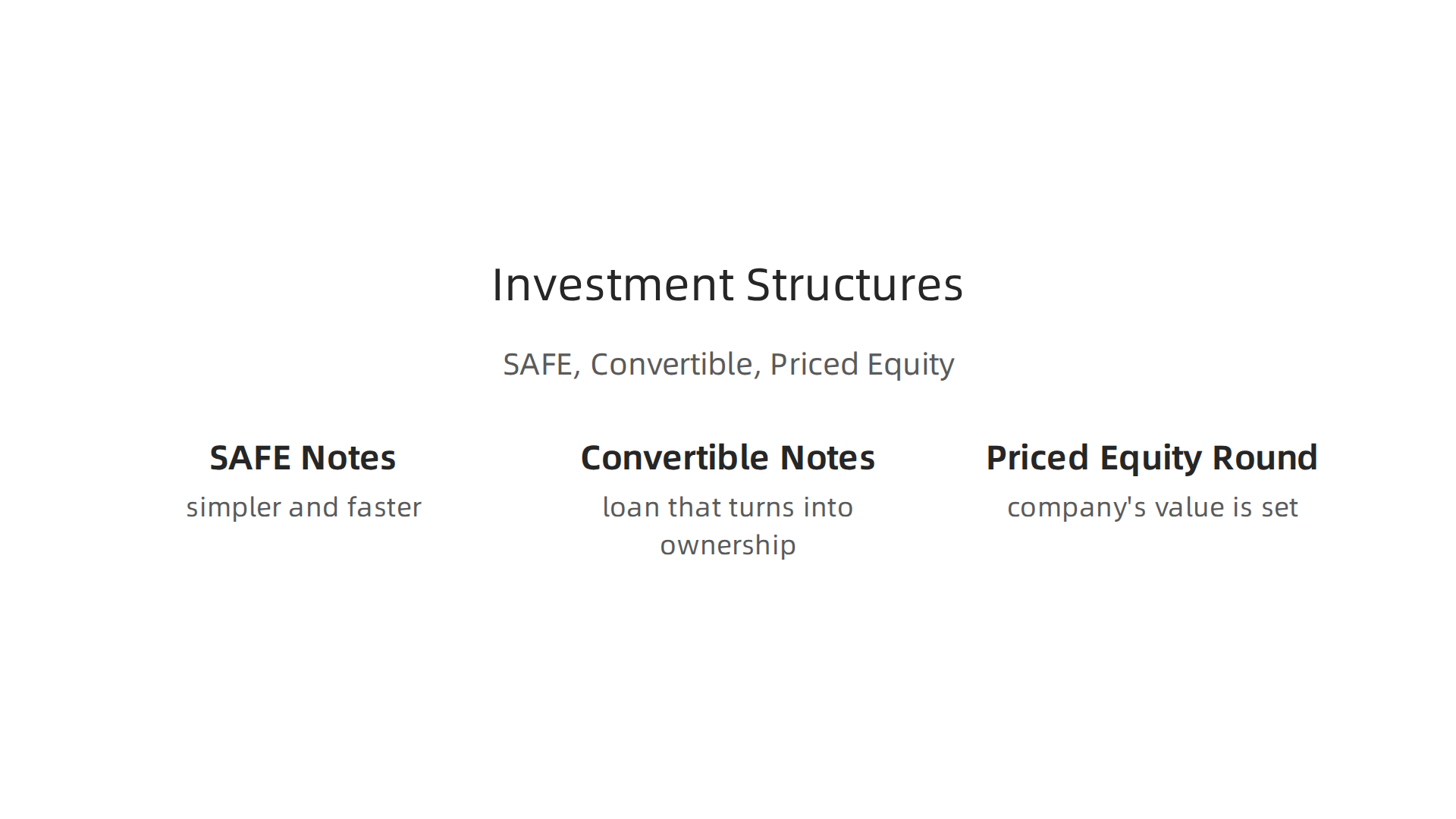
- SAFE Notes: SAFE stands for "Simple Agreement for Future Equity." It’s a popular choice for very early-stage startups because it’s simpler and faster than a full equity round. With a SAFE note, investors give you money now, but they don’t get actual shares right away. Instead, they get the right to buy shares later, when your company raises its first big round of funding. It’s like a placeholder for future ownership. You can learn more about SAFE Notes Explained.
- Convertible Notes: Think of a convertible note as a loan that plans to turn into company ownership later. Investors give you money as a loan, which earns interest. But instead of you paying them back in cash, the loan usually converts into shares of your company when you raise your next funding round. This helps delay setting a company’s exact value right at the start. For more details, see How Convertible Notes Work for Startups & Founders.
- Priced Equity Round: This is a more traditional way for an
equity investment companyto invest. In this type of deal, your company’s value (valuation) is set upfront. Investors then buy shares directly at that price. This is a more complex process but gives everyone clear ownership from the start. It often happens in later funding rounds when your company is more grown up and has a clearer value.
Choosing between SAFEs, convertible notes, or a priced equity round depends on your company’s stage and needs. Earlier startups often use SAFEs or convertible notes to get money quickly without having to set a fixed company value too soon. As you grow, a priced equity round becomes more common. To learn more about investing in early-stage businesses, consider reading about seed enterprise investment in 2026 data driven strategies to raise capital.
Understanding these different deal structures and term sheet details is vital for any founder. The world of tech and fundraising moves fast, especially with new tools and data coming out all the time. Staying informed is key to making the best choices for your startup. For daily updates on AI and technology that can impact your fundraising strategy, consider getting The AI Newsletter Worth Reading. It offers clear insights to help you navigate this complex landscape.
The world of fundraising keeps changing, and founders need to stay sharp. Knowing about term sheets and different investment types, like we talked about, is just the start. In 2026, equity investment company trends show new shifts in how deals are made and what investors are looking for.
Trends and outlook for equity investment companies in 2026 and beyond
Looking at 2026, we see some clear trends among equity investment company firms. Overall, global private equity deal activity has seen some changes, with a slight drop in the number of deals in the second quarter of 2026 compared to the first part of the year. This suggests investors are being careful with their money Private Equity Factbook – Q2 2026. However, some larger deals continue to show strength, especially those between $1 billion and $5 billion, which grew a lot in 2025 Global Private Equity Report 2026. This mix tells us the market is mature, with many investors making focused bets and exploring new types of deals Global Private Markets Report 2026 | McKinsey & Company.
One big change is the growing role of data and Artificial Intelligence (AI) in how private equity investing decisions are made. Investors are using smart tools to find promising companies, understand market risks, and predict future success. This means founders should be ready to show how their own use of data and technology can help their business grow. Learning to optimize fundraising with top tech news and analysis platforms is more important than ever.
What These Trends Mean for Founders
For founders preparing to ask for money in 2026, these trends have a few key takeaways:
- Be Prepared and Precise: Investors are being careful. You need to have a very clear plan, strong numbers, and show exactly how your company will succeed. This is true whether you are talking to
angel investors companiesor largerequity investment companygroups. - Highlight Your Tech Edge: If your startup uses AI or smart data in a good way, make sure to show it off. Investors are looking for companies that are ahead of the curve in technology adoption.
- Know Your Value: With valuation gaps still present, knowing your company’s true worth and being able to explain it clearly is vital.
- Choose Wisely: Not every investor is the right fit. Spend time learning how to choose private equity investment companies for your startup that match your vision and stage. Understanding what is a capital investment group how to partner for growth 2026 can also help you find the best partners.
Founders who understand these market shifts and adapt their fundraising strategies will have a much better chance of securing the capital they need to grow. The landscape is competitive, but smart founders can still find great gateway funding opportunities.
Summary
This article explains why every founder should understand equity investment companies and how they differ from other funding sources. It defines what equity investors do, outlines the main types—venture capital, private equity, institutional allocators, and hybrid managers—and shows how each fits different startup stages. The piece walks founders through how investors screen and perform due diligence, what they value (market size, traction, team, unit economics, defensibility), and how term sheets and deal structures work. It contrasts alternatives like angel investors, accelerators, crowdfunding and corporate investors, and gives practical guidance on choosing partners, spotting red flags, and negotiating key terms. The article also covers modern trends for 2026, including the growing role of data and AI, so founders can prepare stronger pitches and choose the right funding path. After reading, founders will know which investor types suit their stage, how to present the right evidence, and what to watch for in deals.