

Introduction
Dahua Technology has become a dominant force in the global video surveillance market. According to the brief history of Dahua Technology, the company was founded on March 12, 2001, in Hangzhou, China. From those early days, it grew into a worldwide powerhouse that now operates in over 180 countries and maintains 75 subsidiaries across key international markets.
The company invests roughly 10% of its sales revenue into research and development each year. That heavy focus on R&D has pushed Dahua Technology far beyond basic cameras into advanced AIoT systems. These systems power smart cities, manage traffic, secure businesses, and enable industrial automation.
But here is the thing. Dahua’s rapid growth comes with real geopolitical complexity. Trade restrictions, privacy debates, and national security concerns all shape the playing field. For investors and founders, understanding this landscape matters a lot.

The same forces that drive Dahua Technology also ripple through aurora tech markets in autonomous driving, wiregrass tech hubs in regional innovation, and geek tech in consumer electronics.
This profile provides investors, founders, and industry professionals with the key intelligence needed to understand Dahua’s strategy, financial health, and future prospects. Understanding focused tech companies like Dahua is critical for navigating the evolving landscape of IoT, AI, and smart city investments. If you want to stay ahead of these fast-moving trends, The AI Newsletter Worth Reading delivers daily insights on the intersection of AI and technology markets.
For more context on how major tech players shape investment opportunities, check out the ESR Tech Landscape 2026 overview.
Company Overview and History
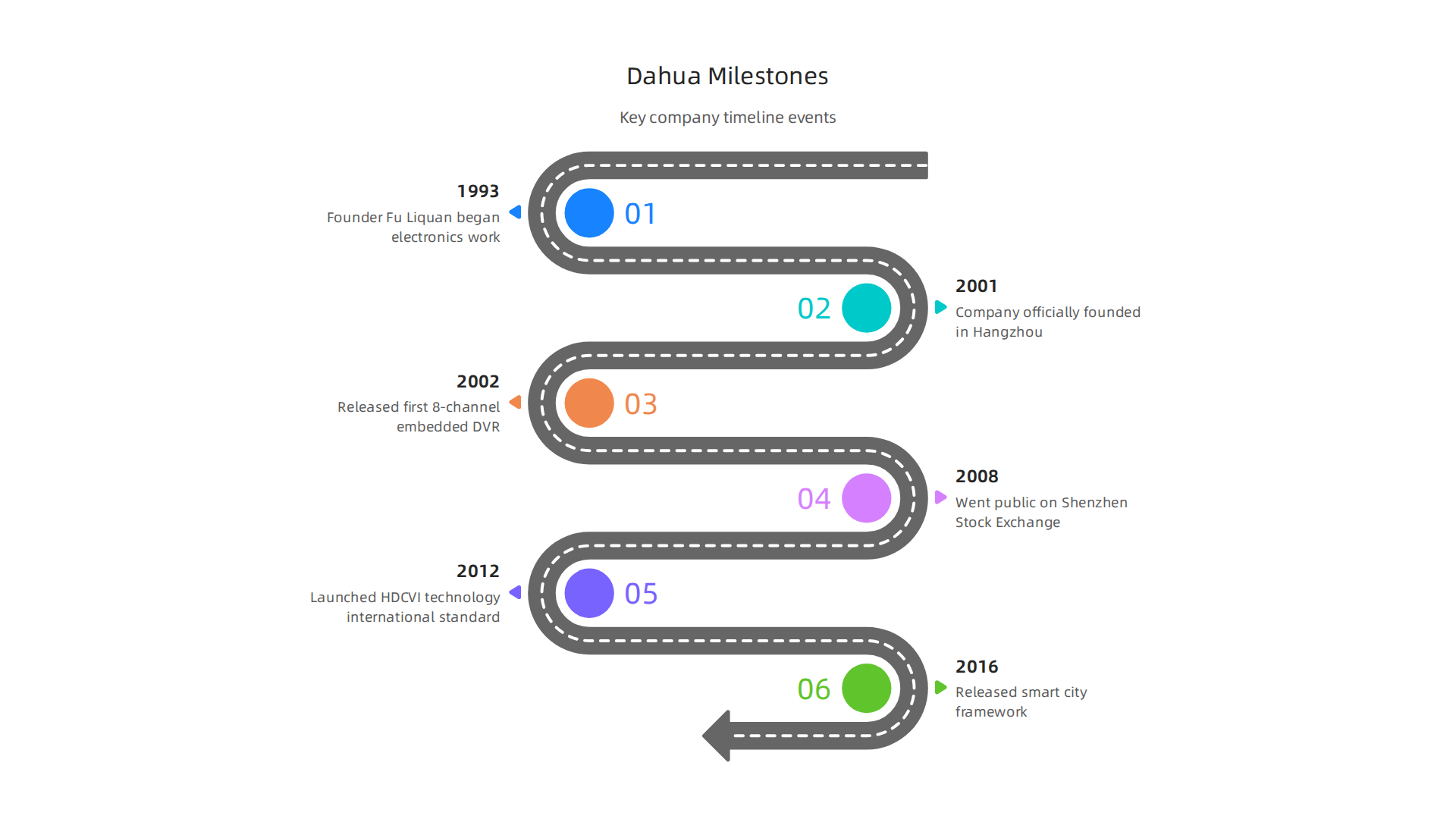
The seeds of Dahua Technology were planted back in 1993, when founder Fu Liquan began working in the electronics field in Hangzhou. Eight years later, on March 12, 2001, he officially founded the company with his wife Chen Ailing. From that moment, the company moved fast. By 2002 it had released the world’s first 8-channel real-time embedded DVR.
That early product put Dahua on the map in video surveillance.
The company went public on the Shenzhen Stock Exchange in 2008. That IPO gave Dahua the capital to expand quickly. In 2012, the company launched its own HDCVI technology. This became the first international standard from a Chinese security company. By 2016, Dahua had released its smart city framework, moving far beyond simple cameras into full urban management systems. These are just a few of the key milestones in Dahua’s timeline.
Today, Dahua operates in over 180 countries and maintains 75 subsidiaries worldwide. The company’s headquarters remain in Hangzhou, where thousands of engineers work on AI and IoT solutions. Dahua has built a global service network with more than 200 offices across China alone.
This growth did not happen by accident. Dahua invests roughly 10% of sales revenue into R&D every year. That steady investment pushed the company from basic DVRs into advanced AI-driven systems that power smart cities, manage traffic, and secure businesses. But that same success has drawn attention. Trade restrictions and national security debates now shape the environment for companies like Dahua. For investors, understanding this history is the first step in evaluating opportunity and risk. If you want to compare how other major tech firms handle similar challenges, check out our venture capital firm profiles for more context.
Core Technology and Innovation
What makes Dahua Technology stand out in a crowded market? It comes down to three things: AI power, IoT integration, and a serious commitment to sustainable design.
Dahua does not just make cameras. It builds entire systems that see, think, and act. The company’s R&D structure is massive. Under the hood, five major research institutes drive the work. The Advanced Technology Research Institute, Data Space Research Institute, Central Research Institute, Cybersecurity Research Institute, and Product Engineering Institute each focus on a different piece of the puzzle.
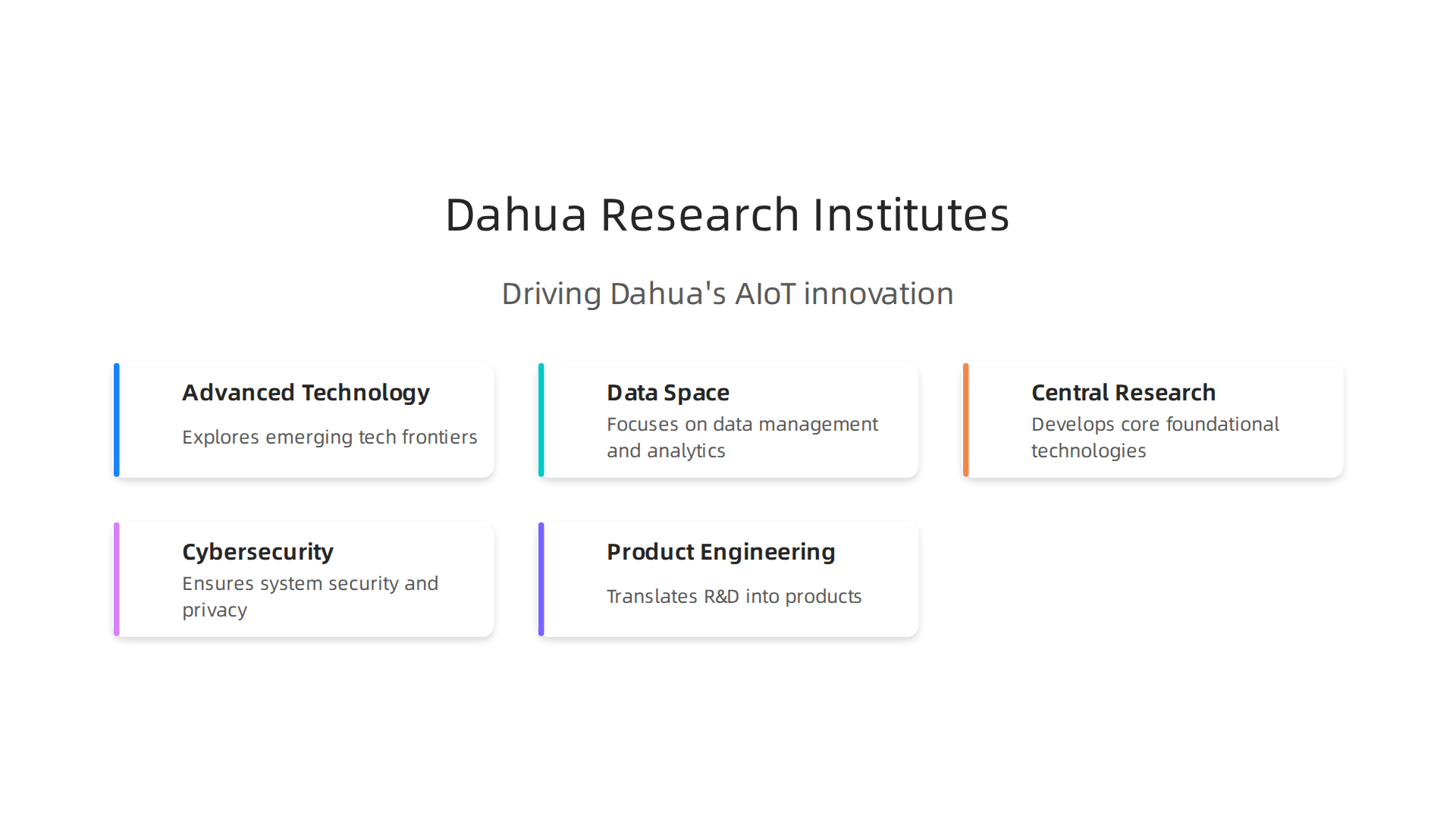
Together, they develop both the hardware and the software that power modern AIoT products.
At the core of Dahua’s recent innovations is the Xinghan Large-Scale AI Model 2.0. This system combines vision, multimodal data, and language understanding into one engine. It takes real-time video from cameras, traffic data, and regulatory information, then turns it all into smart actions. Think automated incident detection on highways, smarter traffic signal timing, and better enforcement with fewer false alarms. The company demonstrated these capabilities at Intertraffic Amsterdam in 2026 with a lineup of new products. The Bisight X Series Camera, Spotter Ultra, and iPatrol Smart Light Bar all use AI to monitor driver behavior, catch violations, and support mobile enforcement. You can see the full range of what Dahua showed with their AI-powered ITS solutions.
But the innovation goes beyond traffic. Dahua also applies AI to renewable energy. At Intersolar Europe 2026, the company showed how its AIoT technologies help energy operators run smarter, safer operations. The solutions cover intelligent security, equipment inspection, PPE management, EV charging, and control centers. This is a company that thinks system-wide, not just product by product.
There is another side to Dahua’s tech story that does not get enough attention. The company invests heavily in green R&D. It developed a film composite packaging technology that is 100% recyclable. This cuts packaging material use by 40% and storage space by 50%. Every million products using this method save roughly 12.5 tons of cardboard. That is a real reduction, not just a marketing claim. Dahua also created an EHS ecological pallet made from paper instead of plastic or wood, cutting pallet weight by half and lowering carbon emissions during transport. You can read more about their green R&D capabilities and how they approach sustainable design.
These innovations matter for investors, too. A company that builds its own AI models, invests over 10% of revenue into R&D, and files over 11,900 patent applications is building a moat.

Understanding the full scope of what Dahua is doing in tech requires seeing the bigger picture. If you want a solid framework for evaluating any tech company’s innovation pipeline, check out this technology definition framework for investors.
All of this raises an interesting question. What happens when a company this large and this good at AI faces growing trade restrictions? That is exactly what we will cover next.
Market Position and Competitive Landscape
Before we get into the trade restrictions question, let’s zoom out and look at the bigger picture. Where does dahua technology actually sit in the global security market right now? The answer matters because it shapes everything that follows — the risks, the opportunities, and the future moves.
Dahua is not a small player trying to find its way. It consistently ranks among the top three surveillance equipment suppliers in the world. According to market research, Dahua and its biggest rival Hikvision together held about 39.20% of the global surveillance camera market in 2025. That is a massive chunk of a market that was worth over $46 billion in 2026. And it is growing fast. You can dig into the full numbers in this surveillance camera market report.
The product range is staggering. Dahua sells everything from simple indoor cameras for small shops to full enterprise security systems and city-wide surveillance networks used in smart city projects. They cover public safety, transportation, energy, and retail. That broad reach makes them hard to ignore. Investors tracking these markets often look at how companies build wide moats around their business. If you are evaluating companies with deep product ecosystems, this guide to tech company categories is a useful resource.
Who competes with Dahua?
The competitive landscape includes some very familiar names.
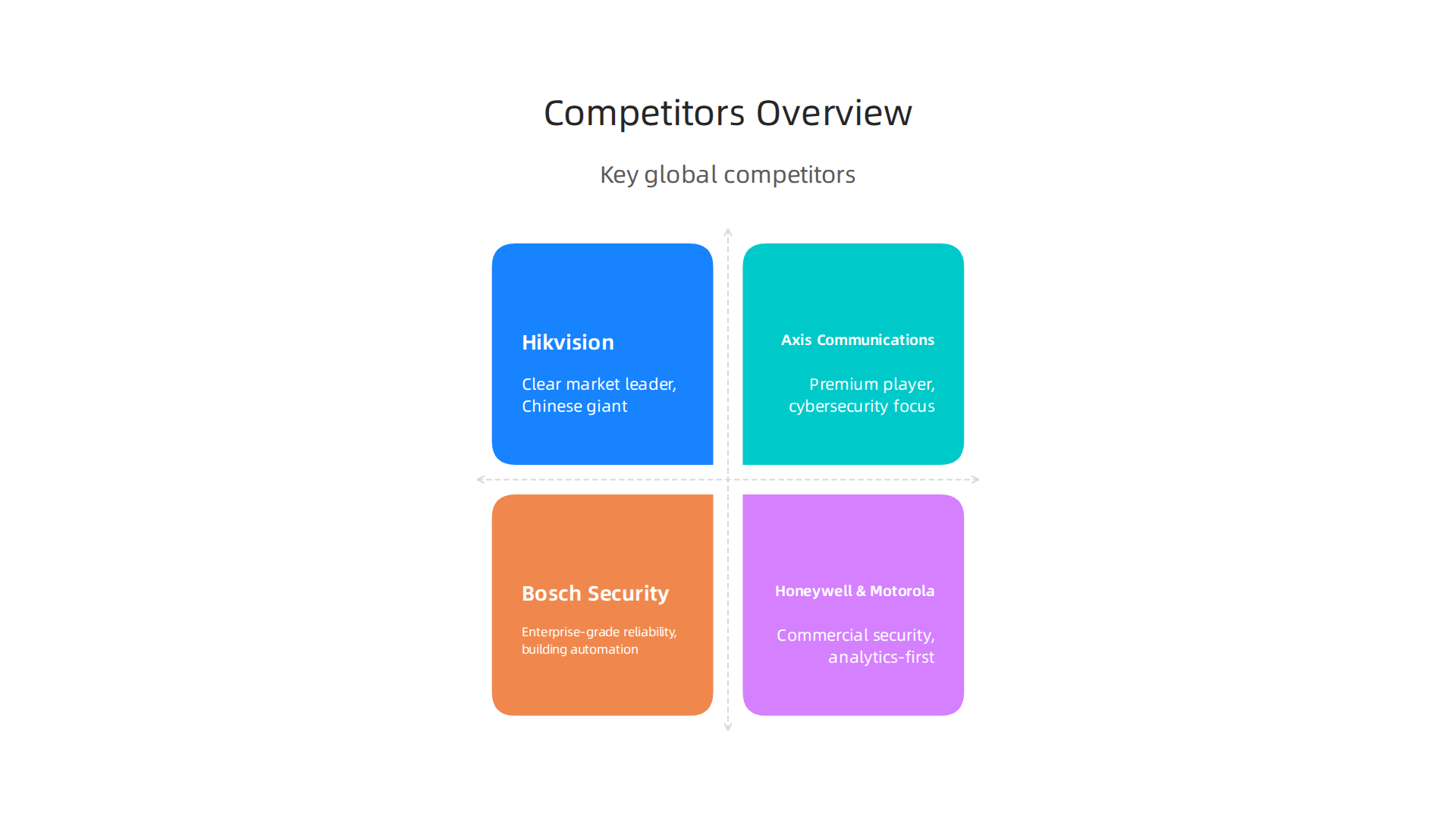
- Hikvision: The clear market leader. Hikvision and Dahua are both Chinese giants. Together they dominate volume orders by leveraging vertically integrated factories. Hikvision is known for cost leadership across the board.
- Axis Communications (Canon): A premium player focused on cybersecurity and open platforms. They hold a smaller but very profitable slice of the market.
- Bosch Security Systems: Enterprise-grade reliability with a strong focus on building automation and integrated security suites.
- Honeywell & Motorola Solutions (Avigilon): These companies focus on commercial security and analytics-first approaches. They often target law enforcement and large enterprises.
- Emerging AI-first Startups: Newer companies are trying to disrupt the old guard by focusing purely on cloud-native analytics. They are smaller but growing fast.
The full breakdown of these players and their revenue shares makes the competitive picture much clearer. You can see a detailed analysis in the CCTV Market report.
The technology inside these systems is serious geek tech. We are talking about AI models running live video analytics right on the edge, processing thousands of feeds at once. That kind of innovation is tough for small AI startups to match on scale.
Dahua’s financial performance backs up its position. In 2025, the company saw net profit jump nearly 33% to ¥3.86 billion. You can see the details in this net profit surge article.
Staying on top of competitive shifts like this is exactly why so many investors and founders follow daily tech news. If you want to track how companies like Dahua are reshaping the tech landscape, The AI Newsletter Worth Reading delivers clear daily updates straight to your inbox.
Now, with this map of the competitive landscape in mind, we can look at the trade restrictions question more clearly. Dahua’s size makes it both powerful and a target. That story is next.
Financial Performance and Fundraising History
Before we dive deeper into trade restrictions, it helps to understand how Dahua Technology makes and spends its money. The financial story here is one of steady growth mixed with real pressure from global politics.

Revenue and profit trends
Dahua pulled in ¥32.74 billion in operating revenue during 2025. That is a 1.75% increase from the year before. Not a massive jump, but steady. What really stands out is the bottom line. Net profit surged 32.77% to ¥3.86 billion. You can see the full numbers in this Zhejiang Dahua Technology 2025 annual report.
The company’s market cap sat at about $9.29 billion as of September 2025. That makes it one of the larger pure-play surveillance companies in the world. Check the latest figures on this Dahua Technology market cap page.
Where does the money go?
A big chunk goes back into the technology. Dahua invests roughly 10% of annual revenue into research and development. That is serious spending for a hardware company. They are pushing hard on AI models, edge computing, and video analytics. This kind of deep tech investment is exactly the kind of thing that catches the attention of sophisticated investors. If you are evaluating companies with strong R&D moats, this analysis of ESR tech landscape 2026 covers how technology companies build defensible positions.
No venture capital — but not shy about debt
Dahua is a publicly traded company listed on the Shenzhen Stock Exchange under ticker 002236.SZ. It does not raise venture capital the way startups do. Instead, it uses bonds, bank loans, and strategic investments to fund growth. That structure gives it more control but also means it carries debt on its books.
Profit margin pressure
Here is the tension. Dahua’s profit margin sits at about 11.69% according to the latest data. You can review the key financial metrics on this Yahoo Finance page. That margin is decent but has been squeezed by two big forces: rising component costs and geopolitical trade barriers. When your biggest markets include the US and Europe, and those markets keep adding restrictions, your margins take a hit.
The company is not in trouble. But the margin pressure explains why Dahua is pushing so hard into smart city projects, AI analytics, and enterprise contracts. Higher margin software and services help offset the hardware squeeze.
This financial foundation matters a lot when we look at trade restrictions next. A company with strong cash flow and heavy R&D spending has options. A weaker one would be in real danger.
Regulatory and Geopolitical Risks
Here is where the story gets complicated. Dahua Technology has been on the US Entity List since October 2019. That means American companies cannot sell certain technology to Dahua without a special license from the government. And that license is almost always denied.
The US government added Dahua to this list alongside other Chinese tech giants like Hikvision and SenseTime. The official reason was ties to human rights violations in Xinjiang. The full breakdown of this US Government Entity List addition covers all 28 companies affected.
What this actually means
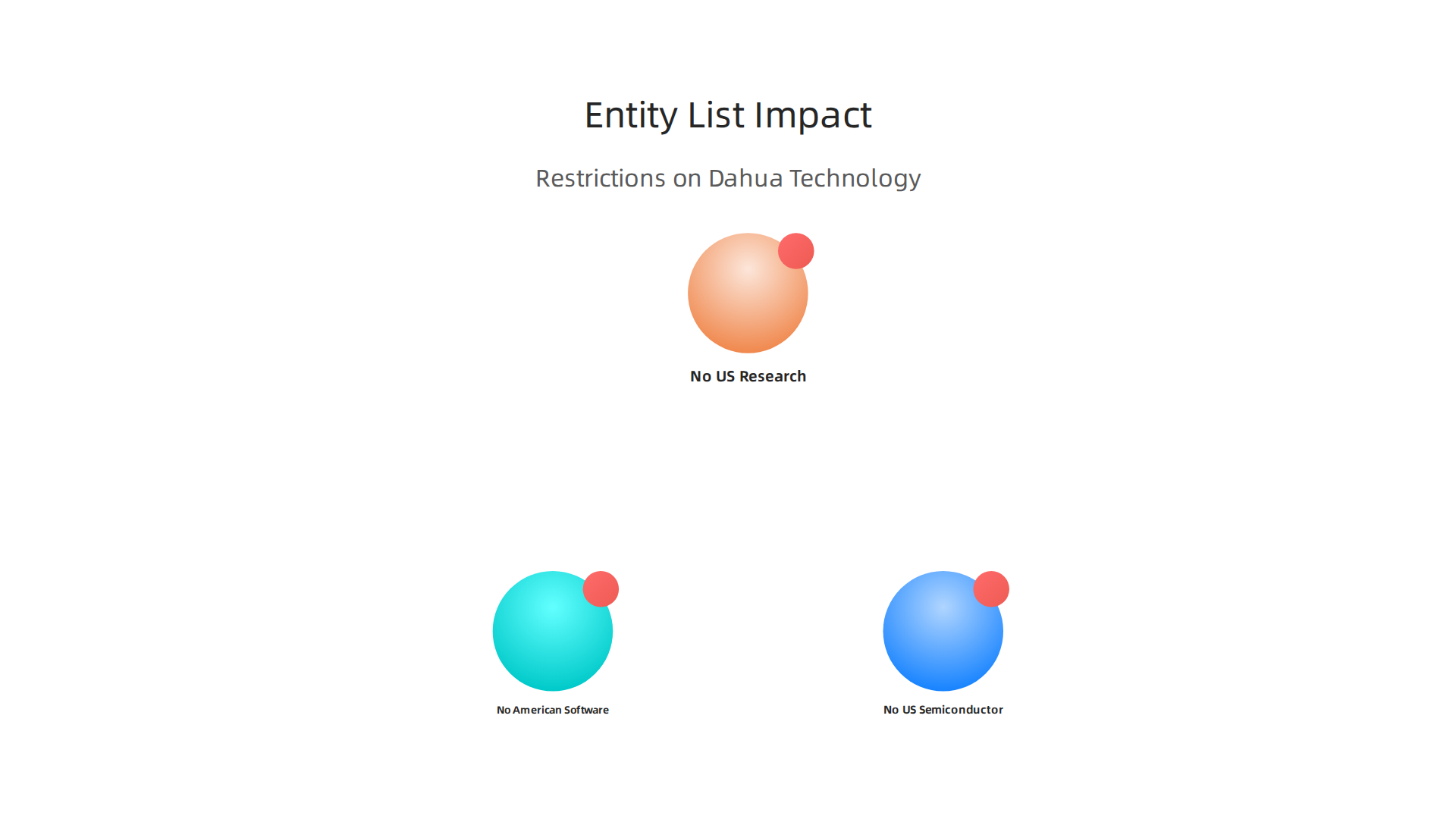
No US-made semiconductor chips. No American software tools. No collaboration with US research institutions. For a company that builds high-end surveillance cameras packed with AI processors, this cuts deep. Dahua cannot buy the most advanced Nvidia chips or use American design software for its next-generation cameras.
The sanctions keep expanding
This is not a one-time problem. The US government keeps tightening the rules. In early 2026, new export control bills moved through Congress aiming to close more loopholes around AI hardware and semiconductor equipment. The list of top export controls areas to watch in 2026 includes expanded AI chip restrictions and deeper supply chain ownership checks.
Doing business in Western countries has become harder too. Several European governments have restricted or banned Dahua equipment from government buildings over national security concerns.
How Dahua is adapting
The company is not sitting still. Dahua has shifted focus to markets that do not follow US sanctions. Sales in Asia, the Middle East, and Africa have grown sharply.

The company has also built alternative chip supply chains using Chinese and other non-American manufacturers.
This kind of strategic pivot under pressure is something every investor should study. Understanding how technology companies restructure when their markets close is a valuable skill. For a deeper look at how companies raise capital and reposition themselves under challenging conditions, check out this guide on breakthrough tech 2026.
Staying current with rapid shifts in AI policy and tech regulation is difficult. That is exactly why many investors and founders rely on trusted daily briefings. If you want clear daily updates on AI policy, sanctions, and technology trends without the noise, The AI Newsletter Worth Reading delivers the key information straight to your inbox.
Dahua is adapting, but the risks are real. And they are not going away anytime soon.
Future Outlook and Strategic Recommendations
Looking ahead, Dahua Technology is not slowing down. The company is doubling down on artificial intelligence and smart city solutions even as it navigates a deeply fragmented global market.
Where the growth is coming from
Emerging markets are the main story. As Western countries tighten restrictions, Dahua is building deeper relationships in Asia, the Middle East, and Africa. These regions are investing heavily in surveillance infrastructure, traffic management, and public safety systems. The global smart camera market is expected to grow from USD 50.4 billion in 2026 to USD 156.5 billion by 2036 according to a smart camera market forecast, and Dahua is well positioned to capture a large share of that growth outside the West.
Dahua is also expanding into new vertical markets beyond traditional security. At Intersolar Europe 2026, the company showcased AI-powered solutions for renewable energy operations, including equipment inspection and EV charging management. This kind of Visible AI in New Energy deployment shows how the company is applying its core technology to entirely new industries.
Strategic focus areas
Traffic management is one of the most promising verticals. Dahua’s Xinghan Large-Scale AI Model 2.0 powers intelligent transportation systems that can reduce congestion, detect accidents in real time, and optimize traffic signals automatically. Retail analytics is another growing opportunity, where camera systems help stores track customer behavior and manage inventory.
The risks ahead
But the challenges are real. Geopolitical tensions with the US and Europe are not easing. Trade barriers continue to limit Dahua’s access to advanced semiconductors and Western markets. And local champions in places like India and Southeast Asia are building competitive alternatives at lower price points.
What this means for investors
Dahua Technology remains a company with strong technology and global reach, but its path forward depends heavily on navigating political risks. Whether you follow aurora tech breakthroughs or traditional surveillance markets, understanding how the largest players adapt under pressure matters.
For investors looking to understand how technology companies restructure under challenging conditions, the ESR tech landscape 2026 report offers useful context on how leading tech players are repositioning themselves.
The bottom line is this: Dahua has the R&D muscle and the product breadth to keep growing. But the smartest investors will watch the geopolitical situation closely before making big moves.
Summary
This profile summarizes Dahua Technology’s rise from a 2001 Hangzhou startup to a global leader in video surveillance and AIoT systems, highlighting its heavy R&D focus (about 10% of sales), major product innovations like the Xinghan Large-Scale AI Model 2.0, and its push into smart cities, traffic systems, and renewable-energy applications. The article reviews Dahua’s product breadth, sustainable packaging efforts, market share (top-three global supplier), and recent financials — steady revenue with a notable net profit surge and margin pressure around 11–12%. It also explains the practical impact of geopolitical headwinds, including US Entity List restrictions that limit access to American chips and software, and how Dahua is pivoting to alternative suppliers and non-Western markets. For investors and founders, the piece lays out the competitive landscape, strategic risks, and where growth is likely to come from, while offering a framework to judge Dahua’s technology moat and geopolitical exposure.