
Denmark is becoming a really important place for people who want to start new businesses and those who invest in them. In 2026, many eyes are on this small Nordic country because its tech scene is growing fast. It’s not just a small spot on the map; it’s a bustling hub for innovation, especially in the world of denmark tech.
The country has a lot of startups, which are new companies that grow quickly. Right now, there are over 23,720 startups across Denmark. Many of these have already gotten money, with more than 4,890 funded companies raising a total of $56.6 billion from investors. Denmark even has three "unicorns," which are private companies worth over $1 billion. This shows how much new ideas are blooming there Startups in Denmark – 2026 Latest Funding Rounds, Trends and News.
In 2025, total investments in Danish startups went up to 11.7 billion DKK The Startup Barometer 2026.
What makes Denmark special is not just the number of startups. It also has strong support from its government. Denmark’s main public agency for new ideas, called the Danish Innovation Fund, gives out about 1.7 billion DKK each year. They help projects that focus on making things greener, using more digital tools, and solving big problems in society. For example, their Innobooster program offers grants for innovative new products or services Denmark: Government Support. This kind of help makes it easier for new companies to get started and grow.
Beyond government help, there’s a very active group of investors. Firms like Heartcore Capital, Seed Capital, and byFounders are always looking for the next big thing. These investors help new businesses get money at different stages, from the very first ideas (pre-seed) to larger growth steps (Series A) Top Venture Capital Investors in Denmark — 2026 Guide.
This mix of many startups, public support, and active investors makes Denmark a key player in the global tech world.
For founders, investors, and advisors, understanding the denmark tech scene is vital in 2026. This article will help you understand the funding landscape in Denmark, including where the money comes from and who the key players are.

We will compare Denmark to other tech hubs, like maybe even London Tech Week or others you’ve heard of, to help you choose the best place for your business. You will also find clear, practical steps on how to enter this market and make your company bigger. If you want to learn how to pick the right places for your startup, read our guide on how to Choose Your Regional Tech Hubs for Optimal Startup Fundraising.
To stay updated on the wider world of tech, especially with new changes in AI that can affect your business and investments, consider getting smart insights.
Get clear daily AI updates from The AI Newsletter Worth Reading.
Snapshot: Denmark’s startup landscape and funding climate
Now let’s look closer at the denmark tech scene to see where companies are focusing and how money moves around. Denmark is very good at certain types of technology. Many startups here work in areas like software, especially for businesses (SaaS), health technology, and biotech. You also see a lot of work in green energy and climate-friendly solutions, which is really important for the world today. Copenhagen, the capital city, is where most of this action happens, with many big deals happening there in 2026 Funded Startups in Denmark.
Looking at how much money companies have raised, Denmark keeps drawing in a lot of investment. In 2025, venture capital funds invested about €1,107 million in Danish companies across 130 deals Danish Venture Capital: Market Analysis 2025. While this was similar to 2024, the first half of 2026 saw €270 million raised in 49 funding rounds Denmark startup funding in H1 2026. This shows that even if the total amount changes sometimes, a steady flow of new deals continues. Denmark is known as one of Europe’s top places for venture capital when you compare it to the size of its economy From Startup to Scaleup 2025.
When companies look for money, the amount they get depends on how far along they are.
- For very early ideas, called pre-seed rounds, companies might get €100,000 to €500,000.
- For a bit more developed ideas, in seed rounds, they might get €500,000 to €2 million.
- Later on, for bigger growth in Series A rounds, companies typically aim for €3 million to €8 million.
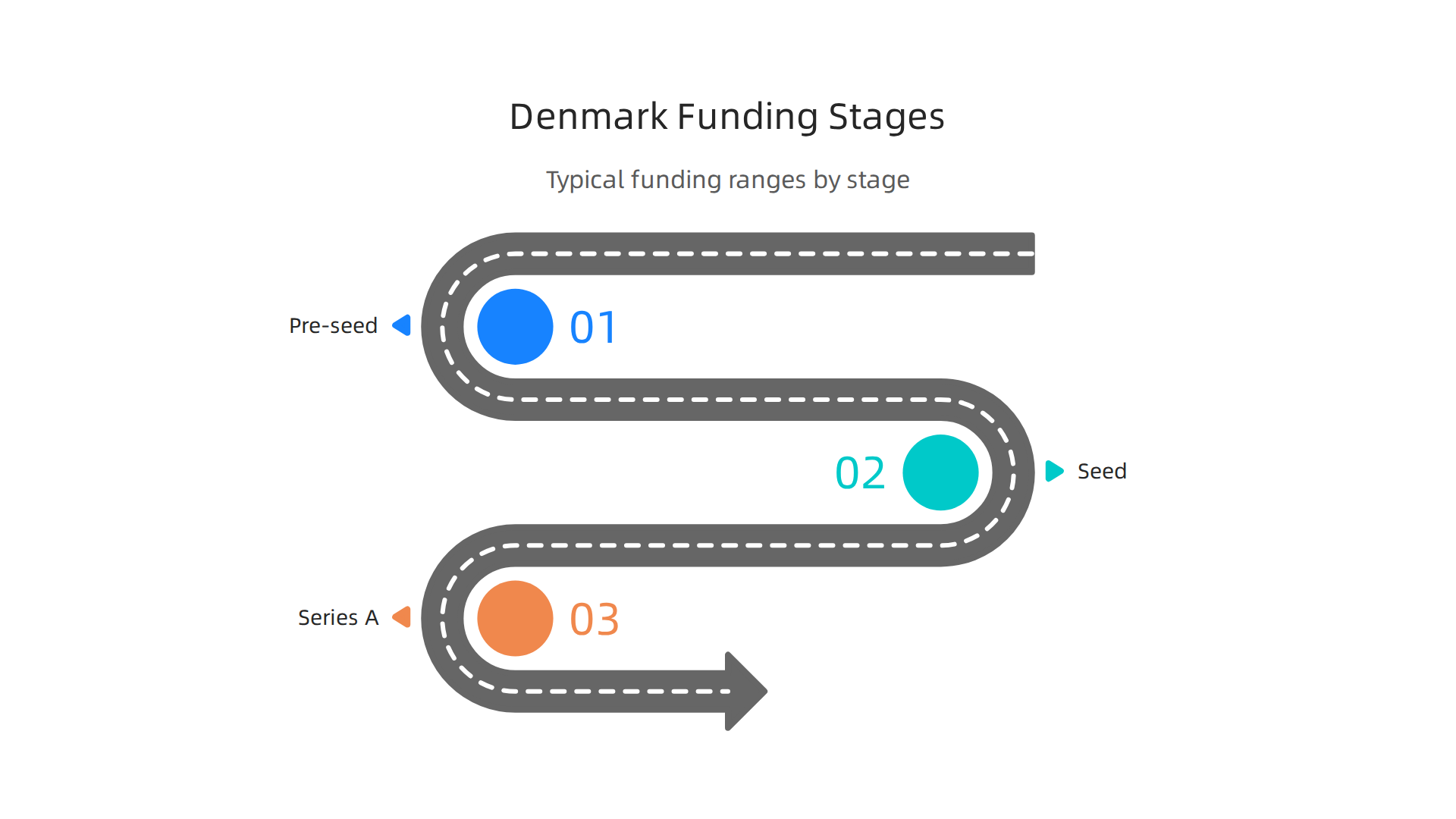
These amounts are common targets for companies in the denmark tech ecosystem Top Venture Capital Investors in Denmark — 2026 Guide.
Who are the main people putting money into these startups? There’s a good mix of local Danish funds and international investors who are keen on the country’s potential Venture Capital 2026 – Denmark. Besides the firms we talked about earlier, you’ll also find active players like PreSeed Ventures, Novo Holdings (especially strong in biotech), and funds focused on climate tech like 2150 and Nordic Alpha Partners Top 15 Danish VCs Actively Funding Startups in 2026. Public funds also play a big part. The Danish Export and Investment Fund (EIFO) is very active, and the state-backed Vækstfonden has supported many businesses Top 15 Venture Capital Firms in Denmark (2026).
The government’s continued support and these many types of investors help keep the deal flow strong. This combination makes Denmark a lively and promising place for new businesses. It stands out from other tech hubs, perhaps even more specialized than a broad event like London Tech Week. If you’re looking for where to start or grow your company, understanding these trends in places like Denmark is key. For more insights on securing early-stage capital, you might want to learn about Seed Enterprise Investment in 2026: Data Driven Strategies to Raise Capital. Also, to compare Denmark with other innovation hotspots around the world, consider reading about World Tech Centers 2026: How to Pick the Best Hub for Your Startup Fundraising.
Denmark’s lively startup world isn’t just in one spot. While Copenhagen is the biggest and brightest star, other cities like Aarhus and Odense also play important parts in the denmark tech story. Each city offers something a little different for new businesses.
Copenhagen: The Main Tech Hub
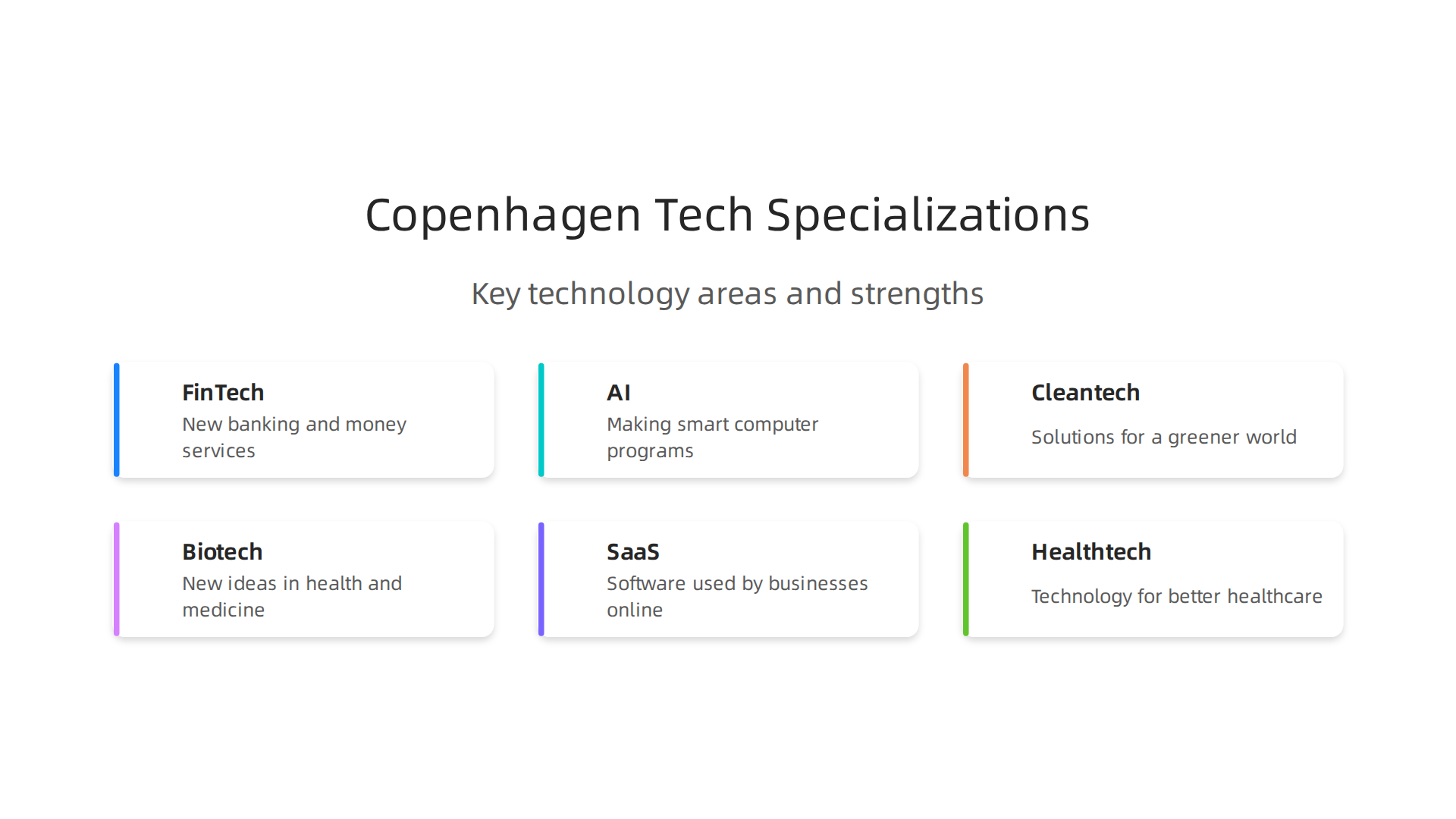
Copenhagen is truly the center of gravity for Danish startups. It’s home to a mix of both new and older tech companies Startups in Denmark News | July, 2026 (STARTUP EDITION). The city is known for many strong areas, including:
- FinTech: This is about new ways of doing banking and money services.
- Artificial Intelligence (AI): Making smart computer programs.
- Cleantech & Sustainability: Solutions for a cleaner, greener world.
- Biotech & Life Sciences: New ideas in health and medicine.
- SaaS: Software that businesses use online.
- Healthtech & MedTech: Technology for better healthcare Copenhagen Startups: Ecosystem & VC Guide 2026.
In 2026, Copenhagen is one of Europe’s top places for startups and a leading spot for AI. This makes it a great meeting place for smart people and new ideas Mesh Community’s Post – LinkedIn. The city also has strong support from both public and private groups, including startup accelerators that help companies grow faster Best Startup Accelerators Copenhagen Capital Funding 2026.
Aarhus, Odense, and Other Growing Areas
While Copenhagen leads the way, other cities also offer good places for tech companies.
- Aarhus: This city is great for teams focused on general tech, engineering, and digital solutions. It also has Aarhus University’s startup hub, called The Kitchen, which helps students and researchers with new ideas Top 10 Tech Coworking Spaces and Incubators in Denmark in ….
- Odense: This city is especially known for its work in robotics.
These cities might be a good fit if you’re looking for a slightly different environment or specific talent.
Choosing Your Hub: What Founders Should Think About
When picking a city for your startup in the denmark tech scene, think about a few key things:
- Talent: Is it easy to find skilled people who can help your company grow? Copenhagen generally has a larger pool of experienced tech workers.
- Cost: Rent for offices and living expenses can be higher in Copenhagen than in Aarhus or Odense.
- Access to Mentors and Big Companies: Copenhagen has more investors, mentors, and larger companies that can help guide new startups. This means more chances to get advice and make important connections.
Denmark offers a strong system for startups with good digital tools, skilled people, and close work between businesses, schools, and government 10 of the most promising Danish startups to watch in 2026. To pick the best spot for your company, it’s wise to consider what each region offers and how it fits your specific needs. Understanding these regional differences is a big part of successful fundraising. For a deeper dive into making these choices, you might find it helpful to learn how to choose your regional tech hubs for optimal startup fundraising.
Staying updated on the wider tech landscape, especially areas like AI, can also give your startup an edge. Get clear daily AI updates from The AI Newsletter Worth Reading.
After choosing the right spot for your startup within the vibrant Danish tech scene, the next big step is finding the money to grow. Denmark offers many ways for startups to get funding, including money from private investors, special companies called Venture Capital firms, and even public funds from the government.
Overall Funding Landscape in Denmark
The denmark tech ecosystem has seen a lot of growth in how much money startups receive. In 2025, the total amount invested in Danish startups and fast-growing companies was around 11.7 billion DKK, which is about $1.7 billion USD. This is a big jump from 2.6 billion DKK in 2016. However, it’s a bit less than the peak year of 2021, when investments hit 17.6 billion DKK [The Startup Barometer 2026]. Despite some ups and downs in overall funding, the country still attracts a lot of interest from both local and international investors, especially in key areas like Life Science and Software [From Startup to Scaleup]. For example, in the first half of 2026, Danish startups raised €270 million across 49 deals [Denmark startup funding in H1 2026].
Venture Capital Firms (VCs) and Their Stages
Venture Capital firms are a major source of money for startups in Denmark. These firms invest in new companies with big potential, hoping they will grow quickly. Danish VCs are active at different stages of a company’s life:
- Pre-seed Stage: This is the very first money a startup gets, often around €100,000 to €500,000. Firms like PreSeed Ventures and byFounders, along with angel investors, typically invest here.
- Seed Stage: Once a startup has a working idea and maybe some early customers, it looks for Seed funding, usually €500,000 to €2 million. Seed Capital and early-stage Heartcore Capital are active in this space.
- Series A Stage: For companies ready to really scale up, Series A funding can be €3 million to €8 million. Later-stage Heartcore Capital often plays a role here [Top Venture Capital Investors in Denmark — 2026 Guide].
Key VC firms like Seed Capital and PreSeed Ventures are known for making many investments. Other important players include Novo Holdings, which has made nearly 400 investments, and Maersk Growth, which is a corporate venture capital arm [Top 15 Venture Capital Firms in Denmark (2026)]. The denmark tech sector benefits from a mix of local and international VC funds [Raise Capital in Denmark]. If you want to dive deeper into how different investment groups approach funding, you can learn more about their Investment Group Profiles Smart Capital Strategies for Founders Investors.
Angel Investors, Corporate Backers, and Public Funds
Besides VCs, other sources of capital are crucial for Denmark’s startups:
- Angel Investors: These are wealthy individuals who invest their own money into early-stage startups, often providing mentorship too. They are a vital part of the pre-seed and seed funding landscape, helping to get new ideas off the ground.
- Corporate Backers: Larger companies sometimes invest in startups that fit their own business goals. Maersk Growth is a good example of a corporate venture arm that supports new tech. This kind of investment can also bring valuable industry knowledge and connections. You can read more about how Corporate Venture Capital is the new power broker in startup funding.
- Public Funds: The Danish government strongly supports innovation. Denmark’s main public innovation agency gives out about DKK 1.7 billion (around $250 million USD) each year. They have programs like Innobooster, which offers grants from DKK 200,000 up to 5 million for new product or service ideas [Denmark: Government Support]. These grants can be a great way to fund early development without giving up company ownership.
How Funding Paths Are Shaped
Often, a startup’s journey in Denmark involves a mix of these different money sources. A company might start with a public grant and angel funding, then move on to seed funding from a local VC, and later attract larger Series A investments, potentially even from international investors. This combination of public support, angel networks, and VC money helps create a strong and varied funding environment for new businesses in the denmark tech space. This makes the overall process more robust and offers more chances for founders to find the right partners for their growth.
Building on the strong funding environment, the success of the denmark tech scene truly starts with its smart and creative people, and the great research coming from its universities. Denmark has a strong focus on turning new ideas from labs into real businesses.

The Role of Universities and Research
Danish universities are key players in creating new technology companies, especially those focused on "deep-tech" which means very advanced science and engineering. Major universities like the University of Copenhagen, Aarhus University, Aalborg University, and the University of Southern Denmark are not just places for learning; they are also centers for innovation [Top 10 Tech Coworking Spaces and Incubators in Denmark in 2026].
A big effort called "Spin-outs Denmark" connects all Danish universities. This project helps researchers who have great ideas turn their discoveries into startup companies [Spin-outs Denmark]. The goal is to create more high-quality, research-based businesses. In 2026, a new plan was set to give DKK 1.8 billion (around $260 million USD) to universities from 2026 to 2029. This money is to help with long-term research and support researchers who want to start companies [Strategic Priorities for Research and Innovation 2026–2029].
The Danish Parliament has also made it easier for universities to share their knowledge and technology with companies. This helps new businesses start up and grow faster from university research [Broad Parliamentary Deal Aims to Turn Danish Universities into Innovation Engines]. For instance, Aalborg University and the University of Southern Denmark are working together to make a digital platform to speed up the journey from research to business [AAU and SDU to strengthen innovation and digital …].
Attracting and Growing Talent
A strong talent pool is very important for any growing tech area. In Denmark, many skilled people come directly from these universities. Copenhagen, the main hub for startups in Denmark, draws a lot of this talent, especially in fields like FinTech and Artificial Intelligence [Top 72 Copenhagen Startups to Watch in 2026]. The denmark tech sector benefits greatly from this steady flow of new, educated workers.
Denmark also works to attract skilled people from other countries. The government understands that to keep growing, the nation needs diverse skills and new ideas. This welcoming approach to international talent helps fill specific needs in areas like deep-tech and software development.
If you are a founder looking to build a team, understanding how these different talent hubs work can be a big help. You can learn more about how to choose your regional tech hubs for optimal startup fundraising to find the best fit for your team.
Government Incentives for Research and Development (R&D)
Besides direct funding for university spinouts, the Danish government offers other incentives for companies doing R&D. These programs encourage both new and existing companies to invest in developing new products and services. This support, combined with the strong university system, creates a nurturing environment for innovation. It helps businesses, especially those in deep-tech, get the resources and skilled people they need to thrive.
The connection between universities, research, government support, and a skilled workforce makes the Danish startup ecosystem very robust. This foundation helps new companies not only get started but also attract further investment as they grow.
For more in-depth daily insights into the broader tech market and AI, which often influences the direction of university research and startup talent, consider subscribing to The AI Newsletter Worth Reading.
The strong support from universities and the government helps new companies get started and grow. Now, let’s look at the real steps founders need to take to enter the market, deal with rules, and grow their businesses in the denmark tech world.
Market entry, regulation and scaling: Practical steps for founders
When you want to start a business in Denmark, it is important to know the rules. Think of it like a checklist to make sure everything is done right. This includes setting up your company legally and understanding the tax rules.

For example, if your business comes from university research, new rules make it much easier for these "spin-out" companies to start University spinouts get easier lift-off in Denmark. This helps good ideas from schools become real products and services faster.
Denmark offers helpful tax rules for companies that do a lot of research and development, called R&D. In 2026, companies can get a special tax credit for their R&D costs, up to 25 million DKK (which is about 3.6 million USD). This credit helps businesses that are trying to invent new things Tax Credit Scheme for Research & Development costs in Denmark in 2026. Also, the government makes it easier for companies to give employees shares, which helps attract good talent. There are new rules that set a minimum yearly salary of DKK 265,300 (around $38,000 USD) for employees getting these shares EU approval of the ‘7P’ tax scheme. This shows that Denmark really wants to help tech companies grow and keep smart people.
Choosing how to get money for your startup is also a big decision. You might think about applying for grants or looking for money from investors who get a share of your company (equity rounds). Grants are like gifts that you do not have to pay back, which is great for early-stage ideas. Denmark has programs like Innobooster and Innofounder that give money for innovative projects and help researchers start companies Denmark: Government Support – Nordic Startup Hub. Innobooster grants can be from 200,000 DKK up to 5 million DKK for projects that develop new products or services.
However, as your company grows, you might need more money than grants can provide. That is when equity rounds come in. Here, investors give you money in exchange for a part of your company. This helps your company scale up much faster. Knowing the right time to use grants versus seeking equity funding is key for a successful journey in the denmark tech landscape. You can learn more about how to get capital by understanding seed enterprise investment in 2026 data driven strategies to raise capital.
Making sure you follow these steps, from understanding legal setups to picking the right way to fund your company, is crucial for growth. This helps your business expand not just in Denmark, but also on a global scale. Founders looking to grow should also think about what makes a great tech hub by exploring world tech centers 2026 how to pick the best hub for your startup fundraising.
Case studies & playbook: What successful Danish startups did right
Looking at how other successful companies in denmark tech made it big can show you the best path. It is not just about having a great idea. It is also about smart choices for getting your product to customers, finding the right money people, and knowing when to ask for help from public programs. Even when investing slowed down in 2024 and early 2025, the Danish startup world stayed strong. New companies kept getting funded by local investors, angel groups, and government support Venture Capital 2026 – Denmark. This shows that Denmark truly supports its tech businesses.
For founders, a key part of this success is finding investors who truly understand their business. For instance, in the first half of 2026, over €270 million was raised in Denmark across 49 funding rounds. Healthtech was a very active area, and BioInnovation Institute was a top investor Denmark startup funding in H1 2026. This means if you are in healthtech, you should seek out investors like them. Other top venture capital firms in Denmark include Seed Capital and PreSeed Ventures, who are very active in early-stage funding for the denmark tech scene Top Venture Capital Investors in Denmark — 2026 Guide.
Here are some simple steps founders can take:
- Network wisely: Go to tech events and meet investors face-to-face. Think about what kind of investor your business needs. Do they like early ideas or ready-to-grow companies?
- Focus your pitch: When you talk to investors, be very clear about what problem your product solves and how it makes money. Show them you know your market. Learning how different types of investors think can make your pitch much stronger. You can learn more by checking out Tech Company Categories 2026: How Founders Can Attract the Right Investors.
- Hire smart people: Having a strong team is vital. Investors look at who is working with you. They want to see people with good skills and a shared goal. Denmark’s rules about employee shares make it easier to attract great talent, as mentioned before.
- Use public support: Do not forget the government grants and programs available. These can give you an important boost without giving away parts of your company. Many successful Danish startups used these programs to get their start before seeking bigger investments.
By focusing on these areas, founders can follow in the footsteps of successful Danish companies. They can build strong connections, pitch their ideas clearly, and use all the help available to grow their business in the vibrant denmark tech ecosystem. To stay updated on the latest trends that could impact your fundraising strategy, especially in areas like AI, you’ll want to read The AI Newsletter Worth Reading. It provides clear daily AI updates to keep you ahead.
Summary
This article maps Denmark’s fast-growing tech ecosystem in 2026, explaining who funds startups, which cities lead innovation, and how founders can enter and scale in the market. It covers ecosystem scale (over 23,700 startups and thousands of funded companies), the mix of public support (annual innovation funding, Innobooster grants, R&D tax credits) and active private backers (local VCs, corporate venture arms, and angels). You’ll learn typical funding ranges for pre-seed, seed and Series A rounds, the role of universities and spin-out programs, and practical steps for legal setup, tax planning, and fundraising strategy. The guide highlights sector strengths—SaaS, healthtech, biotech, cleantech and AI—and compares regional hubs like Copenhagen, Aarhus and Odense so you can choose the best location. It also outlines how to blend grants, equity and partnerships to preserve ownership while scaling. After reading, founders and investors will have a clear action plan for fundraising, hiring, and leveraging Denmark’s public-private support to grow internationally.