

In the fast-paced world of startups, understanding "capital turnaround" is more important than ever. What exactly does it mean? Simply put, a capital turnaround is when a business needs to change how it uses its money to fix problems or find new ways to grow. For new companies, this often means looking for fresh working capital funding when things get tough, or cleverly moving money around to grab new chances.
Startups have special needs compared to bigger, older companies. Large firms might focus on making big changes to their whole business or selling off parts to save money. But for a startup, a capital turnaround is usually about solving problems like running out of cash, not selling enough products, or losing key investors. It’s about being quick and smart with the money they have and how they get more.
In 2026, the startup world is full of changes and opportunities. Global startup investment reached a record $510 billion in the first half of this year, partly due to the boom in AI companies Crunchbase Data: Global Startup Investment Hit Record $510B In H1 2026 As AI Boom Accelerates Funding And Exits. This shows a lot of money is moving, but it’s often flowing into specific areas. For a startup, knowing how to fund new growth or fix money problems in this quickly changing market is critical. This might involve seeking capital wholesale solutions or exploring new fundraising methods.
For founders, a successful capital turnaround isn’t just about keeping the company alive. It’s about protecting the value of their hard work and finding a clear path to future growth.

Investors also have a lot riding on these situations. They want to see their money grow, so they pay close attention to how founders handle funds, especially when a business needs to make a big change. Their goal is to ensure the company not only survives but also increases its value over time. Learning about Seed Enterprise Investment In 2026: Data-Driven Strategies To Raise Capital can be a vital step for founders navigating these waters.
To stay on top of these trends and learn how to make smart financial moves, it helps to be well-informed. Get clear daily AI updates with The AI Newsletter Worth Reading.
Diagnosing the Crisis: Root-Cause Analysis for Startups
When a startup needs a capital turnaround, the first step is to figure out exactly what went wrong. Think of it like a doctor looking for the cause of a sickness.

You can’t just guess; you need to check all the signs to find the real problem. This careful checking is called root-cause analysis. It helps founders understand how fund shortages began and what needs fixing.
Here’s how to look for problems in your startup’s money situation:
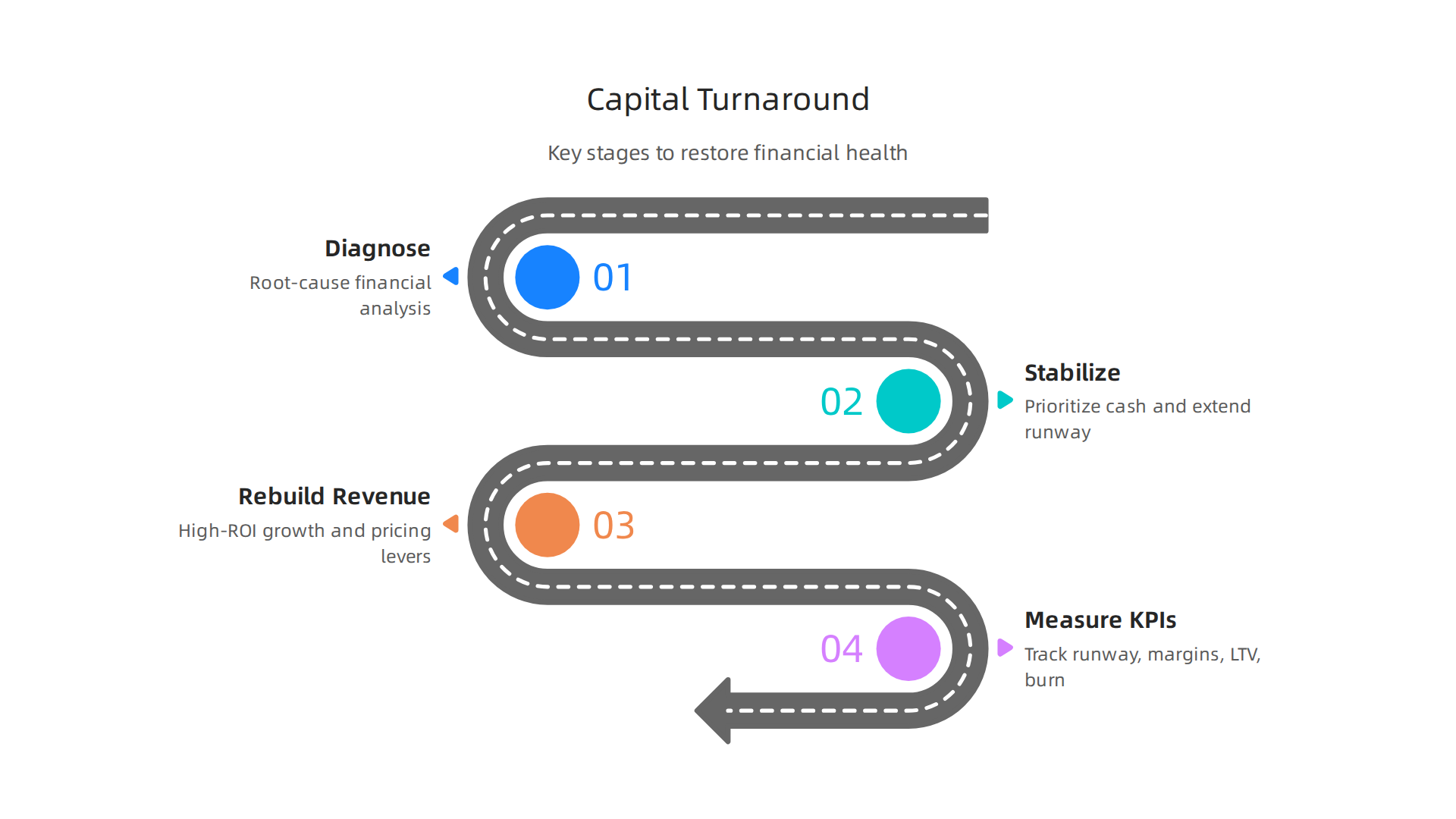
- Check Your Cash (Liquidity): This is about how much money you have right now and how quickly you can get more. Are you running out of cash fast? Do you have enough to pay your bills next month? If cash is tight, that’s a big red flag. A company needs enough working capital funding to keep the lights on and pay employees.
- Find Out Where Money Goes (Burn Drivers): Look closely at your spending. Where is your money going each month? Are you spending too much on marketing that isn’t working? Are office rents too high? Finding the biggest "burn drivers" means finding the places where money is leaving the company too quickly without bringing enough back.
- See If Customers Are Leaving (Customer Churn): Are your customers sticking around? If many customers are leaving after a short time, this is a huge problem. It means your product or service might not be meeting their needs, or your competitors are doing a better job. Losing customers also means losing future money, which hurts your ability to fund your business.
- Understand What Each Sale Brings In (Unit-Economics Gaps): This is about whether you make money on each product or service you sell. For example, if it costs you $10 to make and sell a widget, but you only sell it for $8, you’re losing money on every single sale. These "unit-economics gaps" mean that even if you sell a lot, you’re just losing money faster. For many startups in 2026, understanding these numbers is key, especially as capital is flowing unevenly into different sectors Startup Funding Trends 2026.
After you’ve looked at all these areas, you’ll have a much clearer picture of what’s really happening. Then, you can decide on the best path forward.
Picking the Right Path: Stabilize, Restructure, or Pivot
Once you know the root causes of your startup’s money troubles, you need a plan. There are three main ways a company can approach a capital turnaround:
- Stabilization: If the problems are small and easy to fix, you might just need to make a few changes to get back on track. This could mean cutting some small costs or improving one part of your product. The goal is to make things steady again without big changes.
- Restructuring: For bigger problems, you might need to change how the company is put together or how it works. This could involve letting some employees go, closing down certain parts of the business, or changing your pricing. It’s about rebuilding the company to be stronger and more efficient.
- Aggressive Growth Pivot: Sometimes, the original idea or business model just isn’t working. In this case, you might need to make a big, bold change. This is called a pivot. It means trying a completely new product, finding a new type of customer, or even changing your entire market. It’s a risk, but it can open up new ways to grow and how fund your future success. This might involve exploring [capital wholesale] solutions to quickly inject funds into the new direction.
When your startup is facing money problems, and you’ve decided that a small fix is all that’s needed, you’re looking at stabilization. This path focuses on short-term actions to get your finances steady again. The main goal here is to manage the cash you have and make it last longer, also known as extending your "runway." Your runway is simply how many months you can keep running your business with the cash you have right now, before needing more money. In 2026, many startups aim for at least 18 months of runway, but if you have less than 12 months, it’s time to act fast, and under 6 months is very critical Startup burn rate and runway 2026.
Prioritizing Cash Outflows
The first step in any capital turnaround for stabilization is to look closely at where your money is going. You want to make sure every dollar counts.
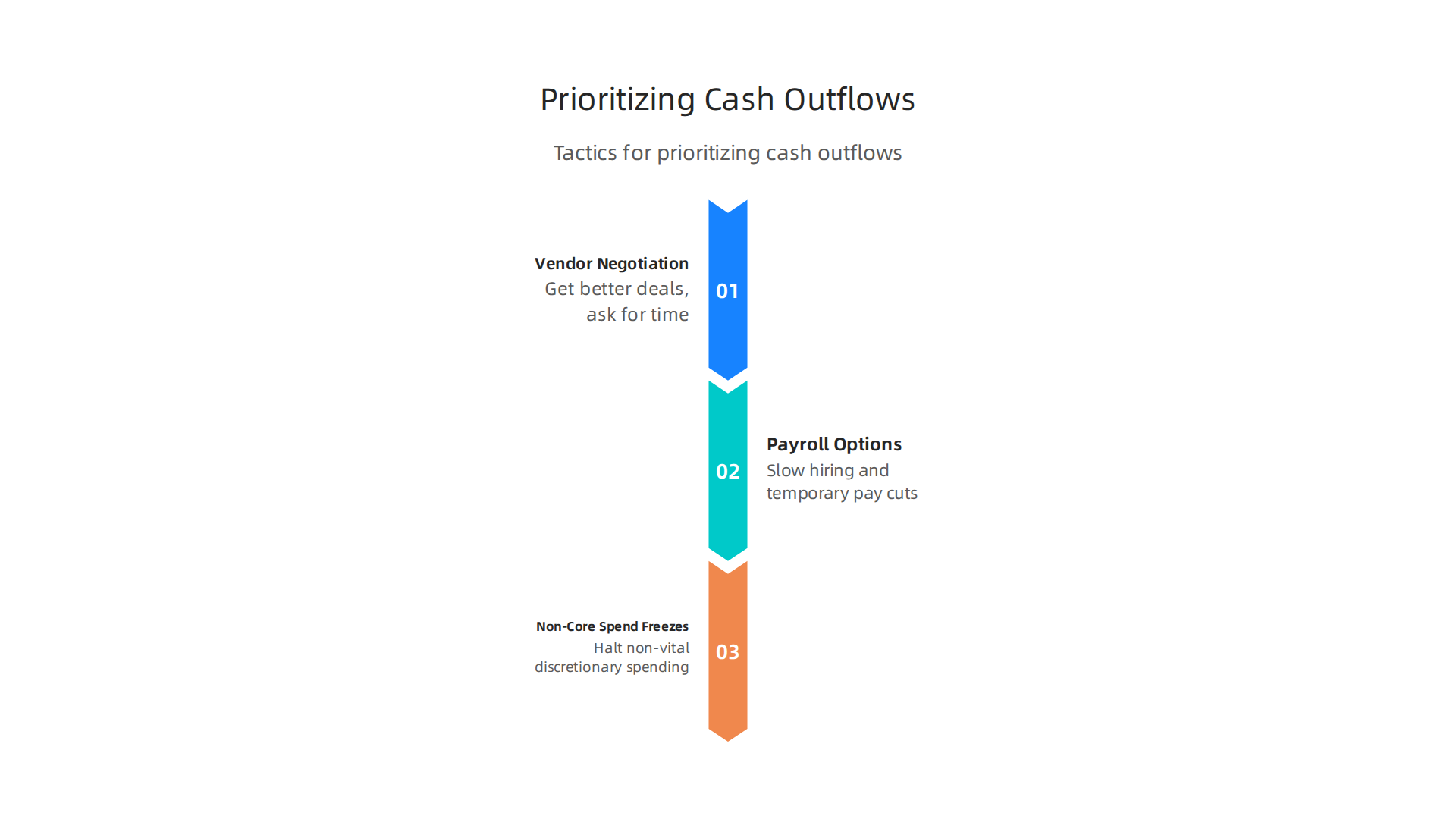
- Vendor Negotiation: Talk to the companies you pay for services or supplies. See if you can get better deals, ask for more time to pay, or negotiate lower prices. Sometimes, just asking can save you a lot of cash.
- Payroll Options: Your team is important, but payroll is often the biggest cost. This doesn’t always mean letting people go. It could involve slowing down new hires, asking for temporary pay cuts, or changing how bonuses are paid. These are tough choices, but they can free up working capital funding.
- Non-Core Spend Freezes: Stop spending money on things that aren’t absolutely vital for your business to run. This might mean pausing new software subscriptions, holding off on office upgrades, or cutting back on team events. Every little bit of savings helps extend your runway.
Financing Stopgaps: Extending Your Runway
Sometimes, cutting costs isn’t enough. You might need a quick boost of money to give your startup more time to get back on its feet. These are called "financing stopgaps." They are short-term solutions to help you how fund your operations until bigger, more stable funding comes along.
- Bridge Notes: Think of a bridge note as a small, short-term loan that "bridges" the gap between your current money situation and your next big funding round. It’s often used when you’re close to raising more money but need a little extra time.
- Venture Debt: This is a type of loan specifically for startups. Unlike a traditional bank loan, venture debt lenders understand that startups might not have a lot of assets or steady profits yet. Venture debt often comes from special lenders and is meant to give you more time without selling off more parts of your company (equity) too soon Venture Debt for Startups | Web3 Listicle. It’s typically used to extend your runway between larger investment rounds Venture Debt Guide [2026].
- Convertible Instruments: These are investments that start as a loan but can later turn into shares of your company. This gives investors a chance to see how well your startup does before deciding on a fixed value for their investment. Examples include SAFEs (Simple Agreement for Future Equity) or convertible notes. These are considered "non-dilutive financing" at first, meaning they don’t immediately reduce your ownership percentage Non-dilutive financing for startups in 2026.
When looking for ways to how fund your growth, understanding different kinds of capital is key. You can learn more about how different investment groups operate and what they look for in startups by exploring what is a capital investment group.
These stabilization tactics are all about buying your startup time. They help you keep going while you work on fixing the deeper problems. By carefully managing your cash and using smart short-term funding, you can keep your business alive and set the stage for a stronger capital turnaround.
For founders and operators navigating the complex world of startup finance and technology, staying updated is crucial.
The AI Newsletter Worth Reading
Once a startup has bought itself some time by stabilizing its cash flow, the next big step in a full capital turnaround is to make the company attractive for new investors. This often means looking closely at the cap table and adjusting the terms of investment. The cap table, short for capitalization table, is simply a record of who owns what percentage of your company. It shows all the shares, options, and who holds them.
Common Cap Table Adjustments to Attract New Money
When a startup needs new growth capital, it might need to change things around in its cap table to seem more appealing to new investors. These changes are crucial for getting fresh money to how fund future plans.
- Dilution Trade-offs: This is about how much of the company each owner gives up when new money comes in. Sometimes, existing owners or even founders might need to accept owning a smaller piece of the company. This "dilution" makes space for new investors. In return, the company gets more money to grow, which makes everyone’s smaller piece worth more in the long run. It’s a tough but often necessary trade-off to ensure the business can continue its capital turnaround.
- Option Repricing: Many startups give stock options to their employees. These options let employees buy company shares at a set price later on. If the company’s value has dropped, these old option prices might be too high, making them less valuable to employees. To keep talented team members motivated, the company might change the option prices to a lower, more realistic amount. This helps employees feel like their work will still pay off.
- Liquidation Preference Recalibration: This part can be a bit tricky. "Liquidation preference" means that if the company sells or goes out of business, certain investors get their money back first. If a startup is struggling, existing investors might have high liquidation preferences. New investors won’t want to put money in if they know old investors will get paid before them. So, existing investors might agree to change these preferences, making them less demanding, to encourage new investors to come in and provide working capital funding. This recalibration is a way to share the risks more fairly and make the deal sweeter for new money.
To truly understand how these financial instruments work together, especially in difficult times, you might want to learn about how different types of investment groups approach these situations. For example, understanding the strategies of a firm like Knighthead Capital Management Investment Strategies for Strategic Growth can offer valuable perspectives.
Talking to Investors: Building Trust and Momentum
Making these changes to the cap table and investment terms isn’t just about the numbers; it’s also about clear communication. How you talk about these adjustments can make or break a deal, especially when you need to bring in more capital.

- Presenting to Existing Investors: You need to be very honest and transparent with your current investors. Explain why these changes are needed for the company’s survival and future growth. Show them that even though they might be taking a smaller piece or adjusting their preferences, it’s for the greater good. It’s about preserving the overall value of the company and allowing it to attract the new money it needs to succeed. Being open and showing a clear plan for moving forward helps keep their trust and support during this critical capital turnaround.
- Presenting to New Growth Investors: When talking to new investors, you want to highlight the positive impact of these changes. Explain how the restructured cap table and new terms create a clearer path to success. Show them that existing investors are committed and willing to make adjustments, which signals confidence in the company’s future. You should also present a strong business plan that clearly shows how the new money will be used to grow the company and reach new goals. Modeling different cash runway scenarios can help you show investors how their money will be used effectively and what to expect in different situations, rather than relying on just one simple guess Cash Runway Scenario Modeling: Why Your Single-Point Forecast …. This helps new investors see the opportunity, not just the challenges, making your startup an investable choice for growth capital. You can also explore insights into Venture Fund Strategy How VCs Pick Power Startup Winners to better understand what top investors are looking for.
Restructuring the cap table and terms effectively can restart your fundraising efforts and secure the growth capital needed to transform your startup. It’s about making smart, strategic decisions and communicating them clearly to everyone involved.
After you have made your company look good on paper and talked clearly about why changes are needed, the next step is to actually negotiate. This is where you discuss the real details of the deal. Successful negotiation is key to getting the money you need for a complete capital turnaround.
Negotiating with Investors and Alternative Lenders
When you are deep in talks with investors, you need to be smart about what you ask for and what you are willing to give. It’s not just about getting money; it’s about getting the right money with terms that help your company grow. Many experts agree that preparing well and knowing your limits before you start is very important for successful negotiations Successful Negotiation Strategies for Startup Founders.
Key Negotiation Points
Here are some important things you will talk about when getting new money for your startup:
-
Valuation versus Control:
- Valuation is simply how much your company is worth in money. A higher valuation means new investors pay more for a smaller piece of your company.
- Control is about who makes the big decisions. When new investors put in money, they often want a say in how the company is run. This might mean giving them a seat on your board or special voting rights.
- Sometimes, in a capital turnaround, you might need to accept a lower valuation to keep more control. Or, you might give up some control to get a higher valuation and more money. It’s a balance. Knowing what you value more can help you negotiate better, acting like a partner instead of an opponent Negotiation Strategies for Securing Startup Funding.
-
Milestone-Based Tranches:
- Imagine you need a lot of money, but investors are not sure if your company can reach its goals. Instead of giving you all the money at once, they might offer "milestone-based tranches."
- This means they give you a first part of the money. Then, they watch to see if you reach certain goals, like getting a certain number of customers or making a new product. If you hit those goals, they release the next part of the money.
- This helps how fund the company step-by-step. It gives investors more comfort and makes sure you are always working towards important targets. It also ties the growth capital directly to your company’s performance.
-
Protective Covenants:
- These are rules put in place to protect the investor’s money. They are like promises you make.
- For example, a protective covenant might say you can’t sell the company or borrow a lot more money without the investor’s permission. These rules make investors feel safer, especially if your company is going through a capital turnaround and needs to restore confidence Restoring Investor Confidence Post-Crisis.
- You must clearly communicate any non-negotiable terms you have as a founder before the negotiation begins Negotiating & Closing Startup Investment Deals.
Considering Alternative Lenders
Sometimes, traditional investors like venture capitalists (VCs) or angel investors might not be the right fit, especially during a tough capital turnaround. This is where alternative lenders come in.
- Who are they? These are often banks, special loan funds, or debt providers. They are different from VCs or angels because they usually don’t want a piece of your company (equity). Instead, they offer loans that you pay back with interest.
- How are their terms different?
- Less Ownership Given Up: You don’t give away a part of your company, so you keep more control.
- Fixed Payments: You have to make regular payments, just like a normal loan. This can be good for working capital funding if you have a clear way to make money.
- Interest Rates and Fees: Instead of giving up equity, you pay interest on the loan, and sometimes extra fees.
- Collateral: They might ask for something valuable as a guarantee, like your equipment or future earnings.
- When to consider them: Alternative lenders can be great if you have steady sales but need money to grow faster or cover short-term costs. They are also a good option if you want to avoid giving up more of your company. It is important to know your financial health and growth plans before talking to any lender Lending best practices: The Art of Negotiation: Getting the Best Loan Terms for Your Startup. Finding the right specialized funding solutions for startups can make a big difference for your growth.
Negotiating with different types of investors requires you to be prepared, clear, and flexible. It’s all part of securing the funds needed for your company’s bright future.
Staying on top of the latest tech and market trends can give you a significant advantage in any negotiation. Get clear daily AI updates from The AI Newsletter Worth Reading.
Securing money is one thing, but how your company uses that money to grow and get back on track is just as important. For a successful capital turnaround, you need a clear plan to boost your income and make sure each sale helps your business more.

This is what we call a "growth-driven turnaround."
Picking Smart Ways to Grow
When you are trying to turn your company around, you can’t just spend money everywhere. You need to pick the smartest ways to grow that give you the biggest return for your effort.
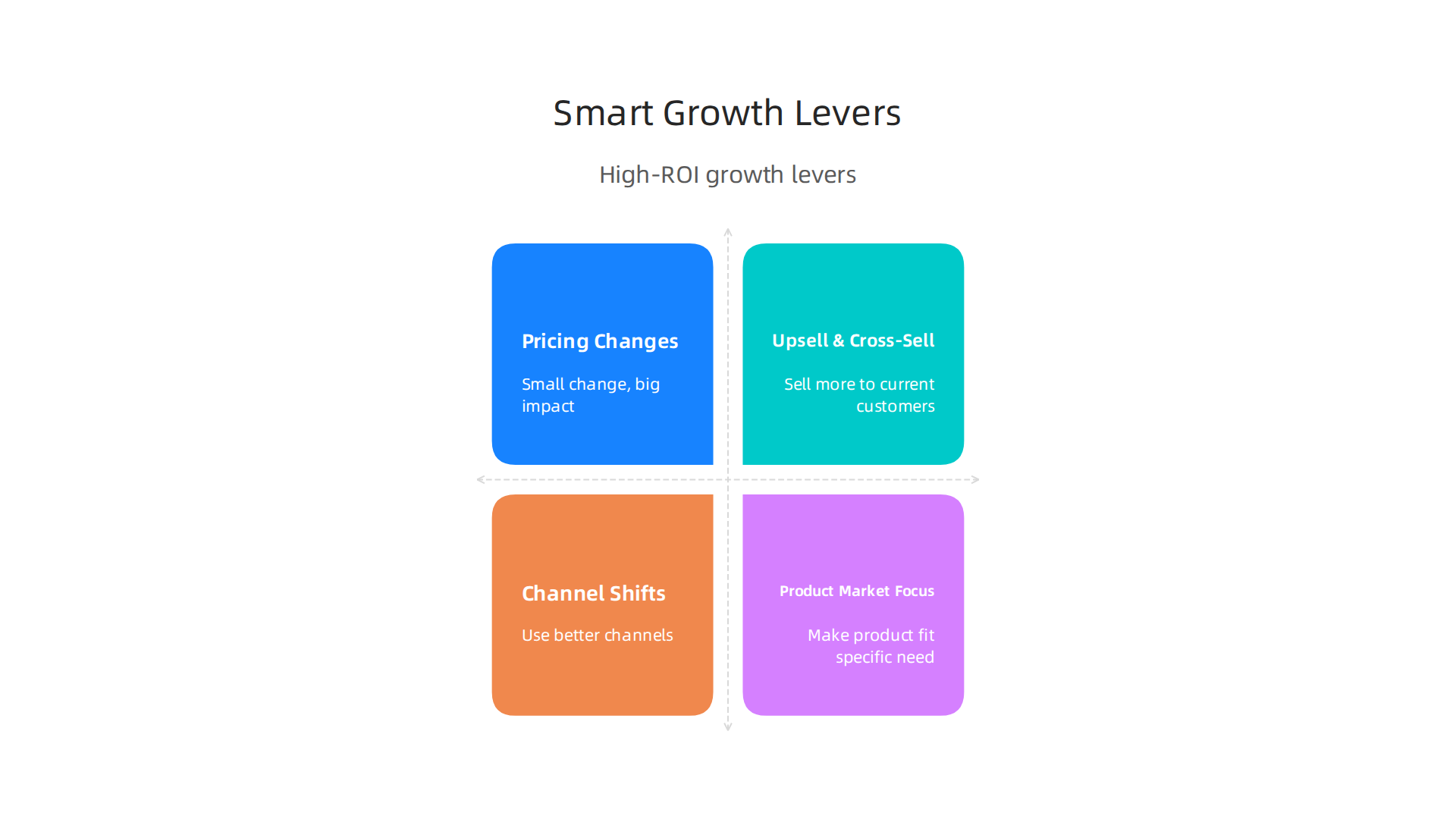
These are often called high-ROI (Return on Investment) growth levers. Here are some key areas to focus on:
- Pricing Changes: Sometimes, a small change in how much you charge can make a big difference. Maybe you can increase prices for your best features, or offer different packages that fit what different customers want. Reviewing your pricing can often unlock new revenue without needing to find many new customers.
- Upsell and Cross-Sell: It’s often easier and cheaper to sell more to your current customers than to find brand new ones.
- Upselling means getting a customer to buy a more expensive version of what they already have.
- Cross-selling means getting them to buy other related products or services from you.
- Focusing on these can greatly improve your income per customer.
- Channel Shifts: Think about how you reach your customers. Are you using the best ways? Maybe selling more through partners, online stores, or different types of advertising can help you grow faster or cheaper. Changing your sales channels can open up new markets or make your sales process more efficient.
- Product-Market Focus: This means making sure your product or service really solves a problem for a certain group of customers. If you can make your product perfect for a specific need, those customers will be very happy and pay more for it. This clear focus helps you stand out and keeps your sales efforts sharp.
Strategic capital partnerships can help unlock value beyond just funding, giving you access to expertise and networks that support these growth levers. Understanding how to partner effectively for growth is key to your long-term success Strategic Capital Partnerships Unlock Value Beyond Funding.
Fixing Your Unit Economics for Profitability
Even with new money, investors want to see that your company can eventually make a profit from each customer or product. This is where "unit economics" come in. They tell you if your business model works. You need to quickly rework these numbers to show a clear path to making money.
Key unit economics metrics include:
- Customer Acquisition Cost (CAC): How much it costs to get one new customer.
- Customer Lifetime Value (LTV): How much money you expect to make from one customer over the whole time they use your product.
Investors look for a good ratio between LTV and CAC. For B2B SaaS companies in 2026, a healthy LTV:CAC ratio is often 3:1 to 5:1, meaning you make at least three to five times more from a customer than it cost to get them Optimal CAC to LTV Ratio for B2B SaaS: 2026 Benchmarks. Many elite teams now aim for 4:1 or higher.
Another important number is the CAC Payback Period. This shows how quickly a new customer pays back the cost of getting them. In 2026, an ideal CAC payback period for B2B SaaS is generally under 12 months, though 12 to 18 months is considered typical The 2026 SaaS Metrics Stack: LTV, CAC, NRR, and ….
By improving these numbers, you show investors that your growth is not just about getting more customers, but getting profitable customers. This strong financial health makes your company much more attractive for growth capital and ensures the capital turnaround is truly successful. Showing strong unit economics proves your business has a credible path to profitability.
After working on making each sale profitable and improving your unit economics, the next big step is to show everyone that your plan is actually working. This means carefully watching your company’s health, telling investors what’s happening, and having a good plan for how decisions are made. This is all part of making your capital turnaround a success.
Measuring Progress: KPIs, Reporting, and Governance for Turnarounds
To really prove your company is getting better, you need clear ways to measure how well you are doing. These are called Key Performance Indicators, or KPIs. Think of them as the important numbers that tell the story of your progress. Investors want to see that the working capital funding they provided is being used wisely.
Here are some key KPIs you should always keep an eye on during a turnaround:
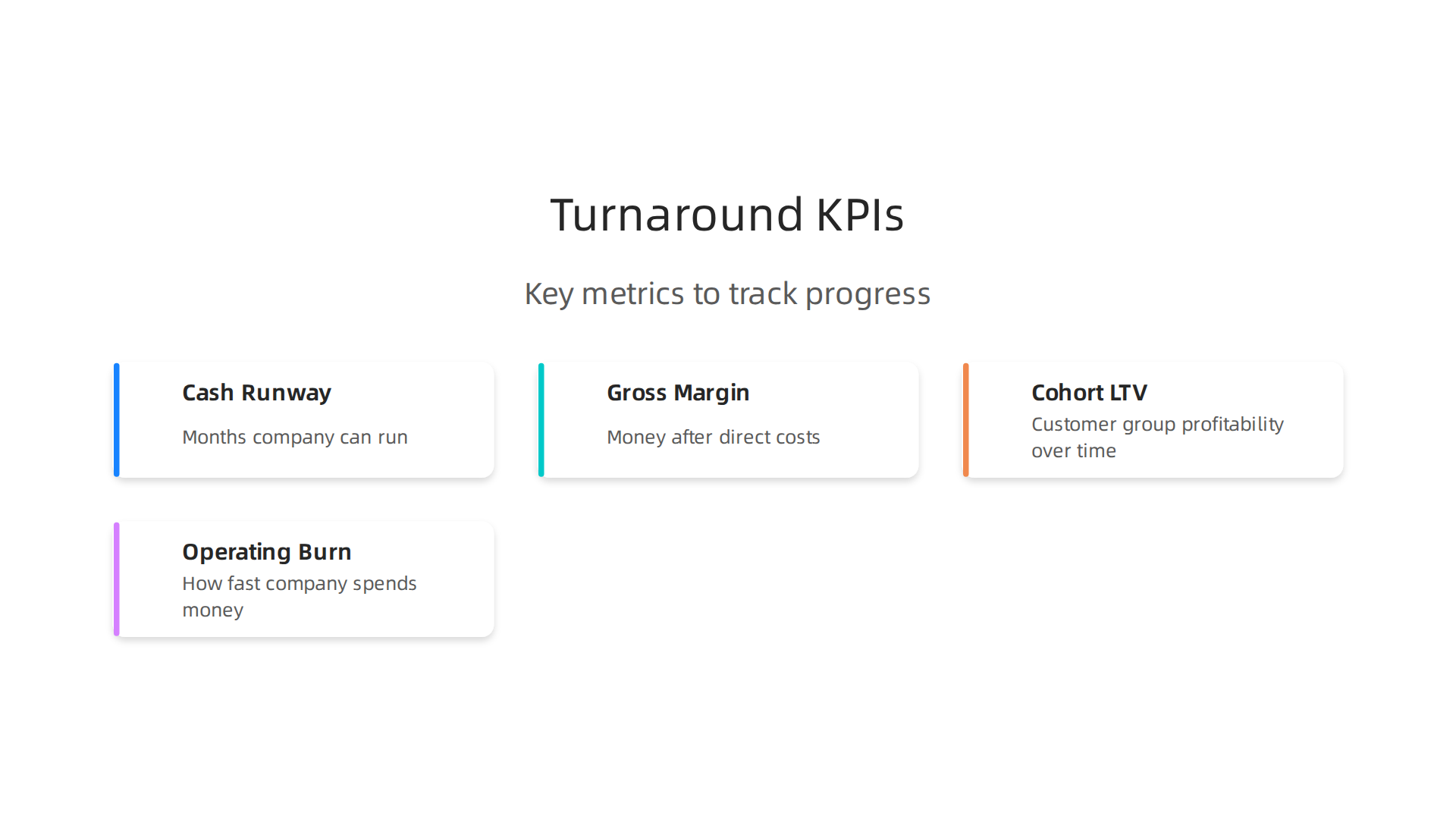
- Cash Runway: This tells you how many months your company can keep running with the money it has right now, without getting any new income. It’s a very important number for investors because it shows how much time you have to fix things.
- Gross Margin Trends: This shows how much money you make from selling a product or service after taking out the direct costs of making it. Watching these trends helps you see if your pricing changes and cost cutting are making a real difference.
- Cohort LTV (Lifetime Value): We talked about Customer Lifetime Value (LTV) before. Cohort LTV looks at groups of customers who joined at the same time. This helps you see if the customers you are getting now are more profitable than older groups.
- Operating Burn Cadence: This is how fast your company is spending money each month, beyond what it earns. You want this number to go down, showing you are getting closer to making a profit.
Having a simple dashboard with these numbers helps everyone see the real picture. It creates trust and shows that you know how fund your growth while watching your spending.
Increasing Investor Confidence Through Good Governance
Good governance means having clear rules and ways of making decisions. During a capital turnaround, this is extra important because investors need to feel sure that their money is safe and being managed well. Strong governance changes can really help increase investor confidence.
Here’s what to focus on:
- Board Composition: Having the right people on your company’s board of directors is key. This means people with experience in turnarounds, finance, and your industry. They should also be people your investors trust. A strong board provides guidance and oversight, showing everyone that important decisions are made carefully.
- Milestone Governance: This means setting clear goals, or "milestones," for your company’s turnaround and then checking in regularly to see if you are hitting them. For example, if your goal is to reduce customer acquisition costs by a certain amount, you would report on that specific milestone. This keeps everyone focused and shows real progress.
- Reporting Cadence: How often and how clearly you report on your progress to investors makes a big difference. Regular, honest updates on your KPIs and milestones build trust. This often includes monthly or quarterly reports that are easy to understand.
In 2026, the global venture funding landscape is dynamic, with record investments in the first half of the year driven by areas like AI, yet also showing a concentration of capital in specific sectors Crunchbase Data: Global Startup Investment Hit Record $510B In H1 2026 As AI Boom Accelerates Funding And Exits. This means that clarity and confidence are even more important for companies seeking to grow or complete a turnaround. Understanding the current climate helps you communicate better with your investors.
To stay on top of the latest trends in technology and funding, you need to keep learning.
Get clear daily AI updates from The AI Newsletter Worth Reading.
Showing strong progress and building trust with investors is super important. But how do you actually make those changes work? This is where having a clear plan, or "playbook," for your company’s capital turnaround becomes really helpful. These playbooks help you figure out what went wrong and what steps to take to fix it, all with a timeline in mind.
Turnaround Playbooks and Select Case Studies: What Worked, What Didn’t
A good turnaround playbook is like a map. It starts by looking closely at your company to find the main problems. Then, it gives you a clear set of actions to take. Let’s look at some common situations and what successful companies did, or didn’t do.
Case Study 1: The Cash Crunch
- The Problem: A startup was spending money too fast and had a very short "cash runway." This meant they would run out of money in just a few months.
- The Diagnosis: Their sales were not growing fast enough, and they had too many extra costs. They also only looked at one way their cash would go down, which was risky. You need to look at different possible futures for your cash, like a good case, a bad case, and a really tough case, not just one straight line idea Cash Runway Scenario Modeling: Why Your Single-Point Forecast ….
- The Playbook:
- Cut Costs Quickly: They immediately looked at every expense and cut anything that wasn’t absolutely needed.
- Focus on Core Product: They stopped working on new projects and put all their effort into their main product that already had some customers.
- Bridge Funding: To buy more time, they sought out venture debt financing for startups. This is a type of loan that can extend your cash runway without selling more parts of your company too soon Venture Debt Guide [2026]: Costs, Terms & Eligibility for Startups. Venture debt is often used as a bridge between bigger fundraising rounds.
- The Outcome: The quick actions slowed their spending and gave them enough time to make their sales better. They got the working capital funding they needed to keep going.
Case Study 2: Not Enough Sales Growth
- The Problem: A company had a good product, but not enough people were buying it.
- The Diagnosis: They weren’t sure who their best customers were, and their marketing was spread too thin.
- The Playbook:
- Find the Best Customers: They looked at past sales to see which customers brought in the most money and stayed the longest.
- Targeted Marketing: They changed their advertising to focus only on these best customers.
- Improve Customer Value: They added small features that their best customers really wanted, making them happier.
- The Outcome: By focusing their efforts, their sales started to grow in a more stable way.
Common Pitfalls and How to Avoid Them
Even with a good plan, companies can make mistakes during a turnaround. Here are some common problems and how to fix them:
- Not Acting Fast Enough: Delaying tough decisions, like cutting costs or letting go of team members, can make the problem much worse.
- Corrective Action: Make decisions quickly and with clear goals. Remember, a short runway of less than six months means immediate action is needed Startup burn rate and runway 2026: calculation and 90-day plan.
- Ignoring the Team: Not telling your employees what’s happening or getting their ideas can hurt morale.
- Corrective Action: Be open and honest with your team. Explain the plan and how everyone’s work helps the company recover.
- Not Knowing Your Numbers: If you don’t track your KPIs carefully, you won’t know if your plan is actually working.
- Corrective Action: Set up clear ways to measure progress and check them often, like a simple dashboard we talked about before.
- Taking the Wrong Kind of Funding: Sometimes, companies take any money they can get, even if it has bad terms. This can hurt the company in the long run.
- Corrective Action: Understand different financing options, including "non-dilutive financing" that doesn’t force you to give up ownership, like certain types of debt Non-dilutive financing for startups in 2026: when a credit …. Always consider what’s best for your company’s future, not just the quickest fix. Thinking about how to fund your growth strategically is part of being smart with your capital wholesale strategy.
By learning from these playbooks and avoiding common traps, companies can increase their chances of a successful strategic capital partnerships unlock value beyond funding.
Summary
This article explains what a capital turnaround means for startups and walks founders through a practical, step-by-step approach to diagnose, stabilize, and revive a cash-strapped business. It covers how to run a root-cause analysis of liquidity, burn drivers, churn and unit economics, then outlines three main response paths: stabilization, restructuring, or an aggressive pivot. You’ll learn short-term financing options (bridge notes, venture debt, convertible instruments), smart cap-table adjustments to attract new investors, and negotiation tactics for both equity and alternative lenders. The guide also shows which growth levers to prioritize—pricing, upsell, channel shifts—and how to fix LTV:CAC and CAC payback metrics so the business becomes investable again. Finally, it explains the KPIs, governance changes, and reporting cadence investors expect, and provides practical playbooks and case studies to avoid common pitfalls and restore investor confidence.