

Why ‘Capital Idea’ Matters: A Practical Guide for Founders
Every founder starts with a big dream: a "capital idea" they believe can change the world. It is exciting to imagine your startup growing and making a real difference.

But turning that great idea into a thriving business often needs money, and finding the right investors can feel like a maze. In 2026, the world of startup funding is very active, with lots of money moving around. For example, in the first three months of 2026, a huge $47.8 billion was raised across many different funds, showing just how much is happening in the market Venture Pulse Q1 2026 – KPMG agentic corporate services.
Even with all this activity, founders often face big problems. There is so much information out there that it can be hard to know what is true or what applies to your business. This is called information overload. Plus, it is often tough to see clearly into what investors truly want, leading to a lack of transparency. The whole process of fundraising itself can be very complex, making it hard to figure out how to get venture capital funding. For example, knowing the typical median seed round size in H1 2026 was about $3.0 million, with a median pre-money valuation of around $18.4 million, is helpful, but these numbers vary a lot by industry and location Seed Funding Trends 2026….
This guide is here to help you navigate these challenges. We will share clear, useful ways and advice that founders like you can use at every step of your startup journey. You will learn about key market trends, understand what is a venture capital firm, and discover how to work with money mentors and startup valuation experts. Our goal is to give you the tools to turn your "capital idea" into a successful, fundable company.
To help you stay on top of the latest technology and market insights that can impact your fundraising strategy, we recommend getting clear daily AI updates.
The AI Newsletter Worth Reading
Learning how to approach different types of investors and understand their expectations is a big part of this journey. We will dive into strategies that make your pitch stand out and help you connect with the right partners. You might also find it useful to check out The Founders’ Strategic Guide to Equity Investment Companies in 2026 for a broader look at different investment groups.
Reading the Market: Current Fundraising Climate & Valuation Benchmarks
After learning about what investors might want, the next step is to look at the bigger picture: the market itself. This means understanding today’s fundraising climate and what your startup might be worth. Knowing these things can greatly improve your chances of getting venture capital funding for your capital idea.
In 2026, we are seeing a lot of movement in startup money. Valuations, which are how much a company is judged to be worth, have generally gone up. This is often because of new ideas in Artificial Intelligence (AI) Venture Pulse Q2 2026 – KPMG agentic corporate services. But not all industries are the same. Some areas like hardware, crypto/web3, gaming, and companies working on AI often get larger amounts of money and higher valuations. Other areas like healthcare, biotech, consumer products, and education technology usually see more average funding numbers Q1 2026 Venture Beacon: Key VC Market Trends – Fenwick.
It’s important to know these trends. They show how much investors are interested in certain types of businesses. To truly understand how to get venture capital funding, you need to look at more than just the big, exciting numbers you hear in the news. Instead, think about the specific stage your company is in. For example, a "seed" round is very different from a "Series A" round.
Here is a simple look at what median funding rounds and company values often look like in 2026, broken down by stage:
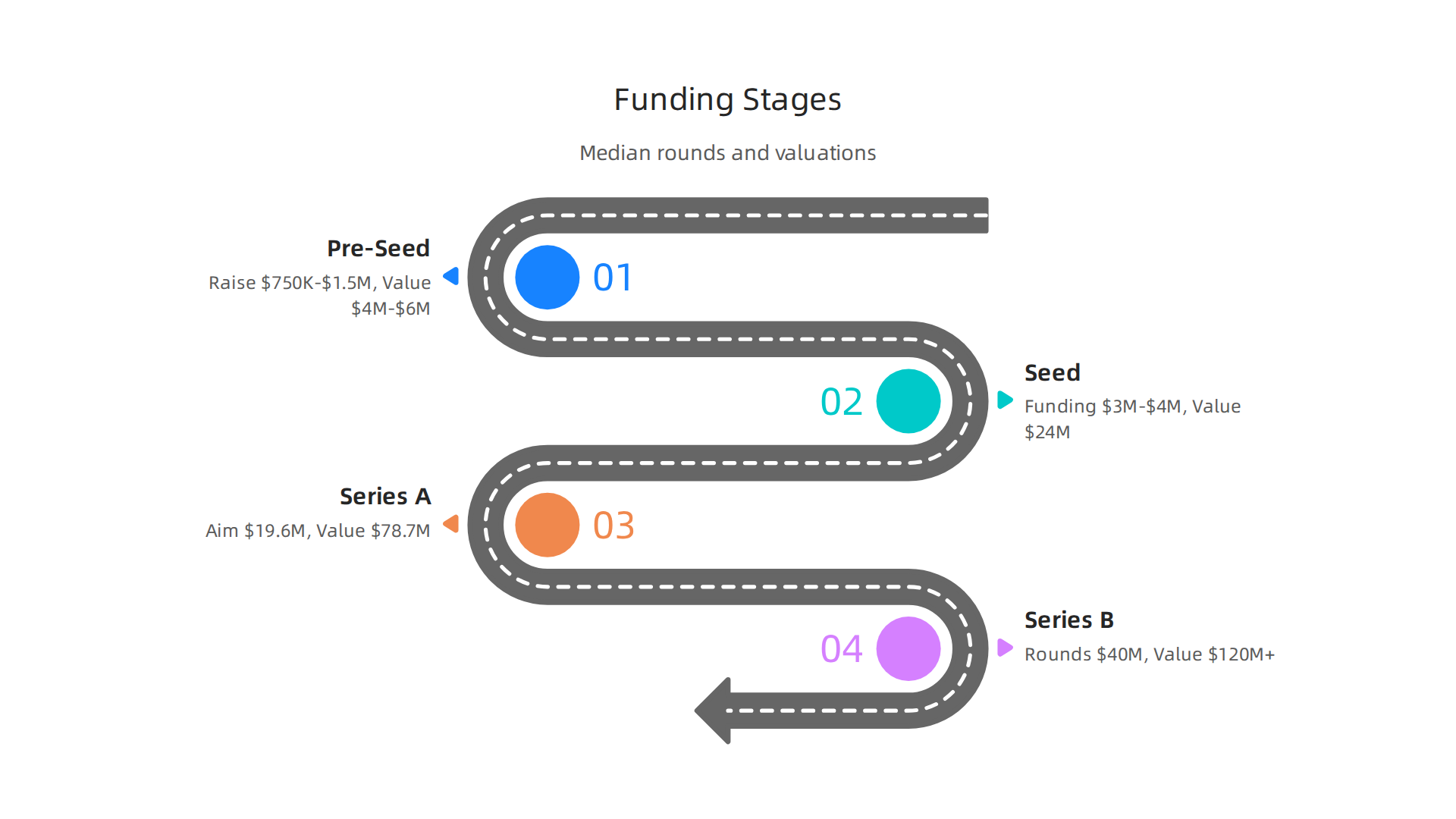
- Pre-Seed Stage: These early companies might raise around $750,000 to $1.5 million. Their value before getting this money could be about $4 million to $6 million Startup Round Sizes by Stage (2026).
- Seed Stage: For startups here, median funding can be around $3 million to $4 million. The company’s value might be closer to $24 million after the investment, a new high Venture Capital Funding, Valuations, and Exits in 2026.
- Series A Stage: Companies at this stage might aim for $19.6 million, with a post-money value often reaching $78.7 million, though non-AI companies might see around $40-42 million before investment Startup Round Sizes by Stage (2026). Some reports show median Series A rounds around $20 million, with post-money valuations of $50 million to $75 million being a good guide The June 2026 US Venture Capital Funding Report and The State of Early-Stage Fundraising 2026.
- Series B Stage: These companies are more developed, with median rounds often hitting $40 million. Their value after investment could be $120 million or more Startup Round Sizes by Stage (2026). In the second quarter of 2026, median pre-money valuations for Series B rounds increased significantly to $185.2 million Record $85.7 Billion Invested; Up Rounds Remain Strong – Cooley.
These numbers are guides, not strict rules. Your company’s specific situation, growth, and team will always play a big part. Getting advice from money mentors and working with experienced startup valuation experts can help you set realistic goals for your capital idea. Understanding what is a venture capital firm and how they look at these benchmarks is key to making your pitch strong.
After looking at what your company might be worth, it’s time to dig deeper. Investors don’t just look at numbers. They want to see special signs, proof that your business is working, and that it’s a good match for them.

Knowing these things can really help you understand how to get venture capital funding for your great capital idea.
What Different Investors Look For
Different kinds of investors look for different things:
-
Angel Investors: These are often the first people to put money into a startup. They usually invest their own money. Angel investors might look for a strong team with big passion for their idea. They want to see that you and your team are smart and can make things happen. Sometimes, they invest even when the business is just a simple idea with no sales yet. Learning about how to connect with these early supporters can be very helpful for your startup. To understand more about finding these investors, you might want to read about mastering the angel investment network.
-
Early-Stage Venture Capital (VC) Firms: These firms manage money from other people and businesses. They invest in companies that are a bit further along than those seeking angel money. They want to see some early proof that your business is growing. This might mean you have some users, a few sales, or good feedback on your product. They care a lot about whether your product solves a real problem for many people. To see how these firms think, you can check out venture fund strategy.
-
Strategic Investors: These are often big companies that invest in smaller startups. They are not just looking for money back. They want to find companies that can help their own business grow or do new things. For example, a big tech company might invest in a small AI startup if that AI can make their own products better. They look for clear ways your business fits with theirs.
Getting advice from experienced people, sometimes called money mentors, can help you learn what each type of investor truly values. They can guide you on what signals to show.
Traction Signals Investors Love to See
"Traction" means showing that your business is actually working and growing. It’s proof that customers like what you do. Investors love to see these signals:
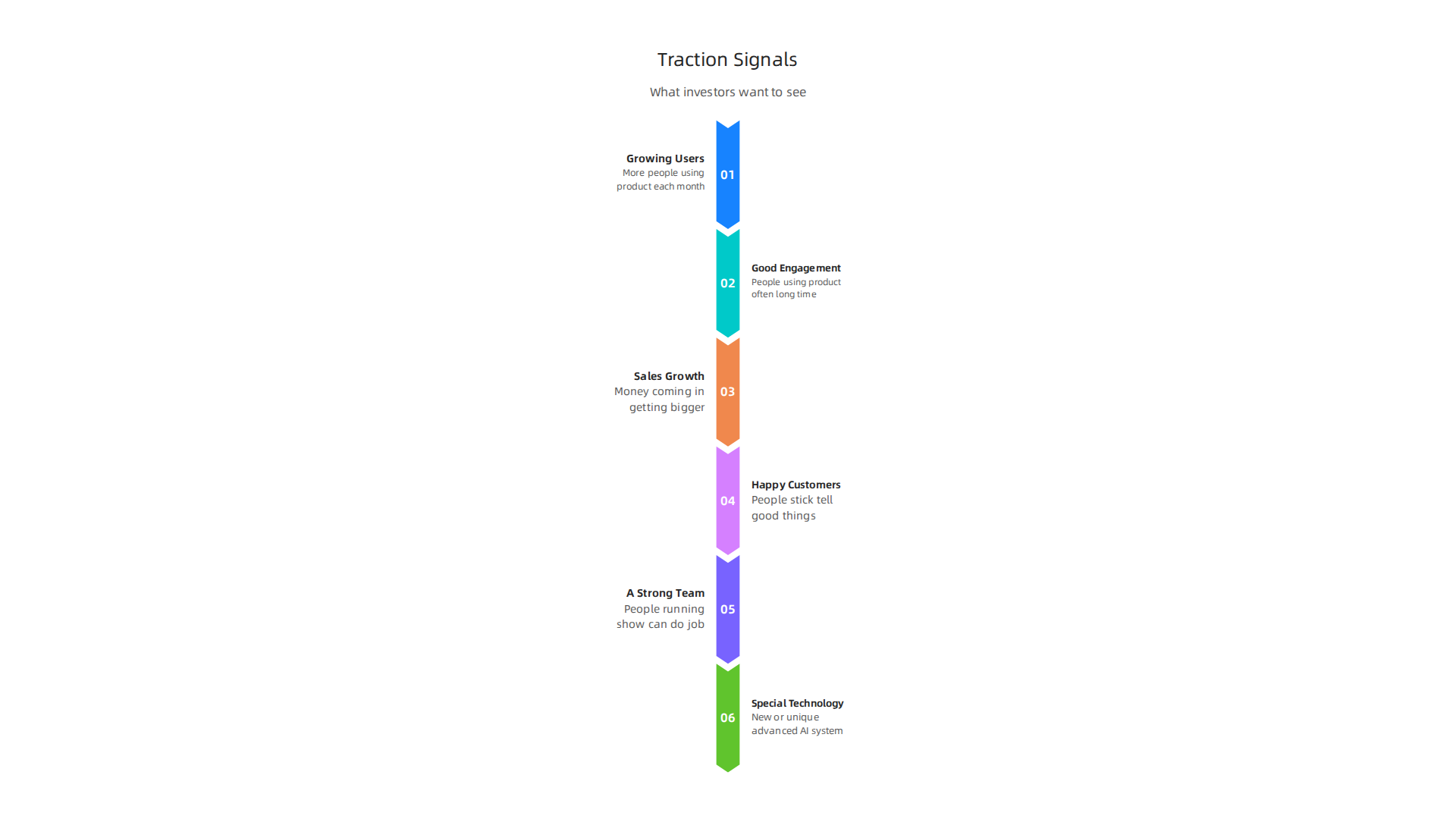
- Growing Users or Customers: Do you have more people using your product or buying from you each month?
- Good Engagement: Are people using your product often and for a long time?
- Sales Growth: Is your money coming in getting bigger? Even small sales at the start are a good sign.
- Happy Customers: Do people stick with your product? Do they tell others good things about it? This shows that your product really helps them.
- A Strong Team: Investors want to know that the people running the show can get the job done. This includes past successes or special skills.
- Special Technology: If your capital idea uses new or unique technology, like an advanced AI system, this can be very attractive.
These are the kinds of numbers and stories that make investors excited, showing them that your business is truly taking off. In 2026, venture capitalists look at many specific measures to see if a company is doing well, including things like how fast revenue is growing, how well customers stay, and how much money is made per customer Traction metrics for VCs in 2026.
Finding the Right Fit
It’s not just about what you have, but also about finding the right investor for your business. An investor whose goals match yours will be a much better partner. They will understand your market and be able to help you grow. Being clear about what your business does and what kind of partner you need is a big part of how to get venture capital funding.
To keep up with what’s new in technology and what investors are thinking, staying informed is key.
Get clear daily AI updates from The Deep View Newsletter. The AI Newsletter Worth Reading
After learning about what investors look for, you need to show them the numbers. This is where your financial model comes in. Think of it like a storybook, but instead of words, it uses numbers to show how your business will grow and make money. It helps investors see your brilliant capital idea come to life with real potential.
Building Financial Models That Tell a Story: Metrics Investors Care About
A financial model is a tool that helps you predict how much money your business will make and spend in the future. It’s not just a guess, though. It’s built on facts from your past sales and smart ideas about your future. This model helps show how to get venture capital funding by giving investors a clear picture.
Here are the main parts of this "money story":
- Top-Line Drivers: These are the big things that make your money grow. For a social media app, it might be how many new users you get each month. For an online store, it’s how many sales you make. You show how these drivers will increase over time.
- Unit Economics: This is about how much money you make from just one customer or one product. For example, if you sell coffee, how much profit do you get from one cup? Investors want to see that each customer brings in more money than they cost you.
- Runway Scenarios: This part shows how long your company can keep going with the money it has. It’s like knowing how much fuel your car has left. It also helps you plan for different futures, like what if sales are a bit slower, or much faster. This shows investors you think ahead.
To make your financial model believable, you need to turn the good stories about your traction into numbers. For example, if many customers love your product (a good story), you can show how many new customers you expect because of that love. But be careful not to make up numbers. It’s important to be honest about your predictions, even if your capital idea feels like it will take over the world. Using real data you already have makes your story strong.
Sometimes, it helps to work with startup valuation experts or money mentors to build these models. They know what what is a venture capital firm or other big investors want to see. These experts can help you make sure your numbers are right and that your story makes sense to people who might give you money.
When your financial model is clear and well-thought-out, it sets the stage for the next big step in getting investment. It helps define the terms of a possible deal, like those laid out in a document called a term sheet. This document outlines the key conditions of an investment, which your strong financial predictions will heavily influence What is a Term Sheet? Common Terms & Examples for Startups. To understand more about different ways to get money for your business, you might want to explore Smart Capital Solutions for Every Startup Funding Stage.
After you’ve shown your financial story, the next step often involves a document called a term sheet. This is a very important paper that lays out the main rules of how investors will put money into your company. It’s not the final agreement, but it’s like a plan for the final deal. Knowing what’s in it is key for how to get venture capital funding.
Pitching, Term Sheets, and Negotiation: Practical Legal & Deal Tips
A term sheet outlines the key parts of an investment. It helps everyone understand what to expect. Think of it as a blueprint for the investment deal. Getting familiar with a Term Sheet for Founders: Key Clauses & How to Negotiate can help you understand what’s coming.
Here are some important parts founders must understand:
- Valuation: This is how much your company is worth before the new money comes in. It’s a big number that affects how much of your company you give up.
- Liquidation Preference: This rule says who gets paid first if your company is sold or closes down. Investors usually want to get their money back before founders and other shareholders. A common investor request is 1x non-participating, which means they get their money back once, then everyone shares what’s left Startup Term Sheet 2026: 12 Clauses to Negotiate.
- Anti-Dilution: This protects investors if the company raises more money later at a lower value. It helps them keep the same share of the company, even if others pay less per share.
- Option Pool: This is a set of shares saved for future employees. It’s good to have, but investors might want it to be bigger, which can make your share of the company smaller. You want it sized just right for your hiring plans.
When you look at a term sheet, it’s very helpful to get advice. Startup valuation experts or money mentors can help you understand each part and what it means for you and your capital idea. They can also help you negotiate to get the best deal. This is a big part of how to deal with what is a venture capital firm. You want fair terms that help your business grow.
Once you understand the term sheet, you’ll be ready for the pitch. This is your chance to tell your company’s story clearly, using the strong numbers from your financial model. Your pitch should answer investor questions before they even ask them. It should connect your big capital idea with how you will make money and grow.
Think about what investors care about. They want to see:
- A Clear Problem and Solution: What problem does your company fix? How does your product or service make things better?
- Market Opportunity: Is your idea big enough? Can it make a lot of money?
- Your Team: Do you and your team have what it takes to make this happen?
- Growth Potential: How will you get many customers? How will your company grow fast?
Aligning your story, numbers, and answers to these kinds of investor questions makes your pitch strong and believable. If you’re looking for more ways to understand investor thinking, take a look at The Founders Strategic Guide to Equity Investment Companies in 2026.
And while you’re focused on your business, remember that investors also keep an eye on big changes in technology, like AI. Staying smart about these trends can give your capital idea an edge.
Get clear daily AI updates from The AI Newsletter Worth Reading.
Mentorship, Advisors, and Network Effects: How to Leverage Guidance
Even with a strong pitch and a solid capital idea, getting guidance can make a huge difference in how to get venture capital funding. Think of it like this: even the best drivers use a map or a co-pilot for tricky routes. Having the right mentors and advisors helps you avoid common mistakes and find the best path to funding.

Many founders try to go it alone, but this can lead to problems. Research shows that founders who build investor relationships early on tend to do better in fundraising, making smart choices based on advice Decoding Startup Fundraising – Analyzing Fundraising Strategies From the "How I Raised It" Podcast. These trusted voices can point out issues in your strategy or your pitch before investors do. They are like a secret weapon for your capital idea.
Why Mentors Are So Important
Mentors and advisors bring years of experience to your table. They’ve seen many companies try to raise money and know what is a venture capital firm looking for.
- Spotting Mistakes: They can help you avoid common
Startup Fundraising Mistakesthat kill funding rounds, like chasing the wrong investors or using shaky numbers Startup Fundraising Mistakes | PDF | Career & Growth. - Sharpening Your Plan: Good
money mentorscan help you refine your business model and make sure your numbers are truly impressive. They can act asstartup valuation experts, helping you understand if your company’s worth aligns with investor expectations. - Opening Doors: Perhaps most importantly, advisors often have wide networks. They can give you warm introductions to the right investors who are a good fit for your
capital idea. This makes it much easier to get those crucial first meetings.
Finding and Working with Advisors
So, how do you find these helpful people? It’s about being smart and building real connections.
- Look for Experience: Seek out people who have successfully built and sold companies, or who have worked at venture capital firms.
- Ask for Help, Not Just Money: When you first reach out, ask for advice. People are often more willing to share their knowledge than their cash right away. If you want to learn more about picking the right partners, read about how to evaluate capital advisors for startup funding.
- Offer Something Back: Even if you can’t pay them much at first, you can offer them a small stake in your company or just keep them updated on your progress. Show them their advice makes a difference.
- Be Clear About What You Need: If you need help with your financial model, be direct. If you need help making introductions, ask specifically.
Remember, a strong network of advisors isn’t just a "nice-to-have," it’s a "must-have" for how to get venture capital funding in 2026. They can help you navigate tough term sheets, perfect your pitch, and connect you with the investors who believe in your capital idea.
Positioning Your Startup to Stand Out: Differentiation & Go-to-Market Signals
After getting good advice and building a strong network, the next big step is making your capital idea truly shine. Investors see many pitches, so your startup needs to clearly stand out. This means showing how you are different and how you plan to get your product to customers.

When a venture capital firm decides how to get venture capital funding for a startup, they want to see a clear path to success.
How to Make Your Startup Unique
Think about these key things to make your startup stand out:
- Your Target Customer: Who exactly are you trying to help? The more clearly you know your customer, the better you can meet their needs. Investors want to see you know your audience inside and out.
- Your Unique Value: What makes your
capital ideaspecial? Why is it better than what people use now, or what other companies offer? This is called your unique value proposition. It is the main reason customers will pick you. - How You Stay Unique: Can others easily copy your idea? Investors look for "defensibility signals." This could be special technology, strong relationships with customers, or a strong brand that is hard to build. For example, if you understand tech company categories in 2026, you can better explain how your company fits and stands apart.
Showing Early Wins and Growth Plans
It is not enough to just have a great idea. You need to show you can bring it to life and grow it. This is where your "Go-to-Market" (GTM) strategy comes in.
- Early Successes: Have you already gotten some customers? Even small wins, like a pilot program or good feedback from early users, show that your product has a place in the market. This proves your
capital ideais not just a dream, but something real. - Predictable Growth: Investors want to know how you will get more customers in a way that can be repeated. They look for clear ways you plan to grow your business, not just one-time successes. This could be through online ads, partnerships, or a strong sales team.
In 2026, investors pay close attention to numbers that show your growth is healthy and steady. For instance, at the Seed stage, many venture capitalists look for $10K-$50K in monthly recurring revenue (MRR) and at Series A, they often expect $2 million to $5 million in annual recurring revenue (ARR) with consistent growth Series A Metrics VCs Expect in 2026. They also look at things like:
- LTV:CAC Ratio: This compares how much money a customer brings in over their lifetime (LTV) versus how much it costs to get them (CAC). A ratio of 3:1 or higher is often seen as a healthy sign for Seed and Series A companies What Investors Want in 2026: From Seed to Series C.
- CAC Payback Period: This is how long it takes for a customer to pay back the cost of getting them. A shorter payback period, often under 10-18 months for early-stage startups, is preferred.
These numbers tell investors that your business is not just growing, but doing so in a smart and efficient way. To stay updated on these crucial metrics and other important tech trends, consider subscribing to The AI Newsletter Worth Reading. It can give you clear daily AI updates to help you make informed decisions.
Common Fundraising Mistakes & Recovery Strategies
Even with a strong unique idea and clear growth plans, raising money for your capital idea can be tough. Many founders make common mistakes that can slow down or even stop their funding efforts. Understanding these errors is key to knowing how to get venture capital funding without big problems.
Mistakes Founders Often Make
Here are some frequent issues that can trip up founders:
- Wrong Price for Your Company: Sometimes founders ask for too much money or value their company too high. This is called mispricing. Investors, especially a
venture capital firm, might walk away if the numbers don’t add up. It’s smart to work with startup valuation experts to get this right. - Poor Ownership Plan: A "cap table" shows who owns how much of your company. If it’s messy or gives too much away too early, investors might see it as a red flag.
- Not Knowing Your Audience: Pitching to the wrong investors or not understanding what they look for can lead to wasted time. Make sure you target investors who care about what your startup does.
- Bad Pitch or Story: Your pitch needs to be clear and exciting. If it’s confusing, too long, or uses too much jargon, you might lose interest. Experts suggest keeping your pitch deck short, often 20 pages or less, because investors spend only a few minutes on average reviewing them Why do some startups get.
- Chasing the Wrong Money: Not all money is good money. Some investors might offer terms that hurt your company in the long run. It’s important to understand the details of any deal. In fact, accepting "bad money" and toxic terms is one of seven fatal fundraising mistakes founders can make 7 Fatal Startup Fundraising Mistakes (With Real Case Studies).
How to Fix Things After a Setback
If your fundraising hits a snag, don’t give up! You can often fix things.
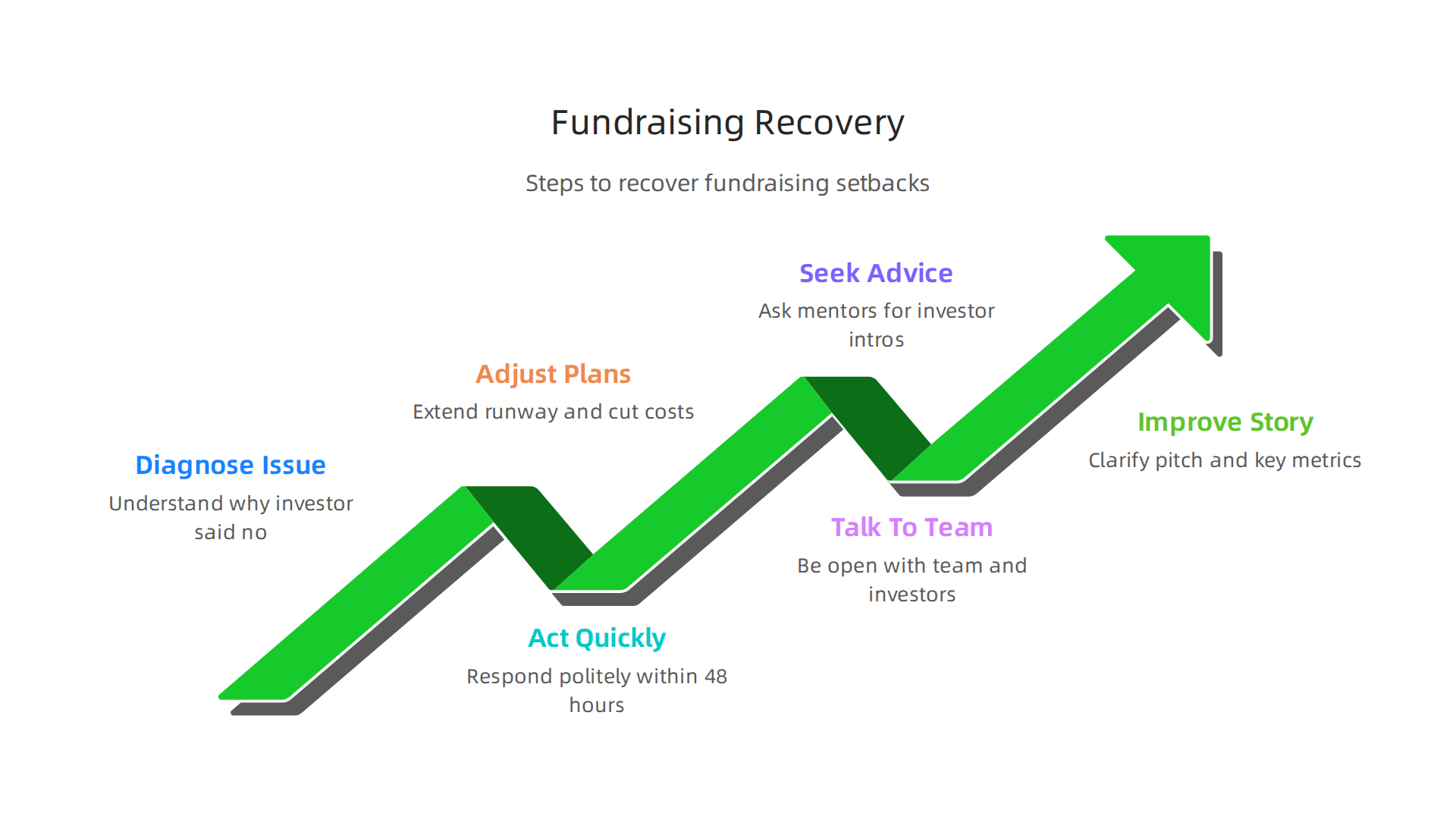
- Find Out What Went Wrong: The first step is to truly understand why an investor said no. Was it your numbers, your pitch, or something else? You need to "conduct an autopsy" to understand the real reason an investor backed out Investor Backed Out? A Founder’s Playbook for Recovery.
- Act Quickly and Respond: If you get a "no," respond politely and thank the investor for their time. If there’s a specific question or issue, address it within 48 hours without making excuses Recover Investor Credibility After Failed Pitch.
- Adjust Your Plans: You might need to make changes to your business plan or how you spend money to extend your "runway" (how long you can operate without new funds). This could mean making some cuts to keep your startup going for at least three more months.
- Talk to Your Team and Current Investors: Be open with your team and any investors you already have. Controlling the story helps everyone stay on the same page.
- Seek Advice from Experts: This is where
money mentorscan be super helpful. They can introduce you to new investors and help you make better plans Accelerate Startup Growth Through Mentorship and …. Having formal advisors can also make your startup seem more trustworthy and increase your chances of getting funding When Do Advisors Help with Startup Fundraising?. - Improve Your Story and Pitch: Take time to make your pitch better. Focus on a clear message and show what you’ve learned. Even if a pitch fails, keep the relationship alive by following up How To Bounce Back From A Failed Startup Pitch. You can learn from real stories of what worked and what didn’t by looking at Case Studies | Real Startup Fundraising Rounds Analyzed.
- Build Credibility: Show that you can learn from mistakes and are serious about success. This can restore investor confidence. Sometimes, working with fundraising consultants can greatly increase investor meetings and improve how investors see your company’s value Failed First Investor Pitch? How Fundraising Consultants in ….
Learning from mistakes and being ready to adjust your approach are important parts of your journey to secure funding.
Summary
This practical guide helps founders turn a promising "capital idea" into a fundable startup by walking through today’s fundraising landscape, investor expectations, and the concrete steps that improve your odds of raising venture capital. It explains current 2026 market trends and benchmark round sizes by stage, what angels, early-stage VCs, and strategic investors evaluate, and the traction metrics that make investors pay attention. The article shows how to translate those signals into a credible financial model—covering top-line drivers, unit economics, and runway scenarios—and how that model feeds into term-sheet negotiation. It also covers how to find and work with mentors and advisors, build defensible positioning and a repeatable go-to-market plan, and recover from common fundraising mistakes. Read this guide to learn what numbers and stories investors care about, how to target the right partners, and practical next steps to prepare your pitch and deal terms.