

Why private equity secondaries matter now
In the world of startup funding, things move fast. One area that’s become very important in 2026 is private equity secondaries. But what are they, and why should you care? Simply put, private equity secondaries are when investors buy or sell existing stakes in private companies or investment funds. Think of it like a second-hand market for big private investments. Instead of investing directly in a brand new startup, you’re buying a piece of an investment that someone else already owns.
This market is booming. In the first half of 2026, the value of these deals reached a record $121 billion. This shows just how much interest there is in this kind of investment right now PE Secondaries Record $121B H1 2026: LP Liquidity Guide.
Private equity secondaries matter to many people:
- For Founders and Startup Operators: This can mean new ways to get money for your company or even for early investors to get some cash back. It helps keep things moving, even when it’s tough to find new investors.
- For LPs (Limited Partners): These are the big investors like pension funds. Secondaries give them a chance to get cash out of old investments or change what they are invested in without waiting years for a company to sell.
This growing market brings up some big questions. How do you find these liquidity options? What do these deals tell us about how much private companies are truly worth, also known as valuation signals? And which firms are leading the way in this space? Big names like Silver Lake Private Equity, Argonaut Private Equity, and Paceline Equity Partners are key players.
If you’re a founder, operator, or investor, understanding this market is super helpful. It can help you make smart choices about how to manage your investments or raise money.

To learn more about how different groups handle money, check out our guide on how to understand global investment groups powering fundraising strategy.
This article will give you clear, easy-to-understand guidance on private equity secondaries. We’ll explore the best strategies and provide an up-to-date list of the top firms making waves.
Get clear daily AI updates from The AI Newsletter Worth Reading.
Market Overview: Size, Growth Drivers, and Recent Trends
The private equity secondaries market is growing very fast in 2026. It’s a clear sign of how much investors want quick ways to get cash out of their private holdings or to adjust their portfolios. In the first half of 2026, the total value of these deals reached about $124 billion, which is a big jump of 28% from the year before Lazard Interim 2026 Secondary Market Report. Experts believe that by the end of 2026, the market could hit a record $250 billion, showing just how strong the growth is Secondaries forecast to hit record $250bn in 2026 as momentum accelerates.
This rapid growth isn’t happening by accident. Many things are pushing the private equity secondaries market forward:
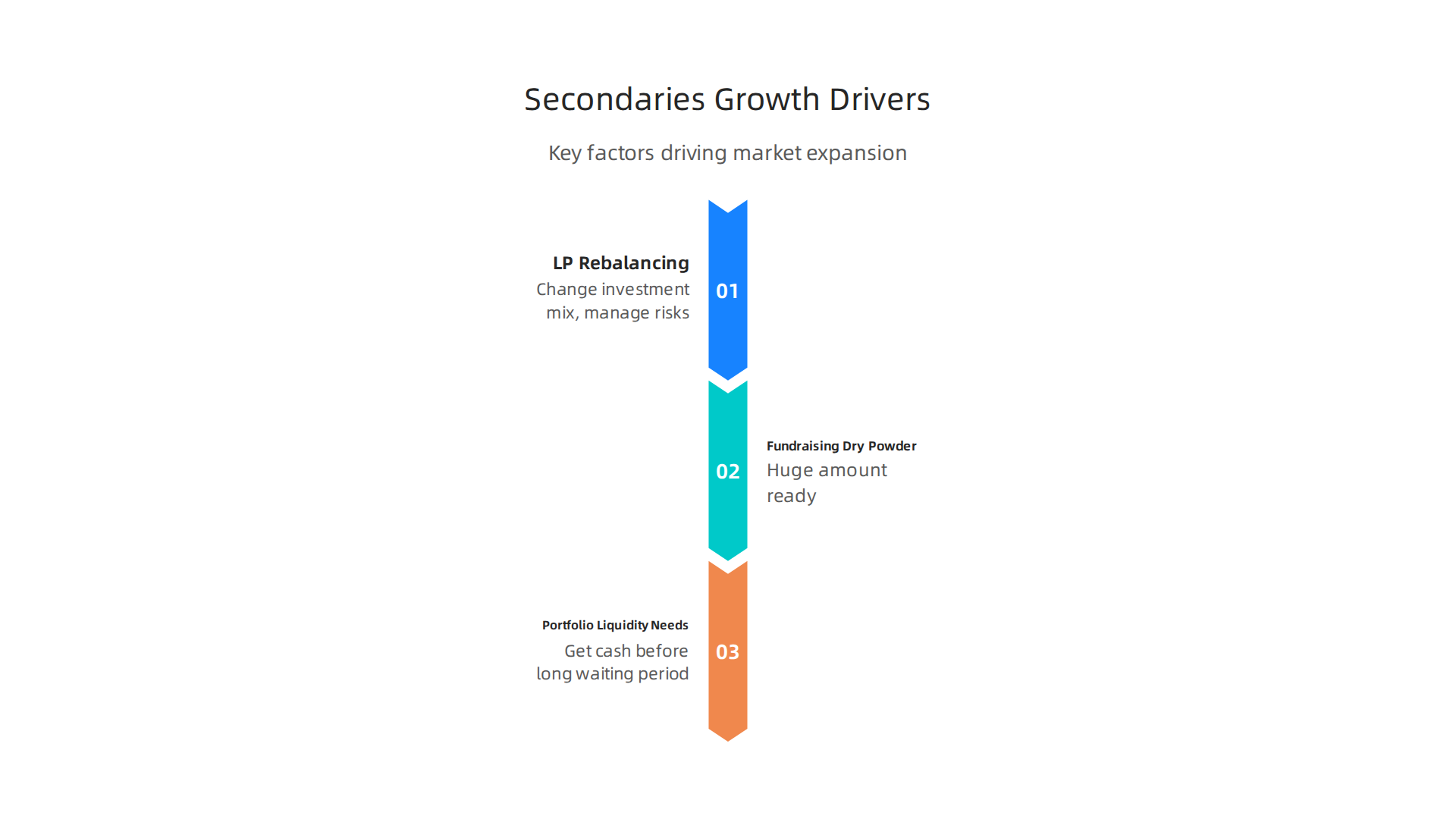
What’s Driving the Growth?
There are both big picture (macro) and smaller, specific (micro) reasons for this boom:
- LP Rebalancing: Many big investors, called Limited Partners (LPs), want to change their investment mix. Maybe they put too much money into private markets during the good times, and now they want to sell some parts to balance their overall investments. Also, many LPs are looking to put more money into secondaries, with about 33% planning to increase their stake LPs steady on private markets allocations as secondaries demand rises. This helps them manage their risks and get cash when needed.
- Fundraising Dry Powder: This term refers to the huge amount of money that secondary funds have ready to invest. When there’s a lot of "dry powder," it means there’s plenty of capital waiting to buy existing investments, which makes the market very active.
- Portfolio Liquidity Needs: For both LPs and General Partners (GPs), secondaries offer a way to get cash from investments before the usual long waiting period. LPs can sell off parts of their funds, while GPs can use deals like "continuation vehicles" to move promising companies into new funds, giving older investors a chance to cash out. For instance, GP-led deals hit about $65 billion in the first half of 2026, showing how popular this way of getting cash has become Secondary Market Review – Evercore.
These dynamics show that private equity secondaries are not just for a special case anymore. They are now a regular part of how private investments are managed. If you’re looking to understand more about different types of capital, you can explore our guide on private equity funds a startup founders guide.
Big names in the investment world, such as Silver Lake Private Equity, Argonaut Private Equity, and Paceline Equity Partners, are very active in this space, driving innovation and growth.
Where is the Market Most Active?
The private equity secondaries market isn’t spread evenly across the globe. Some regions are much more active than others in 2026:
- North America: The United States continues to be a major hub for secondaries. It has a mature private equity market with many funds and investors looking to buy and sell stakes. Experts predict a strong 2026 for the US market Regional Markets: Europe, Asia and US | Outlook 2026.
- Europe: This region is also very active, with a growing number of deals as European investors also seek liquidity and portfolio adjustments.
- Asia: The secondaries market in Asia is growing steadily, though it’s still smaller than in North America and Europe. However, as private markets in Asia get bigger, so does the chance for secondary deals.
Understanding these market trends and growth drivers is key for anyone involved in private investments. It helps founders, operators, and investors see how private company values are changing and where new opportunities lie.

Knowing about the different types of groups that invest can also help you partner for growth. You can learn more about what is a capital investment group how to partner for growth 2026.
The private equity secondaries market isn’t just growing fast; it has special ways of working that make it unique. These deals involve different structures and many kinds of players, from big funds to smaller groups. Understanding how these transactions happen is key to seeing the true power of private equity secondaries.
Common Deal Structures in Private Equity Secondaries
There are a few main ways private equity secondaries deals are put together:
- LP Interest Sales (LP-led): This is when an investor, called a Limited Partner (LP), sells their share in a private fund to another investor. It’s like selling a ticket to a show you can’t go to. The new investor then takes over the original LP’s spot in the fund, including any money still owed The evolution of private equity’s most compelling opportunity set. This helps LPs get cash or change their investment mix. LP-led deals made up about $63 billion in the first half of 2026 Lazard Interim 2026 Secondary Market Report.
- GP-led Solutions: These deals are started by the fund manager, known as a General Partner (GP). The GP might sell one or more companies from an old fund into a new fund they also manage. This new fund is often called a "continuation vehicle" GP-Led Secondaries – Practicing Law Institute. GP-led deals let GPs keep managing promising companies for longer and give existing investors a chance to cash out. This type of deal has become very popular, reaching about $65 billion in the first half of 2026 Secondary Market Review – Evercore.
- Continuation Vehicles: As mentioned, these are special funds created by a GP. They are a big part of GP-led deals. They allow the GP to move one or more companies from an older fund to a new fund. This gives the GP more time and money to make these companies even more valuable. For LPs in the older fund, it offers a choice: they can sell their share for cash or keep their investment in the new continuation vehicle GP-Led Secondaries.
- Stapled Secondaries: This is a specific kind of GP-led deal. It’s where a buyer gets to purchase existing fund interests from LPs and, at the same time, promises to invest new money into a new fund managed by the same GP. It "staples" a secondary purchase with a primary commitment.
These ways of doing deals show how flexible private equity secondaries can be.
Who are the Main Players?
Every secondary deal involves sellers and buyers:
-
Sellers:
- Limited Partners (LPs): These investors often sell their fund interests to get cash, balance their overall investments, or simply get out of a fund they no longer want to be in.
- General Partners (GPs): They sell assets from older funds to new continuation vehicles to keep managing good companies or to give their LPs liquidity options.
- Corporations: Sometimes, large companies will sell off a portfolio of private investments that are not central to their main business.
-
Buyers:
- Dedicated Secondaries Funds: These are investment funds that specialize in buying existing private equity interests. They have lots of "dry powder" (money ready to invest). Many big names like Silver Lake Private Equity, Argonaut Private Equity, and Paceline Equity Partners are active in this space.
- Opportunistic Buyers: These can be other types of investors or funds looking for good deals that fit their specific goals, even if they don’t only do secondaries.
- Strategic Buyers: Sometimes, a buyer might want to get a stake in a specific company or fund for strategic reasons, such as gaining access to a new market or technology.
The Lifecycle of a Secondary Transaction
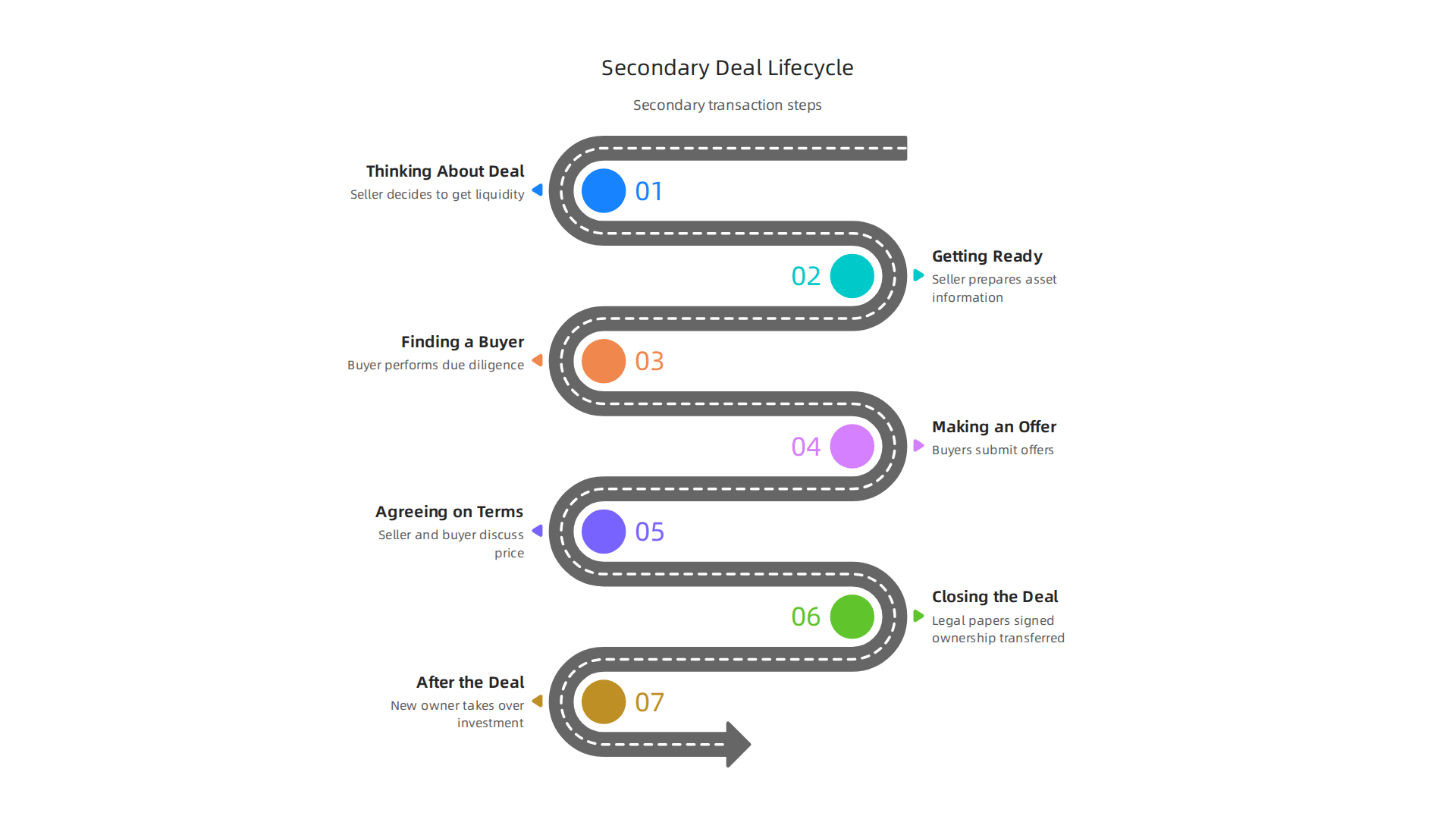
A private equity secondaries deal typically follows these steps:
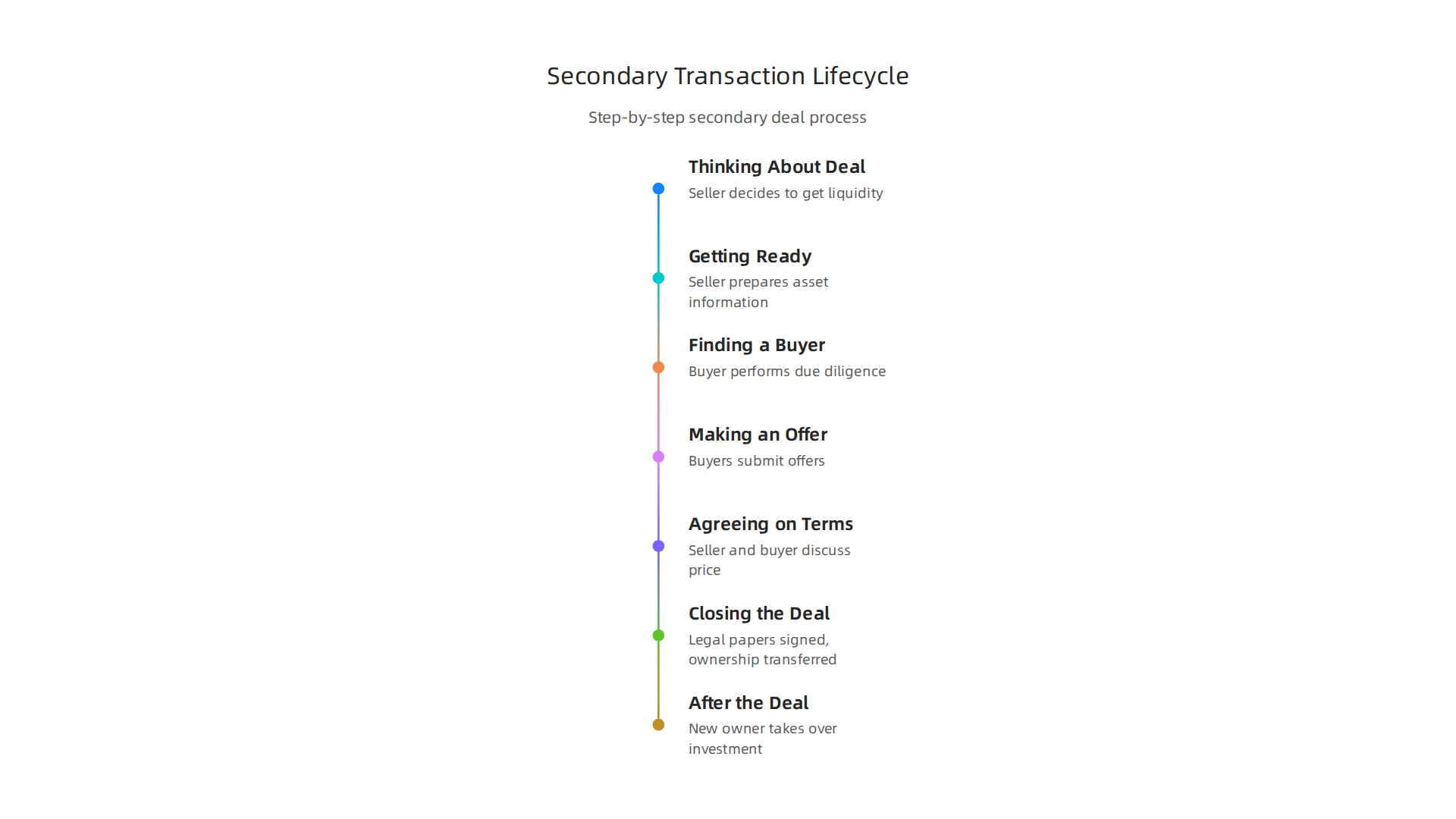
- Thinking About the Deal: It starts when a seller (LP or GP) decides they want to get liquidity or manage their portfolio. For example, an LP might decide to sell part of their stake in a private fund.
- Getting Ready to Sell: The seller will prepare information about the asset they want to sell. This might include financial details and legal papers.
- Finding a Buyer: The seller or their advisor will reach out to potential buyers. Buyers then perform what is called "due diligence." This means they carefully check the corporate structure, contracts, and other important details of the investment Investment Due Diligence Checklist 2026 [Free PDF Template]. They also need to review legal and regulatory aspects, especially for complex deals like continuation vehicles Weil Private Equity Sponsor Sync – Q3 2026.
- Making an Offer: Buyers submit offers based on their review.
- Agreeing on Terms: The seller and buyer talk about the price and other terms of the deal.
- Closing the Deal: Once everyone agrees, the legal papers are signed, and the ownership of the fund interest or company is transferred.
- After the Deal: The new owner (buyer) takes over the investment. For LP-led deals, the buyer becomes the new LP. For GP-led deals, the GP continues to manage the company within the new continuation vehicle.
Understanding these steps helps everyone involved in private equity secondaries. It shows how important careful checking and good partners are. For founders and investors looking to dive deeper into how different firms manage their capital, learning about the various approaches can be very helpful. You might want to explore how to choose private equity investment companies for your startup.
Staying informed about these complex market changes is critical. For founders and investors, knowing the ins and outs of private equity can make a huge difference.
Get clear daily AI updates from The AI Newsletter Worth Reading.
Knowing the steps of a secondary deal helps everyone involved, especially when looking for good partners. To truly get how private equity secondaries work, it is also important to know the main firms and how they stand out from each other.
Key firms and how they compete: profiles of secondaries leaders
The world of private equity secondaries is full of many different types of firms. These firms are always looking for new ways to buy and sell existing investments. In 2026, the secondaries market reached a huge $121 billion in the first half alone, showing how big and important it has become PE Secondaries Record $121B H1 2026: LP Liquidity Guide. Let’s look at who these players are and what makes them unique.
Types of Leading Secondaries Firms
Different firms have different ways of doing things in the private equity secondaries market. Here are a few main types:
- Large-Scale Buyers: These are the biggest players. They manage huge funds, often billions of dollars, and can buy very large collections of investments or single big companies. Firms like Lexington Partners and Ardian are among the largest managers of secondary private equity funds globally Top 10 Secondaries Managers Globally: 2026 Guide. These firms often have a lot of money, called "dry powder," ready to invest.
- GP-Led Solutions Experts: Some firms really focus on GP-led deals. They help fund managers move companies from older funds into new ones, which gives the companies more time to grow. This part of the market has seen strong growth, with new players like Leonard Green & Partners starting secondary strategies 2026 Secondary Market Report.
- Boutique and Sector Specialists: These are smaller firms or ones that choose to focus on certain areas. For example, some might only buy secondaries in technology, healthcare, or real estate. This specialized approach allows them to become experts in their chosen field Continued Bullishness Across Secondaries Despite More …. These firms often seek out unique opportunities that the larger players might overlook.
How Firms Compete and Stand Out
With so many players, firms need ways to show they are the best choice. They compete on several key points:
- Speed: How quickly can a firm look at a deal, make a decision, and close the sale? Being fast is very important for sellers who need cash quickly or want to make a deal before market conditions change.
- Pricing: Of course, the price a buyer offers for an investment is a big factor. Firms aim to offer fair prices that are also good for their own investors.
- Sector Focus: Many firms have deep knowledge in specific industries. For example, if you are selling a tech company, you might want to work with a firm that really understands the tech world. This expertise can lead to better valuations and more helpful partnership after the deal.
- Continuity Expertise: For GP-led deals, how well a secondary firm can work with the existing fund manager is key. They need to ensure a smooth transition and help the company keep growing. This is important for fund managers (GPs) who want to keep managing their successful companies for longer.
Firms like Silver Lake Private Equity, Argonaut Private Equity, and Paceline Equity Partners are well-known names among dedicated secondaries funds. They each bring their own special skills and focus areas to the market.
A Look at Different Investment Group Types
When founders and investors think about capital, it helps to know the different kinds of groups they might meet. The private equity secondaries market has many shapes and sizes of firms. If you want to understand what these firms do and how they can help grow a startup, it’s good to learn about the various structures and focuses they have. For a broader view, you can explore What is a Capital Investment Group and Investment Group Profiles.
Here is a simple list of the types of firms you might find:
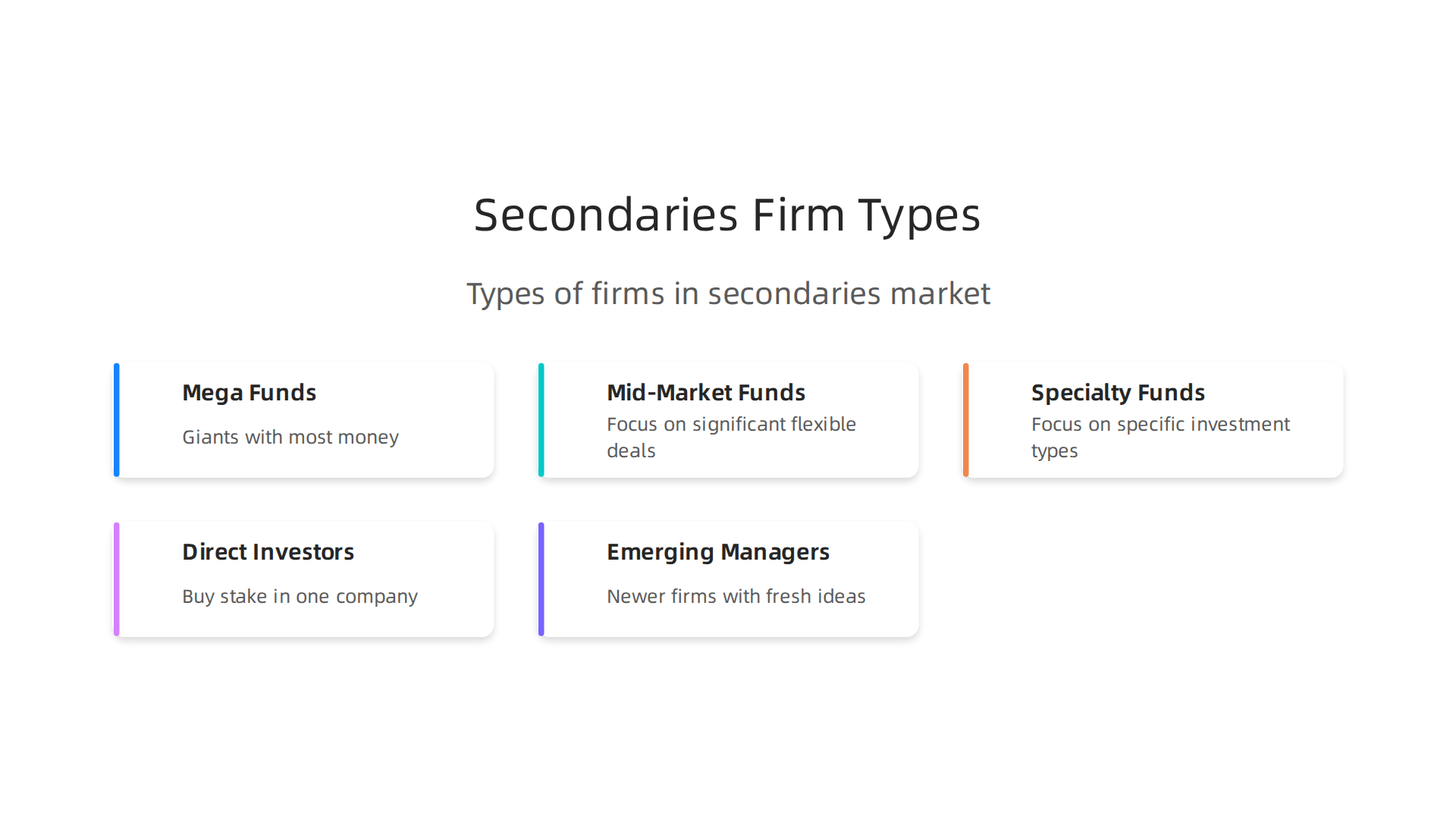
- Mega Secondaries Funds: These are the giants. They have the most money and often buy the biggest pieces of older private equity funds or very large companies within those funds.
- Mid-Market Secondaries Funds: These firms focus on deals that are not as large as the mega-funds, but still significant. They are often more flexible and can react quickly to chances in the market.
- Specialty Secondaries Funds: These groups look for specific types of investments. For example, one might only deal with buying parts of real estate funds, while another might focus solely on energy projects.
- Direct Secondaries Investors: Instead of buying shares in a whole fund, these investors might buy a piece of just one company from a fund. This is a more direct way to invest.
- Emerging Managers: These are newer firms or smaller teams that are just starting out. They might have fresh ideas or focus on areas that are not yet crowded.
Understanding these different firms and how they operate helps paint a clearer picture of the private equity secondaries landscape.
After learning about the different kinds of firms in private equity secondaries, the next important step is understanding how these deals are priced. This can be tricky, as prices are not always clear-cut. Knowing how valuation works is key for anyone buying or selling older private equity investments.
How Pricing Works in Private Equity Secondaries
When someone wants to sell a piece of a private equity fund, buyers need to figure out its worth. They often start with something called Net Asset Value, or NAV.
- Net Asset Value (NAV): Think of NAV as the book value of an investment. It is what the fund manager says the fund’s companies are worth. However, it is important to know that NAV is usually a guess. It is based on past information and not always what a buyer would pay right now. Private equity investments are not like stocks you can easily check every day 2026 Private Equity Annual Program Review.
- Discounts to NAV: Most of the time, private equity secondaries sell for less than their stated NAV. This difference is called a "discount." Why the discount?
- Uncertainty: It is hard to know exactly when a private company will be sold for cash.
- Time: Buyers have to wait to get their money back, and that wait costs them something.
- Risk: There is always a chance the companies in the fund might not do as well as hoped.
- In 2026, many deals, especially those led by the general partner (GP-led transactions), were still priced at a discount to NAV. Some were even more than 10% off PE Continuation Vehicle Discount-to-NAV Tracker 2024-2026.
- Deal-Specific Adjustments: The final price often changes based on many small details. This could include how old the fund is, the types of companies it holds, or even if the seller needs cash very quickly. For example, buyout investments might sell at smaller discounts than venture capital ones, which can be more risky and volatile What’s In a Price? How to Think about Pricing in the LP-led ….
Benchmarks and Market Conditions
Buyers and sellers look at past deals to understand fair pricing. These are like benchmarks. They compare the current deal to similar ones that have happened before.
- Market Conditions: The overall health of the economy plays a big part. When times are tough, buyers might ask for bigger discounts. When the market is strong, discounts might shrink. In 2026, the secondary market has shown strong pricing, with many transactions selling close to or even above NAV in certain areas Secondary Market Review – Evercore.
- Fee Structures: Buyers also need to think about fees. These can include management fees for the fund itself and a share of any profits, called "carried interest" NAV Squeezing’ Reconsidered: Fair Value in an Evolving …. These fees affect the total return for the buyer, so they factor into the price.
Common Mistakes in Valuation
Both sellers and buyers can make mistakes when figuring out prices.
- For Sellers:
- Too High Expectations: Believing the NAV is the true selling price can lead to disappointment. Sellers need to understand that discounts are normal in private equity secondaries.
- Not Enough Information: Not having clear and up-to-date information about their investments can make buyers offer less.
- For Buyers:
- Not Looking Deep Enough: Just trusting the stated NAV without checking the underlying companies can be risky. Buyers need to do their own homework.
- Ignoring Future Costs: Forgetting about future fees or other costs can make a deal seem better than it really is.
Understanding these pricing elements helps everyone involved make better decisions. It is not just about the numbers; it is about how those numbers are put together and what they really mean.
To dive deeper into how investment groups make decisions, check out this guide on how to choose private equity investment companies for your startup.
Staying informed about the latest tech trends and their impact on markets, including how artificial intelligence might affect future valuations, is also a smart move for any investor or founder.
Get clear daily AI updates from The AI Newsletter Worth Reading.
Knowing how private equity secondaries are priced is a big step. Now, let’s talk about what sellers and buyers actually do to make these deals happen. This means looking at smart ways for sellers to offer their investments and for buyers to find good opportunities.
Practical strategies for sellers (LPs/GPs) and buyers
For anyone involved in private equity secondaries, having a clear plan is key. This is true whether you are a Limited Partner (LP) looking to sell your stake or a General Partner (GP) managing a fund, or even a buyer seeking new investments.
For Sellers (LPs): Getting the Best Deal
If you are an LP wanting to sell your share in a private equity fund, here’s what to think about:
- Why Sell? LPs often sell because they need cash, want to manage their risk better, or wish to put money into other types of investments. For example, an LP might sell off older investments to free up funds for newer, more exciting opportunities. Many LP-led deals happen because investors need more cash or want to change their investment mix PE Secondaries Market 2026: The $240B Data Breakdown.
- Be Prepared: Have all your fund information ready and updated. This means showing how the companies in the fund are really doing, not just relying on old numbers. The more open you are, the more trust you build with buyers.
- Talk it Out: Good talks are very important. Clearly tell potential buyers why you are selling and what you hope to get. Being honest about the fund’s ups and downs helps.
- Time it Right: The market for private equity secondaries changes. In 2026, the market has been growing fast. Deals for both LP-led and GP-led secondaries reached new high points in the first half of the year Lazard Interim 2026 Secondary Market Report. Knowing when the market is strong can help you get a better price.
For Sellers (GPs): Running Special Deals
Sometimes, GPs lead deals, like setting up a new fund to hold onto good companies from an older fund. These are called continuation funds or restructuring solutions.
- Keep it Fair: GPs must make sure everyone involved feels the deal is fair. This means giving clear reasons for the deal and being open about how it will work. For example, firms like Silver Lake Private Equity or Argonaut Private Equity might use these methods to keep great companies in their portfolio, but they need to make sure existing investors agree.
- Tell the Story: Explain why these companies are still worth holding onto and how the new fund will help them grow even more.
For Buyers: Finding and Managing Investments
If you are looking to buy private equity secondaries, here’s how to succeed:
- Find Good Deals: Look far and wide. You might find good deals from pension funds, banks, or even other private equity firms looking to sell parts of their portfolios. Firms like Paceline Equity Partners are always on the lookout for promising assets. The secondary market keeps getting bigger, with the overall market hitting a record $117 billion in early 2026, so there are many opportunities Secondary market report 1H 2026 | UBS Global.
- Do Your Homework: Don’t just trust the numbers given to you. Dig deep into the companies inside the funds. Understand their true value and what makes them grow. Remember, what a fund says its assets are worth (NAV) might be different from their actual selling price.
- Think About the Future: Once you buy, you need a plan for managing these new investments. This means keeping an eye on how the companies are doing and working with the fund managers to help them succeed. It’s a bit like picking the right team to work with. To learn more about how to make smart choices when partnering with investment groups, you can read about what is a capital investment group how to partner for growth 2026.
By following these practical steps, both sellers and buyers in private equity secondaries can make smarter choices and have better chances of success in this busy market.

After understanding the different ways sellers and buyers can approach private equity secondaries, it is important to look at the finer details. This includes all the checks and paperwork needed to make sure a deal is proper and safe for everyone.
Due diligence, legal issues, and operational readiness
Getting a private equity secondaries deal done involves a lot more than just agreeing on a price. Both buyers and sellers must carefully handle legal rules, tax considerations, and make sure all the necessary information is ready. This detailed work is called due diligence.
Understanding Legal and Tax Rules
When you are transferring a share in a private equity fund or setting up a GP-led restructuring, like a continuation fund, legal and tax issues are very important.
- Compliance is Key: Buyers need to check if the companies they are looking to invest in follow all the rules for their industry. For example, a thorough due diligence process helps assess the legal side of things 1 Due Diligence in Corporate Transactions Author(s). This can include checking corporate structure, regulatory matters, and important contracts CHAMBERS GLOBAL PRACTICE GUIDES.
- Regulatory Filings: Sometimes, even when a GP keeps ownership through a new fund, certain government filings are needed. Investors in private equity secondaries, especially in continuation vehicles, should know these rules can come up unexpectedly Weil Private Equity Sponsor Sync – Q3 2026.
- Tax Implications: Moving shares from one investor to another can have big tax effects for both sides. It is important to get advice on these matters to avoid surprises.
- LP and GP Responsibilities: When an LP sells or a GP sets up a new fund for existing assets, they must make sure the deal is fair and follows all agreements. GPs also need to do "know-your-customer" checks on new buyers, just like they would for any new investor joining the fund PE Secondary Transactions: Legal Guide for GPs and LPs.
Getting Operations Ready
For buyers, getting access to clear, well-organized information is crucial. For sellers, being ready to provide it makes the deal smoother.
- Data Rooms: Buyers will ask for a "data room," which is a secure online space holding all important documents about the fund and the companies it owns. This includes financial reports, legal papers, and details about how the companies are run.
- Reporting: Regular, clear reports on how the fund and its companies are performing are essential. Buyers will want to see recent numbers and future plans.
- Documentation Requests: Expect buyers to ask for a lot of documents. This means having everything from past financial statements to legal agreements and proof of ownership ready to share. An investment due diligence checklist can help organize these requests Investment Due Diligence Checklist 2026 [Free PDF Template].
Closing and After
The deal does not end when everyone agrees. There are still steps to take before and after the deal closes.
- Closing Conditions: These are specific things that must happen before the deal is final. For example, the fund’s main manager might need to give approval for the transfer of shares. Both sides will work to meet these conditions.
- Post-Closing Issues: After the deal closes, new owners of private equity secondaries need to make sure they are properly set up to receive information and participate in the fund. This can involve making sure they get all future reports and have a say in important decisions, if that is part of their agreement.
By paying close attention to these legal, tax, and operational details, both sellers and buyers can move through the world of private equity secondaries with greater confidence and reduce potential problems. Staying informed about the broader tech landscape can also offer a competitive edge in understanding market shifts. For daily insights into AI and technology, consider subscribing to The AI Newsletter Worth Reading. It is a vital step in ensuring a successful transaction and long-term investment. If you’re looking to deepen your understanding of these types of investments, exploring resources on private equity funds a startup founders guide can also be highly beneficial.
Summary
Private equity secondaries have become a mainstream liquidity option in 2026, with deal activity surpassing $120 billion in the first half of the year. This article explains what secondaries are, why the market is expanding, and who benefits—founders, LPs, GPs and opportunistic buyers. It covers where activity is concentrated (North America, Europe, growing Asia), the main deal types (LP-led sales, GP-led solutions, continuation vehicles and stapled secondaries), and how transactions are priced around NAV and market discounts. You’ll also get a practical walkthrough of the transaction lifecycle, tips sellers and buyers should follow, and the legal, tax and operational checks needed to close deals. Finally, the piece profiles the kinds of firms leading the market and how they differentiate on speed, pricing and sector expertise so you can evaluate potential partners.