Why wearable technology and civic tech deserve investor attention in 2026
In 2026, the world of technology keeps moving at lightning speed. It’s changing how we live, work, and even how our cities run. For smart investors and founders, this means new chances to make a big impact and see great returns.

Two areas are really standing out right now: wearable technology and civic tech. Together, they offer a powerful mix for growth.
Think about devices you wear, like smartwatches or fitness trackers. This is wearable technology, and it’s already a huge market. Experts say the global wearable technology market is valued at a massive $238.3 billion in 2026. It is expected to grow even bigger, reaching over $931 billion by 2035, growing fast every year Wearable Technology Market Size, Share, Forecast Report 2026. This growth shows how much people want these devices. They help us track our health, stay connected, and get things done more easily.
Now, let’s look at civic tech. This is all about using technology to make public services better and improve city life. It helps governments and communities work more smoothly. When you put wearable technology and civic tech together, you get amazing new possibilities. Imagine wearables helping cities manage traffic, monitor air quality, or even keep citizens safer. The data from wearables can give cities new ways to understand and help their people.
For investors, spotting these opportunities early is key. Many startup trends us show a clear path to innovation in these fields. However, we know that finding the right california tech companies or any startup to invest in can be tough. There’s a lot of information out there, which leads to noise and makes it hard to see what’s truly valuable. Investors also often wish for more transparency about how startups are doing. And for founders, raising money can feel very complex.
This guide is here to help. We will walk through how to find and build success in the exciting world where wearable technology meets civic tech. You’ll get clear, easy-to-understand advice to cut through the confusion. If you want to keep up with the broader changes in technology that impact investments, including the latest in AI, consider subscribing to The AI Newsletter Worth Reading. It offers clear daily AI updates that can give you an edge. We’ll give founders and investors the tools they need to make smart choices in this fast-growing market. To truly understand the market, it’s vital to have a strong grip on Global Tech Intelligence.
Market overview: size, growth drivers and TAM for wearable technology
Let’s dive into the huge market for wearable technology. In 2026, this market is truly massive and still growing fast. Different reports give slightly different numbers, but they all agree it’s big. For example, some experts say the global wearable technology market is valued at around $105.75 billion in 2026 Wearable Technology Market Size, Share & Trends. Other studies place the market even higher, around $188.67 billion in 2026 Wearable Technology Market Size & YoY Growth Rate, 2026-2033. No matter which number you look at, it’s clear that many people are using these devices.
So, who is using all this wearable technology? It’s not just one group. The market segments, or different groups of users, are quite broad:
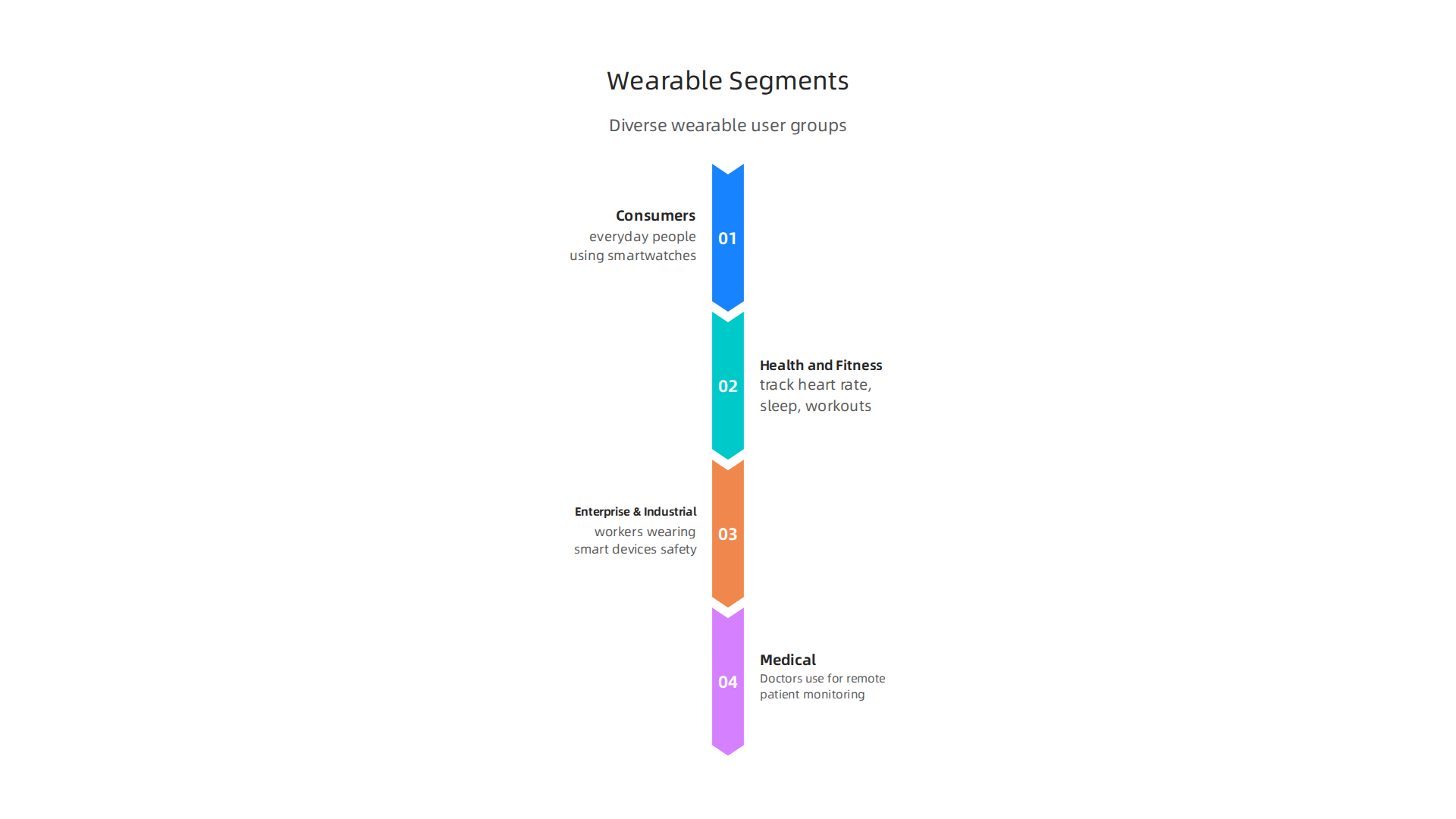
- Consumers: These are everyday people using smartwatches to track steps or smart earbuds for music and calls.
- Health and Fitness: This is a huge area. People use trackers to monitor heart rate, sleep, and workouts. In 2026, just the fitness tracker market is expected to reach $70.3 billion The State of Wearable Health Data in 2026: Market Trends ….
- Enterprise and Industrial: Think about workers wearing smart devices for safety in factories or to help them do their jobs better.
- Medical: Doctors and hospitals use wearables for remote patient monitoring, helping people manage long-term health issues from home.
What makes wearable technology grow so much? There are a few key things that help:
- Better Sensors: Devices can now measure more things more accurately, like blood oxygen or body temperature.
- Longer Battery Life: Who wants to charge their watch every day? Batteries are getting better, letting devices last longer.
- Stronger Connectivity: With faster internet like 5G and better Bluetooth, wearables can connect more easily to other devices and the cloud.
- Easier to Use: Companies are making wearables simpler and more comfortable, so more people want to try them.
Of course, there are some hurdles too. Some people worry about how their personal data is used. Others might find the devices too expensive or just don’t see a clear need for them yet. But these challenges are pushing companies to make even better, more helpful products. Many startup trends us show that companies are working hard on these improvements, including many california tech companies. To learn more about the tech scene there, you can check out California tech in 2026.
The future looks very bright for wearable technology. As these devices become even smarter and more connected, they will keep changing how we live, work, and stay healthy.
Investor landscape: who is funding wearables and civic tech now
With wearable technology growing so much, many different people and groups want to invest in it. This includes smart money looking at wearable technology and also special funding for civic tech projects.
Who Funds Wearable Technology?
In 2026, investors in wearable technology are looking for specific things. They are not just throwing money at any fitness tracker anymore. Instead, they are very interested in devices that use smart computer programs, like AI, and those that help monitor health in a serious way, often with a doctor’s okay. This means money is shifting from simple fitness gadgets to more advanced health monitoring wearables. In fact, funding trends show a big focus on AI-powered devices and health-focused wearables that can get approval from health groups Wearable Technology Funding Trends (2026).
You’ll find different kinds of investors in this space:
- Venture Capital (VC) Firms: These are big companies that invest in new businesses with high growth potential. They look for
startup trends usthat promise large returns. - Corporate Venture Capital (CVCs): These are investment arms of large corporations. For example, a big electronics company might invest in a
wearable technologystartup that makes smart sensors, hoping to use that tech later. To learn more about this, see how corporate venture capital is the new power broker in startup funding. - Angel Investors: These are wealthy individuals who put their own money into early-stage companies. They often help with advice too.
- Micro-VCs: These are smaller venture capital firms that focus on very early-stage startups, often writing smaller checks than larger VCs.
When it comes to how much money they invest, it varies. For fitness tech, many VCs focus on Late Seed to Series A funding rounds. This means they invest when a startup is past the very first idea stage but not yet super big. Typical investments might be from $1 million to $5 million Fitness VC in 2026: Who’s Investing and Where. However, sometimes, a few very large deals can take up most of the money flowing into wearable technology for the whole year Wearable Tech Raises $1.52B in 2026 So Far.
Funding for Civic Tech
Civic tech is about using technology to make cities and governments work better for people. This area often gets funding in different ways than wearable technology. Instead of just private investors, a lot of money comes from public grants and foundations.
- Public Grants: Governments at local, state, and national levels often offer money for
civic techprojects. For example, some grants help create new tools that make government more open and help people get involved Civic Technology Innovation Grants. Other programs, like the Digital Cities Small Grants Program, support projects using digital tech to solve community problems

Digital Cities Small Grants Program.
- Foundations: Groups like Bloomberg Philanthropies often give grants to support
civic techefforts. - Research & Innovation Challenges: Programs like the Civic Innovation Challenge (CIVIC) offer money for projects that test new solutions to community issues using technology Civic Innovation Challenge (CIVIC).
For civic tech, the grant amounts can range from smaller sums, like $50,000, up to $250,000 or even a few million dollars for larger initiatives. These funds usually focus on piloting new solutions or expanding successful projects.
The world of startup funding is always changing. Staying updated on where the money is flowing is key for both founders and investors. Get clear daily AI updates from The AI Newsletter Worth Reading.
The money flowing into wearable technology shows how much this market is growing. Actually, the global wearable technology market is expected to be worth around $96.44 billion in 2026, and it’s set to grow even more, reaching about $231.43 billion by 2034 Wearable Technology Market Size & Industry Trends, 2034. This huge growth is fueled by some exciting new technologies that are changing what wearables can do.
Here are the key technology trends making wearable technology better and opening new doors:
Better Sensors
Today’s wearable devices are smarter because they have much better sensors. These tiny parts can track more things with great accuracy. Think about smartwatches that can check your heart rate, how well you sleep, or even your blood oxygen levels. New sensors are even exploring ways to track things like glucose without needles. This means wearable technology can give us more helpful health information than ever before. This also helps with startup trends us in health tech.
AI Right on the Device
Another big change is putting Artificial Intelligence (AI) directly into the wearable device. Instead of sending all your data to the cloud to be processed, some devices can now do smart thinking on their own. This "on-device AI" makes things faster and keeps your information more private. It means your smart ring or watch can understand your body’s signals and give you advice right away, without needing constant internet connection. For those interested in how technology defines success for businesses, understanding these shifts is key, and you can learn more about technology definition 2026.
Low-Power Wireless Connections
Imagine a wearable device that lasts for days, or even weeks, on a single charge. This is happening thanks to new low-power wireless technologies. These smart ways of connecting use very little battery power. This allows devices to be smaller, lighter, and more comfortable because they don’t need big batteries. It also means you don’t have to charge them as often, making them more useful in everyday life.
New Materials
The way wearables look and feel is also changing a lot. New materials are making devices more flexible, durable, and stylish. We’re seeing smart fabrics that can weave sensors directly into clothing, or strong, lightweight metals that make watches feel premium. These material improvements mean wearable technology can fit more seamlessly into our lives, whether it’s a sleek fitness tracker or a smart piece of jewelry.
Connecting with Health and Company Systems
Modern wearable technology isn’t just about what’s on your wrist. It’s also about how these devices talk to other systems. Many wearables now connect easily with health platforms, so doctors can get important data to help you. They also link with enterprise systems for businesses, like helping workers stay safe in tricky jobs. This kind of connection makes wearables more valuable because their data can be used in bigger, more organized ways. For example, some california tech companies are working on these kinds of integrations, showing strong startup trends us in the market. This creates new ways for these products to make money and stay ahead of the competition.
The amazing progress in wearable technology doesn’t just help people in their daily lives. It also opens up new ways for governments and public services to work better. This area is called civic tech, and it’s all about using technology to improve how cities, states, and countries serve their people. But how do these cool technologies get paid for in the public world?
How Civic Tech Gets Funded
Getting new technology into government hands usually happens in a few ways:
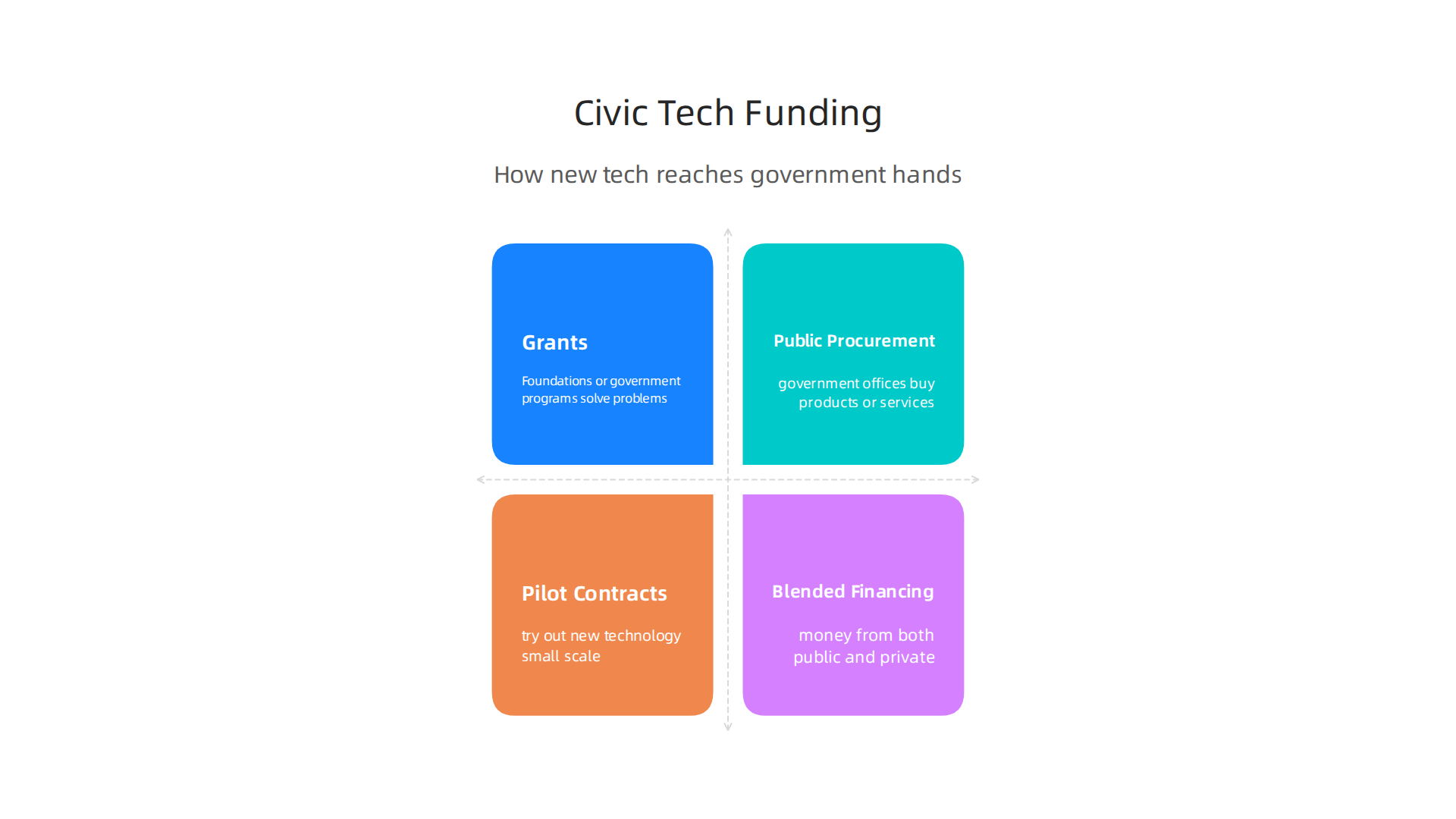
- Grants: Many groups offer money to
civic techprojects. These grants often come from foundations or government programs looking to solve public problems with new ideas. For example, in 2026, there are programs like the Civic Technology Innovation Grants which help build open-source tools for government, or the Digital Cities Small Grants Program from the US Department of State. There are even grants for specific things like technology in libraries or promoting digital fairness, like the 48 Open Technology & Digital Equity Grants (2026). - Public Procurement: This is when government offices buy products or services directly. They put out a call for what they need, and companies offer their solutions. This is a common way for governments to get tools, including
wearable technology, to help their workers or citizens. Looking at April 2026 SLED Contracts shows how cities and counties are always buying new tech. - Pilot Contracts: Sometimes, a government agency will try out a new technology on a small scale first. This is a pilot program. If it works well, they might decide to buy more of it. This helps governments test things without a huge upfront cost.
- Blended Financing: This is when money comes from both public and private sources. For example, a city might put in some money, and a private company or non-profit might add more to fund a
civic techproject. This mix can help new ideas grow faster.
Wearable Tech in Public Service
Wearable technology can do a lot for civic tech. Here are some examples:
- Public Health Monitoring: Imagine smartwatches that can track community health trends, helping local health departments spot outbreaks early or understand general well-being. This data can help make public health decisions better and faster.
- Emergency Response: First responders, like firefighters or paramedics, can wear devices that check their health in dangerous situations, or track their location to keep them safe. These devices could also give them important information quickly.
- Workforce Safety: For public workers in tough jobs,
wearable technologycan prevent accidents. Think of utility workers wearing sensors that detect harmful gases or alert supervisors if they fall down. This helps protect people who serve the public every day.
When governments buy wearable technology for these uses, they think about things like privacy (keeping people’s information safe), how secure the data is, and if the technology will be fair for everyone. They also consider the cost and how well the device will fit into their existing systems. This is why many startup trends us in tech are now focusing on how to make their products useful and safe for government use.
For those keeping up with the latest in artificial intelligence and technology, understanding these developments is crucial. Stay ahead with daily insights into AI and technology by subscribing to The AI Newsletter Worth Reading. It’s a great way to get clear daily AI updates.
Many california tech companies and others around the country are finding ways to partner with public groups. If you’re looking for insights into how these kinds of public-private partnerships work, you might find more information on defense tech companies raising record funding. Also, understanding how to choose your regional tech hubs for optimal startup fundraising can be a smart move for companies looking to enter this space.
Now, after learning how wearable technology can help in public services and how civic tech projects get money, it’s time to look at things from another angle: what do investors care about? For startups making cool new wearable technology, especially those growing in places like California, getting money means showing you really know your stuff. Investors want to see clear proof that your idea is good and can make money.
Due diligence: metrics investors use to evaluate wearable startups
When people think about putting money into a wearable technology startup, they look at certain numbers and facts. These are called Key Performance Indicators, or KPIs, and they help investors see if a company is strong and likely to grow. Here are some of the main things they check:
- Unit Economics: This means how much it costs to make one device or provide one service, compared to how much money it brings in. Investors want to see that each sale or customer is profitable. Key parts of this are the Customer Acquisition Cost (CAC), which is how much money you spend to get one new customer, and Lifetime Value (LTV), which is how much money that customer brings in over time.
You want your LTV to be much higher than your CAC to show you can grow wisely Startup KPIs: Metrics Every Founder Must Master.
- Growth and Retention: How fast is your customer base getting bigger? And how many people keep using your
wearable technologyafter they buy it? For devices that also offer services, like a monthly app plan, it’s super important that people stick around. High customer growth and good retention show that your product is something people want to keep using The Definitive Guide on Product Metrics That Investors …. Especially for health-focusedwearable technology, retention rates above 80% yearly can be a strong signal What are core 5 KPIs of Wearable Health Monitoring Devices …. - Revenue Growth: Investors want to see that your sales are going up, and going up fast. This could be how much money you make each month, called Monthly Recurring Revenue (MRR) for subscription services. A good growth rate tells investors that your business is catching on.
What Proof Do Investors Look For?
Beyond the numbers, investors also check some very important technical things that help make wearable technology products less risky to invest in:
- Validation Studies: This is proof that your
wearable technologyactually works as you say it does. If it’s a health device, they’ll want to see clinical validation, meaning proper studies show it helps people. - Regulatory Pathway: For medical or health
wearable technology, how will your product get approved by the right government groups? This is a big step that needs a clear plan. - Security and Compliance: Since
wearable technologyoften collects personal data, investors need to know that your product keeps that information safe and follows all privacy rules. This is extra important whenwearable technologyis used incivic techfor public services. - Manufacturability: Can your device be made easily and affordably in large numbers? Showing that you have a good plan for making your product helps investors see that you can grow.
Many california tech companies and other startup trends us are keenly aware of these points. Having these metrics and proofs ready helps founders show they have a strong business. Knowing which Tech tools for startups 2026 that attract investors and accelerate fundraising can also give you an edge.
To stay on top of the broader technology landscape and understand market shifts that influence investor decisions, make sure you get regular updates.
Get clear daily AI updates by subscribing to The AI Newsletter Worth Reading. It’s a great way to stay informed.
Now that we’ve looked at the important numbers investors check, let’s talk about how to actually get their attention and money. For companies making cool wearable technology, especially those in busy places like California, knowing how to talk about your company is key. You need a clear plan to show how your idea will grow and make money. This is what fundraising strategies are all about.
Fundraising strategies: pitching, valuation framing, and structuring rounds
Getting money for your startup means more than just having a great idea. You need to know how to present your business in the best light. This involves how you pitch your idea, how you show what your company is worth, and how you set up the funding deals.
Making Your Pitch Strong
When you talk to investors, your story needs to be clear and exciting.

For wearable technology or civic tech startups, you should explain:
- The Big Problem: What big issue does your product solve for people or communities?
- Your Special Solution: How does your wearable device or civic tech tool fix that problem in a way no one else can?
- Who Wants It: Show that lots of people really need and want your product.
- How You’ll Grow: Explain your plan to reach many customers and make more money over time.
- Your Team: Introduce the smart people working with you and why you are the right group to make this happen.
Investors, especially those interested in startup trends us, want to see that you understand your market and have a clear path forward.
Showing Your Company’s Value
"Valuation framing" means how you explain what your company is worth. It’s not just about today’s sales; it’s about how much money your company could make in the future. For wearable tech startups, this can be tricky because the market is always changing. You’ll want to show strong growth numbers and a big market opportunity. Talk about how your unique technology, customer love, and future plans make your company valuable.
Setting Up Funding Rounds
Fundraising usually happens in "rounds." You might get a small amount of money first to start, then more later as your company grows.
- Early Rounds (like Seed or Angel): These are for starting out. Investors here often care most about your idea, your team, and early signs that people like your product.
- Later Rounds (like Series A, B, C): As your company gets bigger, investors will look closely at your sales, how many customers you keep, and how well you manage your money. You’ll need to show that your business model works and can grow a lot. For companies in places with many california tech companies, there’s often competition for these later-stage funds.
Sometimes, investors might give you money in parts, called "tranches." This means you get some money now, and then more later when you hit certain goals, like getting a certain number of users or launching a new feature. This helps investors feel safer about their money.
Finding Money Without Giving Up Ownership
Not all money comes from selling parts of your company. "Non-dilutive funding" means you get money without giving away ownership. This could be through:
- Grants: Money given by governments or other groups that you don’t have to pay back. These are great for civic tech projects or health-focused wearable technology.
- Loans: Money you borrow and pay back, often with interest.
- Competitions: Winning prizes or funding from startup contests.
Considering these different ways to get money can help your wearable technology startup grow without giving away too much too soon. It’s all about picking the right strategy for your company’s stage and goals. Understanding these approaches is a key step in a larger plan for startup fundraising success.
After you find the right way to get money, the next step is to make sure your company grows strong and can eventually make investors happy.

This often means looking at how other successful companies, especially those in wearable technology, have sold their products and grown big enough to be bought by larger companies or go public. This is what we call "case studies" and "exit paths."
Case studies and exits: commercialization paths and acquisition trends
Learning from others is a smart way to plan your own path. For companies that make things like smartwatches or health trackers, seeing how past startups grew and eventually provided returns to investors gives clear examples of what works.
Stories of Success in Wearable Technology
One of the most well-known stories in wearable technology is Fitbit. They made fitness trackers popular and eventually went public in 2015, which was a huge "exit" for its early investors, showing how a venture-backed wearable company can achieve success through an initial public offering (IPO) FitBit’s IPO Ranks As The Top Exit Ever In Wearable Tech.
In 2026, the focus for wearable technology has shifted from just fitness trackers to more advanced health monitoring devices. Companies like Oura, known for its smart ring that tracks sleep and activity, have raised a lot of money and are seen as a top player in this space Top Wearable Technology Startups by Fundraising (2026). Another great example is WHOOP, a screenless wearable used by top athletes, which raised a massive $575 million in early 2026 143 Investors Said No. Now WHOOP Is Worth $10 Billion. These companies found "product-market fit," meaning many people truly wanted and used their products.
How Companies Sell Their Products and Grow
When we talk about "commercialization paths," we mean how these companies got their products into the hands of customers.
- Go-to-market strategies: This includes how they first introduced their product, whether through online sales, big retail stores, or by partnering with other health programs.
- Partner ecosystems: Many successful wearable technology companies work with other businesses. For example, a health wearable might partner with gyms, doctors’ offices, or insurance companies to reach more users. Strategic partnerships like these can really unlock value beyond just funding Strategic Capital Partnerships Unlock Value Beyond Funding.
- Regulatory clearance: For health-focused wearables, getting approval from government health agencies can be a big step. In 2026, there’s a lot of interest in AI-powered health monitoring wearables, especially ones that have clear paths to regulatory approval Wearable Technology Funding Trends (2026). However, products that just make general wellness claims (like tracking steps or sleep) might not need as much strict approval The State of Wearable Health Data in 2026: Market Trends ….
These lessons show that it’s not just about inventing cool tech. It’s about understanding who needs your product, how to sell it, and sometimes, how to navigate important rules, especially for health products. Investors are looking for strong "go-to-market" plans and clear pathways to scaling up. Knowing the venture fund strategy and how VCs pick winners is very important Venture Fund Strategy How VCs Pick Power Startup Winners.
As the world of technology keeps changing, especially with new tools like AI, staying informed is key.
Get clear daily AI updates from The AI Newsletter Worth Reading.
Summary
This article explains why wearable technology and civic tech are high-priority sectors for investors in 2026, showing how their convergence creates new public‑service and health opportunities. It reviews market size estimates and user segments — from consumers and fitness to medical and enterprise use — and highlights the technology trends driving growth, including better sensors, on‑device AI, low‑power wireless, and new materials. The guide lays out where funding comes from for each area (VCs, CVCs, angels, grants, and public procurement), what investors look for (unit economics, retention, validation studies, regulatory pathways, and manufacturability), and practical fundraising tactics like valuation framing and tranche structuring. It also covers civic procurement models, blended finance, and commercialization examples that illustrate exit routes and partnership strategies. Readers will finish with actionable insights to spot investment opportunities, prepare the right KPIs and validation, and craft fundraising approaches suitable for both private and public markets.