
Introduction
If you are a startup founder trying to raise capital in 2026, you have probably heard the name Blackstone.

It shows up everywhere. But here is the thing: most people do not really understand what Blackstone does or why its venture capital division matters to them.
Let us fix that.
Blackstone is not just big. It is the largest alternative asset manager in the world. As of early 2026, the firm reported more than $1.3 trillion in assets under management. That number is hard to wrap your head around, so let me put it this way. Blackstone manages more money than most countries produce in a year. Its first quarter 2026 earnings showed nearly $70 billion in new inflows alone. The firm has over 250 portfolio companies and about 12,500 real estate assets spread across private equity, credit, real estate, infrastructure, life sciences, growth equity, secondaries, and hedge funds.
When people talk about Blackstone venture capital, they are really talking about a powerhouse that shapes how money moves through the entire startup ecosystem. The firm’s scale means it can invest in companies at stages most VCs cannot touch. It can write checks that change entire industries.
But Blackstone is not the only name you need to know. Understanding the landscape means knowing its peers too. Firms like apollo private equity, cerberus capital management, and cvc capital partners each play different roles in the funding world. Apollo focuses heavily on credit and insurance strategies. Cerberus is known for distressed assets and operational turnarounds. CVC Capital Partners dominates European buyouts. Each has a different approach, and each could be the right partner depending on what your startup needs.
This is where things get practical for you. If you are a founder, operator, or investor trying to navigate fundraising in 2026, you cannot afford to treat all these firms the same way. They have different investment theses, different timelines, and different expectations for the companies they back. Pitching Blackstone the way you would pitch a small seed fund is a fast way to get ignored.
That is exactly why this guide exists. Over the next sections, we will walk through a structured framework for evaluating top firms like these. You will learn how to benchmark them against each other and, more importantly, how to figure out which ones actually fit your startup’s stage, sector, and goals.
Before we dive into the details, there is one resource that can help you stay ahead of the rapid changes in this space. The markets move fast, and the firms we just mentioned are constantly shifting their strategies. The Deep View Newsletter delivers clear daily updates on AI and tech trends that affect fundraising decisions.

It is a practical way to keep your finger on the pulse without drowning in noise.
Now, let us get into how Blackstone venture capital actually works and what it means for your fundraising strategy in 2026.
What Is Blackstone Venture Capital?
When you hear the term Blackstone venture capital, you might picture a typical VC firm writing small seed checks. But that is not how Blackstone works. Its venture capital approach sits inside a much larger machine.
Blackstone’s venture capital activity is spread across its private equity and growth equity platforms.

The firm’s private equity division alone manages $165 billion in assets and has $36 billion available to invest as of early 2026, as shown on the Blackstone Private Equity page. That dry powder lets it back companies at almost any stage, from early growth to late stage.
The real focus is technology. Blackstone has poured serious capital into artificial intelligence, enterprise software, and fintech. These are not small bets. They are multi billion dollar commitments that reshape industries. For example, Blackstone’s infrastructure and life sciences funds also target tech enabled businesses. So when founders ask whether Blackstone venture capital is a fit, the answer depends on your sector and stage.
If you are building a B2B software platform or an AI native tool and you have strong revenue traction, Blackstone could be a natural partner. If you are pre revenue and raising a tiny seed round, you probably need a traditional VC firm first.
The key takeaway is this: Blackstone does not act like a typical venture firm. It brings operational support, deep industry connections, and the ability to write checks that scale with your growth. Understanding that structure helps you decide if you are ready for a partner of that size.
If you want to explore how Blackstone compares to other major players, check out this guide on the critical difference between venture capital and private equity. It will help you see where Blackstone fits in the broader funding landscape.
The Evolution of Blackstone’s Venture Capital Division
Blackstone did not wake up one day and decide to become a venture capital powerhouse. The path took decades. The firm started in 1985 as a small mergers and acquisitions advisory shop. Peter Peterson and Stephen Schwarzman built it from scratch. For the first two years, they only gave advice. They did not invest a dime of their own money.
Then everything changed. As the Blackstone Group history from humble beginnings explains, the firm decided to start deploying its own capital. That shift from advisor to principal investor arrived right as the leveraged buyout boom took off. Blackstone jumped in and never looked back.
But venture capital was still nowhere on the map. Through the 1990s and early 2000s, the firm stuck to what it knew best: buyouts, real estate, and credit. It launched an asset management division. It built a massive real estate trust. It went public in 2007. None of that looked like VC.
The move toward venture capital happened slowly at first. Technology started reshaping entire industries. Blackstone realized it needed a way to invest in high growth tech companies without changing its DNA. Instead of creating a small traditional VC fund, the firm used its enormous scale. It hired specialized growth equity teams. It built thematic funds around trends management believed would last for decades.
The firm’s strategy and business model shows how this evolution reflects a bigger shift in institutional investing. More capital flows into private markets every year. Blackstone positions itself to capture that flow. By 2026, its venture and growth investing activity has become a core part of the platform, not a side experiment.
Here is what matters for founders. The evolution tells you where Blackstone will likely invest next. The firm follows long-term trends like AI infrastructure, electrification, and digital transformation. If your company sits inside one of those themes, you are already on the radar.
To see how other major investment firms evolved their strategies, read this analysis of KKR private equity and how it became one of the most powerful names in finance. It will help you understand the full landscape Blackstone operates in.
The world of AI and venture capital moves fast. Blackstone’s heavy focus on AI infrastructure is a clear signal of where the market is heading. The AI Newsletter Worth Reading delivers clear daily updates on AI trends that shape investment decisions and startup opportunities.
Core Criteria for Evaluating Top VC and PE Firms
You know Blackstone’s story now. But how do you actually figure out which top firm is right for you? Every founder faces this question. The wrong partner can slow you down. The right one can change everything.
Here is what separates the best firms from the rest.
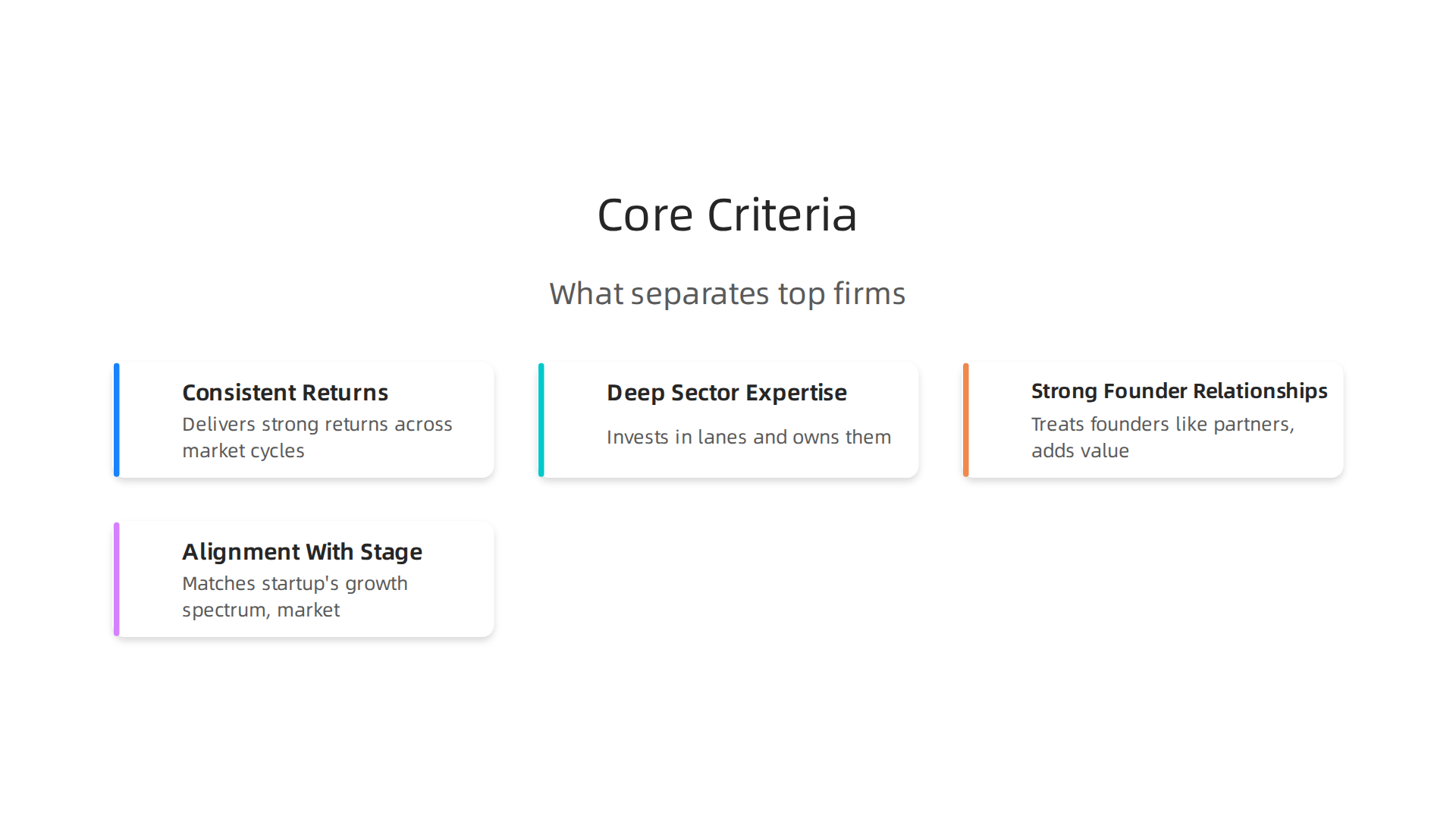
Consistent Returns Over Many Years
A great firm does not rely on one lucky bet. It delivers strong returns again and again across different market cycles. Blackstone has demonstrated this discipline since 1985. The Blackstone Inc. Wikipedia page notes that from 1987 to its 2007 IPO, the firm invested roughly $20 billion across 109 private equity transactions. That long track record tells you more than any single big win.
When you evaluate a firm, ask: How do their funds perform across the past ten years? Do they survive downturns? Firms with consistent returns earn trust.
Deep Sector Expertise
Top firms do not invest everywhere. They pick lanes and own them. Blackstone builds thematic conviction around logistics, digital infrastructure, AI, and life sciences. As the Faster Than Normal Blackstone strategy analysis explains, the firm applies mental models like thematic investing and incentives alignment. It knows where it can add real value.
You want a firm that understands your industry better than you do. Ask yourself: Does this firm already invest in companies like mine? Do they have partners who have built businesses in my space?
Strong Founder Relationships
The best firms treat founders like partners, not assets. They offer friendly transactions and work with management teams to create value. Blackstone publicly states that it engages only in friendly deals. The Blackstone Private Equity page confirms this approach. That matters. You need a firm that backs you during tough quarters, not just when growth is easy.
Look for firms that provide operational support, strategic guidance, and network introductions. Some even help with follow-on fundraising or talent recruiting.
Alignment With Your Stage and Market
A seed stage startup has very different needs from a growth stage company. The same is true for private equity. Blackstone operates at enormous scale, so it typically invests in larger, more established businesses. But other firms like Apollo Private Equity, Cerberus Capital Management, and CVC Capital Partners each have their own focus areas and deal sizes.
Understand where you sit on the growth spectrum. A firm that funds billion dollar buyouts is not the right match for a pre revenue founder. A smaller VC with deep sector knowledge might serve you better.
If you are still deciding between venture capital and private equity, this guide to the venture capital private equity critical difference for startup fundraising will help you pick the right path.
At the end of the day, evaluating a firm comes down to fit. Do their returns give you confidence? Does their sector knowledge match your market? Do they treat founders well? Answer those three questions honestly, and you will find a partner that helps you build something lasting.
How Blackstone Compares to Other Leading Firms
So you know what makes a great firm. But how does Blackstone stack up against the competition? Let’s look at how it compares to other major players like Apollo Private Equity, Cerberus Capital Management, and CVC Capital Partners.
The first thing you notice is scale. Blackstone operates at a size few firms can match. It manages over a trillion dollars in assets across private equity, real estate, credit, and hedge funds. That multi-asset platform gives it rare flexibility. When one market slows down, another may pick up.
But size is not everything. Apollo Private Equity focuses heavily on credit and insurance-related investments. Cerberus Capital Management specializes in distressed assets and turnaround situations. CVC Capital Partners concentrates on middle-market buyouts across Europe and the Americas. Each firm has a different sweet spot.
Side-by-Side Comparison
The table below shows how these leading firms differ on key metrics that matter to founders.
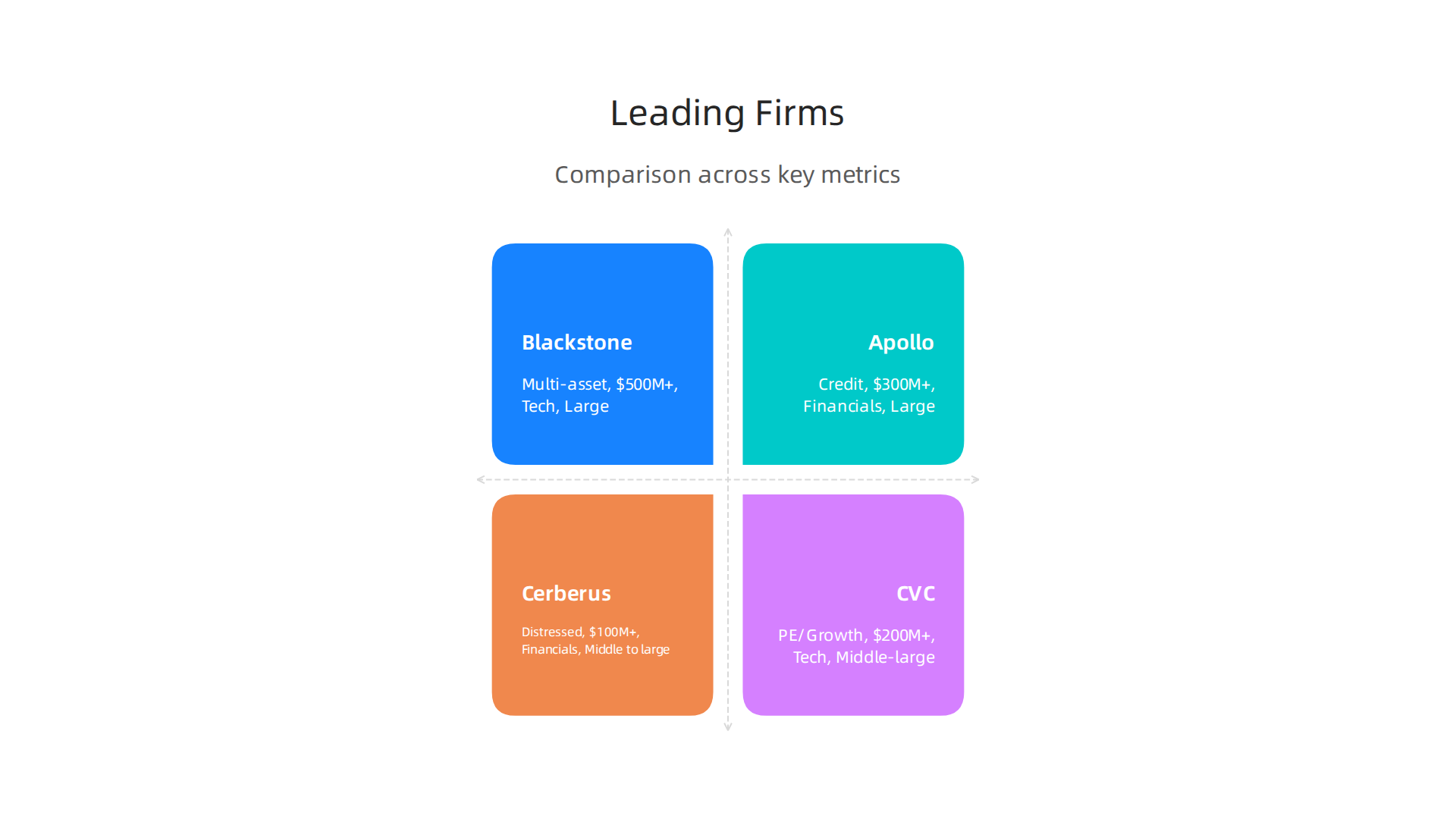
| Firm | Primary Focus | Typical Deal Size | Key Sectors | Stage Preference |
|---|---|---|---|---|
| Blackstone | Multi-asset (PE, Real Estate, Credit) | $500M+ | Tech, Infrastructure, Life Sciences | Large cap buyouts |
| Apollo Private Equity | Credit, Insurance, PE | $300M+ | Financials, Industrials, Media | Large cap |
| Cerberus Capital Management | Distressed, PE, Real Estate | $100M+ | Financials, Retail, Real Estate | Middle to large cap |
| CVC Capital Partners | PE, Growth | $200M+ | Tech, Healthcare, Services | Middle to large cap |
Performance Benchmarks
You also want to compare returns. According to the Private Equity IRR, TVPI & DPI Benchmarks (June 2026), top-quartile buyout funds from the 2015 to 2019 vintages delivered 2.3 to 2.7x TVPI and 18 to 22 percent net IRR. The median funds sat at 1.6 to 1.8x TVPI and 12 to 14 percent net IRR. Those numbers give you a baseline for evaluating any firm’s track record.
Blackstone’s own funds have performed well against these benchmarks. CalPERS data shows Blackstone Capital Partners VII from 2016 delivered a 15.3 percent net IRR and a 1.8x investment multiple. That lands comfortably in top-quartile territory.
What This Means for You
If you are a founder raising capital, understanding these differences helps you target the right firm. A large-scale buyout firm like Blackstone fits later-stage, established companies. A middle-market firm like CVC may suit a growth-stage business. A distressed specialist like Cerberus works for turnaround situations.
The key is matching your stage and sector to a firm that has proven expertise there. If you want to study another powerhouse, read about how KKR private equity became one of the most powerful names in finance. It offers another comparison point for your shortlist.
Markets move fast. Technology shifts overnight. Staying informed about AI trends and how they affect fundraising gives you an edge. Get clear daily AI updates from The Deep View Newsletter and keep your strategy sharp.
Analyzing Fund Performance Metrics
So you know how Blackstone and other firms compare on size and focus. But how do you actually judge whether a firm is good at making money for its investors? The answer lies in a few key metrics. If you are a founder thinking about taking money from a private equity firm, understanding these numbers helps you separate the top performers from the rest.
The Three Numbers That Matter Most
The industry tracks fund performance using three main numbers.
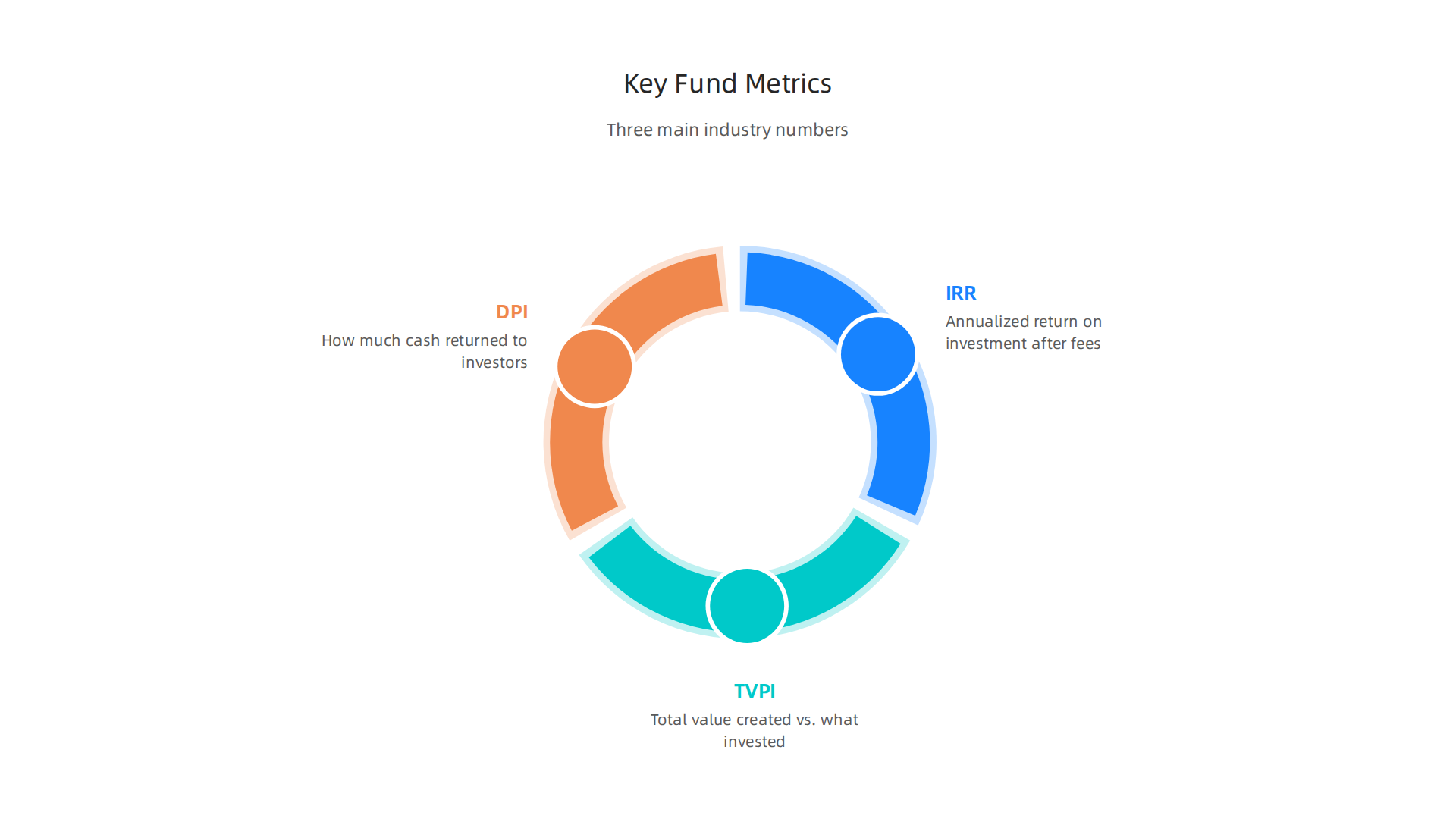
The most common is Internal Rate of Return, or IRR. This measures the annualized return on an investment after fees and carried interest. Think of it as the speed at which your money grows each year.
Next is Total Value to Paid-In Multiple, or TVPI. This shows the total value the fund has created compared to what investors put in. A TVPI of 2.0x means the fund doubled the money. This number includes both cash already returned to investors and the remaining value of companies still held.
Finally, there is Distributed to Paid-In, or DPI. This tells you how much cash the fund has actually sent back to investors. A high DPI means the fund has realized its gains. A low DPI means most of the value is still tied up in companies.
Why Vintage Year Matters
You cannot compare a fund from 2015 to one from 2021. The market conditions are completely different. That is why we use vintage year. It groups funds by the year they started investing. The private investment benchmarks from Cambridge Associates show how top-quartile buyout funds from 2015 to 2019 delivered 2.3 to 2.7x TVPI and 18 to 22 percent net IRR. Those are strong numbers. But funds from 2021 have lower medians because the market peaked and then turned down.
Putting It All Together
When you evaluate a firm like Blackstone, look at the performance of its specific funds by vintage year. A fund that ranks in the top quartile for its vintage is a good sign. Also check the DPI to see how much cash the firm has actually returned.
Context is everything. A 15 percent IRR from a 2016 fund is excellent. But a 9 percent IRR from a 2021 fund might actually be above average because the market was tougher. Do not judge a fund in isolation. Compare it to its peers from the same year.
For a deeper look at how private equity works and how to evaluate funds, check out this private equity funds guide for startup founders. It breaks down the whole process step by step.
Understanding these metrics gives you confidence when you sit down with a potential investor. You can ask smart questions and know whether their track record is real. That puts you in control.
Due Diligence: Verifying a Firm’s Track Record
You now know the metrics that separate top funds from average ones. But numbers alone do not tell the whole story. Smart investors and founders dig deeper. They verify everything. That process is called due diligence. And when you are dealing with a major name like Blackstone, Apollo Private Equity, or CVC Capital Partners, you still need to do your homework.
Talk to Founders Who Took Their Money
The most honest feedback comes from people who actually worked with the firm. Ask the fund for a list of portfolio company founders. Then call those founders directly. Ask about their experience. Did the firm add value beyond writing a check? Were they helpful during tough times? Did they push for unrealistic growth targets?
A good guide to venture capital due diligence explains that reference calls are one of the most important parts of the process. Founders will often share honest details they would never put in an email.
Watch for Red Flags
Some signals should make you pause. Here are the big ones:
- Exaggerated claims. If a firm says every single one of their funds is in the top quartile, be skeptical. No firm hits that every time.
- Lack of transparent reporting. If a firm will not share audited financial statements or detailed performance breakdowns, that is a warning sign.
- Conflicts of interest. Does the firm also invest in competitors? Do they have side deals that benefit the partners more than the fund?
The due diligence process overview from OpenVC suggests running an initial high-level assessment to catch obvious red flags early. That saves you time and protects your company.
Verify the Firm’s Background Too
Just as the fund is checking you out, you should check them out. Firms like Blackstone have long public track records you can research. But smaller firms might not. Look at their past deals. Talk to other founders they have worked with. Search for any lawsuits or regulatory issues.
A helpful piece on preparing for VC audits discusses verifying a fund’s background and why it matters just as much as them verifying yours.
Build a Simple Checklist
You do not need a complicated system. Just use a checklist. Write down everything you want to confirm before signing anything.
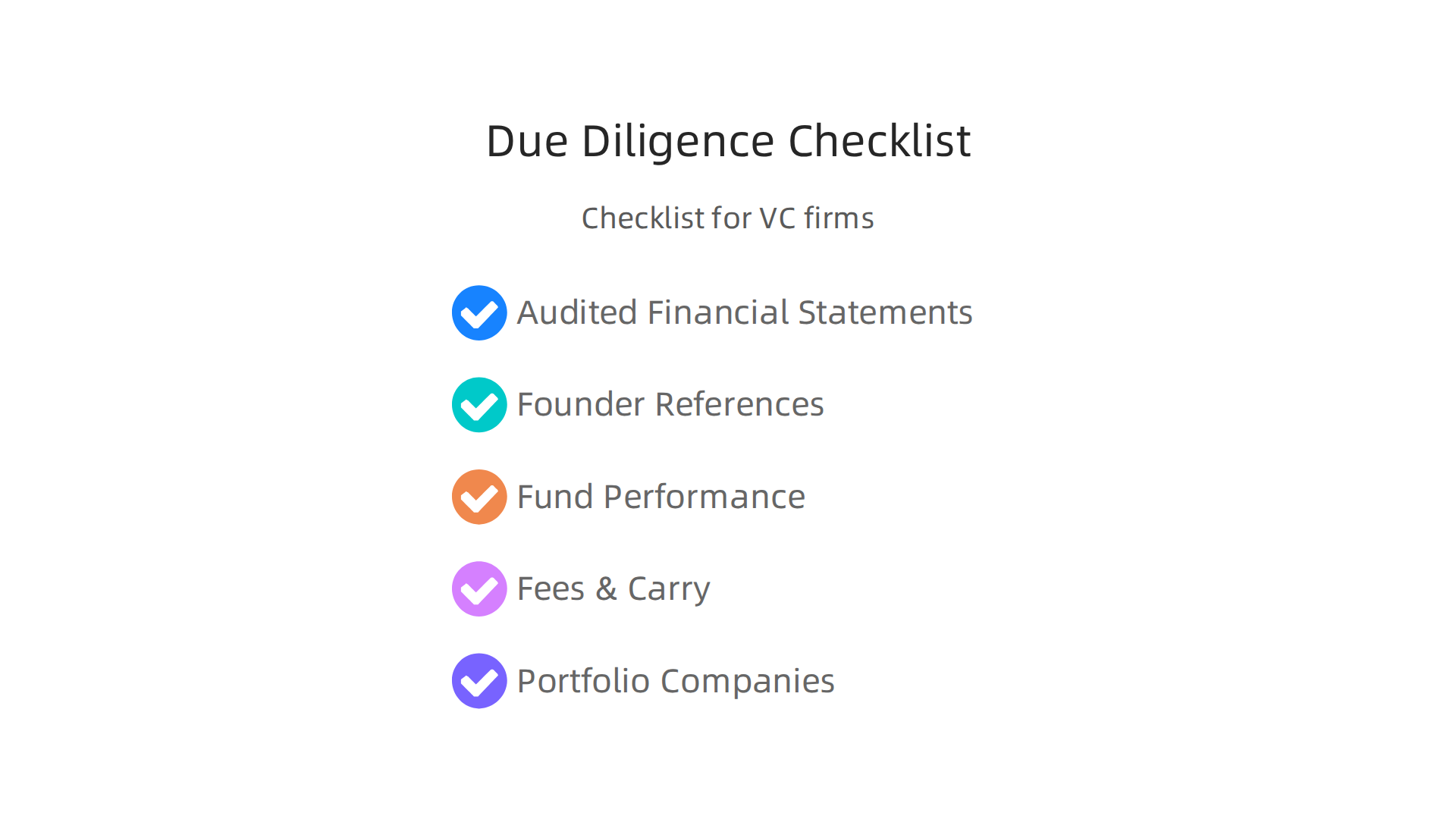
Include items like:
- Audited financial statements for the last five years
- At least three founder references
- Fund performance broken down by vintage year
- A clear explanation of fees and carried interest
- A list of all portfolio companies and their current status
For more on what to include, check the venture capital due diligence checklist from the US Chamber of Commerce. It covers the main categories like financial information, legal matters, and intellectual property.
Doing your due diligence is not about being paranoid. It is about being smart. When you know the full picture, you can decide with confidence. And that confidence will serve you well through the entire partnership.
If you want to stay current on market trends that affect your fundraising strategy, get clear daily AI updates from The Deep View Newsletter. It helps you spot shifts early and make smarter decisions.
Matching Your Startup Stage With the Right Investor
Not all investors are the same. Some only write checks for companies that are still just an idea. Others wait until a startup is already making money. If you pitch your business to the wrong type of investor, you will likely get a quick "no" and waste precious time.
That is why matching your startup stage with the right investor is one of the smartest things you can do early in your fundraising journey.

Why Stage Matters
Investors build their whole strategy around a specific stage. Seed funds look for early traction and a strong founding team. Series A funds want to see product-market fit and growing revenue. Growth-stage investors jump in when a company is scaling fast and needs capital to expand.
A firm like Blackstone venture capital focuses on growth-stage companies. They back businesses that already have proven models and are ready to scale. Similarly, Apollo Private Equity and CVC Capital Partners tend to invest in later-stage companies, often through growth equity or buyout deals. On the other side, Cerberus Capital Management has a very different focus, often targeting distressed assets and operational turnarounds.
Each firm has a clear lane. If you are a seed-stage startup, pitching Blackstone is probably not the best use of your time. Instead, you should target funds that specialize in your exact stage.
Sector and Value-Add Fit
Stage is just one piece. Sector matters too. Some funds only invest in healthcare, climate tech, or enterprise software. Others stay broad. Before you reach out, check the fund’s portfolio. Do they invest in your space? If not, move on.
Also think about what value they can bring beyond the check. A firm with deep industry connections can open doors that money alone cannot.
Investors use a structured process to quickly rule out deals that do not fit. According to this guide on venture capital due diligence best practices, initial screening helps firms filter opportunities by criteria like market size and business model. Stage and sector are almost always part of that screen.
Build Your Target List
Now it is time to get organized. Make a list of every investor who fits your stage and sector. Then rank them by how much strategic value they could add. A good list might include:
- 10 to 15 growth-stage firms if you are at Series B
- 20 to 30 seed funds if you are pre-revenue
- A mix of sector-specific funds and generalists
For a deeper understanding of how these investor types differ, check out this breakdown of venture capital vs private equity. It explains why a growth equity firm like Blackstone operates differently from a traditional VC.
When your list aligns with your stage, sector, and needs, every meeting becomes more productive. You spend less time explaining your basics and more time building a real partnership. That is the goal.
Common Mistakes When Evaluating VC Firms
You built a solid target list. Every firm on it matches your stage and sector. That is a great start. But even the best list will let you down if you make certain mistakes when evaluating which firms to actually pitch.
Here are the most common ones founders run into.

Chasing Brand Names Over Fit
It is easy to get starry-eyed about a big name. You hear about a Blackstone venture capital deal and think, "That is the firm I need." But a big name that does not fit your stage, sector, or needs is a waste of everyone’s time.
The same goes for Apollo Private Equity, Cerberus Capital Management, and CVC Capital Partners. These firms have clear lanes. If you are not in that lane, no amount of brand recognition will help you.
Founders who over-optimize for brand name often ignore the terms of the deal. A famous name might offer a weaker valuation or worse governance terms than a lesser-known firm that truly believes in your vision. Always prioritize strategic alignment and fair terms over the logo on the check.
Skipping Reference Calls
Another huge mistake is relying only on published data. You might read a firm’s website, check their portfolio, and feel ready to pitch. But that is not enough.
According to this guide on common startup fundraising mistakes, founders often overlook how important it is to do thorough research on potential partners before bringing them in. You need to call other founders who have taken money from the firm. Ask about the real experience. How responsive is the partner? Do they add strategic value or just sit on the board? Do they help with follow-on rounds?
These reference calls reveal things no public source will tell you. They can save you from a bad partnership.
Undervaluing Timing and Relationships
Many founders think fundraising is a straight line. You send a deck, get a meeting, and close the deal. But that is not how it works in practice.
Timing matters a lot. Many of the best deals happen before a formal pitch. Investors fund people they already know and trust. If you wait until you need money to start building relationships, you are already behind.
Start talking to investors early. Share progress updates. Ask for advice. Build a connection before you need a term sheet. When the time comes to raise, those existing relationships make everything faster and smoother.
What to Do Instead
Take a step back. Evaluate each firm the same way they evaluate you. Research their portfolio companies. Make reference calls. Look at their fund size and check size to make sure they can actually lead your round. And pay attention to whether they have done follow-on investments in their portfolio.
For a deeper look at how different fund structures affect your options, check out this guide on the critical difference between venture capital and private equity. It helps explain why what works for Blackstone venture capital may not work for a traditional VC firm.
Building relationships early takes consistent effort. One way to stay sharp on the trends that matter to investors is to subscribe to The AI Newsletter Worth Reading. It gives you clear daily updates on AI and technology which can help you speak the language of modern investors.
When you evaluate firms carefully, you avoid these common mistakes. You pick partners who truly help you grow.
Conclusion: Building Your Fundraising Strategy
You made it to the end. By now you have a clear picture of what works and what does not when evaluating venture capital firms. The mistakes we covered are easy to make, but they are also easy to avoid when you know what to look for.
Building a strong fundraising strategy comes down to three things: data analysis, network insights, and strategic alignment. You need all three. Data tells you who is investing and at what stage. Your network tells you what it is really like to work with them. Strategic alignment tells you whether their goals match yours.
Look at a firm like Blackstone venture capital. It shows how scale, deep expertise, and a focused theme can create a powerful partner for the right company. Blackstone does not invest in everything. It picks specific sectors and stages where its resources and network make a real difference. That focus is exactly what you should look for in any potential investor.
The same thinking applies whether you are pursuing Apollo Private Equity, Cerberus Capital Management, or CVC Capital Partners. Each of these firms has a clear lane. Your job is to figure out if your company fits that lane before you spend time pitching.
Trust the Process, Not the Hype
Fundraising can feel overwhelming. There are so many firms, so much advice, and so many opinions. But when you strip it all away, the fundamentals stay the same. Do your homework. Make reference calls. Build relationships early. And never chase a logo over a good deal.
Many founders rush the process because they want a fast yes. That rush is what leads to bad partnerships. According to this article on major startup funding mistakes, skipping your homework on venture capitalists is one of the top errors first-time entrepreneurs make. Slow down. Do the research. It pays off in the long run.
Keep Refining Your Approach
Your fundraising strategy is not a one-time thing. It evolves as your business grows and as the market changes. Use the frameworks from this article to evaluate every new firm you come across. Keep updating your target list. Keep asking hard questions.
For example, understanding how different fund structures affect your options is critical. Read more about how KKR private equity became a powerful force in finance to see how large firms operate and what that means for founders seeking capital.
A Final Word
You know more now than when you started. You understand the common traps and how to avoid them. You have a process for evaluating firms like Blackstone venture capital and others. Trust that process. Stick with it.
The right partner is out there. They will bring capital, yes, but also the strategic support your company needs to scale. Keep building relationships. Keep doing the research. And when the right fit shows up, you will recognize it because you did the work to be ready.
Now go build something great.
Summary
This article explains how Blackstone operates as a venture and growth investor inside a much larger private markets platform, why its scale matters for founders, and how to judge whether it’s the right partner for your startup. It reviews Blackstone’s history and thematic focus—especially on AI, enterprise software, and tech-enabled infrastructure—then lays out a practical framework for comparing top firms like Apollo, Cerberus, and CVC. You’ll learn the core evaluation criteria (consistent returns, sector expertise, founder relationships), the three fund metrics to watch (IRR, TVPI, DPI), and a simple due diligence checklist to verify claims. The guide also shows how to match investor stage and sector fit, highlights common mistakes founders make, and explains how to build a data-driven fundraising strategy so you spend time only on partners who truly fit your business. After reading, you’ll be able to target the right investors, run effective reference checks, and ask smarter performance questions before signing deals.