
Introduction
If you spend any time around startup fundraising, you have probably heard the name Founders Fund. This firm is not your typical venture capital shop. It is known for backing wild ideas, supporting founders no matter what, and taking a very different approach than most investors.

Peter Thiel, Ken Howery, and Luke Nosek started Founders Fund in 2005.
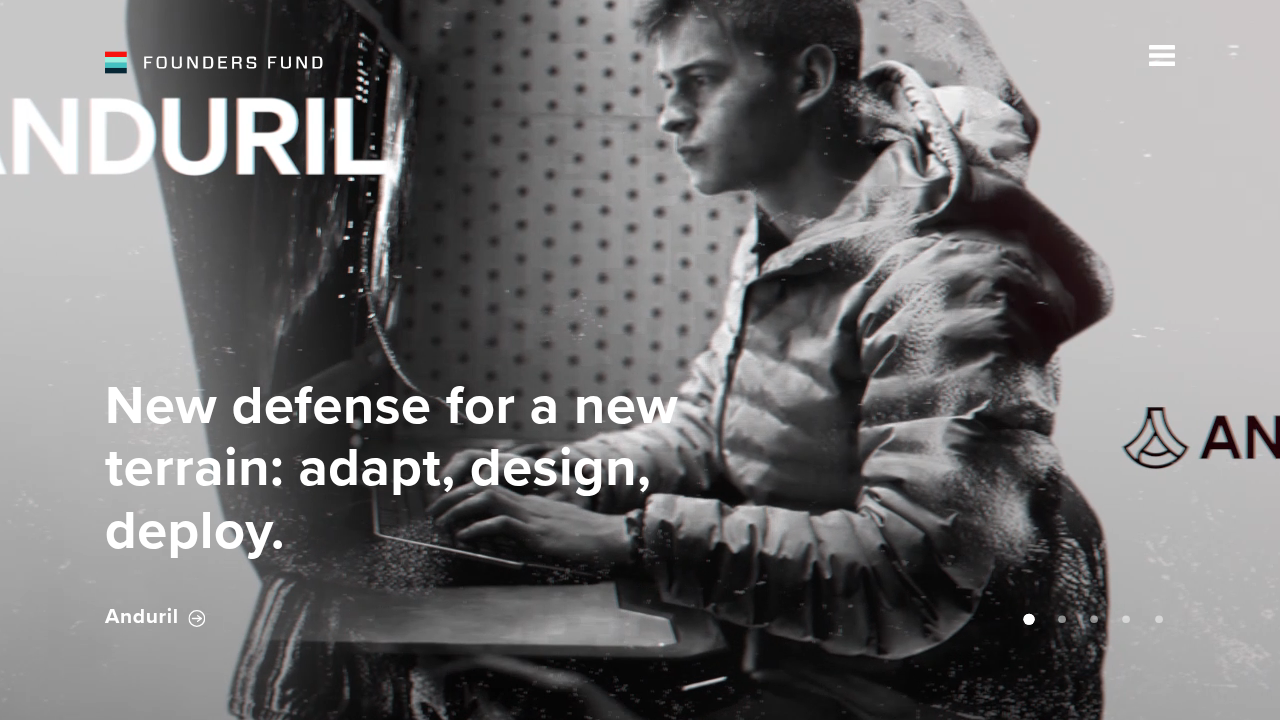
The idea was simple but bold: build a venture firm run by former entrepreneurs, for entrepreneurs. The firm’s early story is one of the most interesting in Silicon Valley. According to a detailed company history, Thiel and his co-founders raised their first $50 million fund in January 2005 with a promise to never remove founders from their own companies. That philosophy, called "founder-maximalist," still drives everything they do today.
So what makes Founders Fund so different? For one, they invest in things most VCs avoid. Hard tech like aerospace, nuclear energy, and defense technology. They also back companies at all stages, from early seed rounds to massive late-stage growth funds. In April 2025, the firm closed a $4.6 billion late-stage growth fund, showing they are still going big.
The results speak for themselves. The firm has invested in over 545 companies and produced 47 unicorns and 28 IPOs. You have probably used products from some of their biggest wins, including SpaceX, Palantir, Stripe, Airbnb, and Anduril.
Whether you are a founder looking for capital or an investor tracking deal flow, understanding Founders Fund is essential. It helps to know how the firm thinks, what it looks for in founders, and how it operates differently from other big names like Oakley Capital, RE7 Capital, Beacon Capital, or Oaktree Funding.
This article breaks down everything you need to know about Founders Fund in 2026. You will learn about its history, investment strategy, portfolio, and how to approach the firm. If you want to keep up with fast-moving tech and startup news, you might also enjoy the clear daily AI updates from The Deep View Newsletter.

It is a great companion for anyone navigating the venture capital world.
The Origins and Philosophy of Founders Fund
Founders Fund started with a simple idea: put founders first. This sounds obvious today, but in 2005, most venture firms had a different rulebook.
They would replace founders with professional managers, push for quick exits, and stick to software deals. Founders Fund wanted to break all those rules.
The firm was built by people who had been founders themselves. Peter Thiel, Ken Howery, and Luke Nosek all helped build PayPal. They knew what it felt like to have investors breathing down your neck. So they created a firm that would do the opposite.
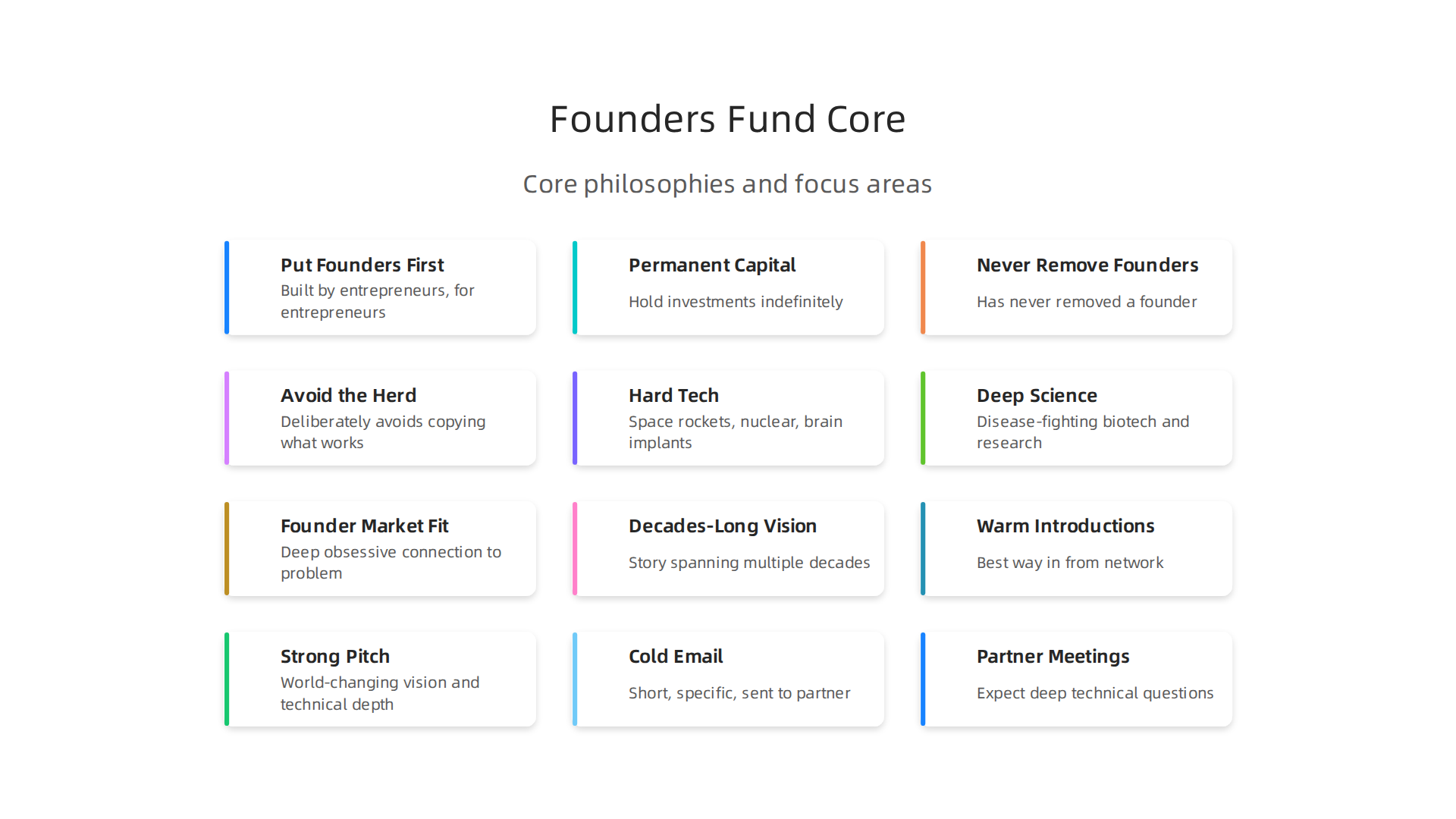
One of the biggest differences is how Founders Fund thinks about time. Most venture funds have a set life of about 10 years. They have to return money to investors by then. Founders Fund uses something called permanent capital. This means they can hold investments for as long as they want. There is no rush to sell. This lets them back companies that take decades to change the world, like space rockets and nuclear reactors.
Their early bets proved this approach worked. The firm invested in Facebook when it was still a small social network. According to a detailed history by The Generalist, Thiel’s $500,000 Facebook investment alone returned $1 billion. That is a 2,000x return. They also backed SpaceX when most people thought private space travel was a joke. Today, SpaceX is the most valuable private company in the world.
This strategy comes from a belief that most venture capital is too focused on copying what works. Founders Fund deliberately avoids the herd. If you want to understand how to attract investors who think differently, it helps to study how firms like this operate. You can read more about private equity funds for startup founders to see how different types of capital compare.
The firm’s philosophy is captured in a single promise: it has never removed a founder from their own company. This is rare in venture capital.

Most firms have clauses that let them replace the CEO. Founders Fund simply does not do that. This founder-maximalist approach creates deep loyalty and attracts the most ambitious founders.
By 2008, Founders Fund had built a reputation for betting on the hardest problems. The permanent capital structure and the team’s own experience as entrepreneurs gave them the patience to wait for big wins. That patience paid off in a big way.
Iconic Portfolio Companies and Sector Focus
That patience paid off in a big way. The Founders Fund portfolio today reads like a list of the most important companies of the 21st century. Think SpaceX, which is now the most valuable private company in the world. Think Palantir, the data analytics giant that went public and returned $3.1 billion to the fund. Think Anduril, a defense tech company that is changing how the military thinks about drones and AI. And OpenAI, which started the AI boom we are living through right now.
According to the firm’s Wikipedia entry, Founders Fund was the first institutional investor in both SpaceX and Palantir. That alone shows how early they get into the hardest problems. They do not wait for a trend to prove itself. They bet on the people who are creating the trend.
The sectors they focus on are not accidental. The firm has a strong tilt toward hard tech and deep science.
This means space rockets, nuclear reactors, brain implants (Neuralink), and disease-fighting biotech. They also back fintech companies like Affirm, Nubank, and Stripe. And they invest in consumer hits like Airbnb and Facebook. But the biggest bets are on companies that challenge entire industries or create markets that did not exist before.
A detailed analysis by SparkCo found that Founders Fund has increasingly emphasized hard tech and defense, moving away from social media investments. This shift matches a bigger trend in venture capital. Most firms are scared of hardware and regulation. Founders Fund leans into it.
If you are building a company in deep tech or science, you need investors who understand long timelines and high risk. Many startup founders struggle to find that kind of capital. One smart move is to learn how to budget and fundraise for deep innovation before you start pitching. That way you show investors you have done your homework.
The firm’s bet on artificial intelligence is one of its defining moves. By backing OpenAI and DeepMind early, Founders Fund placed itself at the center of the biggest technology shift since the internet. If you want to stay on top of how AI is changing the startup world, there is a great source for daily updates.
The AI Newsletter Worth Reading delivers clear, bite-sized AI news every day. It helps founders and investors spot trends before they hit the mainstream.
In the next section, we will look at how Founders Fund actually makes its investment decisions and what that means for founders seeking capital.
Investment Criteria: What Founders Fund Looks For
So what exactly does Founders Fund look for when deciding to write a check? The answer is not a simple checklist of metrics or market size calculations.
It is something much harder to quantify.
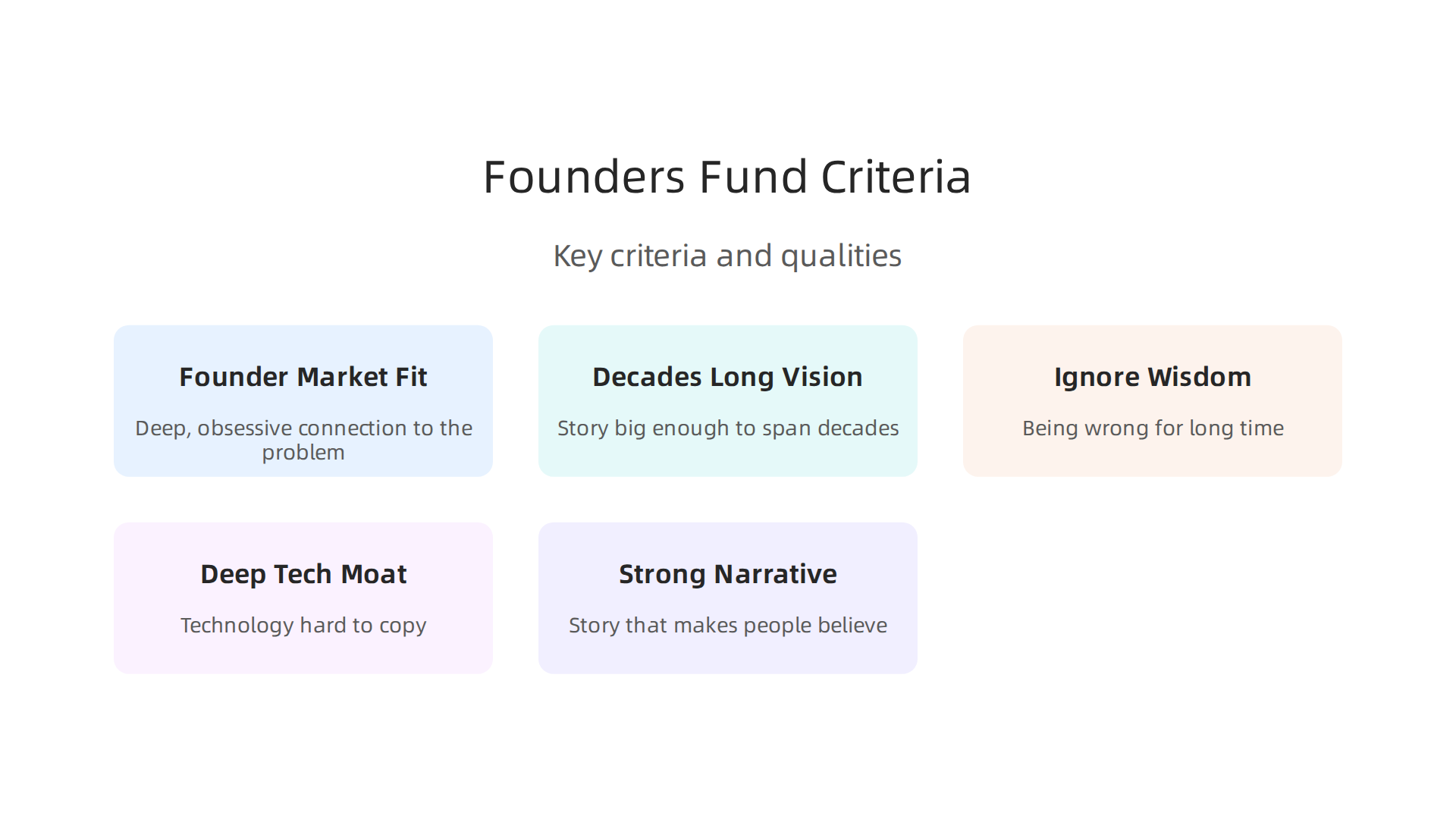
The firm prioritizes founder-market fit above almost everything else. That means they want to see that you as a founder have a deep, almost obsessive connection to the problem you are solving. They are not looking for someone who read a market report and spotted an opportunity. They want someone who has lived inside that problem for years.
Vision matters just as much. Founders Fund partners want to hear a story that is big enough to span decades.

They do not care about next quarter or next year. They think in terms of ten, twenty, or even fifty years out. This is why they were early on SpaceX when most investors laughed at the idea of private spaceflight. According to the firm’s portfolio page, their investments span revolutionary technologies that most people call impossible until they happen.
Another key factor is a willingness to ignore conventional wisdom. Founders Fund actively looks for founders who are comfortable being wrong for a long time. If everyone agrees your idea is smart, it might not be ambitious enough. The firm’s partners have said before that they prefer founders who have a strong narrative and a deep tech moat. That means technology that is hard to copy and a story that makes people believe.
If you are preparing to pitch a venture firm, it helps to understand these criteria. You cannot fake founder-market fit. But you can study how successful founders frame their narratives. Many first-time founders waste time on financial projections that the partners barely look at. Instead, focus on why you, why now, and why this technology cannot be built by anyone else.
For founders building in deep tech or emerging sectors, there are strategic approaches that can make your pitch stand out. One useful resource is a guide on seed enterprise investment strategies that covers data-driven ways to raise capital. Studying how other firms evaluate companies can sharpen your own preparation.
Additionally, while firms like re7 capital or beacon capital may focus on different stages or sectors, the underlying principle of founder conviction remains the same. Know your story. Live your problem. Think in decades. That is the formula that resonates with Founders Fund partners.
In the next section, we will explore how the firm structures its deals and what terms founders should expect when they do get that coveted yes.
The Permanent Capital Advantage: A Structural Innovation
Most venture capital firms operate on a strict timeline. They raise a fund, invest the money over a few years, and then have about a decade to return profits to their investors. That ticking clock creates pressure. It forces partners to look for quick exits, push for early IPOs, and sometimes sell good companies too soon.
Founders Fund does not play that game.
The firm uses a permanent capital structure. That means there is no expiration date on their money. They can hold an investment for as long as it makes sense, whether that is five years, twenty years, or longer. This is a rare and powerful advantage in the venture world.
Traditional VC funds rely on limited partner commitments. Those commitments come with a fixed lifespan, usually seven to ten years, as explained in this breakdown of what a venture capital fund is. After that, the fund must return capital. That forces tough decisions.
Permanent capital changes everything. Without a deadline, Founders Fund can support companies through economic downturns, wait for technology to mature, and let truly transformative outcomes unfold. They do not have to sell when the market is down. They can keep reinvesting and let compounding work its magic. One expert analysis of permanent capital compared to traditional PE shows how this model allows investors to hold through downturns and redeploy cash into new opportunities.
This is why Founders Fund backed companies like SpaceX and Palantir long before they were mainstream successes. Most investors would have cashed out after a few years. Founders Fund held on because they could.
For founders, this matters a lot. If you raise money from a firm with permanent capital, you have a partner who can stay patient. You do not face the same pressure to sell or go public before you are ready. That alignment is rare.
If you are exploring different fund structures or just starting your fundraising journey, reading about corporate venture capital as a new power broker in startup funding can help you understand the full landscape of options available.
And if you want to stay sharp on the technology trends that could shape your company’s future, consider subscribing to The AI Newsletter Worth Reading for daily updates on AI and tech developments that influence long-term strategy.
How to Get Funded by Founders Fund: A Practical Guide
So you know why Founders Fund is different. Now how do you actually get them to invest in you? The process is not a secret, but it takes serious preparation and a bit of strategy.
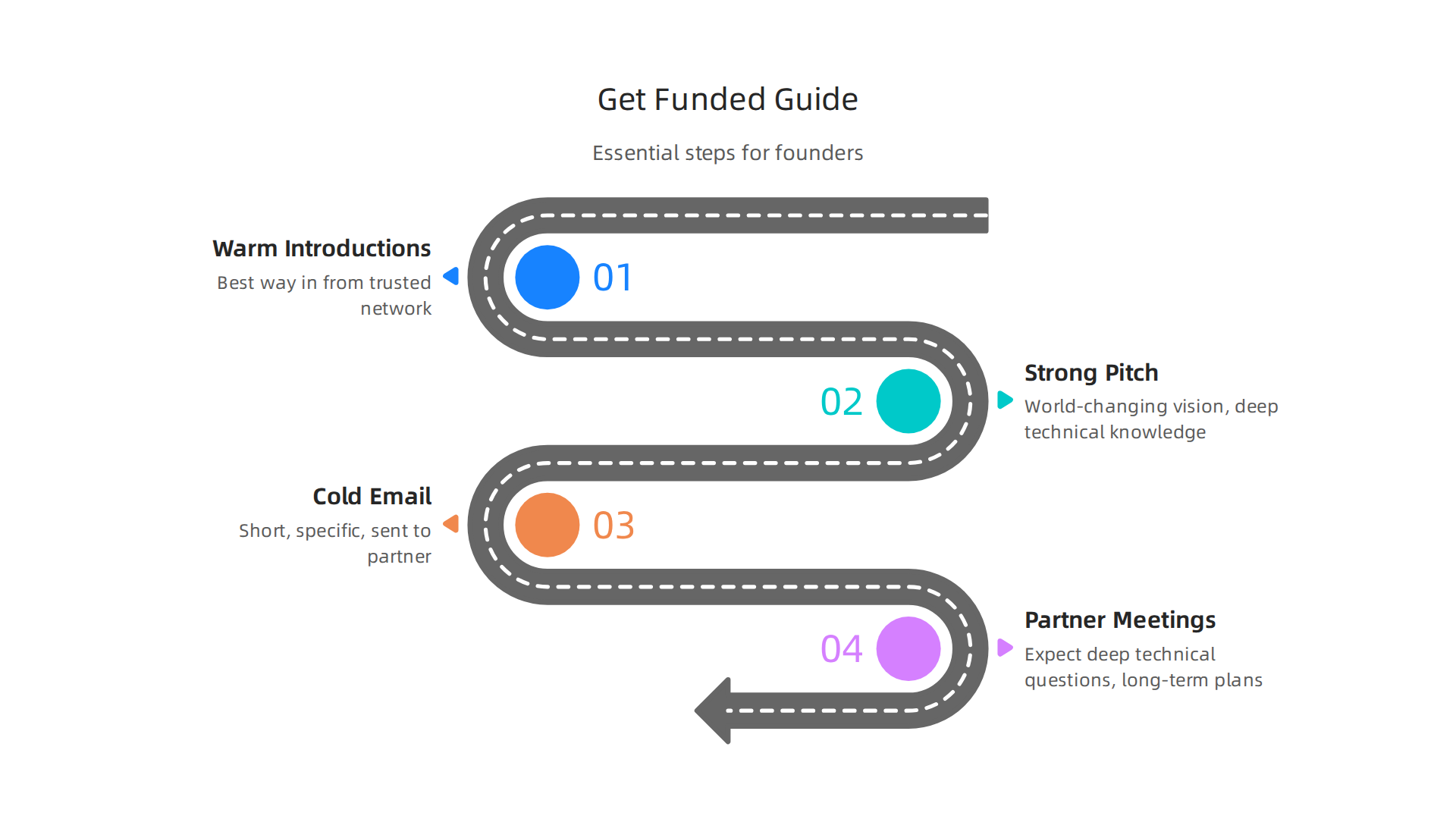
Warm Introductions Are the Best Way In
Founders Fund relies heavily on people they trust. The most effective path to a meeting is a warm introduction from a current or former portfolio founder, an operator, or someone inside their network.

If you know anyone connected to the firm, ask for a referral. If not, start building those connections by attending industry events where partners speak or by engaging with Founders Fund portfolio companies in a genuine way.
The firm invests in people first. A trusted recommendation goes a long way.
What Your Pitch Must Show
Your pitch needs three things: a world changing vision, deep technical knowledge, and a clear understanding of your market. Founders Fund looks for ideas that can reshape entire industries, not small improvements. They want founders who think in decades, not quarters.
Be ready to explain the hard parts of your technology. The partners are sharp and they will push you on engineering details. Know your competition and why now is the right moment to build.
If you are still working on your story, learning about framing tech for startup fundraising success can help you structure your pitch in a way that grabs attention.
Cold Emails That Get Opened
Sometimes a cold email works, but it has to be excellent. Keep it short. State who you are, what you are building, and why it matters. Attach a pitch deck and a one page executive summary. Show that you understand Founders Fund by mentioning specific portfolio companies that relate to your space.
Send your email to a specific partner, not a generic address. Check the official Founders Fund website to see who covers your sector.
What Happens in Partner Meetings
If you get a meeting, prepare hard. Expect deep technical questions. Know your unit economics inside out. Be ready to talk about your team and why you are the right founder to pull off this vision.
Founders Fund now makes fewer but larger bets. Their growth fund invests around $460 million per company in late stage rounds, according to a recent TechCrunch report on Founders Fund’s $6 billion growth fund. That means you need to show your company can grow into something massive.
And remember, Founders Fund is patient. They do not need you to sell or go public quickly. So be honest about your long term plans. That alignment is exactly what they value most.
Notable Exits and Returns: The Fund’s Track Record
A strong track record matters when you pick a venture partner. Founders Fund has built one of the most impressive ones in Silicon Valley. Their early bets on companies that changed entire industries have paid off in a big way.
The fund was the first institutional investor in both SpaceX and Palantir Technologies. That early faith in SpaceX helped launch the private space industry. Palantir’s 2020 direct listing generated an 18.5x return for the fund, distributing $3.1 billion back to limited partners according to an in-depth analysis of Founders Fund’s investment strategies. And their early stake in Facebook? That remains one of the most famous venture capital returns in history.
Airbnb is another home run. Founders Fund invested early in the home sharing platform, which went public in 2020 at a valuation above $100 billion. These kinds of returns show the fund can spot companies with 100x or more potential before anyone else does.
More recently, their bets on Anduril and OpenAI are paying off. Anduril, a defense technology company, has grown into a multi-billion dollar business as governments worldwide invest in modern defense systems. OpenAI reshaped the entire AI landscape. Both companies continue to drive strong returns for the fund.
Understanding how venture capital returns work is important if you are raising money yourself. Learning more about venture capital and private equity can help you see how funds like Founders Fund evaluate their wins.
The fund’s ability to pick winners across different eras, from social media to space to AI, shows a level of insight most investors never reach. For founders, studying these exits can teach you what types of companies the fund will back next.
Watching where the smart money goes in AI and deep tech is easier when you stay informed. That is why we recommend The AI Newsletter Worth Reading for daily updates on the technologies driving these massive returns.
Founders Fund in 2026: Current Landscape and Future Outlook
Founders Fund has not slowed down in 2026. The firm just raised a record $6 billion for its fourth growth-stage fund, called Founders Fund Growth IV. That is the largest fund in the 20-year history of the firm. According to a report from TechCrunch, demand from outside investors actually exceeded the fund’s capacity. Partners and employees of Founders Fund contributed about $1.5 billion of that total themselves.
This new fund comes less than a year after they closed a $4.6 billion growth fund in 2025. The speed of back-to-back fundraising shows the firm is scaling its permanent capital model. They want to keep investing in their most promising portfolio companies for the long haul.
So where is that money going? Three areas dominate the firm’s focus in 2026: artificial intelligence, defense technology, and longevity science.
AI is the biggest bet. Founders Fund already holds stakes in OpenAI and Anthropic. In fact, just last month they co-led a $30 billion investment into Anthropic alongside firms like D.E. Shaw Ventures and Dragoneer. That deal valued Anthropic at $380 billion. The firm is now one of the few investors with significant positions in both leading AI labs.
Defense tech is another core area. Anduril, co-founded by Founders Fund partner Trae Stephens, is currently raising a massive $4 billion round at a $60 billion valuation. The firm also backs other defense companies like Flock Safety and SpaceX.
Longevity science is a newer frontier. While less public, the firm has been quietly backing biotech companies focused on extending human lifespan. This fits their pattern of investing in revolutionary technologies that most people think are impossible.
When it comes to emerging trends like crypto regulation and climate tech, Founders Fund is more selective. They have been cautious on crypto since the market downturn, but they still watch regulation closely for future opportunities. Climate tech is not a core focus right now, though they may invest indirectly through other sectors. While firms like Re7 Capital, Beacon Capital, Oakley Capital, and Oaktree Funding are also active in specialized areas, Founders Fund keeps its focus on high-conviction bets in transformative technologies.
Understanding how permanent capital models work can help founders raise smarter. Learn more about venture capital and private equity differences to see why funds like Founders Fund can hold investments for decades.
Founders Fund vs. Other Top‑Tier Venture Capital Firms
Now that you understand the permanent capital model, let’s look at how Founders Fund compares to other top VC firms like Sequoia, Andreessen Horowitz (a16z), and Accel.
These firms all invest in great startups, but they operate very differently. Knowing the differences helps you choose the right partner for your company.
Permanent Capital Changes Everything
Most traditional VC funds have a set lifespan of about 10 years. After that, they must return money to their investors. That pressure can push firms to sell good companies too early or rush for an IPO.
Founders Fund runs differently. It uses a permanent capital structure with no fixed end date. This is a big shift from the traditional venture capital model. As one analysis explains, permanent capital allows firms to hold through downturns and reinvest earnings without forced exits. Founders Fund partners also put up a lot of their own money, so they are fully aligned with founders.
Sequoia started moving toward open-ended funds recently, but they still rely mostly on fixed-term funds. a16z and Accel use standard 10-year structures. That means they feel more pressure to show short-term results.
Founder‑First or Founder‑Control?
Another sharp difference is how Founders Fund treats founders. The firm calls itself "founder‑maximalist." According to a breakdown of the firm, Founders Fund has never removed a single founder as CEO. That is rare. In most VC firms, about half of founders get replaced within three years.
Other top firms are known for bringing in professional CEOs or pushing founders aside when growth slows. a16z offers a lot of operating support, but they also step in more often. Accel tends to give founders freedom, but they still have a timeline to meet. Founders Fund takes an extreme hands-off approach. They trust the founder to run the show, even if the company hits rough patches.
Concentrated Bets vs. Spray and Pray
Founders Fund also takes bigger, more focused bets on fewer companies. Instead of spreading small checks across 50 startups, they put large amounts into a handful of companies they believe in. This lets them commit fully to each portfolio company.
Sequoia and a16z also take large stakes, but they manage much bigger portfolios. They need more winners to return their funds. For a founder, a concentrated bet from Founders Fund means the firm will fight hard for you during tough times.
What This Means for You as a Founder
If you want a partner who will stick with you for the long haul never push you out and write a big check with full conviction then Founders Fund might be your ideal match. But you should also understand the trade-offs. You get less operational support and less hand holding.
If you need a network of experts, recruiting help, or go to market guidance, firms like a16z or Accel offer more hands on support. They also have larger teams to help you scale fast.
The right fit depends on your stage, your industry, and your personal style as a leader. Take time to research each firm before you pitch.
Keep Learning About Venture Capital
There is a lot more to learn about how VC funds work and how to pick the right one. You can read more about specialized funding solutions for startups to see how different firms approach investing.
And if you want to stay ahead of fast moving trends like AI and defense tech that Founders Fund is betting on, getting daily updates helps a lot. Subscribe to The AI Newsletter Worth Reading for clear daily AI news that keeps you informed about the technologies shaping the next wave of startup funding.
Summary
This article explains who Founders Fund is, why the firm stands apart, and what founders need to know to win its backing in 2026. It traces the firm’s origin as a founder‑led, founder‑maximalist shop, explains its permanent capital model, and shows how that structural advantage lets it back long‑range, hard‑tech bets like SpaceX, Palantir, OpenAI, and Anduril. You’ll learn the sectors the fund favors (AI, defense, longevity, deep science), the qualitative investment criteria it uses (founder‑market fit, technical moat, multi‑decade vision), and practical steps to get a meeting and prepare a pitch. The piece also reviews the fund’s track record and contrasts its concentrated, patient approach with traditional 10‑year VC funds. By reading this, founders should understand whether Founders Fund is a fit, how to tailor outreach and narratives, and what to expect from term structure and long‑term partnership.