When you’re a startup founder looking for money, every word matters. Investors want to know exactly what they are putting their money into. This is especially true when you talk about your company’s technology. Two terms often come up: Information Technology (IT) and Information Systems (IS). People sometimes use these words as if they mean the same thing, but they are actually different and understanding this difference is very important for fundraising.
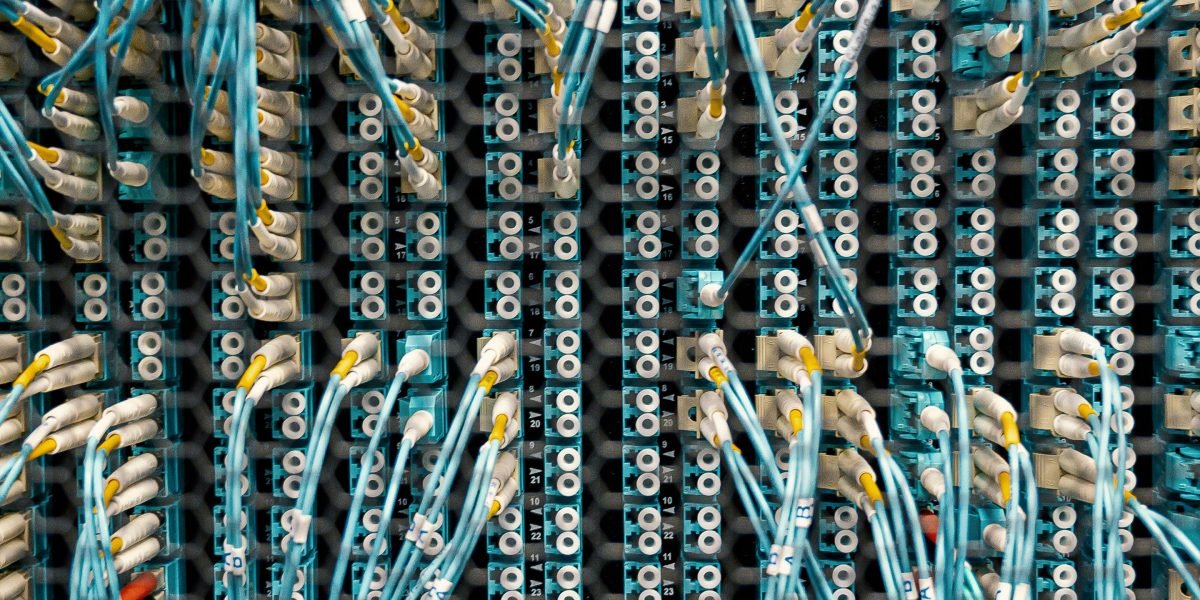
Let’s start with a clear information technology definition. Simply put, IT is about using computer systems to manage, process, keep safe, and share information. Think of all the parts that make up the technical side: the computers, software, network connections, and data storage. These are all examples of information technology products and parts that help a business run its digital tasks. A discrete, identifiable information technology asset might be a server, a piece of software, or even a virtual machine that acts as a building block for a larger system.
Now, let’s look at information systems vs information technology. An Information System (IS) is a bigger picture. It includes all the IT parts we just talked about, but it also includes the people who use the technology, the actual data itself, and the processes or rules for how everything works together. So, while IT is about the tools, IS is about the whole setup that collects, processes, stores, and gives out information to help a company make smart choices and do its work. It’s the full network of components working together.
Knowing the difference matters a lot for fundraising.
- Clearer Explanations: When founders can clearly explain their technical strategy without using confusing words, investors understand it better.
This helps investors see the true value of your company’s tech.
- Less Confusion, More Trust: If a founder mixes up IT and IS, it can lead to misunderstandings about what the product does or how the company runs. Clear definitions reduce this confusion, helping investors feel more confident in their decision to invest.
- Showing Real Value: Your IT and IS choices directly affect how much your company is worth (its valuation), how safe its customer data is (security posture), and how easily it can grow bigger (operational scalability). Founders who understand this can show investors that their company is well-built for the future. Actually, founders who understand computer systems technology attract more investors.
Being precise about your information technology definition and how it fits into your broader information systems helps show you’re a smart leader. It tells investors you know your business inside and out, from the smallest piece of software to the biggest plans for growth.
To stay on top of the latest technology insights that can impact your fundraising strategy, consider exploring a valuable resource.
Ready to get smarter about tech trends?
The AI Newsletter Worth Reading
Get clear daily AI updates from The Deep View Newsletter.
When we talk about an information technology definition, we’re focusing on the hands-on tools and technical parts that make up the digital side of a business. These are the building blocks, often called information technology assets, that help collect, store, and share information. Think of it as all the parts you’d find in a computer system or network.
Let’s break down the main parts of IT:
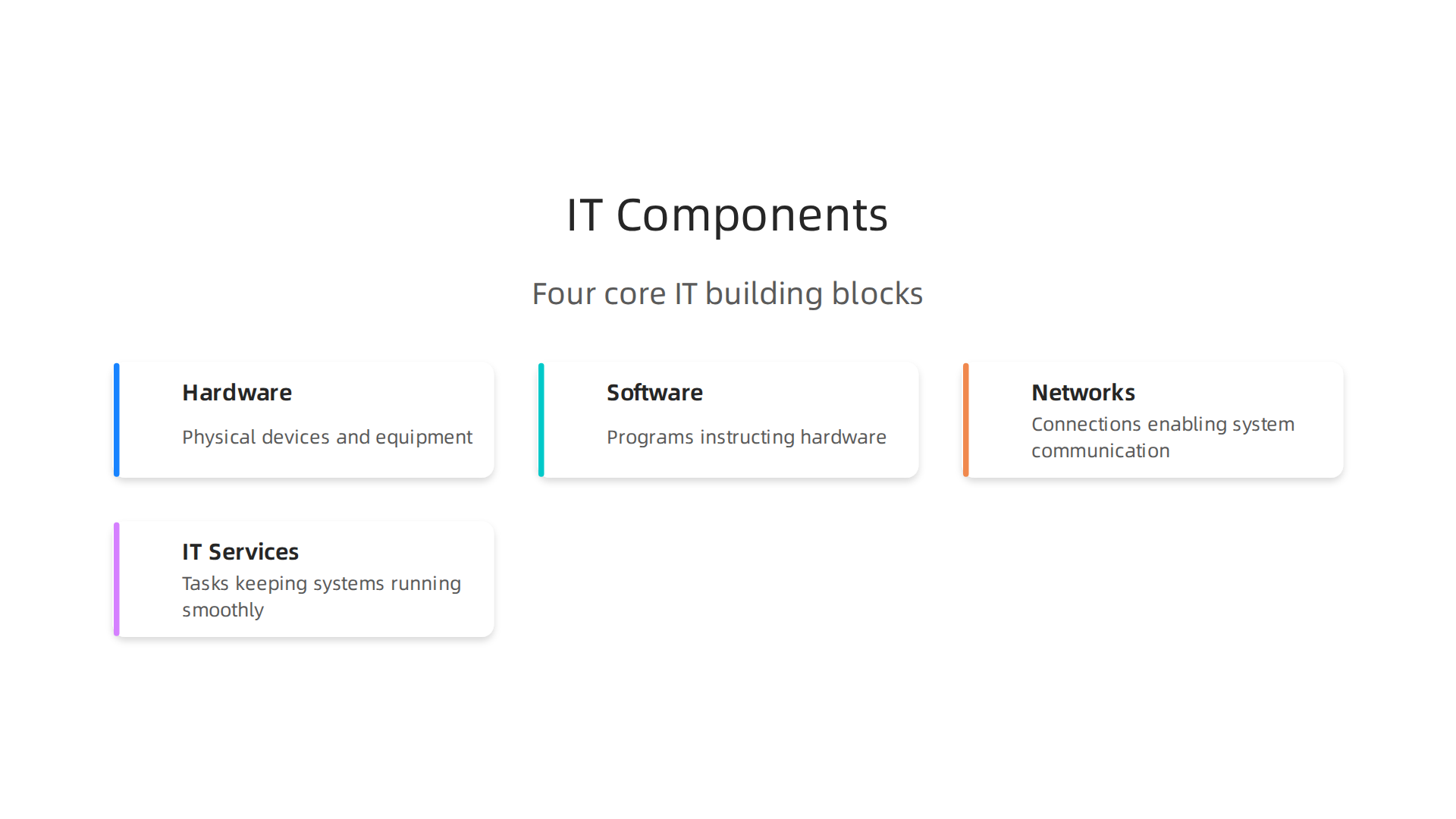
- Hardware: These are the physical things you can touch.
- Examples: Computers (laptops, desktops), servers (big powerful computers that store data and run software), network devices (like routers and switches that connect computers), and mobile devices (phones, tablets). For a startup, this might mean the cloud servers they rent from Amazon Web Services or Google Cloud, not necessarily physical machines in their office.
- Software: These are the programs and instructions that tell the hardware what to do.
- Examples: Operating systems (like Windows or macOS), applications (like Slack, Zoom, or your company’s unique product software), and databases (where all your customer info or product data lives).
- Networks: These are the connections that allow hardware and software to talk to each other.
- Examples: The internet connection, local area networks (LANs) in an office, and wide area networks (WANs) that connect offices far apart. For a startup, this often means secure connections for remote work or APIs (Application Programming Interfaces) that let different software programs communicate smoothly.
- IT Services: These are the tasks and support that keep the hardware, software, and networks running smoothly.
- Examples: Managing data storage, making sure systems are secure (cybersecurity), helping users with tech problems (support), and keeping an eye on how everything is performing (monitoring).
IT as Infrastructure vs. IT as a Product
It’s helpful to see IT in two ways for a startup:
- IT as Infrastructure: This is the behind-the-scenes technology that keeps your company running. It’s like the engine of a car. For instance, the cloud servers hosting your website, the email system your team uses, or the software that handles payroll are all part of your IT infrastructure. This infrastructure is made up of different components. For example, a single server or a piece of software can be seen as an information system component. This type of IT is key for ensuring smooth operations and supporting fundraising efforts, as robust IT infrastructure signals reliability.
- IT as a Product: For many tech startups, information technology is not just what they use, but what they sell. If your company creates an app, a software platform, or a new piece of hardware, then IT is your main product. For example, a startup that develops a new AI-powered analytics tool is selling IT as its core offering.
Concrete Examples for Your Pitch
When you talk to investors, being specific about your IT can show them you have a strong grasp of your company’s foundation. Here are some things you might say:
- "We use a scalable cloud infrastructure with Amazon Web Services (AWS) to handle millions of users."
- "Our product relies on advanced APIs for seamless integration with other popular platforms."
- "We have a dedicated DevOps team that uses modern Ops technology for startup fundraising to automate deployments and monitor system health 24/7."
- "Our core product is a proprietary software platform, built using [specific programming languages or frameworks], designed to solve [specific problem]."
By highlighting these concrete aspects, you show investors not just what your technology does, but how it’s built and managed, which builds confidence in your startup’s future.
When we talk about Information Technology (IT), we’re mostly thinking about the actual tools and machines. But there’s a bigger picture that involves how those tools are actually used to help a business run and make decisions. This bigger picture is what we call an Information System (IS).
What are Information Systems (IS) and how do they differ from IT?
An Information System (IS) is more than just computers. It’s a way for people, processes, and technology to work together to collect, store, manage, and use information. Think of it as a complete setup that helps an organization reach its goals using information. This idea of people and technology working together is often called a sociotechnical system.
Here’s how we can break down the parts of an Information System:
- People: These are the users, managers, and everyone else who interacts with the system. They make decisions based on the information it provides.
- Processes: These are the steps and rules for how work gets done. For example, how a sales order is taken, processed, and fulfilled.
- Technology: This is the IT part, including hardware, software, and networks. It’s the engine that powers the system.
- Data: This is the raw information that the system collects and uses, like customer names, sales figures, or product details.
So, while IT gives you the building blocks, IS shows you how those blocks are put together and used by people to make a house. It’s about solving business problems with technology, not just having the technology itself. You can think of an information system as having six main parts: hardware, software, network communications, data, people, and processes, all working together to get things done Identifying the Components of Information Systems.
IS vs. IT: The Big Difference
The main difference between information systems and information technology comes down to their focus:
- Information Technology (IT) focuses on the "what": the actual tools. It’s about the computers, the programs, the networks, and the services that make up the digital side of things. It’s a part of the bigger IS picture.
- Information Systems (IS) focuses on the "how" and "why": how these tools are used to help people and processes achieve business goals. It looks at the whole picture of how information flows and is used to support decisions. Many experts see the sociotechnical perspective as central to the IS field.
For a startup, this distinction changes how you think about your product and how your company runs.
- Operational Priorities: If you’re looking at IS, you’re thinking about how your customer support team uses a helpdesk software (IT) to follow a clear process (IS) for solving customer problems, improving satisfaction (people). This involves more than just the software; it’s the whole workflow. Staying on top of these trends can be as helpful as reading the latest wired news or a daily tech newsletter.
- Product Priorities: If your startup sells an analytics tool, the IT is the software itself. But the IS is how companies use your tool to understand their data, make better business choices, and manage their teams. This means thinking about the user’s journey, the kind of reports they need, and how the data helps their processes. Founders who truly grasp how computer systems technology interacts with human processes often attract more investor interest.
Understanding this difference is key for founders. It helps you not only build great technology but also explain how that technology drives value by empowering people and streamlining processes within any business.
Understanding the difference between Information Technology (IT) and Information Systems (IS) is super important for startup founders, especially when it comes to getting money from investors. It’s not just about building cool tech; it’s about showing how that tech helps a business grow and succeed. This understanding changes how you talk about your company, how investors check it out, and what they think your company is worth.
Messaging: Telling Your Story Clearly to Investors
When you’re trying to raise money, how you explain your startup’s technology really matters. Investors want to know more than just your information technology definition or what software you use. They want to see how your IT (the actual tools) fits into your IS (the whole system of people, processes, and tech working together).
Founders need to clearly explain not just what their product is, but also how it solves a real problem for users in a systematic way. This shows that you understand the full picture, from the code itself to how it creates value for customers and runs your business. A strong narrative about your information system helps investors imagine how your solution will grow and adapt in the real world. This is a key part of how to create your winning funding package for startup success.
Due Diligence: What Investors Look For
When investors are thinking about putting money into your startup, they do something called "due diligence."

This is like a deep dive into every part of your business, especially the technical side. For founders looking to get venture capital funding, being ready for this step is vital.
They’ll look at your IT to check things like:
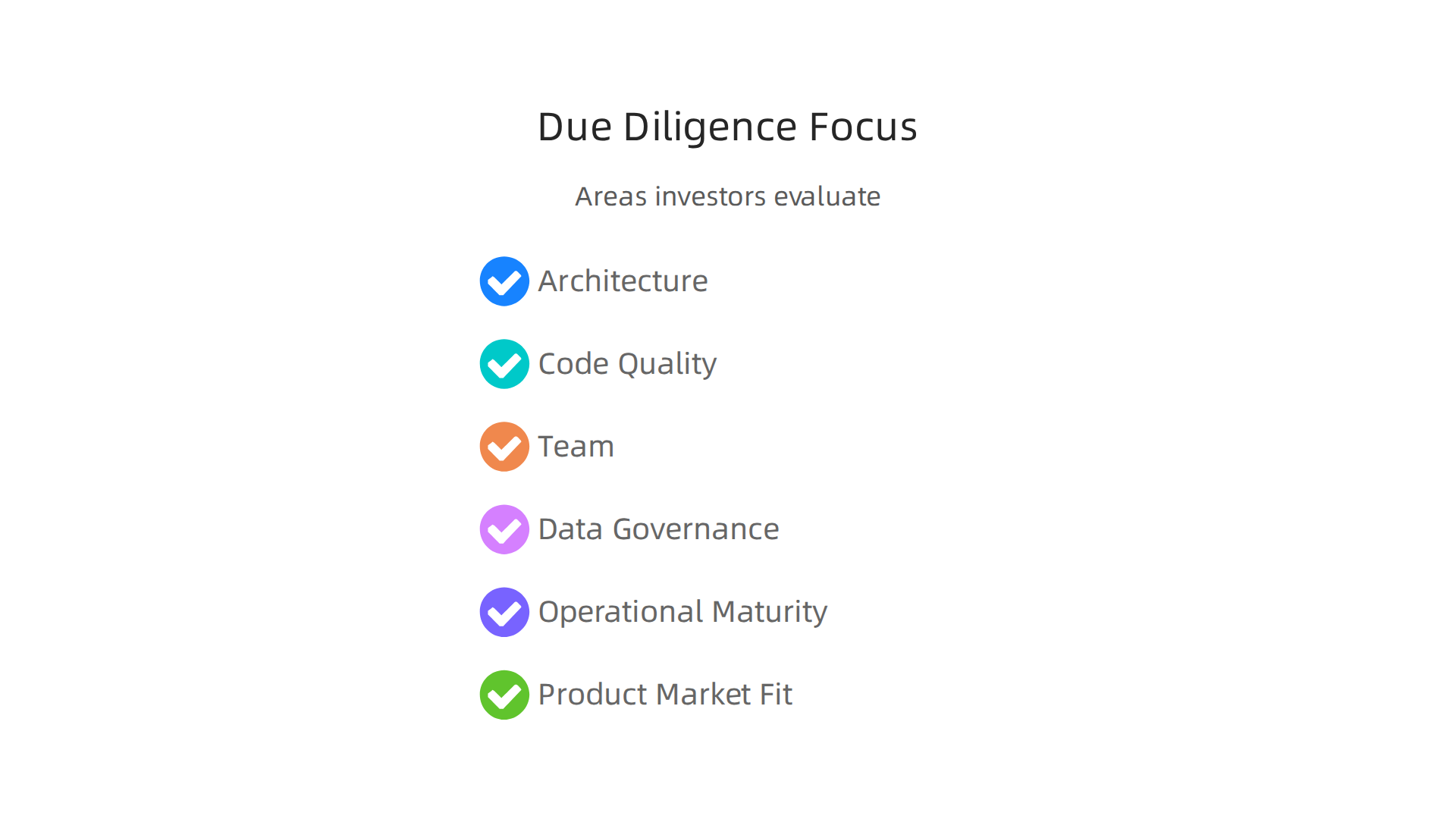
- Architecture and Scalability: Can your system handle lots more users without breaking? They’ll check your setup to make sure it’s built to grow, which is a big part of any Technical Due Diligence Checklist for Startup Investors in 2026. Investors often want to see an architecture diagram that clearly shows how everything connects.
- Code Quality and Security: Is your code well-written and easy to maintain? Is it safe from hackers?
- Team: Do you have the right people to build and manage your tech? Investors consider the team’s skills as part of their Technical Due Diligence For Startups.
But investors also dig into your IS. They want to see how your technology actually supports your business operations and goals. This means looking at:
- Data Governance: How do you collect, store, and use data safely and smartly?
- Operational Maturity: Are your processes clear and efficient? How well does your tech help your team do their jobs?
- Product-Market Fit: How does your whole system meet a clear need in the market?
Showing a strong understanding of both IT and IS helps you prepare for these checks. A solid VC Due Diligence Checklist will cover these areas, ensuring investors know you’ve thought everything through.
Valuation Signals: What Your Words Tell Investors
The way you talk about your "information technology definition" and the broader "information systems vs information technology" picture acts as a signal to investors. If you can clearly explain how your core technology (IT) serves your business’s overall purpose and processes (IS), it shows maturity and reduces risk in their eyes. This makes your startup look more valuable.
Founders who have a deep understanding of their computer systems technology and how it creates a working system for customers and internal teams are often seen as more capable. This signals to investors that you have a clear path to scale, manage risks, and ultimately, deliver strong returns. It’s about showing that your technology isn’t just a fancy tool, but a crucial part of a well-oiled machine ready for growth. Indeed, why founders need a strong technology background for startup fundraising in 2026 cannot be overstated.
Core IT & IS Capabilities Founders Should Document for Investors
Knowing the difference between IT and IS is the first step. The next step is showing investors that you actually have strong IT (your tech tools) and IS (how those tools work with people and processes). This means having certain documents ready.

When investors do their deep dives, they’re really looking for proof that your startup is built on a solid foundation.
Here’s a list of important things founders should write down and be ready to talk about:
- Architecture Overview: Investors want to see a clear map of your technology. This is like a blueprint of your house. It shows how all your different tech pieces work together. You’ll want to show if your system can grow easily when you get more users. Many checklists for investors ask for a detailed technical architecture overview or an architecture diagram that someone outside your company can understand quickly. It helps them see your current setup and if it can handle 2x or even 10x the users without breaking, as noted in a Technical Due Diligence Checklist for Startup Investors in 2026.
- Data Flows: Explain how information moves through your system. Where does customer data go? How is it stored? This helps show your "information systems vs information technology" understanding.
- Integrations: If your tech talks to other apps or services, list them. Show how these connections make your system stronger and more useful.
- Security Posture: In 2026, security is more important than ever. You need to explain how you keep your data and your users safe. This includes things like how you protect against hackers and what your plan is if something goes wrong. A Technical Due Diligence Checklist (54 Items) highlights documented system architecture as a key point.
- Monitoring and Runbooks: How do you watch your system to make sure it’s always working well? What steps do your team take if there’s a problem? This shows you’re prepared for real-world operations.
Having these details ready shows you understand your startup’s core "information technology definition" and how it truly works.
Explaining Trade-Offs to Investors
No startup is perfect, and investors know this. They expect you to have made some tough choices. It’s smart to show how you thought about important trade-offs, like:
- Cost vs. Performance: Did you pick a cheaper tech solution that works "good enough" for now, knowing you might upgrade later? Or did you spend more for top-notch speed from the start? Explain why you made that choice.
- Build vs. Buy: Did you build a new tool yourself, or did you buy an existing solution? There are good reasons for both. Be ready to explain your logic.
Present these decisions clearly and briefly. This proves you’re thoughtful and strategic, not just building without a plan. An Investment Due Diligence Checklist 2026 suggests looking at tech stack assessment and code quality, which relates to these trade-offs.
One-Page Technical Summaries
Investors are busy people. They might not read a 50-page technical document right away. That’s why having a one-page summary for your pitch deck is super helpful. This summary should:
- Give a high-level view of your tech architecture.
- Explain your main tech stack (what programming languages, databases, etc., you use).
- Highlight key security measures.
- Show how your tech can scale.
This kind of concise document can be part of your winning funding package for startup success. It’s a quick way to share big technical ideas without getting lost in too many details. Staying up-to-date on what investors are looking for in tech can give you an edge.
Get clear daily AI updates from The Deep View Newsletter.
The AI Newsletter Worth Reading
Investors don’t just want to see how your technology works; they also want to know it’s safe and follows the rules. This is where security, privacy, and compliance become super important. Having clear answers for these areas helps lower their risk worries and makes your startup look much stronger.
Let’s break down what each of these means and why investors pay close attention.
What is Security?
In simple terms, security is how you protect your company’s valuable information and your customers’ data from bad things happening. This includes keeping it safe from hackers, theft, or accidental loss. For investors, knowing you have a strong security plan means their money and your business won’t be easily put in danger. They want to see that your fundamental information technology definition includes robust protection.
What is Privacy?
Privacy is about how you collect, use, store, and share personal data, making sure you respect people’s rights. It’s not just about keeping data safe (security), but also about using it fairly and letting people know what you’re doing with their information. In 2026, privacy is a huge deal, and mistakes can lead to big fines and a loss of trust. Investors look for clear privacy policies and practices.
What is Compliance?
Compliance means following all the laws, rules, and industry standards that apply to your business. Think of it like playing a game with specific rules. If you break the rules, you can get penalized. For startups, this often means following data protection laws like GDPR in Europe or CCPA/CPRA in California. It also includes industry standards for your type of business. When you show strong compliance, it proves you understand the bigger picture of how your information systems vs information technology fit into the legal landscape.
What Investors Look for in Security, Privacy, and Compliance
To ease investor concerns, you need to show proof that you’re taking these areas seriously. Here’s a checklist of things that can help reduce perceived risk:
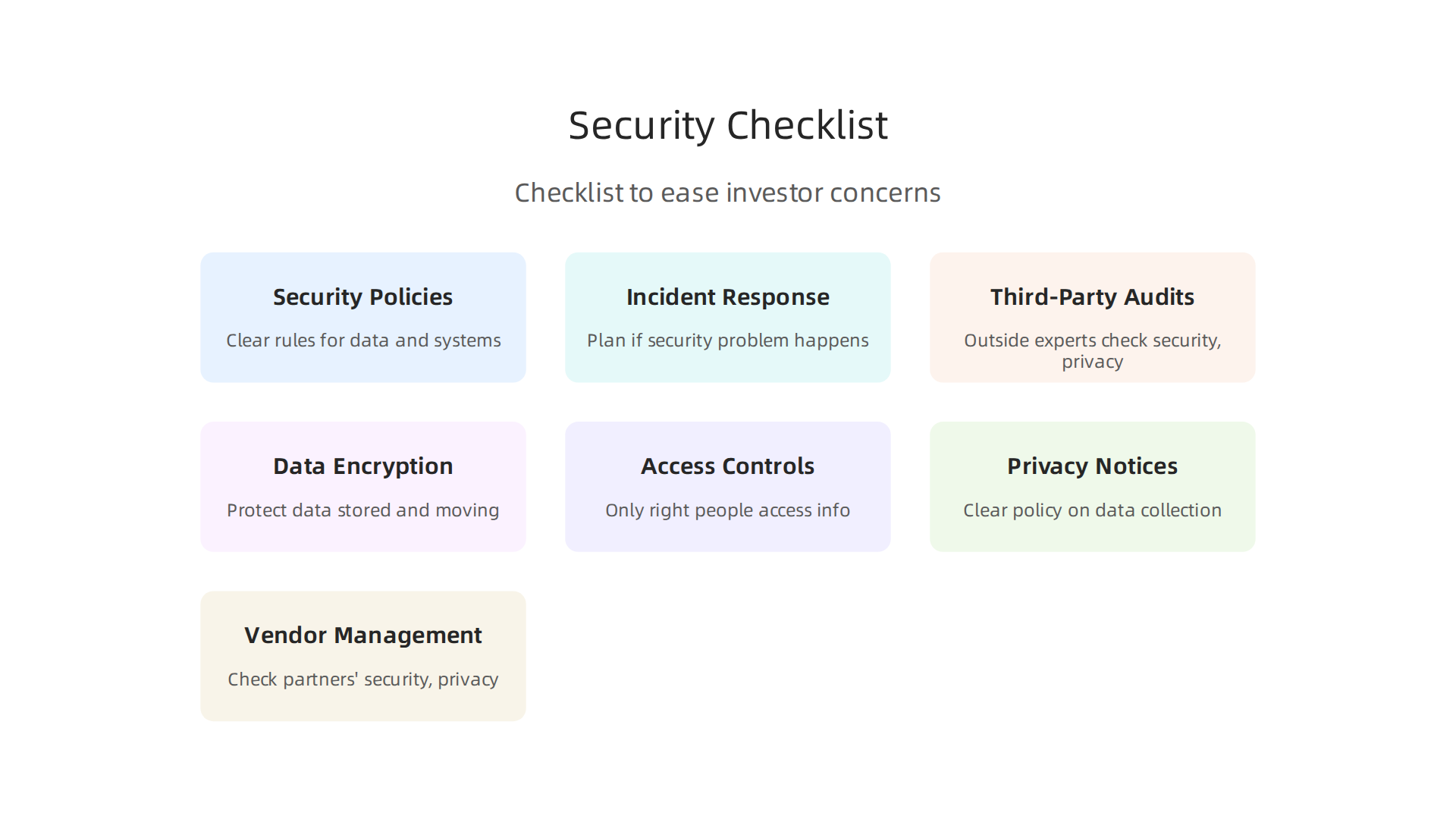
- Security Policies: Have clear written rules about how your team should handle data and keep systems secure. A good Startup Security Checklist 2026 will list key items.
- Incident Response Plan: What’s your plan if a security problem happens? Investors want to know you can react quickly and effectively.
- Third-Party Audits/Certifications: Getting outside experts to check your security and privacy is a big plus. Certifications like SOC 2 Type II or ISO 27001 show you meet high standards. Many startups aim for ISO 27001 for Tech Startups as a sign of global credibility.
- Data Encryption: Show how you protect data both when it’s stored and when it’s moving from one place to another.
- Access Controls: Explain how you make sure only the right people can get to sensitive information. For example, using multi-factor authentication for all important accounts is a must-have for a Startup Security Checklist 2026.
- Privacy Notices: Have a clear privacy policy on your website that tells users what data you collect and how you use it. This is a key part of your Security Checklist 2026.
- Vendor Management: How do you check that the companies you work with (like cloud providers) also have good security and privacy practices?
Investors often review these items as part of their Pre-Fundraise Security Audit for SaaS 2026.
Regulatory Implications for Startups Across Markets
Operating in different countries or even different states can mean facing many different rules. For example, if your startup serves customers in Europe, you need to be compliant with GDPR, which focuses heavily on data privacy. A 2026 GDPR Compliance strategy might even require appointing a local representative if you don’t have an EU office. If you’re based in the US, you might also need to consider state-specific laws like California’s privacy acts.
Keeping up with these rules can be complex, but it shows investors you are prepared for growth and can handle legal challenges. Staying informed with global tech intelligence helps you navigate these different regulatory landscapes. Your ability to manage compliance across different regions is a big factor in an investor’s due diligence data room checklist. They want to know you’re ready for the future, wherever your customers are.
Being ready for the future means more than just following today’s rules. It also means keeping up with new technologies that are changing how we think about "IT" and "IS."

In 2026, things like Artificial Intelligence (AI), edge computing, and observability are not just fancy words. They are changing the basic definition of what information technology is and what investors expect to see.
Emerging trends (AI, edge computing, observability) and how definitions are shifting in 2026
New technologies are changing what founders should include when they talk about their "information technology definition." These shifts also create new signals that tell investors if your startup is truly ready for what’s next.
How AI is Shifting IT
AI is everywhere, and it’s making us rethink how information technology works. It’s not just about using AI in your products. It’s also about how you manage your AI tools, known as ML governance, and how you run and maintain your AI models, called model operations. Investors now look for these things as signs of a smart startup. They want to see that you’re handling AI safely and effectively. Companies are tracking tech signals worth tracking as AI advances to understand these changes.
The Rise of Edge Computing
Edge computing is another big trend. Instead of sending all data to a faraway cloud, edge computing lets devices process information right where it’s collected. Think of your smart home devices or factory robots making decisions instantly, without delay. This change is making the "information systems vs information technology" talk even more interesting. It means your startup might have computing power spread out, which has pros and cons. Investors are watching this closely, especially as small AI models take over to allow for efficient, local AI use with less power needed, according to The Power of Small: Edge AI Predictions for 2026.
Why Observability Matters Now
Observability is about being able to see, understand, and fix problems within your systems easily. Imagine having a super clear dashboard that shows you exactly what’s going on with your technology at all times. With complex AI and edge computing setups, observability becomes super important. It helps you keep everything running smoothly. Experts say that improvements to observability platforms are boosting their use, and companies are turning to observability to help them use AI better. In fact, AI itself is doing more work in observability, as noted in the Top 8 observability trends to watch in 2026. This shows investors that you have a firm grip on your tech.
What Investors Want to See
For investors, these emerging trends mean that your "information technology definition" needs to be wider than before. They don’t just want to know you have good software. They want to know you understand and plan for:
- AI management: How you make sure your AI is fair, safe, and works well.
- Decentralized computing: How you handle data processing in different places.
- System visibility: How you can always see and understand what your tech is doing.
These capabilities are strong investor signals. They show your startup is not just keeping up, but leading the way. To stand out, it’s vital to master mastering the tech adoption curve and effectively communicate your approach to these new areas.
Practical Steps for Founders
To future-proof your technical messaging and attract the next round of funding, here are a few things you can do:
- Show Your AI Strategy: Explain not just what your AI does, but also how you manage its risks and ensure it’s reliable.
- Detail Edge Plans: If you use edge computing, talk about why it’s better for your customers and how you handle the challenges.
- Highlight Observability: Share how you monitor your systems. This shows you’re proactive, not just reactive.
- Stay Informed: Keep up with the latest in these fields. Reading a good tech newsletter can help you stay ahead. You can get clear daily AI updates from The AI Newsletter Worth Reading.
By showing you understand these shifts and have solid plans, you’ll prove your startup is built for the future. Knowing the different tech company categories 2026 can help you frame your startup’s position in this changing landscape.
Summary
This article explains the difference between Information Technology (IT) — the hardware, software, networks and services — and Information Systems (IS), which combines that technology with people, processes and data to create business value. It shows why being precise about these terms matters for startup founders when fundraising: clear messaging reduces confusion, signals maturity, and directly affects valuation, scalability and security perceptions. The piece walks founders through concrete examples to use in pitches, the core IT and IS documents investors expect (architecture diagrams, data flows, integrations, security posture, runbooks), and how to present trade-offs like build vs. buy. It also covers what investors look for in technical due diligence, what security/privacy/compliance proof to have ready, and how one-page technical summaries help busy investors. Finally, the article highlights emerging 2026 trends — AI governance, edge computing, and observability — and gives practical steps founders can take to future-proof their technical story and attract more investor interest.