

Why Finding the Right Private and RIA Investors Matters
Starting a new company is exciting, but finding money to grow it can feel like a big puzzle. Many founders think they just need any money. But actually, it’s about finding the right money from the right investors for startup companies.

If you send your business idea to everyone you can think of, you’ll likely waste a lot of time. What you really need is to find people or groups who truly understand what your startup does and want to help it succeed.
In 2026, getting money for your startup is still very competitive. While US startups raised over $400 billion in the first half of 2026, showing a lot of activity, investors are being more careful about where they put their money. For example, in Japan, the number of startups getting funding went down, even though the total money raised stayed about the same. This means that investors are choosing fewer companies, so you need to make sure your startup stands out to the right ones.
This article will help you understand how to find and connect with the best private investors and RIA investors (Registered Investment Advisers). We will give you clear, proven steps to find these important funders, figure out if they are a good fit for your company, and talk to them the right way. Our goal is to make your journey of startup raising much easier and more successful. If you are a founder looking to get money, learning about these specific types of investors can make a huge difference in how you secure startup capital. For a broader look at getting funds, you can read our guide on The Founders’ Guide to Securing Startup Capital in 2026.
Knowing how to find these specific investors is key. It helps you avoid sending your pitch to people who won’t be interested and instead focus your efforts where they will count the most.
For even more up-to-date insights on the wider tech market and how it impacts startups and investments, make sure to get The AI Newsletter Worth Reading. It gives clear daily updates on AI, which is a big part of the tech world right now.
Understanding the Investor Landscape: Angels, VCs, RIAs, Family Offices, and High-Net-Worth Individuals
To truly find the right money for your business, you need to know who the different kinds of investors are and what they look for. It’s like knowing which fishing bait works for which fish. Different investors for startup companies have different goals, how much money they like to invest, and what stage of a company they prefer to support. Let’s look at the main types you’ll meet in 2026.
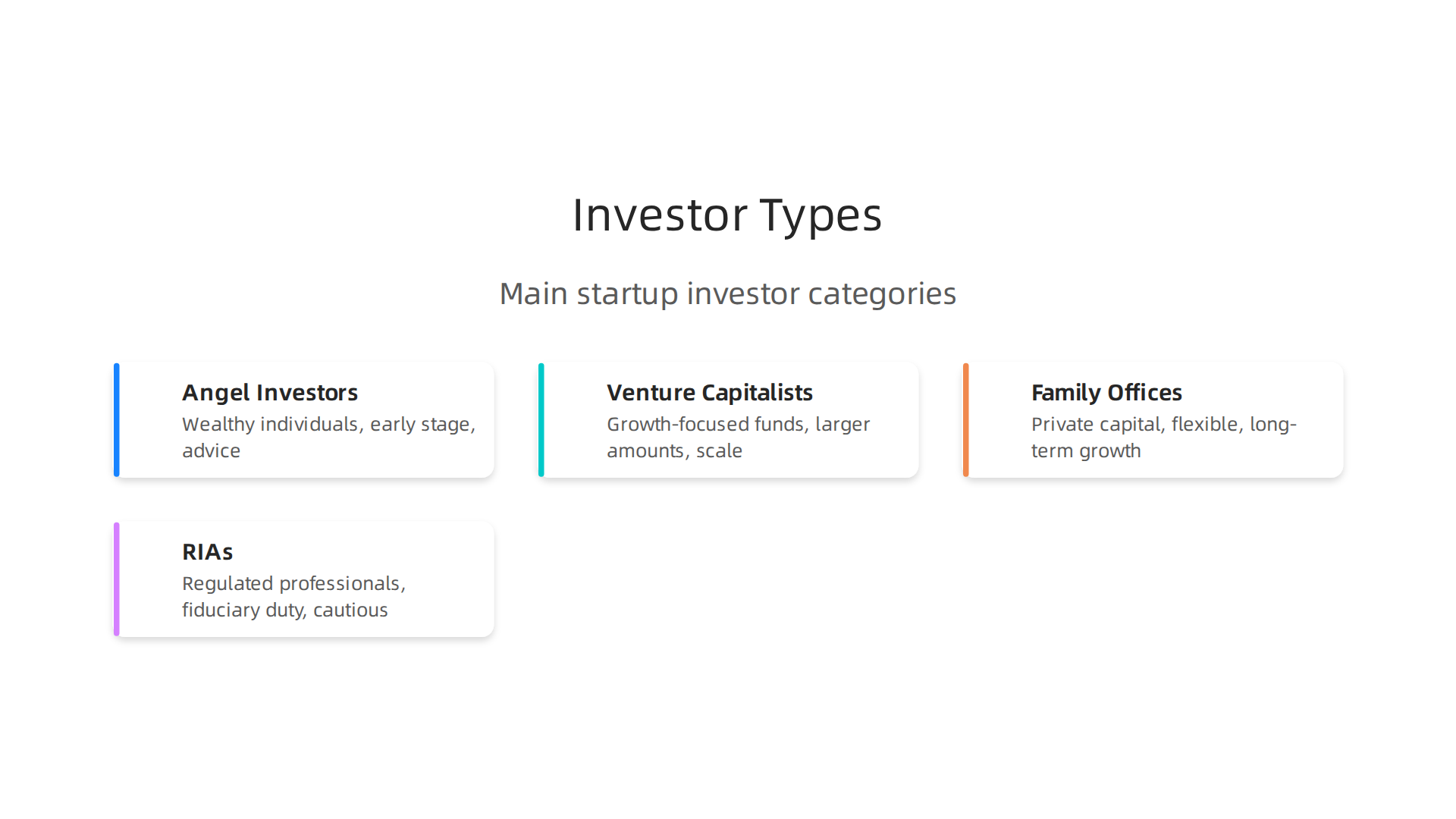
Angel Investors: Early Support and Big Ideas
Angel investors are usually wealthy individuals who invest their own money directly into new companies. They often love being part of a startup’s journey and might offer advice and connections along with their funds. Angel investors usually step in very early, during the "pre-seed" or "seed" stages when a company is just starting out and might only have an idea or a very early product.
In 2026, a typical angel investment for pre-seed startups can range from $25,000 to $250,000, with many checks falling around $75,000 to $100,000. Sometimes, a group of angels will combine their smaller investments to form a larger funding round. If you’re looking for early support and mentorship, learning more about how these funders work can be very helpful. Check out our guide on Mastering the Angel Investment Network to Secure Seed Funding for Your Startup.
Venture Capitalists (VCs): Growth-Focused Funds
Venture Capital (VC) firms are companies that manage money from many different people and organizations. They invest in startups that they believe will grow very fast and bring in big returns. VCs usually invest larger amounts than angels and often look for companies that have already shown some early success, like having a working product or some customers.
VCs tend to invest in seed stages and beyond, such as Series A, B, and C rounds. While angel checks can be smaller, seed-stage VC investments in 2026 can range widely, from $200,000 to $2 million, with many deals around $500,000 to $750,000, according to data on investor profiles. For companies ready to scale, VCs are a common path for startup raising. To dive deeper into securing this type of funding, explore How to Get Venture Capital Funding: A Founder’s Guide for 2026.
Family Offices and High-Net-Worth Individuals (HNWIs): Flexible Private Capital
Family offices are private companies set up to manage the investments and wealth of a single wealthy family. High-net-worth individuals (HNWIs) are, as the name suggests, people with a lot of money. Both family offices and HNWIs are types of private investors. They can be very flexible in their investment choices. Sometimes they act like angels, investing small amounts in early-stage startups they find interesting. Other times, they might invest much larger sums in more mature companies, focusing on long-term growth or specific industries that align with their family’s values or business interests. Their decisions are often less bound by strict rules compared to VCs, allowing them to take unique approaches to investments.
Registered Investment Advisers (RIAs): The Regulated Professionals
Registered Investment Advisers (RIAs) are financial experts or firms that give investment advice and manage money for their clients. They are different from other private investors because they have to follow strict rules set by the government, like the SEC in the US. This means they are very careful about where they put their clients’ money. In 2025, RIA firms managed an astounding $176.8 trillion in assets, showing their massive presence in the financial world.
RIAs don’t usually invest directly in very early-stage startups. Instead, they might invest their clients’ money into larger funds that then put money into startups, or they might help very wealthy clients make direct investments in more established private companies. When you’re looking for RIA investors, remember they prioritize safety and long-term, stable growth for their clients’ portfolios. Their motivations are often tied to their duty to their clients and the legal rules they must follow. This makes them quite different from an angel investor who might invest based on personal passion for an idea. Understanding these differences helps you tailor your approach to finding the right investors for startup companies.
Registered Investment Advisers (RIAs) are bound by certain rules that shape how they approach investments, especially when it comes to investors for startup companies. Unlike angel investors or even some family offices, RIAs have a special duty, called a "fiduciary duty," to always act in their clients’ best interests. This means they must choose investments that are suitable for their clients and manage risk carefully.
What RIAs Look For in Investments
Because of their fiduciary duty, RIAs typically aim for stable, long-term growth for their clients. Direct investments into early-stage startups are usually very risky and can tie up money for a long time. For most clients, this kind of investment doesn’t fit the RIA’s cautious approach.
However, some RIAs do help very wealthy clients access private markets. These clients often have specific goals or are already "accredited investors," meaning they meet certain income or wealth requirements set by the government. For these special cases, RIAs might recommend a small part of a client’s money go into:
- Venture Capital Funds or Private Equity Funds: These are larger funds that then invest in many startups or private companies. This way, the client gets a small piece of many different private businesses, which helps spread out the risk. Learning about these funds can be helpful if you’re exploring private equity funds.
- More Mature Private Companies: These are companies that are no longer in their very early stages and have a proven product or service. They are often seen as less risky than brand-new startups.
For startup founders seeking RIA investors, it’s important to know that most RIAs won’t invest directly in your seed round. Instead, focus on showing how your company could be a good fit for a larger, established private fund that RIAs might recommend to their high-net-worth clients.
Following the Rules: Compliance and Legal Constraints
RIAs operate under strict government rules, mainly from the SEC (Securities and Exchange Commission). These rules are always being updated. For example, in 2026, the SEC has proposed increasing the asset amount that defines a "small entity" RIA, which could change how many RIAs are seen under simpler rules for smaller firms. This shows how regulators keep a close eye on the financial world. You can read more about these proposed changes in the SEC’s Proposed Amendments to Small Entity Definitions.
Other important rules for RIAs include:
- Accredited Investor Rules: As mentioned, many private investments are only open to people who are "accredited investors." RIAs must make sure their clients meet these rules before suggesting such deals.
- Data Protection: RIAs must also follow rules to protect client information. For example, new requirements for Regulation S-P mean smaller RIAs need to be ready by mid-2026 to protect client data, as noted in the RIA Compliance Blog.
- Anti-Money Laundering (AML) Rules: As of January 1, 2026, RIAs also face strict anti-money laundering rules from FinCEN, which affects how they manage client money and communications. You can find more details about how RIAs face day-one AML scrutiny.
- Reporting: RIAs have to keep very detailed records and report on their investments. This high level of oversight makes it tricky for them to invest in early-stage startup raising that often comes with less clear financial data and higher risk.
Because of these rules, RIAs often focus on helping clients manage their overall wealth, including how they approach all kinds of investments. They are a crucial part of the financial landscape, but their role with direct startup investments is different from that of an angel or venture capitalist.
To successfully find capital, founders need to understand what each type of investor is looking for. Knowing the rules that guide different private investors, like RIAs, helps you target your efforts more smartly.
Staying informed about technology and market trends is key for any founder. For daily updates on AI and technology that can help you shape your fundraising strategy, we recommend The AI Newsletter Worth Reading.
Finding the right investors for startup companies is like searching for a needle in a haystack, but knowing where to look can make it much easier. Since RIAs often approach investments carefully, as we discussed, founders need to understand the best places to connect with various private investors, including those working with RIAs.
Where to Find Potential Investors
To successfully find capital for your startup raising, you’ll want to explore several key channels:
-
Commercial Databases: These are powerful tools that list many investors, including venture capital firms, angel investors, family offices, and sometimes even the specific funds RIAs might recommend to their clients. Services like PitchBook or Crunchbase are popular, giving you details on who invests in what kind of company. Other specialized databases can help find RIA investors directly. For example, platforms like Altss provide extensive data on institutional investors, including over 38,500 SEC- and state-registered investment advisers. Another helpful resource is Dakota Marketplace, which offers a guide on top databases for connecting with RIAs in 2026, showing how active they are in the market, with RIAs managing $176.8 trillion in assets in 2025 alone. You can learn more about these tools in the Top Databases for Calling on RIAs: 2026 Guide and from the Family Office, LP, GP & RIA Database.
-
Industry Conferences and Events: Attending events related to your industry or to startup funding is a great way to meet investors face-to-face. These events often include pitch competitions, networking sessions, and presentations by leading investors. Keep an eye out for regional or national tech conferences and investor summits.
-
Local Investor Networks: Many areas have groups of angel investors who team up to fund local startups. These "angel networks" can be a great first step for early-stage companies. Learning how to connect with these groups can be a game-changer for securing initial funding. You can get more insights into building these connections by understanding mastering the angel investment network.
-
Referral Channels: Often, the best introductions come from people you already know. Mentors, advisors, other founders, or even your lawyers and accountants might have connections to investors who could be a good fit for your startup. A warm introduction is usually more effective than a cold email. It’s crucial to know how to pick the right people to help you.
Smart Search Strategies for Founders
When using databases or researching investors, don’t just look for "investors." Be smart about your search:
- Define Your Ideal Investor: Think about what kind of investor matches your startup. Do you need someone who invests in your specific industry, at your stage of growth, or in your geographic area?
- Use Boolean Queries: In databases, you can use special search terms like "AND," "OR," and "NOT" to narrow down your results. For example, you might search for "venture capital AND AI startup AND seed round" or "angel investor NOT biotech."
- Look at Investment Portfolios: See what other companies an investor or fund has supported. This tells you a lot about their interests and typical check sizes. For instance, in 2026, angel and pre-seed checks typically range from $25,000 to $250,000, with many angel networks pooling smaller individual investments into larger syndicated rounds.
- Research RIA Funds: If you are targeting RIAs, remember they often invest through funds. Search for venture capital or private equity funds that focus on areas relevant to your startup. Then, look for RIAs that allocate client money to those types of funds. This indirect path can still lead to significant capital.
- Evaluate Advisors Carefully: As you look for guidance in your fundraising journey, remember that not all advisors are created equal. Knowing how to evaluate capital advisors is key to getting the best help.
By using these strategies, you can spend less time guessing and more time connecting with the right private investors who are genuinely interested in what you’re building.
After you find potential investors for startup companies, the next big step is to make sure they are a good fit.

It is not just about getting money. It is about finding the right partners who truly believe in your vision and can help your startup grow. This means looking closely at what they offer, how they act, and if their goals match yours.
Key Criteria for Investor Fit
When you are trying to find private investors, including any RIA investors, think about these important points:
- Stage Experience: Does the investor have a history of funding companies at your current stage? For example, some investors only put money into very new companies (seed stage), while others prefer companies that are already growing quickly (Series A or B). An investor who understands your stage of development will be more helpful.
- Sector Focus: Do they invest in your specific industry? An investor who knows a lot about your market, like AI, healthcare, or hardware, can bring valuable insights and connections. For instance, in 2026, companies focused on hardware, crypto, gaming, and AI saw some of the largest investment rounds and high valuations, while healthcare and biotech were more moderate in comparison. AI-native companies, especially, have shown strong performance, making them attractive for investors. You can learn more about these market trends in the Q1 2026 Venture Beacon: Key VC Market Trends and the U.S. Completed Financings Guide 2026.
- Check Size: Does their usual investment amount fit your needs? If you are a startup raising seed funding, you will need an investor who typically writes smaller checks. For example, in 2026, angel and pre-seed checks often range from $25,000 to $250,000. Seed round checks can range from $200,000 to $2 million. You can find more details on typical funding amounts in What 1,100 investor profiles tell us about check sizes in 2026.
- Track Record: Look at the other companies an investor has supported. Have those companies been successful? What kind of results have they seen? This can tell you a lot about an investor’s ability to pick winners and help them succeed.
- Value-Add: Good investors offer more than just money. They can provide advice, open doors to new customers or partners, and help with hiring. Think about what extra help they can bring to your team.
For founders who are particularly interested in the fast-paced world of AI, staying updated on the latest trends and valuations is key. Get clear daily AI updates from The AI Newsletter Worth Reading.
Red Flags and Reputation Checks
It is important to watch out for any warning signs when talking to investors. Your relationship with them is like a partnership, and you want it to be strong.
- Investor Behavior: Pay attention to how investors treat you and your team. Do they listen? Are they respectful? Do they seem to have realistic expectations? A study found that founders feel a strong responsibility to their early-stage investors, highlighting the deep bond that forms. Learn more in the Startup Founders’ Psychological Con- tracts with Early Stage Investors. If something feels off, it probably is.
- Term Sheet Language: The "term sheet" is a document that outlines the basic terms of the investment. It is very important to understand every part of it. Sometimes, terms can be unfair or put too much control in the investor’s hands. In 2026, there have been some concerns about valuations, though many believe valuations still match company fundamentals. For example, some AI software companies saw very high valuations, with early-stage AI apps trading at 8-12x EV/Revenue and LLMs at 25-40x. This shows that valuations can change a lot depending on the industry. You can read more about this in the Hamilton Lane 2026 Market Overview and the AI Software Valuation Report — Q1 2026. Do not be afraid to ask for changes if something does not seem right.
- Reputation Checks: Before you commit, talk to other founders who have worked with these investors. Ask them about their experiences. Good investors will have a strong, positive reputation. Knowing how to get venture capital funding means also knowing who you are getting it from.
Alignment Checks
Finally, make sure that the investor’s long-term vision and values match yours. Do they understand your company’s mission? Are they on board with your plans for growth? A good partnership means working together towards common goals. For more help on this, explore our guide on The founders strategic guide to equity investment companies in 2026.
By carefully checking these things, you can choose investors who will truly help your startup succeed, not just provide a cash injection. This careful approach is key to any successful startup raising capital.
After you have carefully chosen the right private investors or RIA investors for your startup, the next big step is to actually talk to them. It is important to know how to reach out, what to say, and when to follow up. This way, you can get the attention of the best investors for startup companies.
A Smart Way to Reach Out to Investors
Think of your outreach as a clear, friendly chat. Here is a simple plan to follow:
- Do Your Homework: Before you send any message, learn about the investor. What companies have they invested in before? What do they like to talk about? This helps you make your message special for them. Knowing your investor’s background also helps you secure more capital for your startup. You can find more tips in this guide on investor outreach for startups.
- Make it Personal: Do not send the same message to everyone. Show the investor you know about them. Maybe they invested in a company like yours, or they wrote something interesting. Mentioning this makes your message stand out. Experts say that mentioning their portfolio or a recent article is key for personalization when you reach out to investors.
- Be Clear About What You Need: Investors are busy. Get straight to the point. What does your company do? What problem does it solve? And what exactly are you asking for? A specific request for a short call is often best.
- Show Your Progress: Investors want to see that your startup is already doing well. Share some proof, like how many customers you have, how much money you are making, or how many people are waiting to use your product. This is called "traction" and it helps show you are worth meeting.
- What Happens Next?: Always make it clear what the next step is. For example, suggest a quick 15-minute call. This makes it easy for the investor to say yes and move things forward.
Warm Introductions are Best
The best way to meet investors is through someone they already know and trust. This is called a "warm introduction."

It means another founder, advisor, or mutual friend connects you to the investor. Warm introductions lead to meetings much more often than cold emails, as they help you get investors to read your deck.
- How to Get a Warm Intro: Ask people in your network if they know the investors you want to meet. Look at who your current investors know, or check out founders from companies the target investor has funded. They might be able to introduce you. This is seen as the most effective way to reach Series A investors.
- Cold Outreach: If you cannot get a warm introduction, then sending a "cold email" is your last option. These emails need to be very good to get a reply.
Practical Tips for Your Messages
When you send an email or a LinkedIn message, keep it short and easy to read. Most investor outreach emails should be under 200 words.
- Subject Line: Make it catchy but clear. Include your company name, what you do, and maybe your funding stage. For example: "Company Name A: AI Tool for Small Businesses (Seed Round)." This helps your email get noticed, according to investor pitch email templates.
- Opening: Start by saying why you are contacting them. Mention something specific you found about their work or investments.
- Your Company: Briefly explain what your company does in one sentence.
- Your Success: Share a key success point. This could be how many users you have, your recent sales, or a big partnership.
- The Ask: Ask for a quick chat, like 15-20 minutes.
- Deck Link: You can include a link to your pitch deck, but sometimes it’s better to share it after they agree to a call. For more guidance on sending your deck, check out email templates and best practices for sending a pitch deck to investors.
Here’s an idea of what a good cold email might look like:
Subject: [Your Company Name] – [Your Category] – [Funding Stage]
Hi [Investor Name],
I saw your recent investment in [Portfolio Company Name] and was impressed by [specific detail about their investment]. Our company, [Your Company Name], is building [one-line description of what you do] and we’ve already achieved [mention a key traction metric, e.g., $X revenue, Y users, Z pilot programs].
We are currently a startup raising [funding amount/stage] to [what you’ll use the money for]. I think our vision aligns well with your interest in [specific industry/theme].
Would you be open to a brief 15-minute call next week to learn more?
Best,
[Your Name]
You can find more helpful guides, including a list of 29 investor and startup email templates to help you craft effective messages.
Following Up
If you do not hear back right away, it is okay to send a gentle reminder. Send one follow-up message about a week after your first outreach. Keep these follow-ups short, too. Sometimes, investors miss emails, or they are just very busy. Persistence is important when you are a startup raising money. To get more strategic insights into securing funding, consider our guide on mastering the angel investment network.
When you are looking for investors for startup companies, knowing the best way to get in touch is key. We have already talked about how warm introductions are the best way to get noticed. These happen when someone an investor trusts introduces you. It is much more likely to lead to a meeting than sending an email out of the blue. Getting a good introduction is especially important for reaching Series A investors, which means they lead to meetings 3 to 5 times more often than cold emails, according to one guide on investor outreach for startups.
To get a warm intro, ask around in your network. Check with your current investors or advisors if they know the private investors or RIA investors you want to meet. You can also look at companies an investor has already put money into and ask those founders for an introduction. This strategy helps a startup raising capital connect with the right people.
Cold Outreach: When You Have No Other Way
If you cannot find a warm introduction, then cold outreach is your next step. This means sending an email to an investor you do not know. These messages need to be very well-made to get a reply.
Here are some tips for cold emails:
- Keep it short: Your email should be under 200 words. A short, clear email is easy for busy investors to read quickly, as noted in a guide on Investor Outreach Emails: Templates That Get Replies.
- Catchy Subject Line: Make your subject line clear and interesting. Include your company name, what you do, and your funding stage. For example, "Company Name: Health Tech (Seed Round)" helps your email stand out, based on advice from Investor Pitch Email Templates.
- Personal Touch: Start by saying why you picked them. Show you have done your homework. Maybe you mention a company they invested in or something they wrote.
- What You Do: Clearly state what your company does and the problem it solves in one simple sentence.
- Your Success: Share one big success, like how many customers you have or how much money you are making. This is called "traction" and shows your startup raising money is worth their time.
- Clear Ask: Ask for a quick, specific thing, like a 15-minute call.
- Pitch Deck: You can add a link to your pitch deck.
- Follow Up: If you do not hear back, send a polite reminder about a week later.
Remember, every part of your cold email should be concise, show your metrics, be easy to read, and make it simple for the investor to take the next step. You can find more helpful messages in these 29 Investor, Fundraising & Startup Email Templates. For more detailed strategies on securing capital, consider exploring The Founders’ Guide to Securing Startup Capital in 2026.
Staying updated on broad tech trends, especially in AI, can also give your startup an edge. Get clear daily AI updates from The AI Newsletter Worth Reading.
After you find the right investors for startup companies, the next big step is to agree on how the money deal will work. This means understanding different ways investors can put money into your company and what rules you need to follow.
Common Ways Investors Put Money into Startups
There are a few main ways private investors and RIA investors might structure their deals with a startup raising capital.
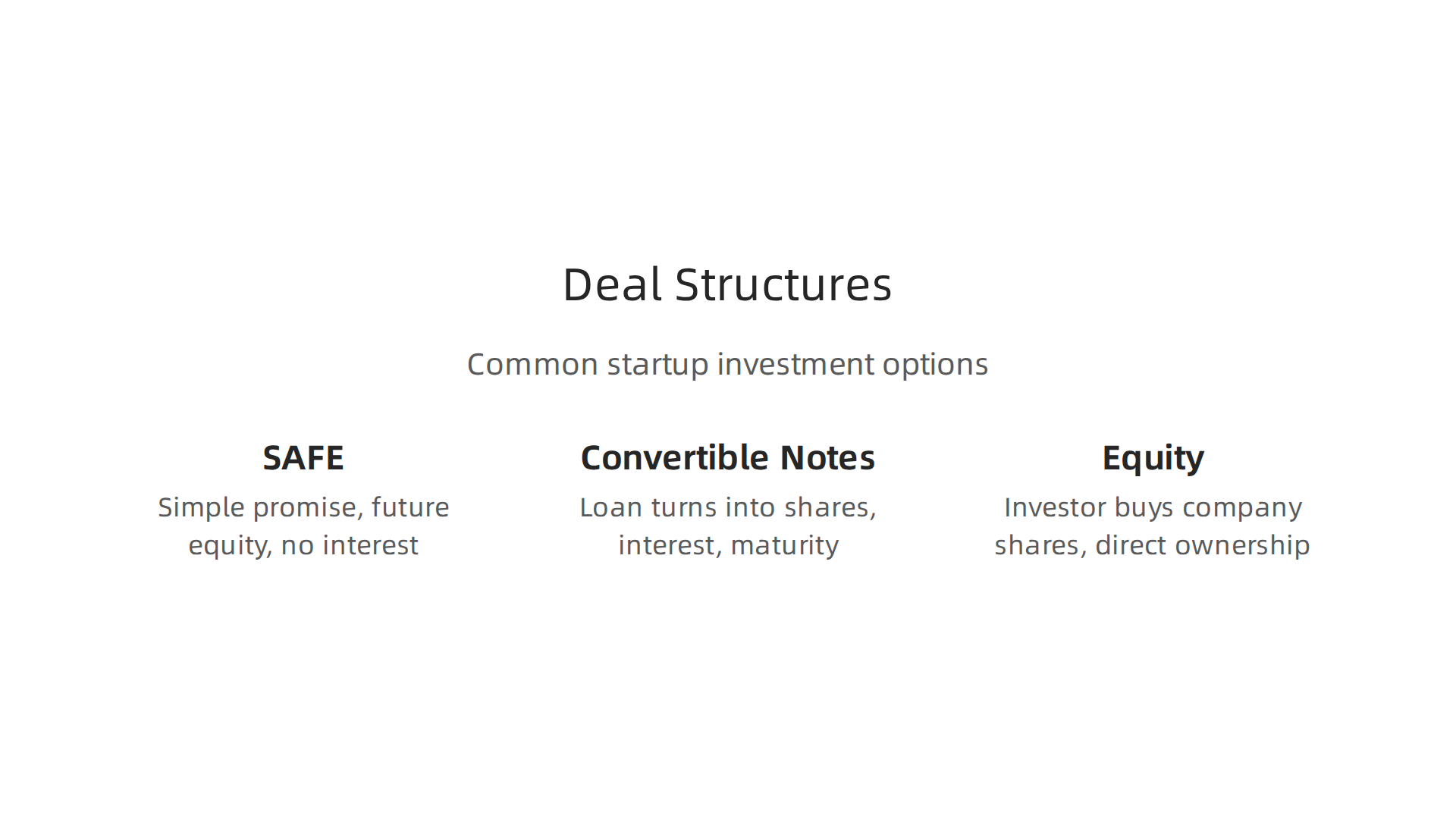
Each has its own rules.
-
SAFE (Simple Agreement for Future Equity)
A SAFE is a simple promise. You get money today, and the investor gets the right to receive shares in your company later. This usually happens when your company raises a bigger round of funding at a set price. SAFEs are popular because they do not have an interest rate or a date when the money must be paid back, which makes them easier for young companies. Think of it as "convertible equity" because it is not debt and aims to become shares later on. A SAFE is a flexible agreement between an investor and a startup where the investor gets a contractual right to buy shares in the future, often when a specific event happens, like a priced funding round. You can learn more about how SAFEs work in this SAFE Financing: 2026 Guide. -
Convertible Notes
Convertible notes are a type of loan at first. An investor gives you money, and you promise to pay it back with interest by a certain date. However, instead of paying cash back, the loan usually turns into shares of your company at a later fundraising round. Key parts of a convertible note often include an interest rate, a maturity date (when it needs to be repaid or converted), a discount rate, and sometimes a valuation cap. This helps investors get a better deal when their loan turns into shares. These are short-term loans that turn into equity later, often having terms like interest and a due date. For more details on these agreements, see this guide on SAFEs, Convertible Notes, and Priced Rounds. -
Equity
This is the most straightforward. An investor buys a piece of your company right away. They become a shareholder and own a certain percentage of your business. This usually happens in later funding rounds when your company’s value is more clearly set. Investors typically get preferred shares, which come with certain protections and rights that common shares do not have.
How Private Investors and RIA Investors See Things Differently
Private investors might be more flexible with simpler structures like SAFEs, especially for very early-stage startups. They might focus more on the team and the big idea.
RIA investors, which are Registered Investment Advisors, often manage money for many people. They tend to be more careful and might prefer more formal deal structures. They have strict rules they must follow when investing, so they need everything to be well-documented and compliant. This means they often need clear terms sheets, which lay out the main parts of the investment. For insights on all types of funding, check out Smart Capital Solutions for Every Startup Funding Stage.
Following the Rules: Compliance for Founders
When you are a startup raising money, especially from RIA investors, you need to be ready for strict rules and paperwork. This is called compliance. In 2026, there are some important things to keep in mind:
- Due Diligence: Investors will dig deep into your company’s finances, legal standing, and team. Make sure all your documents are clear and ready.
- Regulatory Changes: Rules are always changing. For example, the SEC has proposed changes to how "small entities" like some RIAs are defined. These changes could affect how many RIAs fall under certain rules. Also, new anti-money laundering rules came into effect in January 2026, requiring RIAs to be very careful about where their money comes from and goes. An RIA Compliance Checklist can help you prepare for key obligations. Smaller RIAs will also need to meet new privacy rules by mid-2026, which started with bigger firms in late 2025.
- Documentation: Always have clear legal documents for your deals. This includes term sheets, which outline the main terms of the investment. For convertible notes, these would specify the interest rate, maturity date, and how it turns into equity.
- Working with Experts: It is smart to work with lawyers who know a lot about startup investments. They can help make sure your deal terms are fair and that you follow all the necessary rules.After you find the right investors for startup companies, the next big step is to agree on how the money deal will work. This means understanding different ways investors can put money into your company and what rules you need to follow.
Common Ways Investors Put Money into Startups
There are a few main ways private investors and RIA investors might structure their deals with a startup raising capital. Each has its own rules.
-
SAFE (Simple Agreement for Future Equity)
A SAFE is a simple promise. You get money today, and the investor gets the right to receive shares in your company later. This usually happens when your company raises a bigger round of funding at a set price. SAFEs are popular because they do not have an interest rate or a date when the money must be paid back, which makes them easier for young companies. Think of it as "convertible equity" because it is not debt and aims to become shares later on. A SAFE is a flexible agreement between an investor and a startup where the investor gets a contractual right to buy shares in the future, often when a specific event happens, like a priced funding round. You can learn more about how SAFEs work in this SAFE Financing: 2026 Guide. -
Convertible Notes
Convertible notes are a type of loan at first. An investor gives you money, and you promise to pay it back with interest by a certain date. However, instead of paying cash back, the loan usually turns into shares of your company at a later fundraising round. Key parts of a convertible note often include an interest rate, a maturity date (when it needs to be repaid or converted), a discount rate, and sometimes a valuation cap. This helps investors get a better deal when their loan turns into shares. These are short-term loans that turn into equity later, often having terms like interest and a due date. For more details on these agreements, see this guide on SAFEs, Convertible Notes, and Priced Rounds. -
Equity
This is the most straightforward. An investor buys a piece of your company right away. They become a shareholder and own a certain percentage of your business. This usually happens in later funding rounds when your company’s value is more clearly set. Investors typically get preferred shares, which come with certain protections and rights that common shares do not have.
How Private Investors and RIA Investors See Things Differently
Private investors might be more flexible with simpler structures like SAFEs, especially for very early-stage startups. They might focus more on the team and the big idea.
RIA investors, which are Registered Investment Advisors, often manage money for many people. They tend to be more careful and might prefer more formal deal structures. They have strict rules they must follow when investing, so they need everything to be well-documented and compliant. This means they often need clear terms sheets, which lay out the main parts of the investment. For insights on all types of funding, check out Smart Capital Solutions for Every Startup Funding Stage.
Following the Rules: Compliance for Founders
When you are a startup raising money, especially from RIA investors, you need to be ready for strict rules and paperwork. This is called compliance. In 2026, there are some important things to keep in mind:
- Due Diligence: Investors will dig deep into your company’s finances, legal standing, and team. Make sure all your documents are clear and ready.
- Regulatory Changes: Rules are always changing. For example, the SEC has proposed changes to how "small entities" like some RIAs are defined. These changes could affect how many RIAs fall under certain rules, as noted in the article SEC Proposes Amendments to Small Entity Definitions. Also, new anti-money laundering rules came into effect in January 2026, requiring RIAs to be very careful about where their money comes from and goes. An RIA Compliance Checklist can help you prepare for key obligations. Smaller RIAs will also need to meet new privacy rules by mid-2026, which started with bigger firms in late 2025.
- Documentation: Always have clear legal documents for your deals. This includes term sheets, which outline the main terms of the investment. For convertible notes, these would specify the interest rate, maturity date, and how it turns into equity.
- Working with Experts: It is smart to work with lawyers who know a lot about startup investments. They can help make sure your deal terms are fair and that you follow all the necessary rules.
Now that you know about the different money deals, it is time to put everything together into a plan. Raising money for your startup can feel like a big journey. Here is a simple map to help you find the right investors for startup companies and reach your funding goals.
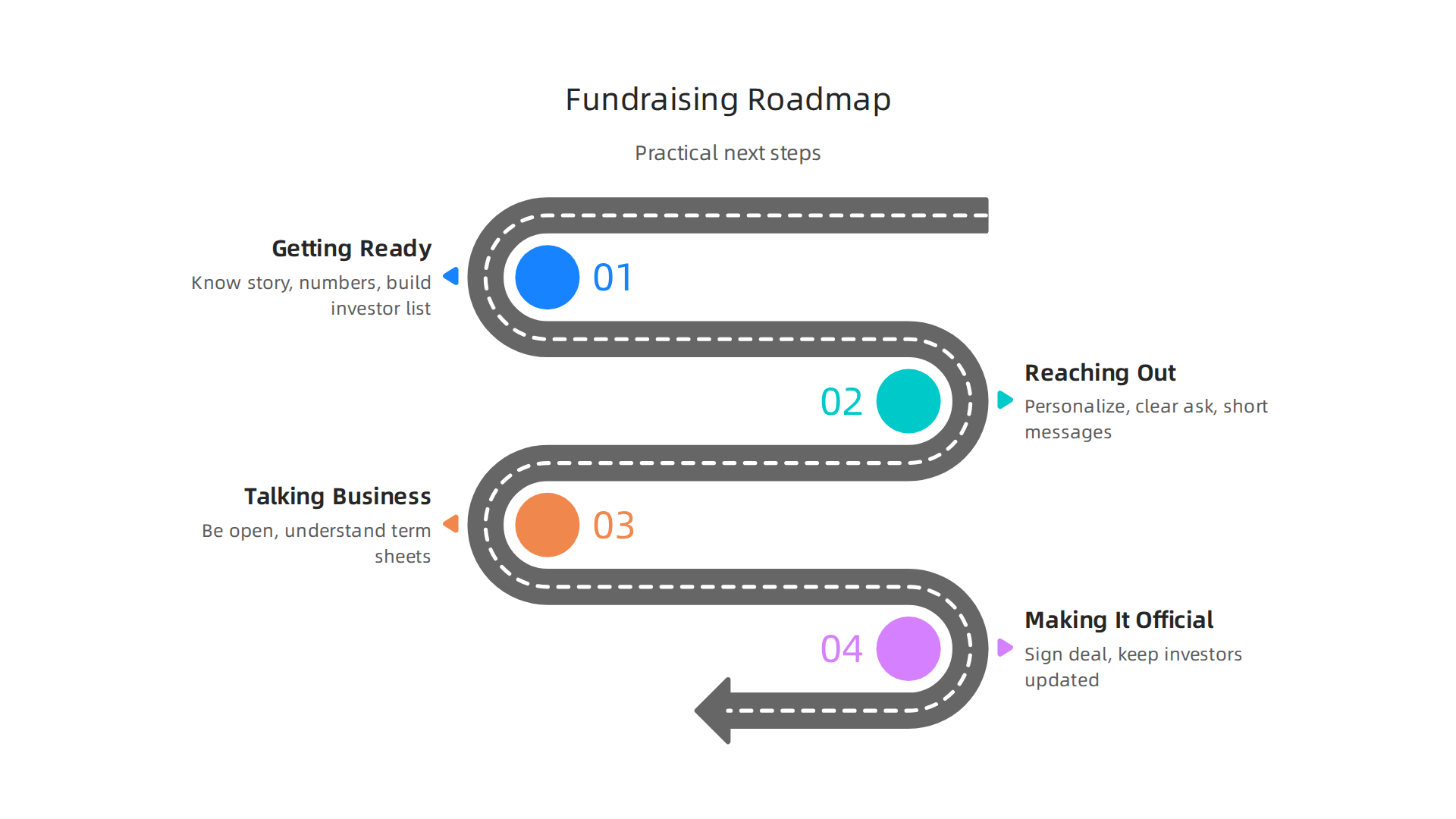
Pulling it together: a practical fundraising roadmap and next-step checklist
To successfully get money for your startup, you need a clear path. Think of it as a few main steps: getting ready, reaching out, talking business, and making it official.
Step 1: Getting Ready (Before You Reach Out)
Before you even think about contacting private investors or RIA investors, you need to do some homework.
- Know Your Story: Can you explain what your company does, what problem it solves, and why it will be huge in just a few sentences? Practice your pitch until it is super clear.
- Know Your Numbers: Have all your financial information ready. This means knowing how much money you need, how you will use it, and what your expected sales look like.
- Build Your Investor List: Think about what kind of investors fit your company. Are they interested in your type of business? Do they invest at your stage? It is best to get a warm introduction to investors if you can, as this often works better than cold emails, according to experts. You can learn more about finding the right partners in How to Evaluate Capital Advisors for Startup Funding.
- Prepare Your Documents: This includes your pitch deck (a short presentation about your business), a simple one-page summary, and any important legal papers.
Step 2: Reaching Out (Connecting with Investors)
Once you are ready, it is time to start talking to investors.
- Personalize Your Outreach: Do not send the same email to everyone. Make each message special by mentioning why you think this specific investor would be a good fit. Maybe you know they invested in a similar company or wrote an article you liked.
- Keep it Short and Sweet: Investors are busy people. Your first message should be under 200 words, focusing on what your company does and why it is exciting, says fundraising experts. Make sure to highlight any success you have had, like how many users you have or how much money you are making.
- Be Clear with Your Ask: State clearly what you are looking for, like "raising $750K SAFE with $6M cap" instead of just "looking for funding." You can find good examples in various investor outreach email templates.
- Follow Up: If you do not hear back right away, it is okay to send one gentle follow-up email about a week later.
Step 3: Talking Business (Due Diligence and Term Sheets)
If an investor is interested, they will want to learn a lot more about your company. This is called due diligence.
- Be Open: Share all the information they ask for. This includes financial records, legal documents, and details about your team. Remember the compliance rules we talked about earlier.
- Understand the Terms: When an investor is ready to offer money, they will give you a "term sheet." This paper outlines the main parts of the deal, like how much money, what kind of investment (SAFE, convertible note, equity), and any special rules. Make sure you understand every part of it. Working with a good lawyer here is very important.
Step 4: Making It Official (Closing and After)
The last part is signing the papers and building a relationship with your new investors.

- Sign the Deal: Once everyone agrees, you will sign the final legal documents. This is when the money usually comes into your company.
- Keep Investors Updated: Even after the money is in, the work is not over. Keep your investors informed about your company’s progress, both good and bad. Good communication helps build trust and can be helpful for future funding rounds.
By following this roadmap, you will be much better prepared for your fundraising journey. For deeper dives into strategic planning, check out The Founders Guide to Securing Startup Capital in 2026.
Your Fundraising Checklist:
- Before Outreach:
- Clear company story and pitch.
- All financial documents ready.
- Target investor list created.
- Pitch deck and summary prepared.
- During Outreach:
- Personalized emails sent.
- Specific "ask" in communications.
- Follow-up strategy in place.
- During Due Diligence:
- All requested documents provided.
- Term sheet reviewed with a lawyer.
- After Term Agreement:
- Legal documents finalized.
- Plan for investor updates in place.
Staying on top of market trends and technology is key for any founder. It helps you understand what investors are looking for. If you are keen to keep up with the fast-changing world of AI and technology, consider subscribing to The AI Newsletter Worth Reading. It offers clear daily AI updates that can give you a broader view of the tech market.
Summary
This article explains how founders can find and win the right private investors and RIA (Registered Investment Adviser) partners for startup fundraising in 2026. It outlines the main investor types—angels, VCs, family offices, HNWIs and RIAs—what they typically invest, and how their goals and rules differ, especially RIAs’ fiduciary and compliance constraints. You’ll learn where to find these investors (databases, events, local networks and warm referrals), how to research and target them with smart queries, and practical outreach tactics that increase reply rates. The guide covers how to evaluate investor fit, spot red flags, and negotiate common deal structures like SAFEs, convertible notes and equity. It also walks through due diligence, documentation needs, and a four-step fundraising roadmap with a checklist so you can prepare, connect, close, and build productive investor relationships.