

Why SLR Capital Partners matters for founders and investors
For founders looking for money to grow their businesses and investors wanting to make smart choices, understanding who gives out capital is key. This is true whether you’re looking at private equity funds, venture capitalists, or direct lenders. Today, we’re going to talk about SLR Capital Partners. Knowing about firms like SLR Capital Partners can really help you when you’re trying to raise money or decide where to put your investments.
SLR Capital Partners is a top independent money manager. They focus on giving flexible debt solutions to medium-sized businesses in the U.S. SLR Capital Partners > About > Firm Overview tells us they offer many kinds of secured loans to these companies. They’ve been helping businesses since 2006, after being known as Solar Capital Partners. Over the years, they’ve invested a lot of money in hundreds of companies.
This article will help you understand SLR Capital Partners better. We will look at what kinds of businesses they like to invest in, how they set up their funds, and how they work with companies. Knowing these details can make a big difference. For founders, it means you can save time and effort by only talking to investors who are a good fit for your company. You won’t waste time pitching to the wrong people. For investors, it helps you see if SLR Capital Partners’ way of investing fits your own goals.
Imagine you’re a founder. You want money, but not just any money. You want "smart capital" that helps your business thrive.

Understanding the investment focus of a firm like SLR Capital Partners, or others such as Tailwater Capital, Sheridan Capital Partners, Brightwood Capital, or Legacy Capital, means you can find partners who truly understand your industry and business needs. This knowledge helps lower the stress of getting funds. It also helps you get money faster. It’s like knowing which door to knock on instead of trying every single one. Learning about the different ways these groups operate can help you choose wisely. To get a broader view of different types of funding partners, learn more about what is a capital investment group.
Staying informed about the investment landscape is a big job. If you want to keep up with the fast pace of technology and market changes, especially in AI, a good resource can make a huge difference.
Get clear daily AI updates from The AI Newsletter Worth Reading.
Firm profile: history, geographic focus, and fund lineup
To really understand how a firm like SLR Capital Partners works, it helps to know their story. They have a clear past, a main area where they like to work, and different ways they put money into businesses.
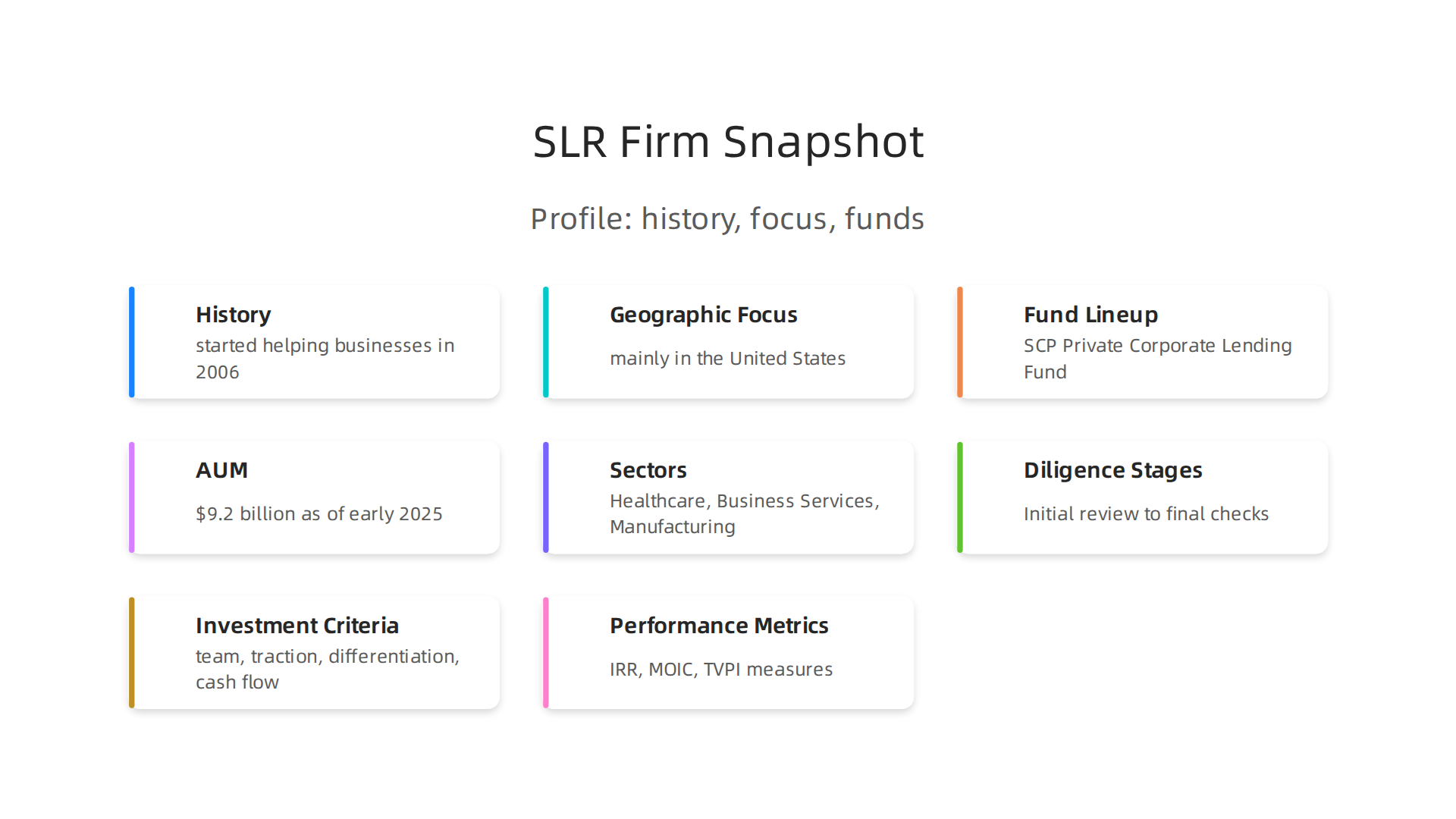
SLR Capital Partners first started helping businesses in 2006. Back then, they were known as Solar Capital Partners. They later changed their name to SLR Capital Partners as they grew and offered more types of funding. This history shows they have a lot of experience in the lending world SLR Capital Partners Fund History.
Their main office is in New York City SLR Capital Partners LLC | AUM 13F. This firm focuses its efforts mainly on businesses in the United States. They like to work with "middle market" companies. These are businesses that are not too small, like a startup, but also not huge, like a very well-known public company.
SLR Capital Partners manages different funds to offer money to these companies. They are known for providing many types of secured loans. For example, some of their funds include the SCP Private Corporate Lending Fund and the SLR HC Onshore Fund Investment Alternatives – SLR Capital Partners. These funds help them give flexible money solutions.
Over the years, SLR Capital Partners has invested a lot. They have put over $16 billion into more than 1,500 companies since they began SLR Capital Partners Profile. As of early 2025, they managed about $9.2 billion in total money, which is called Assets Under Management (AUM) SLR Capital Partners LLC | AUM 13F. This big number helps show their reach and ability to support many businesses.
For founders, knowing these details is important. It means if your business is a middle-market company in the U.S., SLR Capital Partners might be a good match for the kind of money you need. Understanding an investment firm’s profile, like that of SLR Capital Partners or other groups such as Tailwater Capital or Brightwood Capital, helps you find the best partner for your growth. Learning about how different investment groups work can help you make smart choices for your company’s future. Discover more about different firms by looking at Investment Group Profiles Smart Capital Strategies.
Now, let’s look closer at how SLR Capital Partners decides where to put their money. This involves understanding what stage of a business they invest in, how much money they typically offer, and what types of industries they prefer. These choices make up their capital strategy.
Capital strategy: stages, ticket sizes, and sector preferences
SLR Capital Partners focuses on providing money to companies that are already growing. Since they work with "middle market" businesses, they are not usually looking to fund brand-new startups. Instead, they aim for companies that have a clear plan and a proven track record. This often means they invest in businesses looking for funds for big projects, mergers, or to buy other companies. For example, in 2026, the middle market continues to show strength, with deal values increasing significantly, making it an attractive space for firms like SLR Capital Partners The Lower Middle Market May Be Private Equity’s Best Opportunity ….
When we talk about "ticket sizes," we mean the amount of money SLR Capital Partners invests in a single company. While exact numbers can change, they are known for offering substantial loans. This is different from the smaller amounts angel investors might provide for early-stage companies. Their funds are built to support growth that needs millions of dollars. Knowing this helps founders understand if their funding needs match what SLR Capital Partners can offer. It’s about finding smart capital solutions for every startup funding stage.
SLR Capital Partners also has preferences for certain types of industries, or "sectors." They are well-known for their focus on a few key areas, which helps them become experts in those markets.
While specific sectors can shift with market trends, their portfolio often includes areas like:
- Healthcare: Investing in companies that provide services or products for health and medical care.
- Business Services: Funding businesses that help other businesses run smoothly, like consulting or IT services.
- Manufacturing: Supporting companies that make goods.
These sector preferences mean SLR Capital Partners spends a lot of time learning about these specific industries. This helps them find the right companies to invest in. They do a lot of research, called "diligence," to make sure a company is a good fit. This process is important for all investment firms, whether it’s SLR Capital Partners, Tailwater Capital, or Brightwood Capital. Experts predict that private equity activity, especially in the middle market, will rise in 2026, with investors looking for attractive opportunities Private Equity 2026 Midyear Outlook | Morgan Stanley.
Understanding a firm’s capital strategy, including their preferred stages, ticket sizes, and sectors, is key for any founder seeking money.

It helps you know if your business and its needs align with what an investment partner like SLR Capital Partners is looking for. This helps speed up the fundraising process and increases your chances of success.
For founders and investors alike, staying on top of market changes and investment trends is a must. If you want to keep up with the fast-moving world of technology and investment, there’s a great resource available.
Get clear daily AI updates from The AI Newsletter Worth Reading.
Understanding an investment firm like SLR Capital Partners means more than just knowing what kind of businesses they fund. It also means looking at how well they actually do. This is called "benchmarking performance," and it’s super important for both the people who give money to SLR Capital Partners (called LPs or Limited Partners) and the founders whose businesses might get investments.
How SLR benchmarks performance: metrics, reporting, and expectations
When SLR Capital Partners, or any other private equity firm like Tailwater Capital or Brightwood Capital, invests money, they want to see it grow. To check this growth, they use special tools called performance metrics. These are like report cards for their investments. For LPs, these metrics show if their money is being used wisely and making good returns. For founders, understanding these metrics can help them see what a firm looks for and what kind of support they might get.
Here are some common ways to measure how well an investment firm is doing:
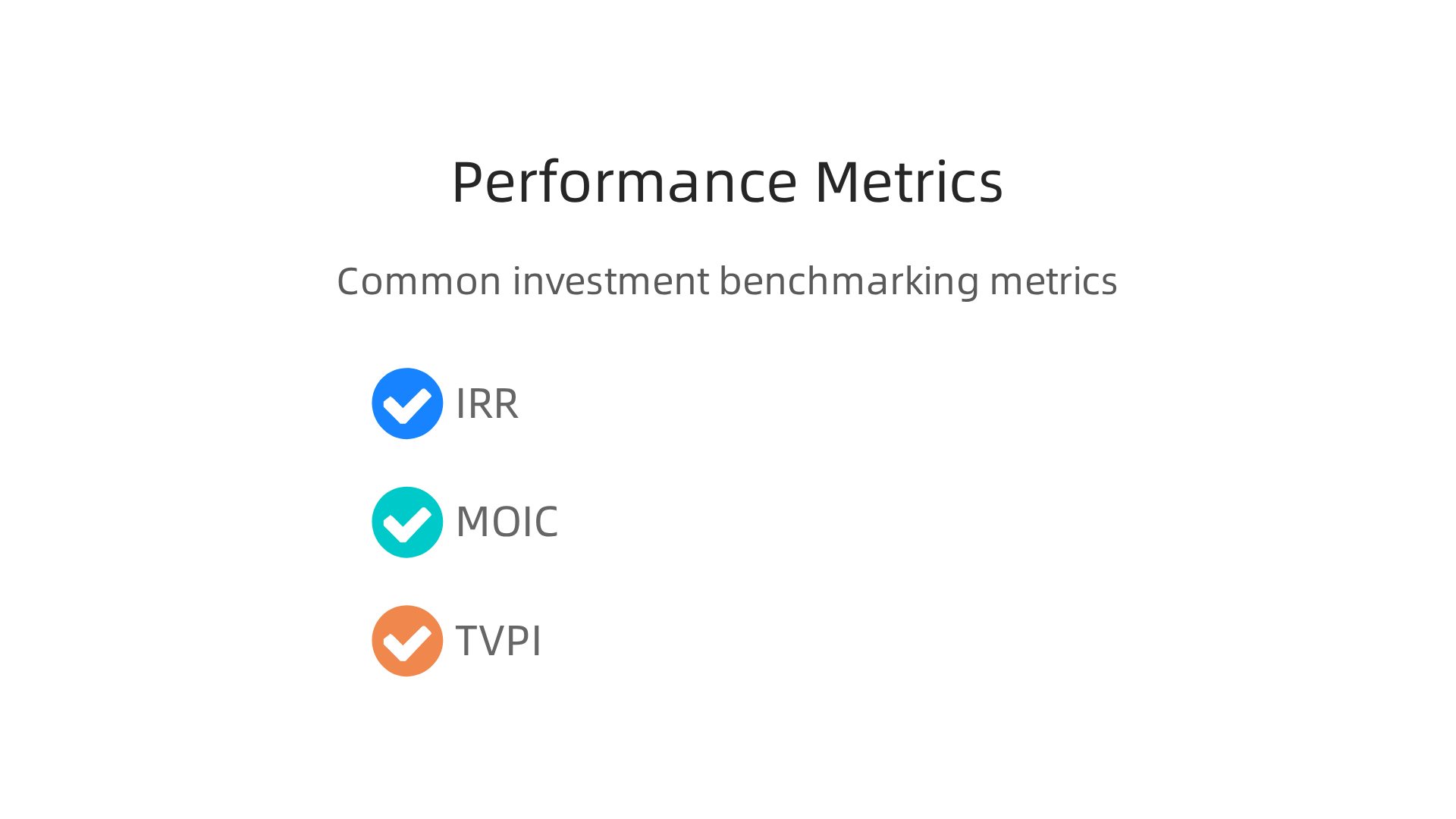
- Internal Rate of Return (IRR): Imagine you put money into a piggy bank, and every year it grows. IRR is a way to measure how fast that money grows over time, including all the money you put in and took out. It’s a key number for private investments to show how profitable they are Benchmarking Private Asset Performance.
- Multiple on Invested Capital (MOIC): This is a simpler way to see how much money an investment has made compared to what was put in. If you put in $1 and get $2 back, your MOIC is 2x. It shows the total gain.
- Total Value to Paid-in Capital (TVPI): This metric combines the money already paid back to investors with the current value of the investments still held. It gives a full picture of what the investment is worth compared to what was initially invested.
These metrics help everyone understand the real success of investments made by firms like SLR Capital Partners or Sheridan Capital Partners. For instance, private equity has often been a top performer in private markets over the long run May 2026 – MSCI Institute.
How performance reporting works
Firms like SLR Capital Partners regularly share reports with their LPs. These reports show how their investments are doing, using the metrics we just talked about. This "performance reporting" is like giving an update on their homework. It helps LPs see if the firm is meeting its goals.
When you look at these reports, you can also guess a bit about "follow-on capacity." This means how much more money the firm might have to invest in the future. If a firm is doing very well, LPs are more likely to give them even more money for new funds. This gives the firm more power to make new investments or add more money to companies they already own.
In 2026, many reports like the MSCI Private Capital Benchmarks Summary Q1 2026 show how private capital markets are performing. Staying updated with these insights is helpful for anyone involved in funding. You can also explore specific benchmarks like the Q1 2026 PitchBook Private Capital Indexes for detailed breakdowns.
For founders, understanding these reports means you can better choose an investment partner. A firm with strong, consistent performance is more likely to be a stable and helpful partner for your business. It also shows they have a good track record. To learn more about how to pick the right partners, you can read about how to choose private equity investment companies for your startup. Knowing how firms like Legacy Capital benchmark themselves helps you make smarter choices for your company’s future.
Now that you know how investment firms check their success, let’s look at the next big step for founders: the deal process. This is about what happens when a firm like SLR Capital Partners decides it might want to invest in your business. It’s a journey that needs careful planning.
Deal process and diligence: what founders should prepare for
When a firm like SLR Capital Partners or Tailwater Capital shows interest in your business, they start what’s called "due diligence." Think of it as a deep dive into every part of your company. They want to make sure everything is as you’ve presented it. For founders, this means getting ready to share a lot of information.

Stages of a typical diligence timeline
The due diligence process usually has a few main parts:
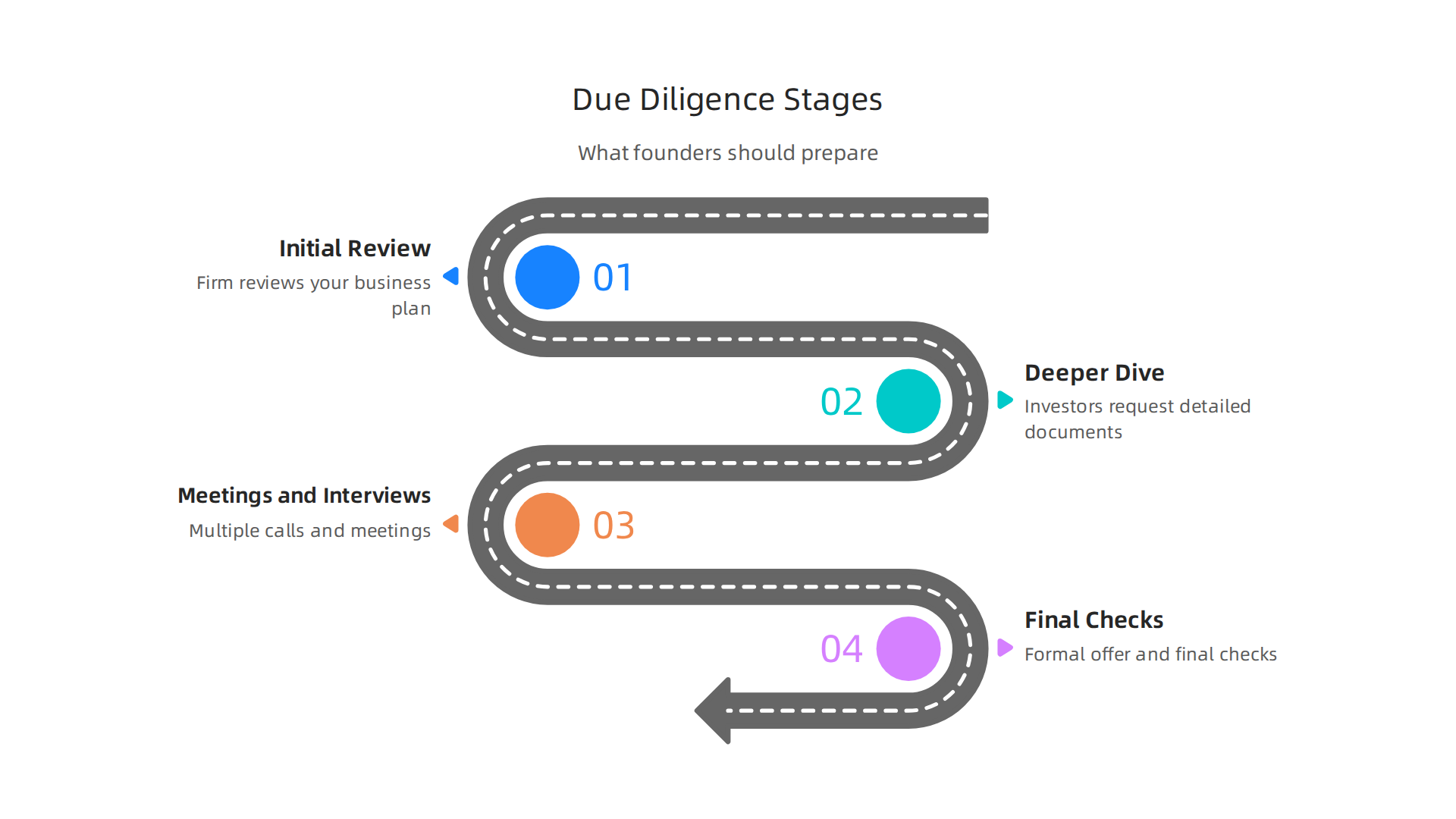
- Initial Review: This is where the investment firm first looks at your business plan, pitch deck, and key financial numbers. If they like what they see, they’ll ask for more details.
- Deeper Dive (Documentation Request): Next, they will ask for many documents. This can include:
- Detailed financial records, like profit and loss statements, balance sheets, and cash flow reports for the last few years.
- Legal documents, such as company agreements, contracts with customers or suppliers, and any past legal issues.
- Information about your team, including resumes of key people.
- Details about your products, technology, and how you sell things.
- Your growth plans and market analysis.
- Meetings and Interviews: You’ll likely have many calls and meetings with the investment team, sometimes including experts they bring in. They might talk to your customers or even some of your employees (with your permission, of course).
- Final Checks and Investment Proposal: If everything looks good, they will put together a formal offer to invest.
Firms like SLR Capital Partners often focus on direct lending to mid-market companies and look for businesses with strong leadership [SLR Capital Partners > About > Investment Philosophy]. They have invested in over 1,500 companies, showing their broad experience [SLR Capital Partners]. To help you prepare for this detailed review, understanding what private equity investors look for is key. This could involve practicing how you present your business case and financial models, much like someone preparing for a demanding job interview [Private Equity Interview Guide 2026].
Key negotiation levers and red flags
During negotiations, founders have certain "levers" they can use. These are things that make your company more attractive or give you more say in the deal. For example, a strong growth history, a clear path to make more money, or a unique product can give you more power.
However, be aware of "red flags" that might make an investor hesitate:
- Unclear financials: If your financial records are messy or don’t add up, it’s a big problem.
- Too much debt: If your company already owes a lot of money, it could be seen as risky.
- High customer turnover: If customers are leaving quickly, it suggests issues with your product or service.
- Key person risk: If the business relies too much on one person, and they leave, the company might suffer.
- Unrealistic expectations: If you ask for too much money or expect too high a valuation, investors might walk away.
Mid-market growth investors like SLR Capital Partners, Brightwood Capital, or Sheridan Capital Partners are looking for stable businesses with good cash flow. They want to invest in companies that can show they will keep growing and pay back their loans. Understanding these aspects helps you prepare for the best possible outcome. For more insights on this topic, you can learn about Private Equity Funds: A Startup Founder’s Guide.
Staying informed about broad technology trends, like AI, can also give you an edge in conversations with investors, as it shows you are aware of market shifts and future opportunities. Get clear daily AI updates from The AI Newsletter Worth Reading.
When you’ve shared all your company’s details during due diligence, the big question is: what makes an investment firm like SLR Capital Partners actually decide to put money into your business? It all comes down to how well your company "fits" with what they are looking for. They have a clear idea of the kinds of businesses they want to help grow.
Investment criteria and portfolio fit: what convinces SLR to write a check
For founders, understanding what these investors value is like knowing the rules of a game before you play. It helps you show them exactly why your company is a good match. Firms like SLR Capital Partners look for specific signals that tell them your business is a safe and smart place to invest.
Observable signals: what investors look for
Investment firms check for a few key things:
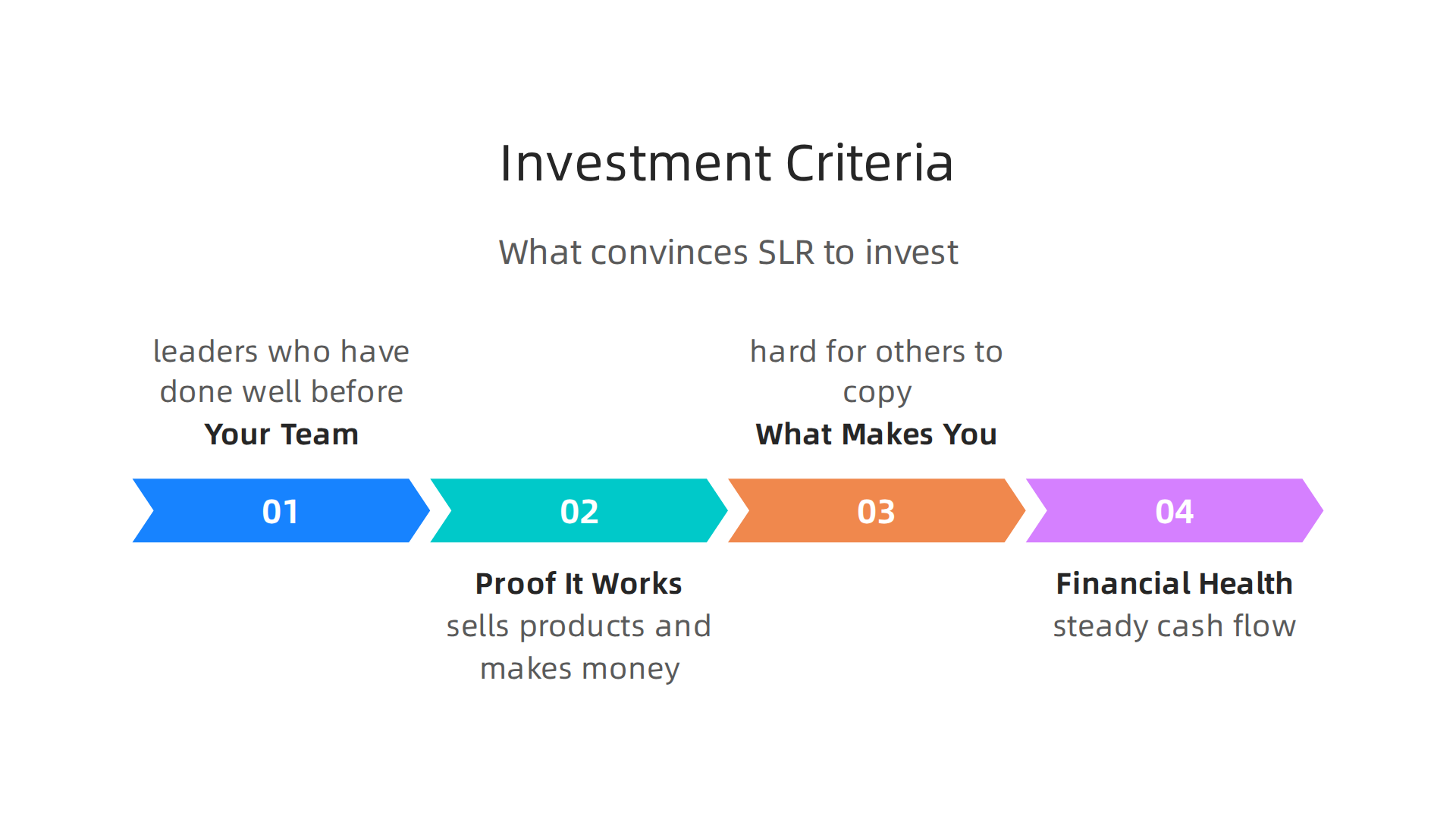
- Your Team: Investors want to see a strong team in charge. This means leaders who have done well before, know their industry inside and out, and are fully committed to the business. SLR Capital Partners often seeks to work with experienced management teams who have a proven track record of success and are personally invested in their companies.
- Proof Your Business Works (Traction): This is about showing that your business is not just an idea, but that it actually sells products or services and makes money. This could be shown through steady customer growth, good sales numbers, or users who keep coming back.
- What Makes You Special (Defensibility): Investors like companies that are hard for others to copy. Maybe you have a unique product, special technology, strong patents, or customers who are very loyal. This "special something" helps your business stay strong even when new competitors show up.
- Financial Health: SLR Capital Partners focuses on giving money to mid-market companies, often through "senior secured cash flow loans." This means they look for businesses that have steady money coming in, also known as cash flow, and a clear path to keep earning profits. They want to see that your business can easily pay back the loans they provide. SLR Capital Partners is known for aiming to give investors stable quarterly income by focusing on these types of loans to businesses that are often owned by other investment groups in the upper middle market [SLR Capital Partners > About > Investment Approach].
How founders can show they’re a good fit
To get a "yes" from firms like SLR Capital Partners, Brightwood Capital, or Sheridan Capital Partners, you need to show them you meet their needs. Here’s how:
- Tailor Your Pitch Deck: Your pitch deck is your company’s story. Make sure it clearly highlights your strong team, how your business is growing, and what makes you unique. Show how your company’s goals match the investor’s focus, especially if they look for mid-market businesses with reliable cash flow, like SLR Capital Partners does.
- Organize Your Data Room: The data room holds all the important documents about your company. Make sure it’s tidy and easy to understand. Think of it as your company’s official filing cabinet. Having everything organized shows that you are professional and ready for serious investment talks. You can learn more about important documents for review in a due diligence checklist for startups.
- Show Your Financial Strength: Provide clear financial records that highlight your cash flow and profits. SLR Capital Partners and similar firms, such as Tailwater Capital or Legacy Capital, want to see that your company can manage its money well and continue to grow. They have invested over $16 billion in more than 1,500 companies since 2006, showing their deep experience in picking strong businesses [SLR Capital Partners Secures Strategic Minority Investments to Support Expansion].
- Emphasize Growth Potential: Even if your company is stable now, investors want to see how you plan to grow in the future. Have a clear plan for new products, more customers, or entering new markets. Many private equity firms are looking for mid-market opportunities, as the sector has seen good growth in 2026, with deal value increasing [The Lower Middle Market May Be Private Equity’s Best Opportunity in 2026].
Understanding these key areas and making sure your company’s story clearly matches what firms like SLR Capital Partners are looking for is crucial. It’s about building trust and showing that investing in your company is a smart move. To help find the right partner, founders can explore how to choose private equity investment companies for your startup.
When a firm like SLR Capital Partners decides to invest, it’s not just about giving money. It’s also about how that money is structured and what the investors expect over time. Understanding these "rules of the game" is super helpful for founders. It helps you know what to expect and how to plan for the future of your company.
Fund structure, LP relationships, and exit expectations
Investment firms get their money from many different investors, often called Limited Partners or LPs. These LPs are like the people who put money into a big savings pot. The firm then uses this pot of money, called a fund, to invest in companies like yours. Each fund has its own set of rules, including how long it plans to hold onto a company before selling it (this is called the holding period) and how it plans to get its money back (the exit strategy).
How fund rules shape the future of your business
The structure of these funds and the LPs involved really shape how long an investment firm will stay with your company. Private equity funds often have a set lifespan, usually around 10 years. This means they plan to invest, help grow companies, and then sell them within that time to return money to their LPs. For example, firms like SLR Capital Partners, Brightwood Capital, Sheridan Capital Partners, Tailwater Capital, and Legacy Capital all work within these kinds of structures.
Data from 2026 shows that private markets are always changing, with different returns over time for various asset classes. Knowing this helps firms decide when to invest and when to sell. Benchmarks in private capital help investors see how things are going in the market right now, which is important for planning when to exit an investment and make money for their LPs. For instance, reports like the MSCI Private Capital Benchmarks Summary Q1 2026 give a snapshot of how private capital has been performing. Another report from 2026, the Global Private Markets Report, also talks about private market trends.
For you as a founder, understanding these timelines is key. It helps you plan your company’s growth in a way that aligns with the investor’s goals. You’ll know if the firm expects a quick sale or is ready for a longer journey. This is part of a larger picture of how different investment groups work, and you can learn more about how to understand global investment groups powering fundraising strategy.
Value-add support versus pure capital: what to expect
When an investment firm puts money into your company, they might offer more than just cash. This is called "value-add support." It means they might help with advice, introduce you to important people, or even help make your company’s operations better. This kind of help can be very useful for a growing business.
However, some firms focus mainly on providing "pure capital." This means they give you the money you need, but they expect your company to largely run itself without much hands-on help from them. SLR Capital Partners, for example, often provides senior secured cash flow loans, which is a type of funding that usually means they are more focused on the financial side than day-to-day operations.
As a founder, it’s important to know what kind of support you can truly expect. Before you sign any deals, talk clearly with the firm about how much they will be involved. Do they plan to just give you money, or will they also roll up their sleeves and help you grow? This helps avoid surprises later on and ensures you pick the right partner for your company’s needs.
For founders who want to stay smart about the latest trends in technology and how they impact fundraising and investment, it’s good to keep learning.
Get clear daily AI updates from The AI Newsletter Worth Reading.
Summary
This article explains who SLR Capital Partners is, how the firm operates, and why that matters for founders and investors. It covers SLR’s history, New York base, and middle‑market lending focus, plus fund examples and scale (billions deployed and thousands of portfolio companies). You’ll learn SLR’s capital strategy—preferred stages, ticket sizes, and sector biases such as healthcare, business services, and manufacturing—and the practical signals that convince the firm to invest (team, traction, defensibility, cash flow). The piece also walks founders through the deal process and due diligence checklist, shows how performance is benchmarked (IRR, MOIC, TVPI), and explains fund rules, LP relationships, and exit expectations. Read it to decide whether SLR (or similar mid‑market lenders) is a fit, prepare the right materials, and negotiate with clearer expectations.