
Introduction: Why ‘Stark Tech’ matters for fundraising in 2026
In 2026, the world of startup fundraising is more competitive than ever. To stand out, founders need to understand what we call "stark tech."

This isn’t just any technology; it’s the powerful, essential, and often groundbreaking innovation that truly moves the needle for a business.
Think of it as the core apex technology that makes a startup attractive to investors. When investors look at a company, they want to see more than just a good idea. They want to see how this "stark tech" makes the company better, faster, or smarter than its rivals. This could involve special software, new ways of using data, or smart tools that automate tasks. For example, knowing about Trimble tech in certain industries or understanding how to avoid getting stuck on a tech sideline can make a huge difference in attracting funds.
This guide will walk you through the world of stark tech in 2026. We’ll look at the top companies leading the way, explain what their platforms can do, show you how investors are using these technologies, and teach you how to pick the right tools for your startup. Our goal is to give you clear, proven advice so you can make smart decisions and attract the right funding.
Understanding these tech trends is key. For even more insights into the fast-changing world of AI and technology, you might want to check out The AI Newsletter Worth Reading for clear daily updates from The Deep View Newsletter.
Market overview: What ‘stark tech’ platforms do and where value is captured
Now that we know what stark tech is, let’s look at what these powerful platforms actually do. Stark tech platforms are built to solve big problems in clever ways. They often use advanced software, smart algorithms, and new ideas to create lots of value. Think of them as the engine that drives a startup’s growth and makes it special.
These platforms usually have a few main powers:
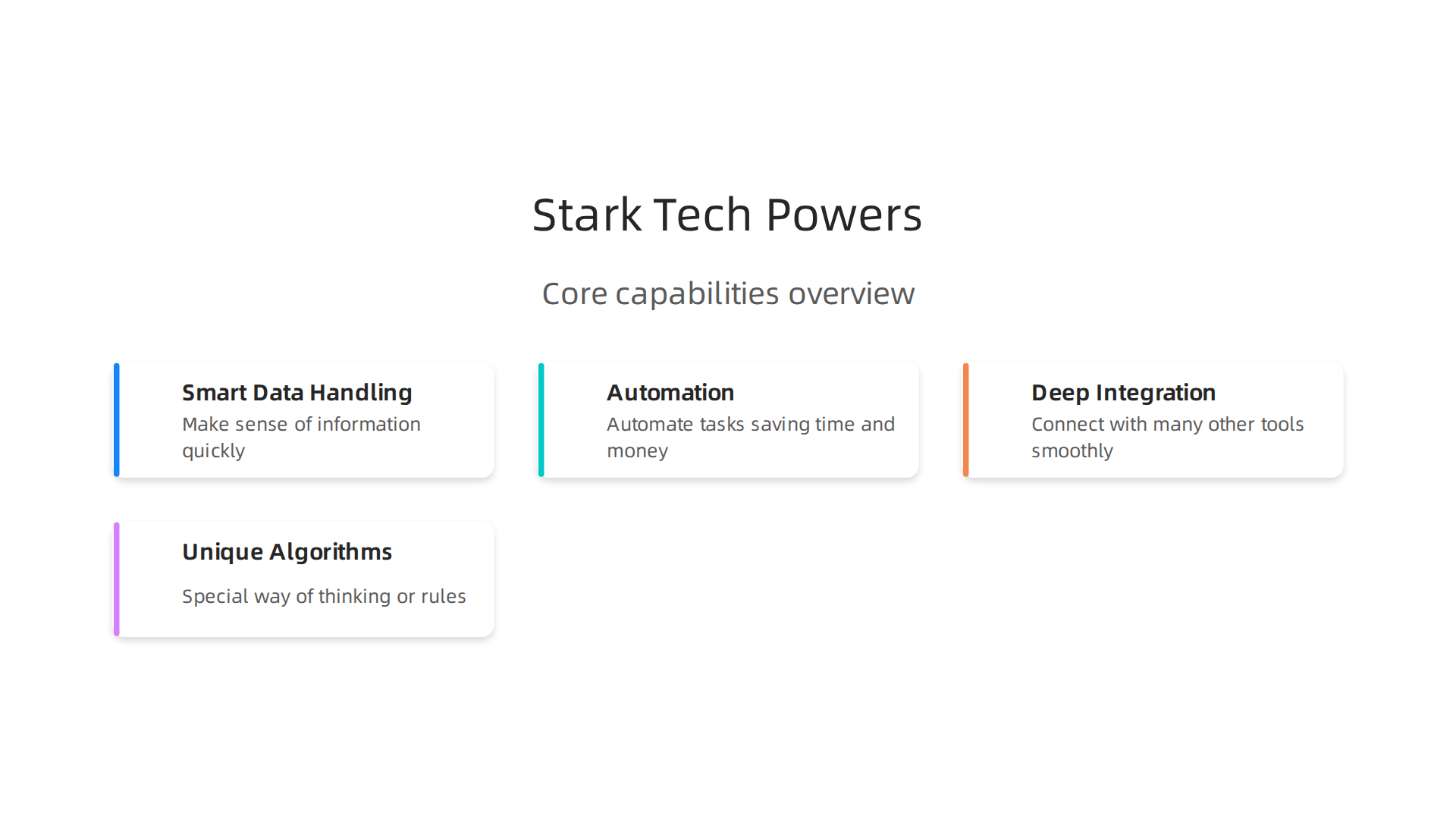
- Smart Data Handling: They can take in huge amounts of information and make sense of it quickly. This helps businesses understand their customers better, find new trends, or make smarter choices.
- Automation: Many
stark techsolutions automate tasks that used to take a lot of human effort. This saves time and money, and it lets people focus on more important work. - Deep Integration: They can connect with many other tools and systems, making everything work together smoothly. This helps avoid problems that come from using many different, unconnected software tools.
- Unique Algorithms: Often, the heart of
stark techis a special way of thinking or a unique set of rules (algorithms) that helps the platform do its job like no other. This could be in areas like artificial intelligence or specialized engineering.
In 2026, the technology market is booming, showing just how important these platforms are. The digital platforms market is expected to reach an amazing $1471.4 billion by 2035, growing steadily from $507.99 billion in 2026 Digital Platforms Market Size, Share, Growth Global Outlook 2035. And if we look at the software market alone, it’s projected to grow from $921.14 billion in 2026 to over $2.4 trillion by 2035 Software Market Size, Share and Trends 2026 to 2035. This kind of growth shows that businesses really need advanced tech.
Where Stark Tech Value Grows
For investors, understanding where value is captured in stark tech is key.
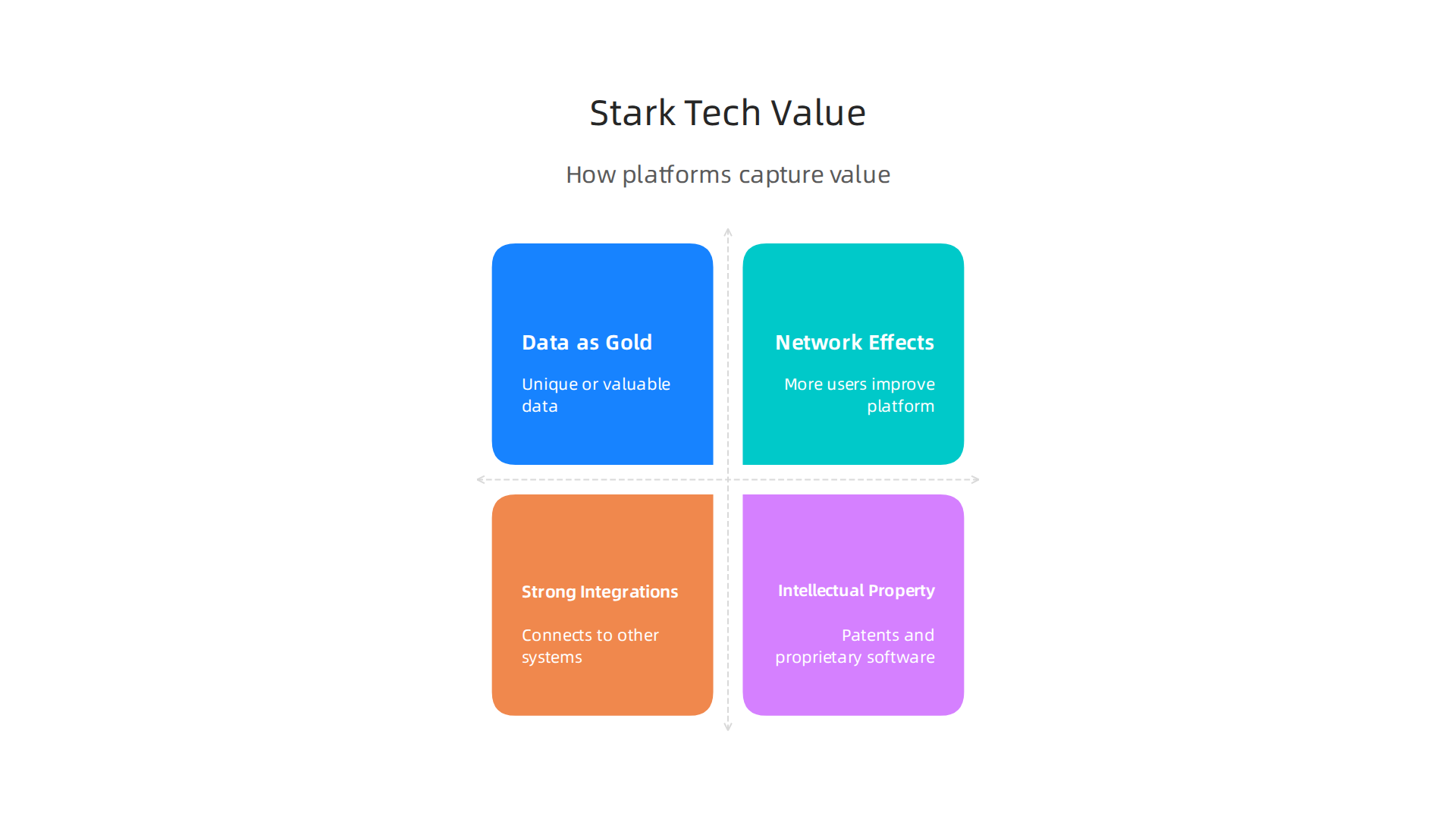
It’s not just about the platform itself, but what it creates and controls.
- Data as Gold: The more unique or valuable data a platform collects, the more valuable it becomes. This data can be used to make the platform even smarter or to offer new services.
- Network Effects: When a platform gets more users, it often becomes even better for all users. This "network effect" makes it hard for new competitors to catch up.
- Strong Integrations and Ecosystems: A
stark techplatform that plays well with other tools or has its own set of tools built around it creates a strong, sticky system. It becomes the central hub for many business needs. - Intellectual Property (IP): Unique patents, secret processes, or special software can protect a
stark techcompany from rivals. This kind of protection makes the company more stable and valuable in the long run.
These platforms often deal with what experts call "deep tech," which is based on significant scientific or engineering breakthroughs. The deep tech market is also seeing huge growth, predicted to jump from $154.33 billion in 2025 to over $501.24 billion by 2033 Deep Tech Market Size And Share | Industry Report, 2033. This shows investors are eager to fund companies built on strong, new ideas.
When founders understand the true definition of technology and how to talk about it clearly, they can attract the right investors. Knowing the difference between a simple feature and a true Technology Definition 2026 is very important. Actually, founders who really know their computer systems and underlying technology have a much better chance of getting investment. Learn more about why Founders Who Understand Computer Systems Technology Attract More Investors. By focusing on these core capabilities and value drivers, stark tech companies show investors they have a solid foundation for big growth and high returns.
Great stark tech companies don’t just solve problems; they stand out in special ways. They show everyone why their technology is the best. Let’s look at how these top companies make themselves unique and attract smart investors.
How Leading Companies Stand Out
Leading stark tech companies use clever ways to be different.
- Unique Products: Their products do things no one else can. For example, some companies create advanced computer systems for whole buildings, helping them save energy. One company, Stark Tech, focuses on Energy Management & Solutions to make buildings smarter. Others, like Stark Technology Inc., help with system integration services for many types of technology products.
- How They Sell: They have smart ways to get their products to customers. This could be through strong partnerships or by reaching many people online. They know their market well.
- Community and Developers: Some
stark techplatforms build a strong group of users or other developers who love to work with their tools. This creates a powerful network around their technology.
These companies often have a clear strategy, almost like an apex technology goal, aiming to be at the very top of their field. It’s not just about having a good idea; it’s about how they make it work in the real world. Knowing the different tech company categories in 2026 can help founders show investors where they truly fit.
Funding and Investor Audiences
When stark tech companies grow, they need money. This money often comes in different "funding rounds," and the amount can be very big.
- Early Stages (Seed, Series A): In the beginning, these companies might raise smaller amounts from "angel investors" or small venture capital firms. For instance, a German startup named Stark recently raised an initial $62 million with help from big investors like Sequoia Capital.
- Growth Stages (Series B, C, and beyond): As companies get bigger and prove their ideas work, they can raise much larger amounts. For example, another company simply called STARK has raised a total of $86.5 million across several funding rounds. More recently, Stark Defence, a drone maker from Berlin, was looking to raise a huge sum, potentially reaching a €2.5 billion valuation in 2026. Another report suggested a company named Stark might raise another $350 million at a nearly $3 billion valuation. These large numbers show how valuable
stark techcan become.
Investors look for these clear signs of value and strong growth. They want to see that the company has a unique tech sideline or main product that can make a lot of money. Understanding the different kinds of investors and funding methods, like seed enterprise investment, is key for any founder.
The growth of stark tech is often driven by exciting new ideas, especially in artificial intelligence (AI). To stay updated on the latest in AI and technology, consider subscribing to The AI Newsletter Worth Reading.
Platform types and technical differentiators (APIs, SDKs, data pipelines)
When we talk about successful stark tech companies, it’s not just about their big ideas or how much money they raise. It’s also about the hidden technical parts that make their ideas work. These are like the gears and engines behind a great machine. We are talking about things like APIs, SDKs, and how data moves. These technical details show how strong a company’s foundation truly is.
The Important Technical Layers
For any stark tech platform to be a real apex technology, it needs strong technical parts.
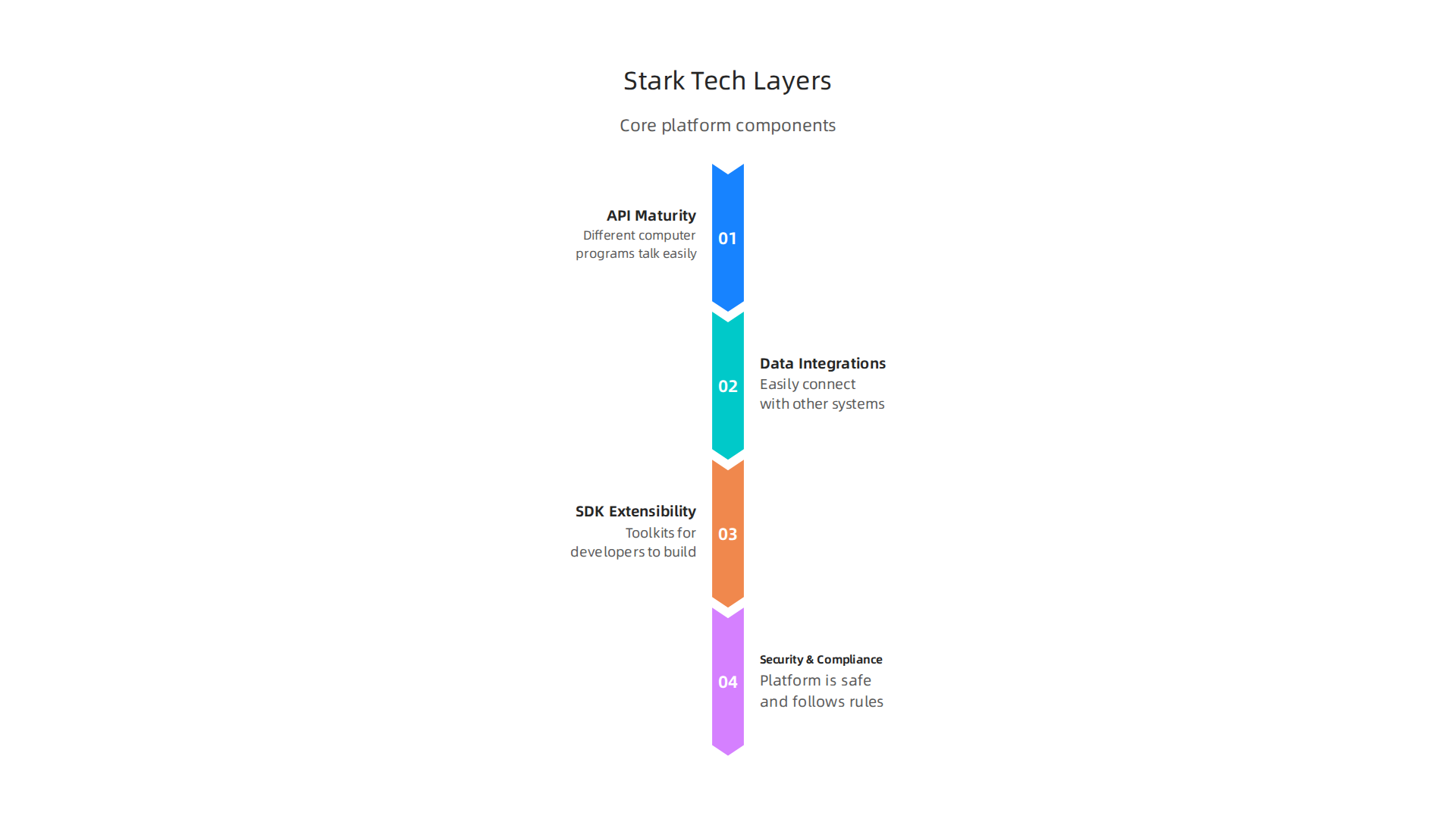
Here are some key areas that investors and partners look at:
- API Maturity: An API (Application Programming Interface) is like a special messenger that allows different computer programs to talk to each other. A good API makes it easy for other businesses to use a company’s features or data in their own products. In 2026, APIs are changing fast, driven by new ideas like AI and the need for strong security, as noted in "The Rapidly Changing Landscape of APIs in 2026". A mature API is reliable, safe, and easy for other developers to understand and use. This makes a platform more useful and helps it grow.
- Data Integrations: Imagine trying to share toys with a friend, but your toys only work with other specific toys. Data integration is similar. It’s about how easily a
stark techplatform can connect with other systems and share information. This is very important for businesses today. Companies that integrate well are 30% more likely to keep their customers, showing how valuable good data connections are, according to "64 Valuable Integration Statistics You Need to Know in 2026". Easy data flow, sometimes called "data pipelines," means a company can add new features, like atech sideline, without building everything from scratch. For founders, knowing how to build these kinds of connections is vital, and understanding Founders Who Understand Computer Systems Technology Attract More Investors can make a big difference. - Extensibility (SDKs): SDKs (Software Development Kits) are like toolkits that let other developers build new things on top of an existing platform. If a
stark techcompany offers good SDKs, it means many other businesses can make their products even better by using the core technology. This expands the reach and usefulness of the main platform, turning it into a bigger ecosystem. - Security and Compliance: This means making sure the platform is safe from hackers and follows all the important rules and laws. For businesses, especially big ones, trust is everything. A
stark techplatform must show it can keep data safe and meet industry standards.
How These Tech Parts Help Companies Get Adopted
These technical strengths greatly change who uses a stark tech platform:
- For Large Businesses (Enterprises): Big companies need rock-solid security, proven reliability, and easy ways to link new tech with their old systems. They look for mature APIs and strong data integrations because changing systems is a huge job for them. They also need to know the platform follows all the rules. The global digital platforms market is huge, expected to reach $1471.4 billion by 2035, growing from $507.99 billion in 2026, highlighting the large scale of these needs, as shown in the "Digital Platforms Market Size, Share, Growth Global Outlook 2035".
- For New Companies (Startups): Startups often need things that are quick to set up and easy to change. They might value clear SDKs that let them build new features quickly without a lot of cost. But they still need their chosen tech to be reliable and help them attract partners and investors. Many Tech Tools For Startups 2026 That Attract Investors And Accelerate Fundraising focus on making these technical aspects simpler.
Ultimately, a strong technical foundation helps a stark tech company not just survive, but truly thrive. It shows investors and potential customers that the company is built to last and can grow over time. Understanding the deeper meaning of technology is crucial, as explored in Technology Definition 2026 The Framework Every Founder Needs For Investor Clarity.
Investor & operator use cases: How VCs and portfolio teams use stark tech
After building a strong technical base, the next big question is: how does this stark tech actually help businesses and investors? For Venture Capital (VC) firms and the companies they invest in (called portfolio teams), stark tech is not just cool gadgetry.

It is a tool to make money, save money, and build a lasting advantage. This is how stark tech turns into an apex technology in the eyes of smart investors.
How Stark Tech Adds Value to Companies
Investors look for clear ways that a stark tech platform can boost a company’s success. Here are the main ways:
- Make More Money (Revenue Acceleration): A
stark techsolution can help a company sell more products or services. Maybe it helps them reach new customers, speed up sales, or offer better products that people want to buy. This could be by making a sales process faster or by giving customers new, exciting features. - Cut Costs (Cost Reduction): Every business wants to save money.
Stark techcan automate boring tasks, make operations more efficient, or lower the need for expensive tools or staff. For example, a smart software might help manage inventory better, so a company does not spend too much on things it does not need. - Build a Data Moat (Data Moat Creation): This is like building a strong wall around a company’s data.
Stark techcan help a company gather special information that its rivals cannot easily get. This unique data helps the company make better decisions and offer smarter services, making it hard for other companies to catch up. Think of it as atech sidelinethat gives a lasting edge.
How Investors Check Out Stark Tech
When investors look at putting money into a stark tech company, they do a deep dive. This is called technical due diligence. They want to know if the technology is strong and if it can really grow. This check helps them see if the company is a good bet for their money.
Investors specifically look at two main things:
- Market Growth (TAM Defensibility): TAM stands for Total Addressable Market. It means how many people or businesses could potentially use the
stark techproduct. Investors want to know if the technology can protect its share of this market as it grows. Can it stay strong even if new competitors show up? They check if thetrimble techhas unique features that keep customers loyal. Getting into the details of a startup’s technology is a key part of this review, as outlined in an Investment Due Diligence Checklist 2026. - How It Reaches Customers (Go-to-Market Motion): This is about how the company plans to sell and deliver its
stark techproduct to customers. Is it easy for customers to find and use? Does the company have a smart plan to get its product out there? Investors want to see a clear path to getting the technology into the hands of many users, ensuring it can actually make a big impact.
Understanding the deep technical aspects helps founders secure investments, and it also helps investors make smart choices. If you want to dive deeper into how technology powers startup fundraising, you can learn more about why founders need a strong technology background for startup fundraising in 2026. Staying informed about new tech and AI trends is also key for both founders and investors.
Get clear daily AI updates from The AI Newsletter Worth Reading.
Another key step for stark tech to truly shine and become an apex technology is how well it plays with other tools and businesses. It is not enough for a technology to be powerful on its own; it also needs to fit into a bigger picture. This is where integration partners, marketplaces, and developer communities become super important.
Why Working Together Helps Stark Tech Grow
Think of a stark tech product as a new toy. If this toy can connect to all your other favorite toys and make them work even better, you will use it more, right? It is the same for businesses. When a stark tech solution can easily connect with other software and services that companies already use, it makes everyone’s job easier. This smooth connection is called integration.
- Faster Adoption: Companies are more likely to use a new
trimble techif it does not force them to change everything else they do. Easy integration means less work to get started. For example, customers with integrations are 30% more likely to keep using a product, according to statistics from 2026 focusing on valuable integration insights

64 Valuable Integration Statistics You Need to Know in 2026.
- Wider Reach: When
stark techis part of marketplaces, it means many more people can find and try it out. These are like online stores where businesses look for new tools. - Stronger Ecosystems: Developer communities are groups of people who build new things with the
stark tech. They create new features and ways to use the technology, which makes the wholetech sidelinemuch stronger and more useful for everyone. These platforms help accelerate fundraising for startups too. You can learn more about how they work in Tech Exchange Platforms That Accelerate Startup Fundraising in 2026.
What Investors Look For in Integrations
When investors check out a stark tech company, they pay close attention to its integration strategy. They want to see proof that the technology can grow by working with others.
Here are some clear signs they look for:
- Partner Revenue: Is the
stark techmaking money because of its partnerships? This means other companies are helping to sell or use the technology, showing its wider appeal. - Marketplace Activity: How well is the
stark techdoing on different marketplaces? Many downloads or positive reviews show that it is being used and valued by many customers. - Number of Third-Party Integrations: How many other tools and services does the
stark techconnect with? More integrations mean it is more flexible and can fit into many different business setups. A high number shows thestark techis building a strong network, making it a more attractive investment.
Emerging Trends and Risks Through 2026–2030
Even when a stark tech company has strong integrations, it still needs to look ahead. The world of technology changes very fast. What is new and exciting today might be old news tomorrow. Investors know this, so they also look at future trends and possible risks that could affect how well a stark tech company does.
Big Changes in Technology
The way stark tech works will keep changing in big ways between 2026 and 2030. These changes affect how much it costs to build and run new apex technology solutions.
- More Powerful Computers: Computers are getting faster and can do more work than ever before. This means
stark techcan handle bigger tasks and more complex problems. - Smarter AI Models: The ways we build Artificial Intelligence (AI) are always getting better. New types of AI models are coming out that can learn and do amazing things. For instance, generative AI, which can create new content, is changing many fields, as shown in a review of its impact on creative work A systematic critical review of generative AI’s impact on authorship. These advancements make
trimble techmore powerful and useful. - Tech Everywhere (Edge Deployment): Imagine your
stark techworking on devices right where you need them, like in a smart factory or a self-driving car, instead of far away in a big computer center. This is called edge deployment. It meansstark techcan react faster and needs less internet to work.
These changes are important because they can make stark tech better, but they also change the cost of making and using this tech sideline. For founders, understanding these deep tech trends is key to attracting smart investors. You can learn more about how a good tech understanding helps in Founders Who Understand Computer Systems Technology Attract More Investors.
Things That Can Go Wrong: Risks to Watch Out For
Besides technology changes, there are other big things that can make stark tech companies struggle. Investors pay close attention to these risks too.
- New Rules and Laws: Governments around the world are making new rules about technology. These can be about how companies use your personal information (privacy) or how AI is built and used. These rules can affect how
stark techcompanies sell their products or how much their products are worth. - Privacy Concerns: People care a lot about their personal information being safe. If a
stark techcompany does not protect data well, it can lose trust and customers. This can hurt its value a lot. - Big Economic Changes: Sometimes, the whole world economy can change. Things like recessions or big shifts in how people spend money can make it harder for
stark techcompanies to grow and get funding. These bigger problems are called macro risks.
Keeping an eye on these trends and risks is crucial for any stark tech business hoping to become an apex technology leader.
Get clear daily AI updates from The AI Newsletter Worth Reading.
To keep up with fast changes and reduce risks, both founders and investors need a clear way to check out other companies, or "vendors."

This is extra true for those working with stark tech and other new types of apex technology. Having a good checklist helps everyone make smart choices that lead to success later on.
Checking Out Vendors: Your Checklist
Before making a big deal or investing, it’s wise to go through a checklist.
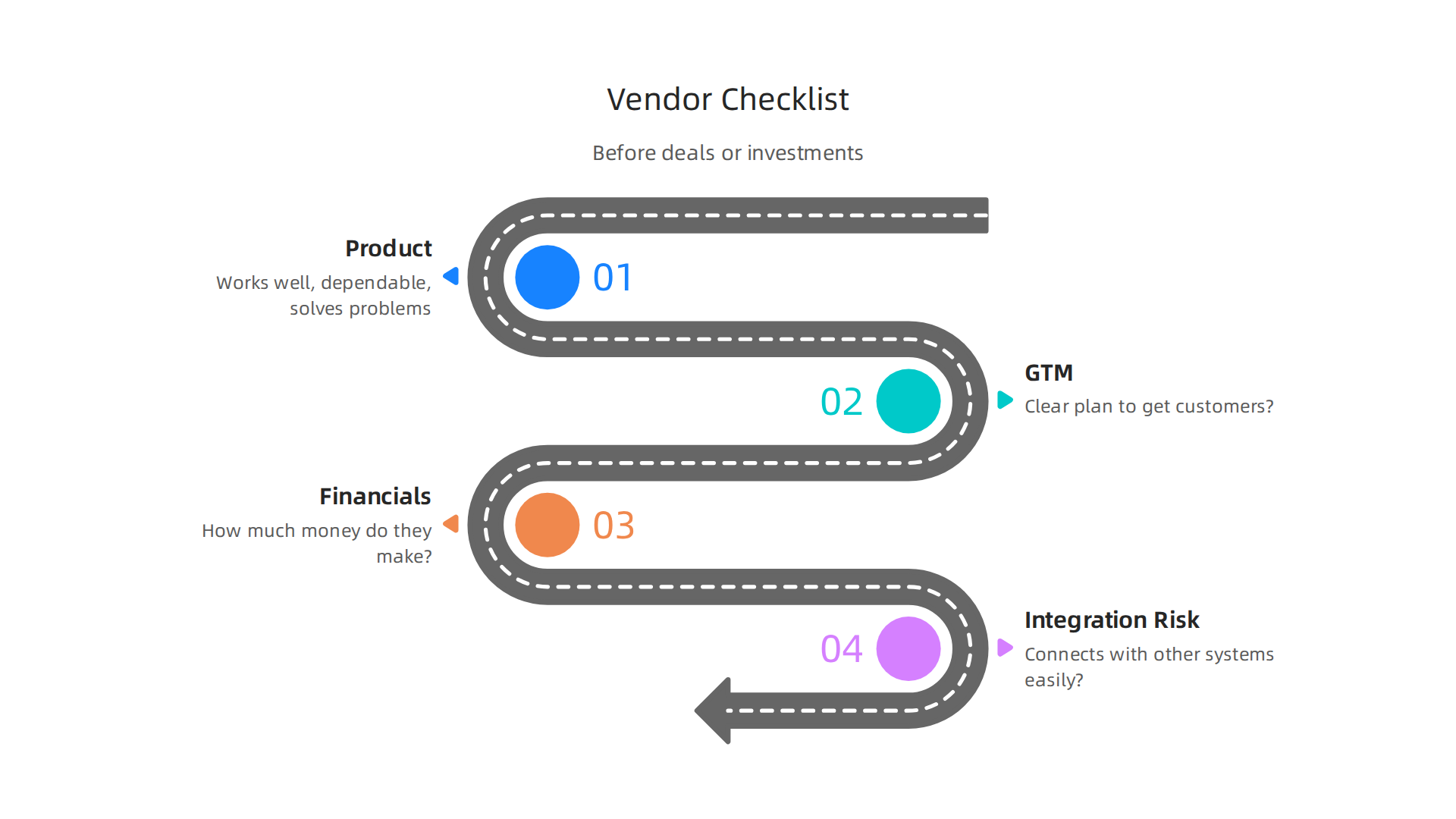
This helps you look at a company from all sides, much like doing "due diligence" on a startup to check its strengths and weaknesses Technical Due Diligence for Startups: A Checklist.
- What They Make (Product Evaluation): First, look closely at the actual
stark techproduct or service.- Does it work well? Is it dependable?
- Is it easy for people to use?
- Does it truly solve a problem for customers?
- Can it grow bigger if more people start using it?
- What makes it better than other options out there?
- How They Sell It (Go-to-Market or GTM): Think about how the
trimble techcompany plans to reach its customers and sell its product.- Do they have a clear plan to get customers?
- Are their sales and marketing efforts working well?
- Can they make money as they get more customers?
- Money Matters (Financials): It’s super important to check the company’s money situation. This is a big part of any investment review Investment Due Diligence Checklist 2026.
- How much money do they make?
- How much do they spend?
- Are they making a profit or do they have a clear path to do so?
- Do they have enough money to keep going for a while?
- Fitting In (Integration Risk): For a
tech sideline, how well does it connect with other systems or tools?- Can their technology easily work with what you already have?
- Are there any big problems expected when trying to link it up? This can affect how smoothly things run after a deal.
Using a detailed checklist for vendor selection helps founders and investors cover all important areas. You can learn more about this process in a guide on the Vendor Selection Process: Steps, Criteria & Checklist Guide [2026].
Important Flags in Deals (Negotiation and Contracting)
When you’re close to making a deal, the terms and conditions in the contracts matter a lot. These can change how much a deal is worth or if it will truly succeed.
- Unclear Promises: Watch out for promises that are vague or hard to measure. Make sure everything is written down clearly.
- Hidden Costs: Sometimes, there are extra costs not mentioned upfront. Always ask about all possible fees or future expenses.
- Fairness of Terms: Are the terms of the deal fair to everyone involved? Be careful of terms that seem too good to be true or too harsh for one side.
- Exit Strategy: For investors, it’s good to know how they might get their money back later. This is often called an exit strategy.
- Control and Decisions: Who gets to make big decisions after the deal? Make sure this is clear to avoid arguments later.
Looking out for these flags during negotiations helps secure better outcomes and makes sure that a new partnership or investment truly builds an apex technology leader. Understanding the different ways to get money can also help founders make better choices when talking to investors about their stark tech ideas. You can explore this further by learning about Venture Capital Private Equity The Critical Difference For Startup Fundraising.
Summary
This article explains "stark tech" — the core, high-impact technologies that make startups attractive to investors in 2026 — and shows founders and investors how to evaluate, adopt, and monetize them. It covers what these platforms do (data handling, automation, integrations, unique algorithms), how they create value (data moats, network effects, IP), and which technical layers matter most (API maturity, SDKs, data pipelines, security). You will learn how VCs and portfolio teams use stark tech to accelerate revenue, cut costs, and defend market share, plus practical guidance on funding stages, partner ecosystems, and go-to-market motions. The guide also outlines emerging trends (AI, edge deployment, compute advances), key risks (regulation, privacy, macro shocks), and a vendor selection checklist to use during due diligence. After reading, founders will know what technical signals investors look for and how to structure integrations, partnerships, and contracts to increase fundraising success.