

Getting money and advice for your business is super important if you want it to grow.

That is why connecting with the right investors in businesses truly matters. These investors can offer more than just cash. They bring big chances for your company to do well.
The Big Benefits of Connecting with Investors
Imagine your business has a great idea or a product people love. To make it even bigger, you usually need more money. That is where investors come in. They provide what we call "growth capital." This money helps you hire more people, build better products, and reach new customers.
In 2026, the world of venture capital (VC) investment is still very strong. Even with some ups and downs, the total money put into startups is huge. For example, the venture capital investment market is expected to grow from about $598.91 billion in 2026 to over $2.6 trillion by 2034 Venture Capital Investment Market Size, Share | Growth [2034]. This shows a big opportunity for businesses. Even early-stage money from angel investors is seeing bigger deal sizes, according to the 2026 WilmerHale Venture Capital Report.
But it is not just about the money. Smart investors also offer:
- Strategic Guidance: Think of them as experienced coaches. They have seen many businesses succeed and fail. Their advice can help you avoid common mistakes and make better decisions.
- Market Access: Good investors often have a lot of connections. They can open doors to new customers, partners, and even other helpful people in the business world. This can help your business grow much faster.
Common Problems When Looking for Investors
Even with these great opportunities, finding the right investors in businesses can be tricky. Many business owners face some common problems:
- Too Much Information: There is so much advice out there about fundraising. It can feel like a big mess, making it hard to know what steps to take first.
- Not Enough Clear Information: It is often hard to know what investors truly want to see in a business. Their rules and preferences are not always clear.
- Limited Connections: It can be tough to meet the right people who truly care about your business idea. You might want to find angel investors or get in touch with top vc firms, but making those first connections can be a big hurdle.
Actually, a large part of venture capital money in the first half of 2026 went to companies working on Artificial Intelligence (AI). AI projects received 86% of all venture dollars Q2 2026 PitchBook-NVCA Venture Monitor. This means if your business is not in AI, it might feel even harder to get attention. To stay ahead in the fast-changing world of AI and technology, consider subscribing to The AI Newsletter Worth Reading for clear daily updates.
What This Guide Promises You
This guide is here to help you get through these tough parts. We will give you simple, proven steps to master startup investing and fundraising 2026 strategies. You will learn how to:
- Find: Discover investors who are a good match for your business.
- Engage: Talk to investors in a way that makes them interested.
- Retain: Build lasting relationships with investors that help your business keep growing.
Whether you are looking for local opportunities, like connecting with venture capital firms utah, or aiming for national angel investors, this guide will show you how to find and work with investors who truly believe in your business’s future.
To really make your business grow, it is super important to know who the investors in businesses are and what they care about. This part of our guide will help you understand the different kinds of investors and what they look for in a business like yours. This way, you can find the best match and talk to them the right way.
Types of Investors for Your Business
Not all investors are the same. They come in different types, and each type might be right for your business at a certain time.
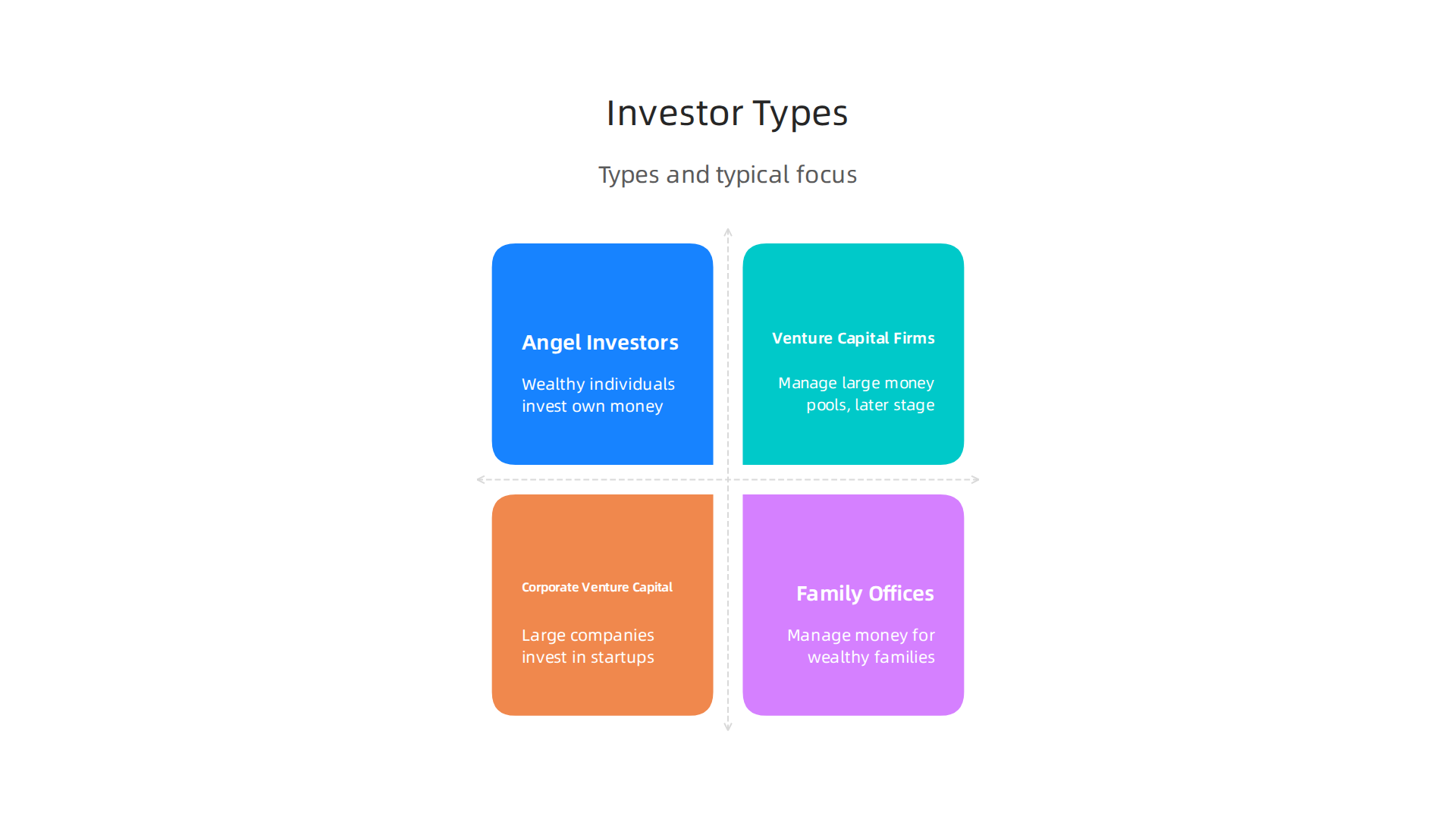
- Angel Investors: These are often wealthy individuals who put their own money into very new businesses. They usually invest smaller amounts of money to help a startup get going. Think of them as the first helpers for a seed idea. In 2026, many business angels are involved in funding, often alongside bigger groups like family offices, according to the Swiss Venture Capital Report 2026.
- Venture Capital (VC) Firms: These are companies that manage large pools of money from many sources. They invest in businesses that are already a bit past the idea stage and have a good chance to grow very big. VC firms can invest at different stages: seed, early, and growth stages. To learn more about how different groups invest, check out this guide on understand global investment groups powering fundraising strategy.
- Corporate Venture Capital (CVC) Units: Sometimes, large companies invest in smaller startups. This is called Corporate Venture Capital. They do this not just for money, but also to find new technologies or partners that fit their own big business.
- Family Offices and Institutional Investors: These groups also invest big money. Family offices manage money for wealthy families, and institutional investors are large groups like pension funds. They usually invest in more established companies or in the VC funds themselves.
Understanding these different types of investors in businesses is the first step to finding the right fit for your company.
What Investors Look for in Your Business
When investors decide where to put their money, they look at a few main things. Knowing these points will help you get ready.
- Market Size: Is your business idea solving a problem for a very large group of people? Investors want to see that your business can serve a huge market. The bigger the market, the more money your business can potentially make.
- Traction: This means showing that your idea actually works and people want it. Do you have early customers? Are people signing up for your service? Proof that your business is catching on is very important.
- Team: Investors bet on people. They want to see a strong team that has the right skills and passion to make the business a success. Your team’s experience and how well you work together matter a lot.
- Unit Economics: This is about the money you make from each customer or sale. Investors want to know that your business model is sound. Can you make a profit on each item or service you sell? Can you keep customers for a long time?
- Exit Potential: Investors want to know how they will get their money back and make a profit. This usually happens when your company is bought by a bigger company or goes public (starts selling shares on the stock market). You need a clear plan for how this might happen one day. If you want to dive deeper into the differences, you can also explore the venture capital private equity the critical difference for startup fundraising.
Tools to Research Investors
Finding the right investors in businesses is a bit like looking for a job. You need to research the company you want to work for. For investors, this means looking at their past investments and what kinds of businesses they usually support.
There are tools and websites that can help you with this research. Services like PitchBook and Crunchbase are popular for finding out who invested in what companies, when, and how much. They help you see patterns in investor behavior and their most recent deals. Looking at such data helps you understand the bigger picture of investing in 2026, including global trends in private equity and venture capital, as shown in the Global Private Equity and Venture Capital Overview and Outlook 2026. This helps you find investors who truly fit what your business does.
Finding the right investors for your business means more than just knowing who they are. You also need to build good relationships and get your foot in the door.

This is how you access quality deal flow, meaning you get chances to talk to the best investors.
Practical Ways to Reach Out
There are a few smart ways to reach out to investors. Each way works best in different situations.
-
Warm Introductions: This is often the best way. A warm introduction means someone who knows both you and an investor introduces you. This could be a mentor, an advisor, or even another founder that the investor has already put money into. Building these connections takes time, but it really pays off. For example, you might look at connections through people you know on LinkedIn, especially from folks in accelerators or former colleagues, to find paths to investor meetings even without a direct intro, as one guide suggests for 2026 efforts on how to get investor meetings in 2026.
-
Events Strategy: Going to startup conferences, demo days, and industry events is a great way to meet investors face-to-face. Many angel investors and top VC firms attend these events to find new businesses to support. It’s a chance to quickly share your idea and make a personal connection. This is a good way to find angel investors who are looking for new ideas.
-
Digital Outreach Sequences (Emails): Sometimes, you might need to send an email to an investor you don’t know directly. This is called a "cold email." To make these emails work, they need to be short and clear.
- Make it personal: Show you’ve done your homework. Mention something specific about their past investments or what they care about.
- Be clear: In just a few sentences, explain what your business does and why it’s special. Also, mention what you are asking for, like a specific amount of money and its purpose, as well as the next step, such as a short call or meeting, according to one outreach template document Outreach Email Templates.
- Show proof: Quickly share a key achievement or proof that your business is growing. This is your "traction."
- Have a clear request: Ask for something small, like a 15-minute chat. This makes it easier for them to say yes.
- Follow up smartly: If you don’t hear back, send a few polite follow-up emails, but don’t spam them. A common plan might be a few touches over a few weeks, then monthly updates, as noted in 2026 investor outreach advice on Investor Outreach in 2026: Templates, Cadence & …. For more details, you can read about Investor Outreach: A Step-By-Step Guide.
Building Relationships vs. Sending Many Emails
It’s better to spend more time building strong relationships with a few good investors than sending hundreds of emails to everyone. Targeted relationships usually lead to better results. Think about quality over quantity. For example, if you are in a specific area, you might focus your efforts on venture capital firms Utah rather than all firms everywhere. This approach helps you focus your energy where it has the most impact. Learning how to get venture capital funding often highlights the importance of these targeted efforts.
Keeping Relationships Alive
Once you make an early connection, it’s important to keep the conversation going. Send short, helpful updates. Share your progress, big wins, or new customer stories. The goal is to keep them thinking about your business without being annoying. These "value-led touchpoints" show you are making progress and help move the conversation forward naturally. For a deeper dive into securing early-stage funding, explore mastering the angel investment network to secure seed funding for your startup.
After building good connections, your next big step is to create strong pitch materials. These materials are what truly show investors in businesses what your company is all about. Good materials not only get investors excited but also make the process of looking into your business much faster. This faster look is called "shortening diligence."
Craft pitch materials that attract investors and shorten diligence
When you want to get money from investors, you need two main things: a great pitch deck and a ready "data room."

These are like your business’s storybook and its detailed filing cabinet.
Your Winning Pitch Deck
A pitch deck is a short, exciting presentation about your business. It tells your story in a way that makes investors want to learn more. Think of it as your company’s most important sales tool for top VC firms and those who find angel investors.
Here are the important parts investors expect to see in your pitch deck:

- Problem: What big problem are you solving for people?
- Solution: How does your product or service fix that problem?
- Market Size: How many people have this problem? Is it a big enough group to make a lot of money? This shows the market opportunity.
- Product: What have you built? Show it off simply.
- Traction: What proof do you have that your business is working? This means sales, users, or positive feedback. This is super important.
- Team: Who are the people behind the business? Why are they the right ones to make it successful?
- Financials: A quick look at your money picture, like how much you make and spend.
- The Ask: How much money are you looking for and what will you use it for?
Your deck should tell a clear story. Start with the problem, show your solution, then prove it’s working and that you have a great team. Most successful pitch decks have between 10 to 18 slides. Keeping it short and to the point helps keep investors interested, as some experts point out in their insights on pitch deck presentations for 2026. Make sure your deck is easy to read, with big fonts and clear images. When you send it to investors in businesses, always send it as a PDF file, ideally under 10MB. This makes sure everyone sees it the same way. You can find many guides and templates online to help you with the structure of your pitch deck for 2026. For example, some resources offer a helpful breakdown of the 11 key slides needed in a pitch deck for this year.
Data Room Essentials
Once an investor is interested in your pitch, they will want to look deeper into your business. This is where your data room comes in. A data room is a secure online folder filled with all the important documents about your company. Having this ready early makes the "diligence" process go much faster, meaning investors can make a decision more quickly.
Here’s what should be in your data room:
- Legal Documents: Papers about your company’s setup, ownership, and any contracts you have.
- Financial Records: Detailed past and future money plans.
- Team Information: Resumes of your main team members.
- Customer Information: Details about your customers and how much they spend.
- Market Research: Studies and information about your industry.
Making sure your data room is neat and complete shows investors in businesses that you are organized and serious. This really helps move things along.
Common Mistakes to Avoid
Many founders make simple mistakes that can scare investors away. Don’t let these happen to you:
- Too Many Slides: A deck that’s too long makes investors lose interest. Keep it focused and punchy.
- Too Much Text: Use pictures and simple bullet points, not long paragraphs. The deck should help you tell the story, not replace you.
- Unclear Ask: Be very clear about how much money you need and why.
- No Traction: If you have no sales or users yet, show strong plans or early interest.
- Messy Data Room: If your data room is hard to understand or has missing papers, it makes investors worry.
By getting your pitch deck and data room right, you show investors you’re ready for funding and ready to grow.
To learn more about putting together a strong financial case and other essential materials that attract capital, explore our guide on how to create your winning funding package for startup success.
For even deeper insights into the latest tech and market trends that influence investor decisions, make sure to get our daily briefings.
Get The Deep View Newsletter
Now that your pitch materials are ready, the next big step is to make sure you’re talking to the right people. It’s not enough to just send your deck to everyone; you need to find and prioritize the right investors in businesses that fit what you do. This smart approach saves you time and increases your chances of getting funded.
Identify and prioritize the right investors for your stage and sector
Finding the best investors is like finding the perfect partner for your business. They should understand your vision, share your excitement, and be ready to help you grow. Here’s a simple way to figure out who those key investors in businesses might be.
Scoring Investor Fit
Think of this as a checklist to see how well an investor matches your company. You want to focus on investors who are most likely to be interested.
- Stage: Does the investor typically put money into companies at your stage? Some find angel investors for very early ideas, others focus on seed rounds, and top VC firms often come in later for bigger growth rounds. For example, angel and seed funding rounds saw a median valuation of $15.5 million in 2026, showing where early money is often placed 2026 WilmerHale Venture Capital Report.
- Sector Focus: What kind of businesses do they invest in? If you have a healthcare tech company, you want investors who love healthcare tech, not just any tech. Many venture capital firms Utah might focus on software, while others could be interested in specific industries. Overall global venture capital investment stayed strong in Q2 2026, but some areas like AI grabbed a huge share of deals, showing specific areas investors are excited about Venture Monitor.
- Check Size: How much money do they usually invest? If you need $1 million and an investor only does deals of $10 million or more, they are not a good fit. Look for investors whose typical investment size matches your needs.
- Portfolio Overlap: Do they already invest in a company that does exactly what you do? This can be a tricky area. Sometimes it’s a good sign they like the market, but other times it means they won’t invest in a direct competitor.
- Added Value: What else do they bring besides money? Some investors offer great advice, connections, or help with hiring. This "smart money" can be more valuable than just the cash.
By looking at these points, you can give each potential investor a "fit score." The higher the score, the more likely they are a good match for you.
Building Your Outreach List
Once you know what to look for, it’s time to find these investors.
- Public Signals: Look at investor websites, news articles, and social media. What companies have they invested in? What do they talk about? This helps you understand their focus.
- Direct Research: Use tools and reports to dive deeper. Many reports, like the Swiss Venture Capital Report 2026, give you a clear picture of different types of investors, from general partners to business angels. You can also research their existing portfolio to see if their investments align with your business. For more detailed insights, you can explore guides on how to get venture capital funding.
- Prioritize: Make a list of investors and rank them by their fit score. Start with the ones who are the best match.
Reaching Out to Investors
Now it’s time to make contact. A thoughtful approach can greatly increase your chances of getting a reply.
- Warm Introductions: The best way to reach an investor is through someone they already know and trust. Ask your mentors or advisors if they can introduce you.
- Initial Message: Keep your first message short and clear.
- Say who you are and what your company does in one or two sentences.
- Briefly mention the problem you solve and your solution.
- Show a key piece of traction or progress.
- State your "ask" very clearly: how much money you’re looking for and what you’ll use it for.
- Suggest a short follow-up call, like a 15-minute chat.
- Attach your pitch deck as a PDF.
By carefully choosing who you reach out to and how you do it, you’ll make the fundraising process much more effective. If you want to understand the larger trends shaping investment decisions, especially in cutting-edge fields like AI, staying informed is key.
Get clear daily AI updates from The AI Newsletter Worth Reading.
After successfully making contact, the next big step is sitting down with potential investors in businesses. These meetings are your chance to show them your vision up close and build trust. Knowing how to run these meetings well and how to handle talk about money terms can make all the difference.
Preparing for Investor Meetings
Think of an investor meeting like a job interview for your company. You want to be ready for anything.
- Know Your Goal: Before each meeting, ask yourself: What do I want to achieve? Is it a second meeting, an introduction to another partner, or a request for a term sheet? Having a clear goal helps you steer the conversation.
- Rehearse Your Answers: Practice answering tough questions about your business, market, and team. Investors will want to know about your strengths and weaknesses. Be honest and confident.
- Build a Two-Way Agenda: Come with a suggested plan for the meeting. This shows you’re organized and value everyone’s time. A good agenda usually includes a brief update from you, time for their questions, and maybe a few questions you have for them. This makes the meeting a helpful conversation, not just a one-sided pitch.
Some top VC firms even use AI tools to help prepare for meetings, looking at past interactions to get ready.
Reading Investor Signals
During the meeting, pay close attention to what investors in businesses say and do. Their actions can tell you a lot.
- Listen to Their Questions: Are they asking about your market, your team, your technology, or your financials? The kinds of questions they ask show what they care about most.
- Watch Their Body Language: Are they engaged? Nodding along? Or looking distracted? These small cues can help you adjust your pitch on the fly.
- Adapt Your Follow-Up: Based on their signals, change how you follow up. If they seemed very interested in your growth numbers, send them more data on that. If they asked about your team, share team bios. Keeping up with your investors after a meeting is called "investor relations," and it means giving regular updates. Many companies find that sending quarterly updates is a good way to keep investors in businesses informed and engaged, which helps build trust for the long run Investor Communication Best Practices. This consistent communication helps keep the funding momentum going.
Negotiation Fundamentals
If an investor is serious, they will offer you a "term sheet." This is a document that spells out the basic terms of their investment. It’s not the final legal agreement, but it’s a very important starting point. You’ll want to understand it well.
- Key Clauses to Know: Term sheets have many parts, and some are more important for founders.
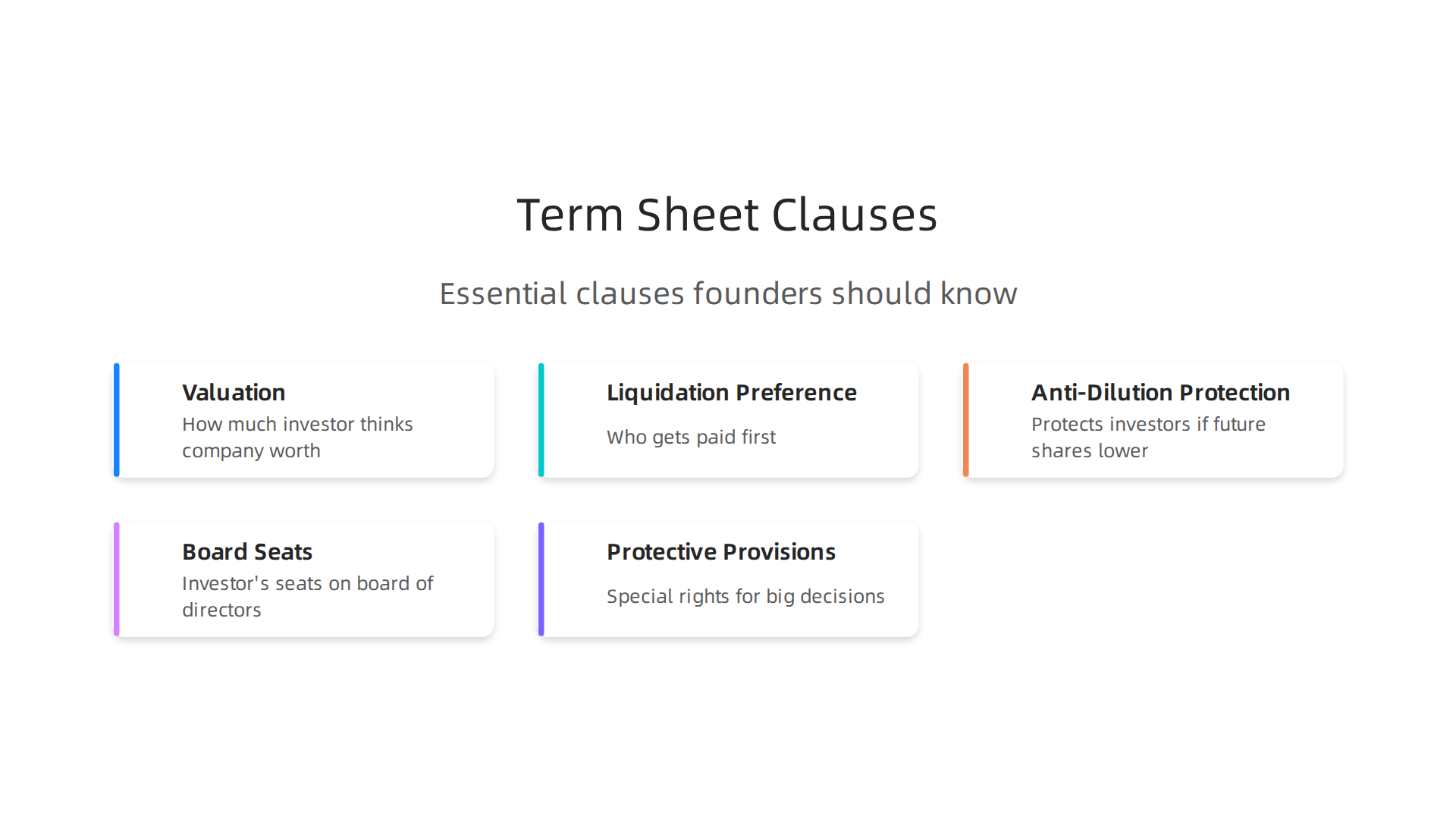
These often include:
* Valuation: How much the investor thinks your company is worth.
* Liquidation Preference: This term decides who gets paid first if your company sells or closes down. Investors usually want to get their money back before common shareholders. In 2026, a common setup is a "1x non-participating" preference, meaning they get their original investment back, and then everyone shares what’s left Startup Term Sheet 2026: 12 Clauses to Negotiate.
* Anti-Dilution Protection: This protects investors if future shares are sold at a lower price.
* Board Seats: How many seats on your company’s board of directors the investor will get.
* Protective Provisions: These are special rights that give investors a say in big company decisions.
- Know What Matters Most to You: Before you get a term sheet, decide what is most important for your company. Is it a high valuation, keeping more control, or getting smart money that comes with good advice? Knowing your priorities will help you negotiate better. You can find detailed guides on these terms to help you negotiate with confidence Venture Capital Term Sheet Guide 2026.
- Don’t Be Afraid to Negotiate: Most terms in a term sheet are negotiable. It’s common for founders to push back on certain clauses. Don’t feel pressured to agree to everything right away. If you need help understanding these complex documents or how to negotiate them, consider learning more about how to master startup investing and fundraising.
Being ready for meetings and understanding term sheets will give you the confidence you need to secure the best funding for your business.
Getting money from investors is a big win, but it is just the start. After the handshake and signed papers, the real work begins: building strong, lasting relationships with your investors in businesses. These people are now part of your company’s journey, and you want them to be more than just money providers. You want them to be true partners who help your business grow. This part is called investor relations, and doing it well can change everything for your company.
Setting Up Regular Communication
Right after you close a funding round, it’s super important to set up how you will talk with your investors. This means having a clear plan for when and what you will share.
- Reporting Schedule: Most companies find that sending updates every month or quarter works best. This keeps everyone in the loop without too much back and forth. For example, monthly investor updates and quarterly board meetings are a common rhythm for startups Managing Board and Updates Post-Funding.
- What to Share: Your updates should include key numbers (like sales or user growth), big wins, and even challenges you are facing. It is also good to share an executive summary and use simple charts or pictures to make your reports easy to understand. Giving your investors in businesses clear, honest reports helps build trust Investor Reporting Best Practices: Metrics, Cadence & …. Always include definitions for your key metrics so everyone understands them the same way.
- Governance Basics: If you have board members from your investment, schedule regular board meetings. These meetings are a chance to talk about big plans, make important decisions, and get their advice.
Activating Your Investors as Partners
Your investors are often successful people with wide networks and lots of experience. You should use this to your advantage, but in a smart way.
- Ask for Introductions: Need to meet potential customers, new team members, or other top VC firms for a future funding round? Your investors can often make those introductions. They might even know a good angel investor or two if you need to find angel investors later.
- Recruiting Support: Investors usually know many talented people. If you are hiring for a key role, ask them if they know anyone who would be a good fit.
- Strategic Advice: Don’t be shy about asking for advice on big decisions. They have seen many companies grow and can offer valuable insights. However, remember to keep your requests focused and not overwhelm them. Building strong post-funding relationships is all about strategy and clear communication Post-Funding Investor Relations: Strategies for Founders. When you understand what is a capital investment group and how they operate, you can partner with them more effectively.
Navigating Tricky Situations
Not every day will be sunny. There will be tough times, and knowing how to handle them with your investors is key.
- Underperformance: If your company is not doing as well as expected, don’t hide it. Share the bad news early and explain what you are doing to fix it. Being honest shows you are in control and are working hard to solve problems. Sometimes, this open communication can even help you execute a startup capital turnaround.
- Follow-on Rounds: If you need more money, clearly explain why and how the situation has changed. Show them how the new investment will help your company reach its next big goals.
- Board Dynamics: Work with your board members. Listen to their concerns and ideas. They are there to help guide your company, and a good relationship with them makes everything smoother.
By keeping your investors in businesses well-informed and engaged, you turn them from just funders into active partners who are invested in your success.
Summary
This guide explains how to find, engage, and retain the right investors to grow your business. It reviews the main investor types—angels, VC firms, corporate VCs, family offices—and what each looks for, such as market size, traction, team, unit economics, and exit potential. You’ll learn practical research tools and outreach methods, from warm introductions and events to short, personalized cold emails, plus how to prioritize investors by fit. The article also shows how to craft a winning pitch deck and a tidy data room to speed diligence, read investor signals in meetings, negotiate key term sheet clauses, and maintain clear post-funding communications so investors become true partners. Follow these steps and you’ll be better prepared to raise capital, shorten timelines, and secure smarter, value-added investors.