

Introduction
Have you ever wondered how a firm with just $120,000 in starting cash grew into one of the most powerful names in global finance? That is exactly the story of KKR private equity.
Back on May 1, 1976, three men named Jerome Kohlberg Jr., Henry Kravis, and George Roberts walked away from their jobs at Bear Stearns to start something new.

They had $120,000 between them and a bold idea about how to buy companies using borrowed money. According to KKR’s official history, that small bet launched what we now call the modern private equity industry.

Here is the thing. KKR did not just invent leveraged buyouts. They perfected them. Over the last 50 years, this firm has completed thousands of deals across the globe. Their approach shaped how firms like one equity partners, vista equity partners, and alpine investors operate today. But KKR remains in a league of its own when it comes to size, reputation, and track record.
Why should you care about KKR in 2026? Because understanding how this firm works gives you a window into the entire private equity world. Whether you are a startup founder looking to raise capital or an investor trying to make sense of the market, KKR’s moves often signal where the smart money is going.
This guide breaks down KKR’s history, strategy, and performance in simple terms. You will learn how they pick companies, how they make money, and what their success means for people like you who follow the fundraising landscape.
If you want to stay ahead of investment trends, knowing the players matters. And no player has shaped private equity quite like KKR.
Ready to go deeper? Understanding the fundraising landscape means keeping up with the biggest trends shaping tech and finance today. Subscribe to The Deep View Newsletter for daily insights that help you spot opportunities before the crowd does.
The Origins and Evolution of KKR
Picture three dealmakers walking out of Bear Stearns in 1976 with just $120,000 between them. That is exactly what happened on May 1 when Jerome Kohlberg Jr., Henry Kravis, and George Roberts decided to start their own firm.
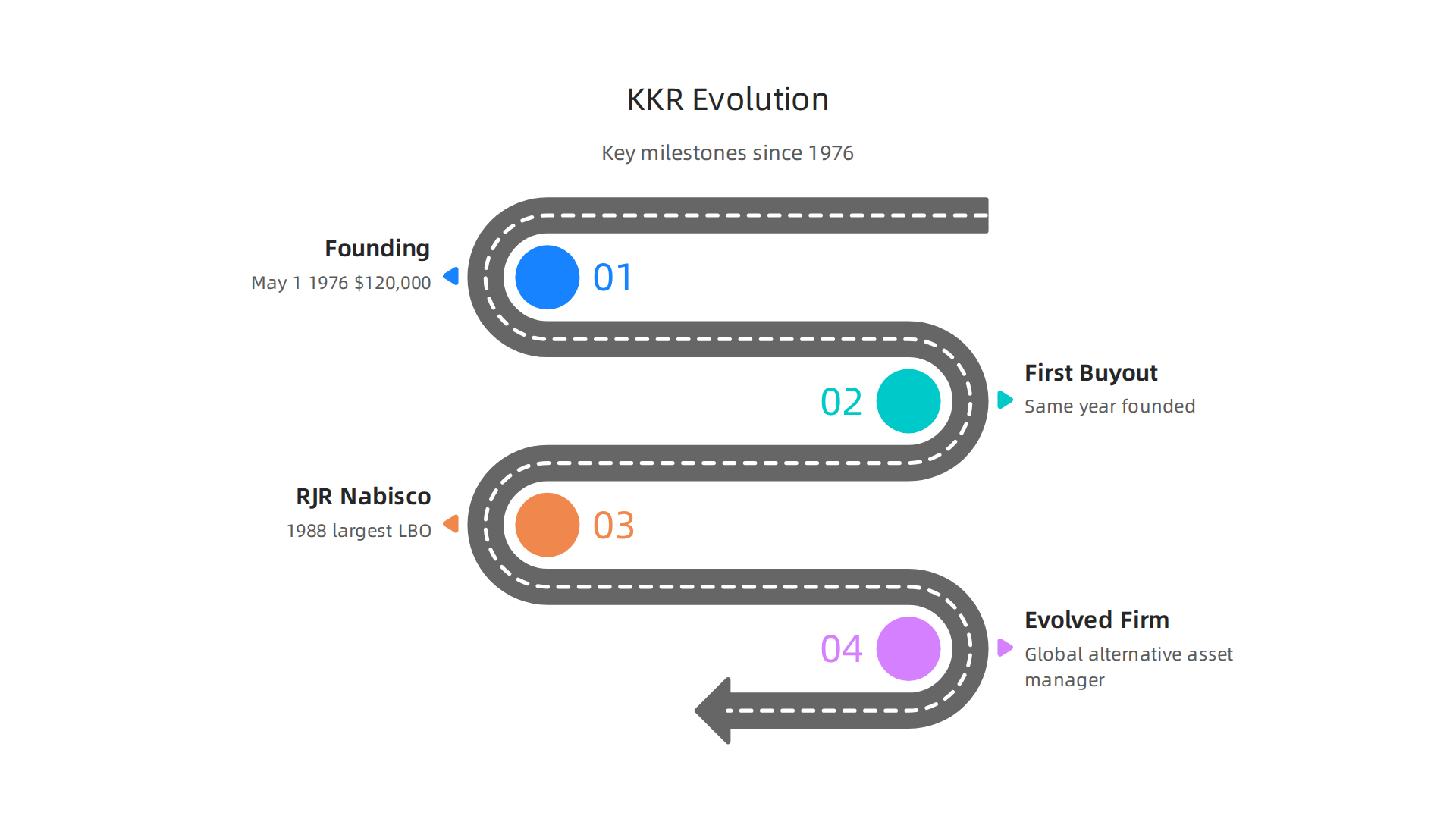
According to KKR’s official history, that small bet created what we now call the private equity industry.
The three founders had a simple but powerful idea. Instead of using their own money to buy companies, they would borrow most of the purchase price. That strategy is called a leveraged buyout or LBO. At the time, hardly anyone had heard of this approach. According to the founding history of KKR, one early investor named Hillman had no idea what private equity even was.
KKR completed its first buyout in the same year it was founded, as reported by Matrix BCG. That first deal proved the model worked. But the deal that really put KKR on the map happened in 1988. That was the RJR Nabisco takeover, which at the time was the largest LBO in history. The battle for RJR Nabisco became a symbol of Wall Street ambition and is still studied in business schools today.
Here is the thing. KKR did not stop at buyouts. Over the decades, the firm transformed itself into something much bigger. According to Street Of Walls, KKR evolved into a leading global alternative asset manager. Today it spans private equity, credit, real assets, and insurance. It is a far cry from the tiny three-person operation that started in the 1970s.
Why does this history matter for you in 2026? Because KKR’s journey shows how the private equity world works today. The same LBO strategies that KKR pioneered are now used by firms like one equity partners, vista equity partners, and alpine investors.

Understanding the original blueprint helps you make sense of modern fundraising and investment moves.
KKR’s growth also signals something important for startup founders. As private equity has matured, the lines between early-stage investing and buyout deals have blurred. Many PE firms now compete with venture capital for promising tech companies. That means more options if you are raising capital.
If you want to understand where fundraising is heading, watching KKR is a smart move. Their recent moves into credit and insurance tell us that capital is flowing into new corners of the market. That is exactly the kind of trend that matters for founders planning their next round.
Want to stay ahead of these shifts? The Deep View Newsletter delivers daily insights on AI and technology trends that shape the fundraising landscape. Subscribe now and never miss a signal.
KKR’s Core Investment Philosophy and Strategy
KKR has mastered the art of the deal. But what truly sets the firm apart in 2026 is not just what they do, but how they do it. Their core investment philosophy blends patience with precision. It focuses on long-term value creation instead of short-term financial tricks. This approach is a big reason why Euromoney named KKR the world’s best investment manager in private equity for 2026.
The key difference today is their focus on operational value creation. Early on, the kkr private equity model was known for the leveraged buyout structure. Today, the playbook centers on making portfolio companies better operators. They bring in experts to improve supply chains, invest in new tech, and expand into new markets. It is not about stripping assets. It is about building stronger businesses over many years.

Where does KKR look for these opportunities? The firm targets four main sectors: technology, healthcare, industrials, and consumer. This broad focus is paired with a disciplined strategy. While specialized firms like vista equity partners focus on software, one equity partners targets industrial growth, and alpine investors backs specific verticals, KKR competes across all four sectors at once. Their global footprint means they can deploy capital anywhere from Silicon Valley to Southeast Asia. If you are a founder wondering how your industry fits into this landscape, you can read our guide on Tech Company Categories 2026.
Execution is everything at KKR. That is where the KKR Capstone team comes in. Capstone is a dedicated internal group of operational experts who work directly with portfolio companies. They do not just write checks and wait. They help management teams improve margins, find talent, and drive growth. For companies backed by kkr private equity, this hands-on support is a major advantage. The firm’s own 2026 Outlook reinforces this commitment to "high grading" portfolios for quality and resilience.
What This Means for You
Understanding the kkr private equity philosophy gives you a real edge as a founder. If you ever partner with a PE firm, you now know to ask how they add value beyond capital. Do they have a Capstone team? What sectors do they truly understand? Asking these questions helps you find the right long-term partner.
Stay ahead of every shift in private markets. The Deep View Newsletter delivers daily, clear insights on the technology and AI trends driving decisions at firms like KKR. Subscribe now to make smarter fundraising moves.
Assessing KKR’s Track Record and Fund Performance
So does the kkr private equity strategy actually work? The numbers say yes. Let us look at the hard data.
Massive Scale and Consistent Growth
As of the first quarter of 2026, KKR reported a record $758 billion in assets under management. That includes private equity, credit, real estate, and infrastructure.
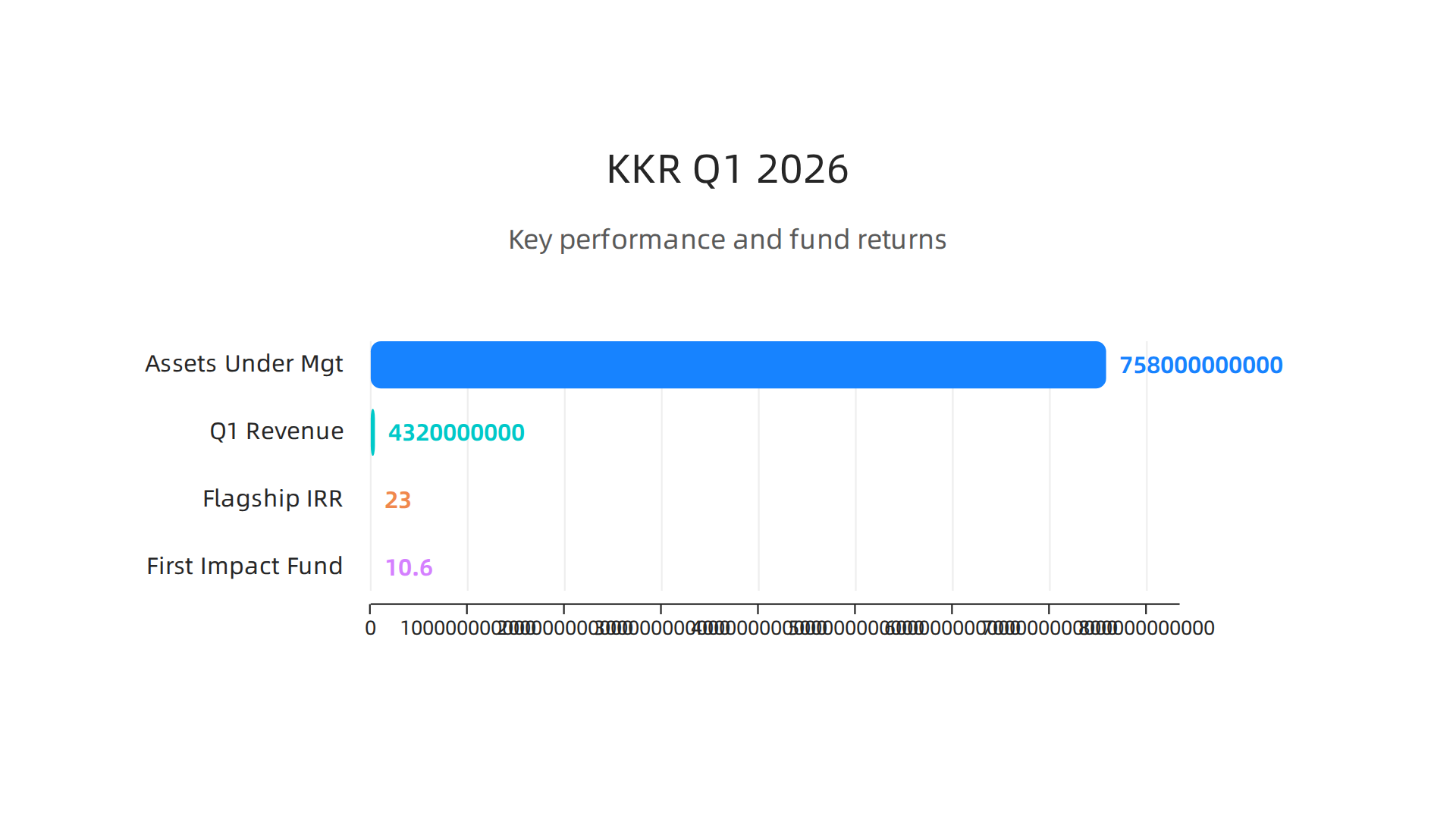
In that same quarter alone, the firm generated $4.32 billion in revenue and $1.25 billion in adjusted net income. These numbers come from their official Q1 2026 earnings release. This scale is what sets KKR apart from smaller players like one equity partners or alpine investors. Few firms in the world can deploy capital at this level across multiple strategies at once.
Flagship Fund Performance That Leads the Pack
The real test of any kkr private equity investment is how its core funds perform. In early 2026, KKR raised $23 billion for its North America flagship fund. That is a huge vote of confidence from limited partners. According to Private Equity International, the three prior funds in this flagship series delivered a gross internal rate of return of 23 percent. That is a top-quartile result compared to industry benchmarks.
For investors comparing generalist strategies, KKR’s impact funds also show strong performance. The first impact fund achieved a net IRR of 10.6 percent and a gross multiple of 1.7x on invested capital. The second impact fund was performing even better as of early 2026. These returns are solid when placed alongside similar strategies from firms like vista equity partners, which focuses exclusively on software.
Diversified Performance Across Asset Classes
KKR does not rely on private equity alone. Their real estate investment trust, KREST, showed a Class I net distribution rate of 6.71 percent as of April 2026. Their Australia-based KKR Private Equity (K-PRIME) Fund also continues to deliver steady growth. This diversification helps KKR maintain strong overall returns even when one asset class faces headwinds.
What the Track Record Means for Founders
When you approach a firm like KKR, you want to know they can deliver. A track record of consistent top-quartile returns shows that their operational value creation model works. It also means they will have strong relationships with their own investors, which gives them more flexibility to back portfolio companies through tough times.
If you are planning your own fundraising journey in 2026, understanding which firms have real performance data matters. You want partners who can help you scale, not just cut a check. For more context on how different capital sources compare, read our guide on Capital Group American Funds and what startup founders need to know.
Stay Ahead of the Market
The private equity landscape changes fast. The firms that deliver strong returns today might shift strategy tomorrow. Stay informed with The Deep View Newsletter. It gives you clear daily updates on the technology and AI trends that shape investment decisions at firms like KKR. Subscribe now and make smarter moves in 2026.
KKR vs. Other Top Private Equity Firms
KKR is a giant, but it is not alone at the top. In 2026, the biggest private equity firms compete fiercely for the best deals and the largest pools of investor money.

So how does kkr private equity stack up against Blackstone, Apollo, and Carlyle? And when should you choose one over the other?
Size and Scale
Let us start with assets. Blackstone leads the pack with roughly $1.3 trillion in assets under management, according to the 2026 rankings from Praxis Rock. Apollo is closing in on $1 trillion. KKR sits at $758 billion as of early 2026, but it is growing fast. The firm expects to raise more than $300 billion between 2024 and 2026 as it aims to eventually cross the $1 trillion mark. Size matters because bigger firms can take larger stakes and offer more support.
Different Business Models
Here is the key difference. These firms are not just scaled-up versions of each other. They pursue very different strategies.
According to an analysis from Qubit Capital, KKR places greater emphasis on operational transformation inside portfolio companies. It digs in to improve margins, growth, and efficiency. Apollo, on the other hand, leans more heavily into structured credit and debt deals. Blackstone dominates real estate and has a massive credit business too.
KKR also stands out because of its deep heritage in leveraged buyouts (LBOs). The firm invented the modern LBO in the 1980s. That experience gives it a unique ability to run complex buyouts that other firms might struggle with. Another major differentiator is the Global Atlantic insurance platform. This gives KKR a steady, long-term source of capital that many rivals lack.
What This Means for Investors
If you are a limited partner choosing between firms, think about what you value. Do you want deep operational support? KKR is a strong choice. Do you prefer exposure to real estate assets? Blackstone might fit better. Are you looking for credit-heavy returns? Apollo could match your goals.
Firms like one equity partners or alpine investors play in different niches, but the mega-firms offer scale and diversification that smaller players cannot match.
For startup founders, understanding these differences helps you pick the right strategic partner. If you plan to grow through acquisition or need major operational support, a firm like KKR could be ideal. To learn more about how to position your company for the right investors, check out our guide on why founders need a strong technology background for startup fundraising in 2026.
Stay Ahead of the Market
The private equity landscape shifts quickly. The firm that is best for you today might change focus tomorrow. Get clear daily updates on the technology and AI trends that shape investment decisions at firms like KKR. Subscribe to The Deep View Newsletter and make smarter moves in 2026.
How to Access KKR’s Investment Opportunities
The previous section showed you how KKR compares to the competition. But how do you actually invest with them in 2026?
For decades, KKR funds were off-limits to anyone outside the top tier of institutions. That is starting to change.
For Institutional Investors
Most of KKR’s capital comes from big institutions. Think pension funds, university endowments, and sovereign wealth funds. These groups make direct investments with major commitments. You are looking at $5 million to $10 million minimums. You also need to accept lock-up periods of 10 years or more. The fee structures are complex and require careful review. KKR has repeatedly shown it can evolve for these partners, launching new strategies like global impact and growth equity. This ability to adapt is one reason why Euromoney named KKR the best investment manager in private equity for 2026.
For Qualified Individuals
Qualified high-net-worth individuals now have new pathways. The KKR Private Markets Equity (K-PRIME) strategy drops the minimum to just $25,000. It gives you a pure play on their buyout and growth equity portfolio.
There is also the KKR Infrastructure Fund with a similar entry point. In 2026, KKR even partnered with Capital Group to launch a public-private equity fund. This broadens access even more.
Unlike niche firms like vista equity partners, which focuses on software, or boutique firms like one equity partners and alpine investors, KKR offers a diversified platform. You get access to buyouts, infrastructure, and credit all in one place.
What This Means for Founders
Understanding this landscape is a strategic advantage for startup founders. Knowing how KKR raises and deploys capital helps you position your company better. If you plan to scale through strong technology and clear innovation, you become a more attractive target. Founders should check out our guide on why founders need a strong technology background for startup fundraising in 2026.
Stay Ahead of the Market
Access to kkr private equity is widening, but it remains a complex asset class. The key to success is staying informed about the technology and AI trends that shape investment decisions at firms like KKR. Get clear, daily updates. Subscribe to The Deep View Newsletter and make smarter moves in 2026.
Navigating Risks and Criticisms of KKR
No investment is perfect, and KKR is no exception. Before you commit capital, it pays to look at the risks and criticisms honestly.

The core risks are standard for private equity. Your money gets locked up for years. That is called illiquidity. KKR also uses leverage, or borrowed money, to buy companies. This boosts returns in good times, but it can also magnify losses. And fees add up fast. Management fees plus performance fees eat into your gains. The K-PRIME strategy page itself warns that the fund involves a high degree of risk and should only be funded with discretionary capital you can afford to lose.
KKR has faced real criticism over the decades. In its early years, the firm pioneered the leveraged buyout (LBO). Opponents argued these deals loaded companies with debt, slashed jobs, and focused on short-term profits. Critics also raised concerns about governance and fee transparency. The wider private equity industry has long struggled with these issues, and KKR was often the face of the backlash. You can read more about the firm’s history and controversies on Wikipedia.
Here is the good news: KKR has adapted. The firm has made real changes to address these concerns.
- Transparency: KKR now offers detailed reporting on portfolio performance and fees through its K-series products.
- ESG focus: The firm has launched global impact funds and integrated environmental, social, and governance factors into its investment process.
- Fee reform: Newer products like the KKR Infrastructure Fund have simpler, investor-friendly fee structures with no long-term fund-level leverage.
For founders, understanding these risks is part of smart fundraising. You should always do your own due diligence on any firm you consider partnering with. If you want to dig deeper into evaluating investment opportunities, read our guide on seed enterprise investment in 2026.
The private markets are complex and constantly changing. To stay ahead of the risks and spot the next big opportunity, you need reliable daily insights. That is exactly what The Deep View Newsletter delivers. Join thousands of founders and investors who get clear, actionable AI and tech news every day.
Summary
This article explains how KKR grew from a three-person firm with $120,000 into a global private equity leader and why that history matters for founders and investors in 2026. It covers KKR’s origin as the pioneer of leveraged buyouts, the firm’s evolution into a diversified asset manager across private equity, credit, real assets, and insurance, and its current emphasis on operational value creation through the Capstone team. The guide reviews scale and performance metrics—like $758 billion AUM and top-quartile flagship returns—compares KKR to rivals such as Blackstone and Apollo, and explains how individuals and institutions can access KKR products (including lower‑minimum K-PRIME offerings). It also spells out core risks—illiquidity, leverage, and fees—and outlines KKR’s responses around transparency, ESG, and fee reform. Readers will finish able to judge when KKR is the right partner, what to ask them, and how their moves signal broader fundraising trends.