

The tech industry layoffs that started in 2023 are still hitting hard in 2026. In the first three months of this year alone, tech employers announced over 52,000 job cuts, the highest first-quarter total since 2023 [Kore1]. Companies like Oracle, Amazon, Meta, and Dell drove most of those reductions. But here’s the thing: something unexpected is happening with all that displaced talent.
Instead of leaving tech for good, many experienced workers are starting their own companies.

An AI gold rush is pulling people out of corporate jobs and into entrepreneurship [Business Insider]. That means the tech industry layoffs are actually reshaping the startup and venture capital landscape in real time.
For founders and investors, this creates both opportunity and new pressure. Fundraising is tougher because investors are pickier. Talent acquisition is a mixed bag: more skilled people are available, but competing for the best ones is fierce. Strategic positioning has never been more important.
That’s where this article comes in. We look at the latest tech industry trends, including news from companies like Aurora Innovation and shifts across the broader information technology space. We break down data, share expert perspectives, and offer actionable strategies to help you navigate this climate. Whether you are raising a Seed round or scaling a Series A, the rules have changed. Understanding them is the first step to winning.
Want to stay ahead of the curve? Sign up for The Deep View Newsletter.

It delivers clear daily AI updates that help founders and investors make smarter decisions in this fast-moving market.
The Scale of Tech Layoffs in 2026: A Data-Driven Overview
We touched on the 52,000 job cuts in Q1 2026. But the full picture is bigger than any single quarter. Looking at the data closely helps founders spot tech industry trends before they become obvious.
Let us look at the numbers. Crunchbase confirms that U.S.-based tech companies cut at least 127,000 jobs in 2025 alone. That came after massive cuts in 2022 and 2023. WifiTalents data shows Amazon cut 27,000 roles. Google cut 12,000. Meta made huge reductions too. Now, in 2026, the cuts have not stopped. InformationWeek’s tracker shows ongoing reductions at Oracle, Dell, and others.
But here is the surprising part. A report on AI-driven layoffs found that roughly 92% of companies that announced job cuts actually grew their total headcount between 2024 and 2025. They were swapping old roles for new ones focused on AI and automation.
So what does this mean for workforce morale? The feeling is mixed. Fear of layoffs remains high. At the same time, experienced workers are now available. For startup founders, this creates a rare chance to hire top talent that was previously locked inside big companies.
These shifts affect the entire information technology landscape. Founders who understand where the market is going can position themselves better. For example, knowing your exact technology definition 2026 helps you attract the right investors during a pitch.
The layoff data is not just bad news. It is a sign of redistribution. Talent is moving from giants to startups. Money is following the smartest builders. If you are trying to raise capital right now, you need to see how investors view this reshuffling.
Getting reliable data on these fast changes is hard. But you do not have to do it alone.
That is exactly why thousands of founders read The Deep View Newsletter every day. It delivers clear AI and tech updates that help you stay ahead and make faster decisions.
Root Causes: Why Tech Companies Are Still Cutting Headcount in 2026
You might think layoffs happen only when a company is losing money. But that is not the full story in 2026. As we saw earlier, even profitable companies are letting people go. So what is really driving these cuts? Let us look at the three main forces behind the tech industry layoffs still hitting the news.
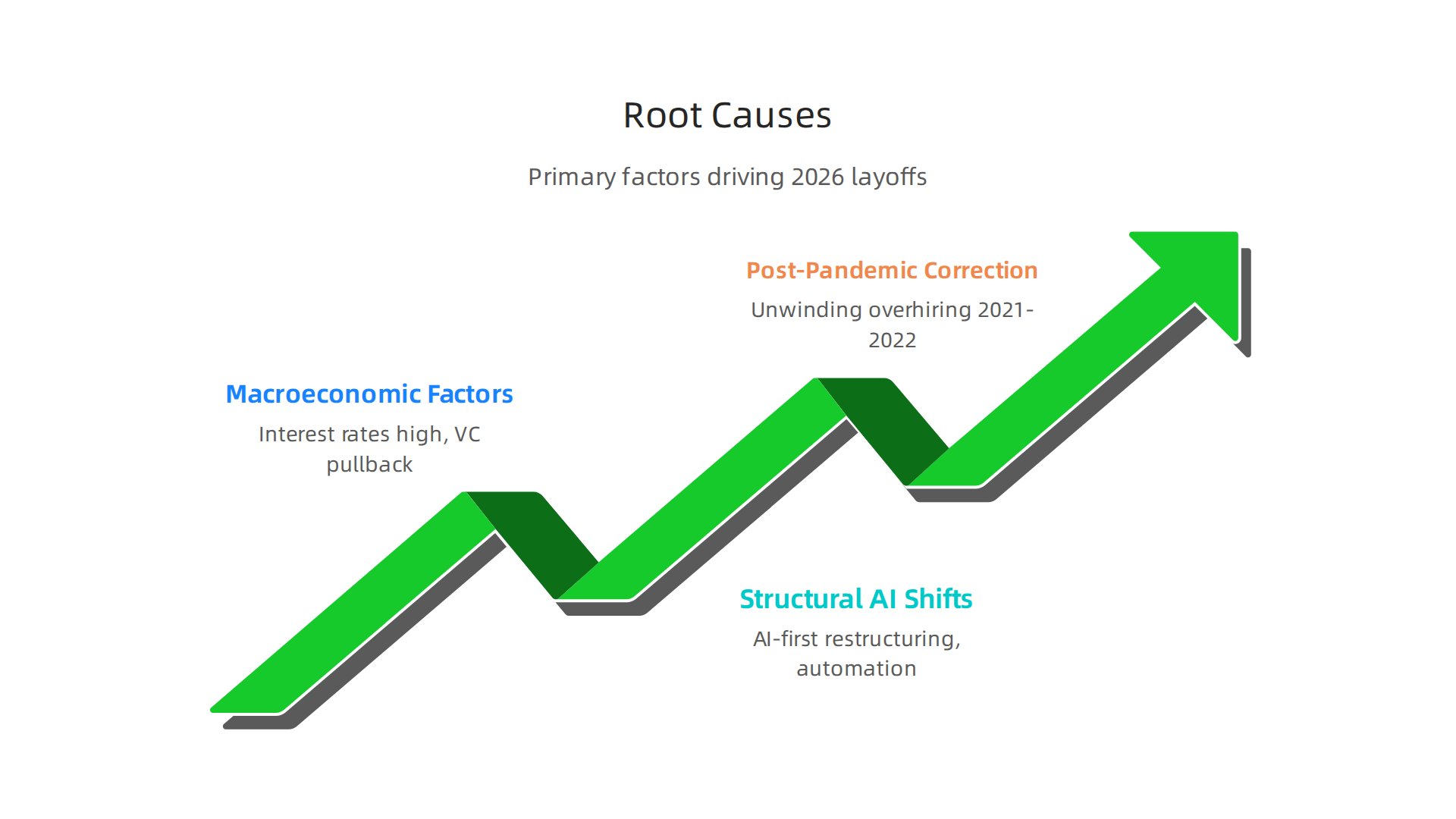
Macroeconomic factors still bite. Interest rates stayed higher than many expected. Venture capital firms pulled back on risky bets. Recession fears made big tech leaders cautious. They are not adding headcount unless it directly boosts their bottom line. This environment forces companies to trim fat, even if they are making money. In March 2026 alone, over 6,000 tech jobs were cut despite record corporate profits, as reported by ResumeHog.
Structural shifts from AI and efficiency mandates. Here is the biggest change. Many companies are not cutting jobs because they are struggling. They are cutting because they are shifting to an "AI-first" structure. The current wave of tech layoffs in the USA is less about financial distress and more about restructuring around AI, as iCert Global explains.

Firms are flattening management layers and replacing some roles with automation. A Business Insider list shows over 30 companies, including Meta, Walmart, and Groupon, made cuts in 2026, largely driven by this AI transformation. For founders tracking tech industry trends, this means the roles that disappear often get replaced by new AI-focused ones.
The post-pandemic correction is still unwinding. Many companies overhired during 2021 and 2022 when growth seemed endless. Now they are still unwinding that bloat. Even companies that are healthy on paper are cutting headcount to match a leaner, more efficient operating model.
Understanding these root causes helps you see where the market is going. If you want to raise capital as a founder, you need to speak the language of efficiency and AI readiness. Knowing how investors view information technology shifts can make or break your pitch. That is why we created a guide on how a strong technology background helps founders raise funds in 2026.
The data is clear. Layoffs are not random chaos. They are a reshuffling of talent and priorities. And the winners will be the ones who adjust fastest.
Want to stay ahead of every shift? Join thousands of founders who read The Deep View Newsletter every day for clear AI and tech updates that help you make faster, smarter decisions.
The Ripple Effect on Startup Fundraising
So how do all these tech industry layoffs actually hit your ability to raise money as a founder? The answer is simple. Everything changes.
Investor sentiment has flipped hard. In 2026, investors do not care about growth at all costs anymore. They want profitability. They want lean teams. If you walk into a pitch meeting with a big headcount and no clear path to profit, you will lose their attention fast.

According to Crunchbase News, over 4,500 U.S. tech workers were laid off in just one week in late May 2026. Investors see those cuts and expect the same discipline from startups. They are asking tougher questions about burn rate and unit economics. The days of raising on a hockey-stick graph are over.
Valuation compression is real. When big tech companies cut thousands of jobs, it drags down the entire market. Investors compare your round to what similar companies are worth, and those comparables keep dropping. A CFO Dive report shows that U.S. tech companies announced 85,411 layoffs in the first four months of 2026 alone. This creates a ripple effect. If a well-funded company like Oracle cuts 30,000 people, your Series A pricing suddenly looks too high. You have to be ready to negotiate harder and accept lower valuations.
Founder credibility is on the line. Here is the tricky part. If your own startup has to do layoffs, how you handle them matters a lot. Investors watch closely. A clean, respectful, transparent process can actually build trust. It shows you are realistic and willing to make hard choices. But a messy layoff with poor communication? That can kill your next raise. Sources like YourStory explain that layoffs in 2026 are mostly about AI restructuring and repositioning. So if you frame cuts as a strategic shift toward efficiency rather than a sign of failure, investors will listen.
The bottom line is clear. Tech industry trends are forcing founders to think differently about team size, cash management, and storytelling. If you want to raise capital in this environment, you need a solid fundraising plan that matches the new reality. Check out our guide on seed enterprise investment strategies for 2026 to build a smarter approach.
Want to stay on top of every shift that affects your fundraising? Join thousands of founders who read The Deep View Newsletter for daily AI and tech updates that help you make faster, smarter decisions.
Which Sectors Are Hit Hardest?
Not every part of tech feels the pain equally. Some sectors are catching way more of the fallout than others. If you are raising money right now, knowing where the cuts hit hardest can help you adjust your strategy.
Fintech, SaaS, and e-commerce took the biggest blows. These sectors grew fast during the low interest rate years. They hired aggressively. Now they are paying the price. According to the Crunchbase tech layoffs tracker, companies in fintech and SaaS alone accounted for a huge share of the 127,000 U.S. tech workers cut in 2025.
Crypto? That sector never fully recovered, and layoffs there are still happening in 2026. The pattern is clear. Sectors that relied on cheap capital and rapid scaling are now shrinking fast.
Venture funding slowdown and layoff concentration go hand in hand. When investors pull back, startups in these sectors cannot raise new money easily. So they cut costs the only way they can. By cutting people. InformationWeek’s 2026 layoff tracker shows that midsize tech companies in these same sectors are letting go of employees at record rates. If your startup operates in fintech, SaaS, e-commerce, or crypto, expect investors to grill you harder on burn rate and runway.
Silicon Valley is still the epicenter, but emerging hubs are feeling it too. The Bay Area sees the biggest numbers because that is where the most tech companies live. But cities like Austin, Denver, and Miami are seeing faster growth in layoff rates relative to their size. This matters for founders outside traditional hubs. Investors in those regions may have less experience navigating downturns, which means you need to be extra prepared.
This is why understanding tech industry trends at a sector level is so important. If you know where the cuts are happening and why, you can position your own startup as safer and smarter. Check out our guide on tech company categories for 2026 to see how investors are labeling startups now.
Want to stay ahead of every sector shift? Get clear daily AI updates that help you make faster decisions. Subscribe to The Deep View Newsletter today.
Surviving and Thriving: Practical Strategies for Startup Founders
So you know which sectors are getting hit hardest by the tech industry layoffs. Now what? The good news is that tough times also create real opportunities. Founders who act smart can extend their runway, hire incredible talent, and build stronger relationships with investors. Here are three practical strategies to help you not just survive but come out ahead.
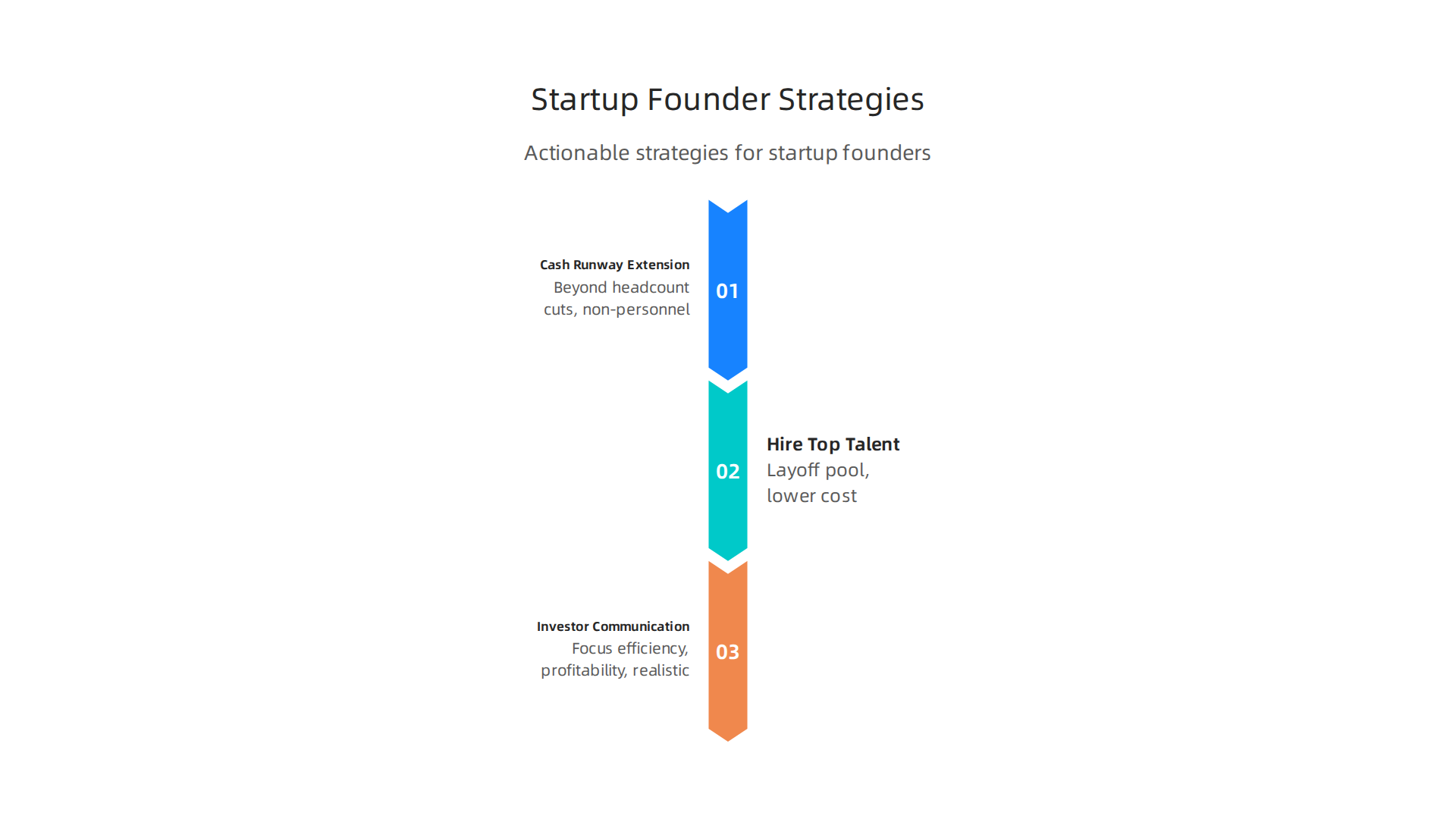
First, focus on cash runway extension beyond headcount cuts. Yes, layoffs are one way to save money, but they are not the only way or always the best way. Look at your non-personnel costs first. Renegotiate software contracts, cut tools your team is not using, and push for longer payment terms with vendors. The 2026 tech layoffs data from Kore1 shows that Q1 2026 alone had over 52,000 job cuts. Many companies are doing the same things, so standing out means being smarter about where every dollar goes. Consider reducing office space or switching to a fully remote model if you have not already. Every month of extra runway gives you more time to hit milestones before your next fundraise.
Second, use the layoff pool to hire top talent at a lower cost. This is one of the biggest opportunities right now. Some of the best engineers, product managers, and marketers are looking for new roles after being let go from giants like Oracle, Amazon, and Meta. According to Business Insider, many big tech workers are quitting corporate jobs and joining startups because of the AI gold rush. You can offer them equity, mission, and flexibility that big companies cannot match. The startup hiring market in 2026 is full of experienced people who are eager to build again. Check out the Entrepreneur Layoffs Tracker to see who is available right now in your area.
Third, get your investor communication right. In this environment, investors care more about efficiency than growth at any cost. When you talk to potential backers, lead with your unit economics, burn rate, and clear path to profitability. Show them you understand the broader tech industry trends and that your plan is realistic. A founder who demonstrates resilience and adaptability stands out. If you need help framing your story, our guide on why founders need a strong technology background for startup fundraising in 2026 offers practical tips for building credibility with investors.
The founders who adapt fast in this market will be the ones building the next big thing. Stay informed, stay efficient, and keep moving forward. For daily updates on AI and tech trends that shape fundraising, subscribe to The Deep View Newsletter and get clear insights straight to your inbox.
The Investor’s Playbook: How VCs Are Reacting to Layoffs
We just talked about what you can do as a founder to survive and thrive. Now let’s flip the table and look at what investors are doing. In 2026, venture capitalists are reacting to the market in three specific ways. Knowing this playbook helps you prepare for your next meeting.
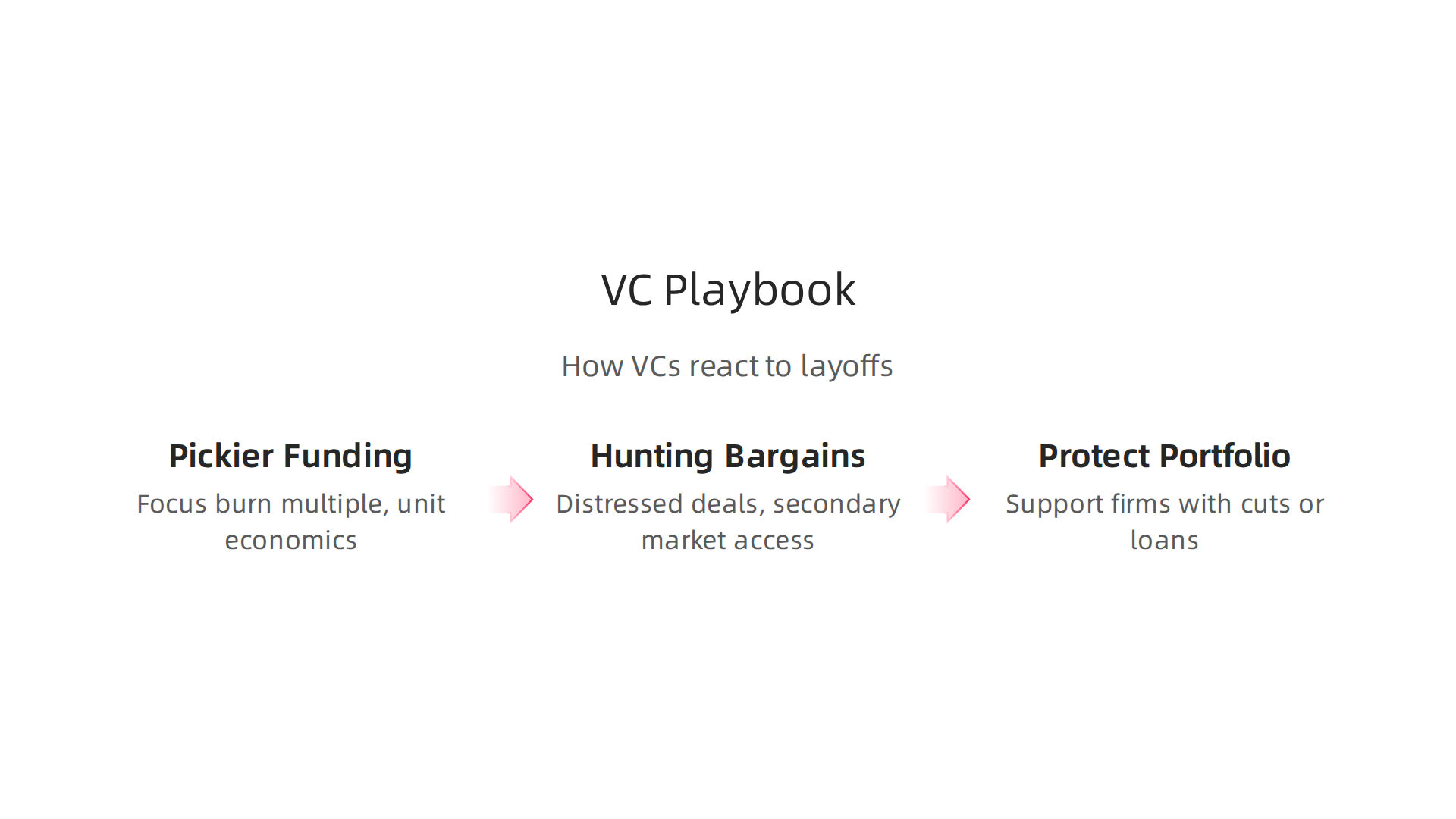
First, VCs are much pickier about who they fund. They used to love "growth at all costs." Not anymore. In April 2026 alone, US tech companies cut over 33,000 jobs, according to CFO Dive.
So investors now focus on your burn multiple and unit economics. They want to see a culture of efficiency. A Crunchbase News report on the latest cuts shows this trend clearly. To speak their language, check out our guide on technology definition in 2026. It helps you frame your startup the right way.
Second, some VCs are hunting for bargains. They know that tough times create opportunities. They look for distressed companies or buy shares on the secondary market. This is a big shift in the tech industry trends of 2026. Even in aurora innovation news, you see companies cutting costs to focus on what works. VCs know the tech industry layoffs of 2026 are more about repositioning than failure, as YourStory explains. If you want to see which startups are growing through this, check out our list of startups in the USA.
Third, VCs are protecting their own portfolio. They do not want their current investments to fail. So they step in to help with reductions, connect founders with new roles, or provide short-term loans. This hands-on support is critical for many information technology firms right now.
Staying informed about these moves helps you stand out. Subscribe to The Deep View Newsletter to get daily AI and tech updates that explain exactly what investors are thinking.
The Macro Outlook: Will Layoffs Continue into 2027?
The tech industry layoffs of 2026 have been rough. In March alone, over 6,000 tech workers lost their jobs even though many companies were still turning a profit, according to ResumeHog. By late May, more than 30 major companies including Meta, Walmart, and Groupon had announced cuts (Business Insider). So the big question is: Will this keep going into 2027?
Let’s look at three big factors.
Economic indicators. Interest rates are still high, and inflation is sticky. GDP growth has slowed in some regions. That usually makes companies nervous about hiring. But here is the twist: many of the cuts are not about money problems. They are about becoming leaner. The iCert Global analysis calls it an "AI-first restructuring," not a financial crisis.
What analysts predict. Most experts think hiring will pick up in late 2026 and early 2027, but it will look different. Companies will hire more for roles that support AI and automation. Roles that are easy to replace with software will stay scarce. The YouTube breakdown on tech layoffs points out that some big companies use "AI" as a cover for normal restructuring, which muddies the picture.
Structural changes that are permanent. AI and automation are not passing fads. They are changing what jobs are needed. For example, the same tech layoffs that remove some roles also create demand for data engineers and cloud architects. Another YouTube explanation shows that tech jobs are actually exploding in AI-related fields even as other areas shrink. So the net effect is a shift, not a total loss.
What does this mean for you? If you are a founder, you need to position your startup for this new landscape.

Investors want to see that you understand the tech industry trends driving these changes. One way to do that is to clearly define your technology in terms investors get. Our guide on technology definition in 2026 can help you frame your story right.
The bottom line: layoffs will likely slow down as the economy stabilizes. But the job market is being reshaped permanently by AI. To know exactly what is happening week by week, get the The Deep View Newsletter for daily AI and tech updates straight to your inbox.
Lessons from Previous Downturns: Historical Context
So the current wave of tech industry layoffs feels scary. But if we look back, we have been here before. The dot-com bust of 2000-2002 and the Great Recession of 2008-2009 both reshaped the tech world in painful ways.

And they left behind clues about what might happen next.
The dot-com bust (2000-2002). When the bubble burst, tech unemployment skyrocketed. Many people left the industry and never came back, according to a Hacker News discussion about the current layoffs. The companies that survived were the ones with real business models, not just hype. Venture capital dried up almost overnight. It took several years for the market to recover.
The Great Recession (2008-2009). This one was different. It was driven by a financial crash, not a tech bubble. Brookings research shows that millions of jobs were lost and the recovery was slow. For startups, the advice from Crunchbase was clear: plan for at least two years without new funding. Companies that cut costs early and focused on revenue survived.
What patterns repeat? Three things stand out. First, talent migrates. Many laid-off workers from the dot-com era moved into other fields. Today, some of that talent is flowing into AI and automation instead. Second, VC behavior shifts. Investors become more cautious and picky. They want proof of traction before writing a check. Third, recovery is uneven. As McKinsey points out, different sectors recover at different speeds. In 2026, we see that clearly. While some information technology roles are shrinking, areas like autonomous driving are still growing. For example, recent aurora innovation news shows continued investment in self-driving tech, a sign that tech industry trends are shifting, not stopping.
What this means for 2026-2027. History suggests a recovery timeline of two to four years for the broader market, but specific niches could bounce back faster. Founders should build lean, keep cash reserves, and watch where talent is moving. You also need to frame your technology in a way that matches what investors now value. Our guide on technology definition for investor clarity can help you do that.
To keep up with daily shifts in tech and AI, the The Deep View Newsletter delivers curated updates straight to your inbox.
Summary
This article examines the continuing wave of tech industry layoffs in 2026 and explains how those cuts are reshaping startups, hiring, and venture capital. It uses data showing tens of thousands of job losses alongside surprising growth in AI roles to explain that many layoffs are strategic restructurings rather than outright failures. The piece breaks down root causes—higher interest rates, AI‑first reorganizations, and post‑pandemic overhiring—then shows how those forces compress valuations, make investors pickier, and create hiring opportunities for founders. You’ll get sector‑level analysis (fintech, SaaS, e‑commerce, crypto), practical tactics to extend runway and recruit displaced talent, and guidance on how to frame layoffs to investors. The article also reviews investor behavior, offers a short playbook for surviving fundraising, and places today’s trends in historical context so founders can act strategically and win in the new market.